Stack racking has become one of the most versatile storage solutions in modern warehousing, manufacturing, and logistics operations. Unlike fixed pallet racking that requires floor anchoring and engineered installation, stack racking consists of self-contained, portable units that can be stacked vertically, moved between locations, folded flat when empty, and redeployed to entirely different facilities. This flexibility makes stack racking particularly valuable for seasonal storage, temporary warehousing, outdoor applications, and any operation where storage requirements change frequently. Yet stack racking is a family of products with distinct designs — foldable, fixed, removable-post, and industry-specific configurations — each engineered for different load types and operational patterns.
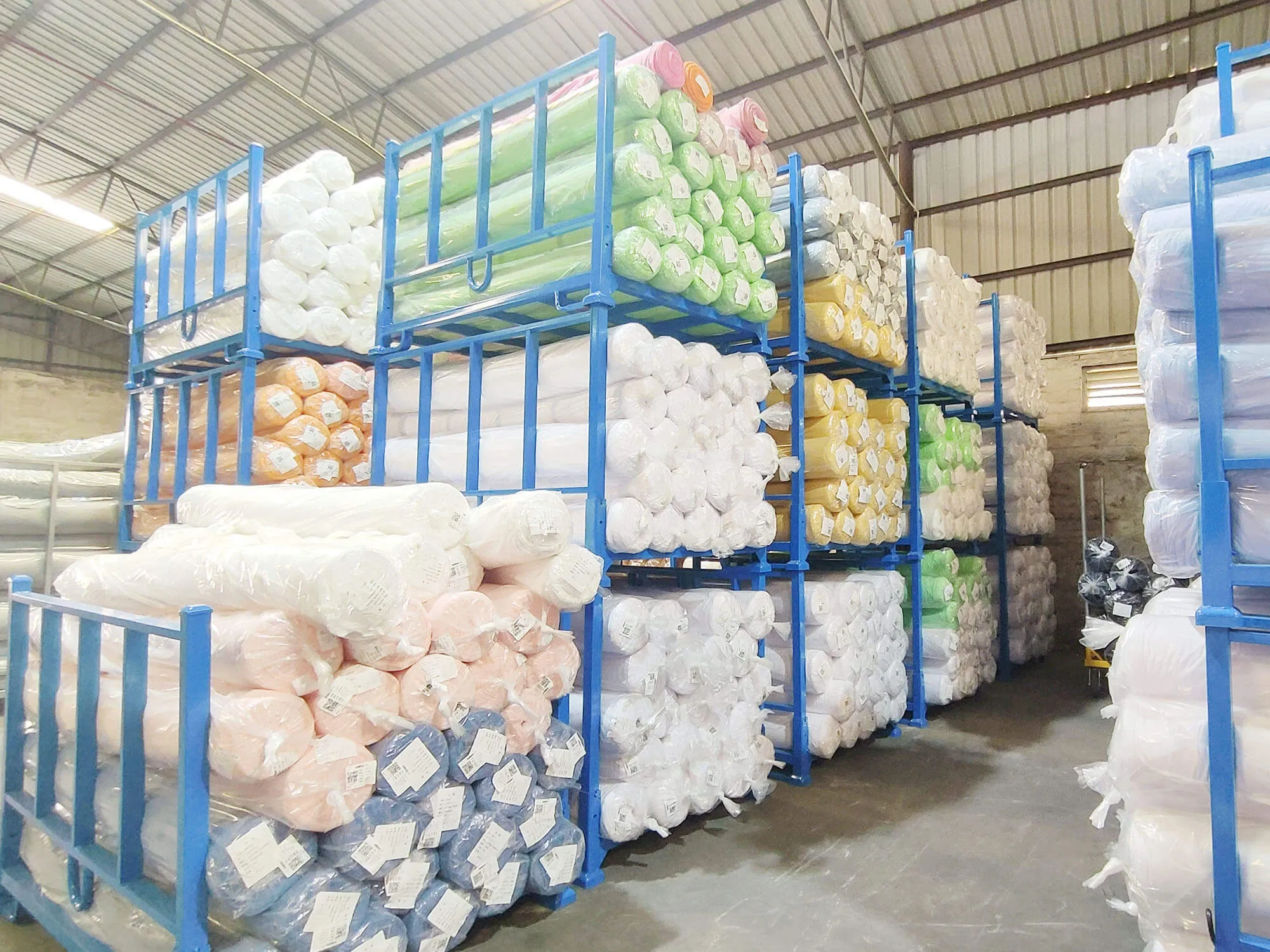
This article explains what stack racking is, examines its structural components, reviews the main types available, and outlines the process for choosing the right stack rack configuration for a specific warehouse application.
What Is Stack Racking?
Stack racking is a self-contained modular storage unit consisting of a bottom frame, four vertical corner posts, and integral forklift pockets or fork channels that allow individual racks to be lifted, stacked vertically on top of one another, and used as portable warehouse storage without requiring floor anchoring or a permanent structural framework. Each stack rack functions as an independent load-bearing unit that supports one or more pallets or loose goods on its own frame while allowing additional loaded units to be stacked on top through matching corner sockets.
Because each stack rack carries its own load path through integrated posts and base frames, no aisle framework, anchoring, or engineered installation is required. Load capacities typically range from 800 to 3,000 kg per unit, with stack heights of two to four units common in indoor operations. Stack racks are widely available from dedicated stack rack product lines, which offer foldable, fixed, and application-specific designs to match different pallet dimensions and load profiles. Stack racking is also referred to as portable stack racks, stacking frames, pallet stacking racks, or post pallets depending on regional terminology.
Main Components of Stack Racking
A stack rack is built from a defined set of components that together form a stackable, load-bearing unit.
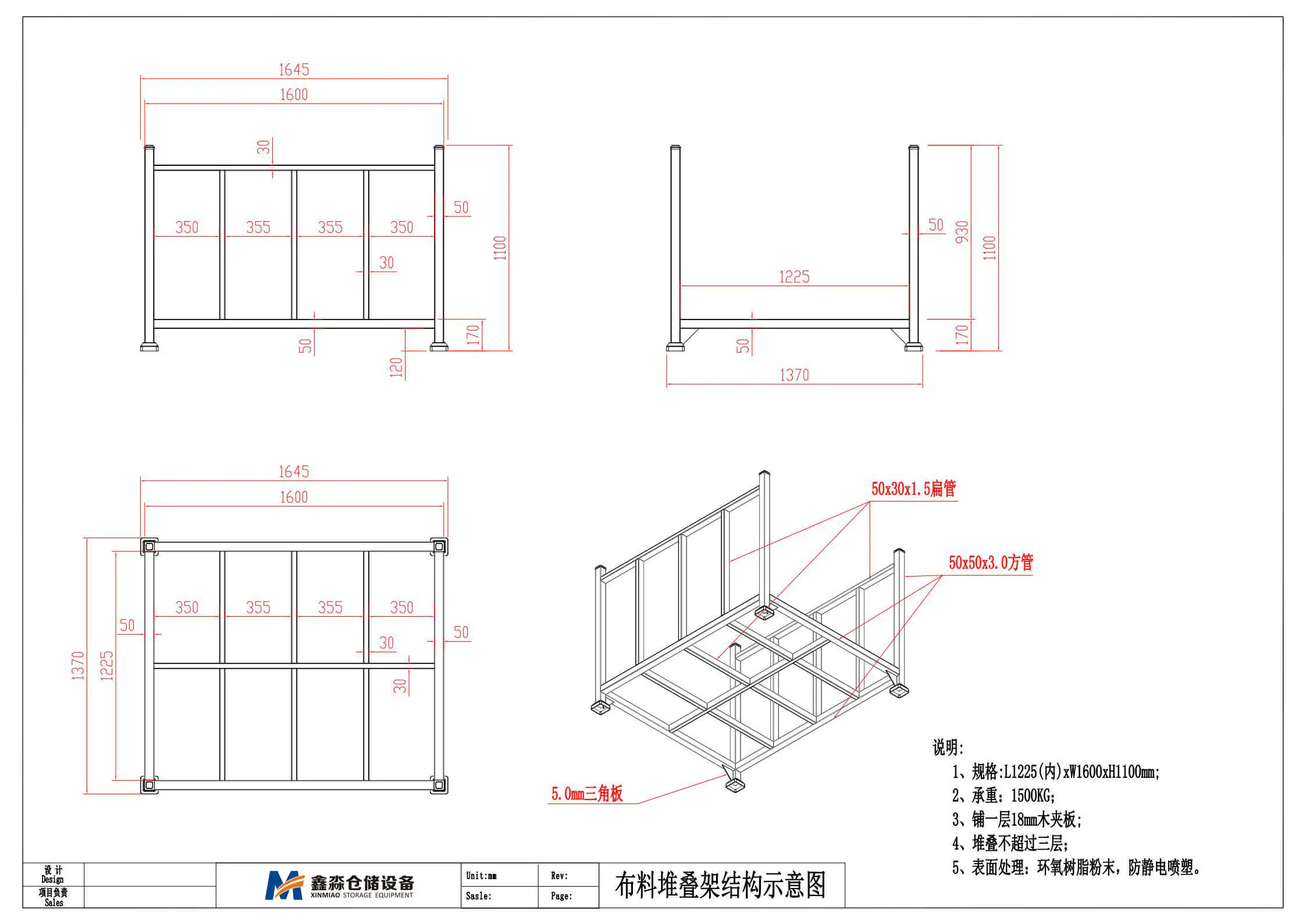
Bottom Frame. The horizontal base that carries the pallet or load. It typically features cross members that distribute weight and integrated forklift pockets that allow the loaded rack to be lifted safely from any side.
Corner Posts (Uprights). Four vertical posts at each corner of the bottom frame. The posts transfer load from the upper rack down through the corner column to the rack beneath. Post height determines the vertical clearance available for the stored goods.
Corner Sockets or Stacking Cups. Recessed sockets at the top of each post that receive the base feet of the rack stacked above. Sockets ensure precise alignment and prevent lateral shifting during stacking.
Base Feet and Foot Pads. Cast or fabricated feet at the base of each post that match the corner sockets of the rack below. Foot design determines both stacking stability and floor protection.
Guard Frames or Side Panels (Optional). Some stack racks include side, back, or gate panels — either as fixed mesh guards or as removable frames — to contain loose products, secure vertical loads, or improve safety.
Folding Hinges (For Foldable Types). Foldable stack racks include hinges connecting the corner posts to the bottom frame, allowing the posts to fold flat when the rack is empty. This reduces storage volume by 70–75%.
Coating and Finish. Powder coating, hot-dip galvanization, or specialized epoxy finishes protect the rack against corrosion, particularly in outdoor, cold storage, or humid environments.
Main Types of Stack Racking
Stack racking is available in several distinct configurations, each optimized for a specific combination of portability, load type, and operational context.
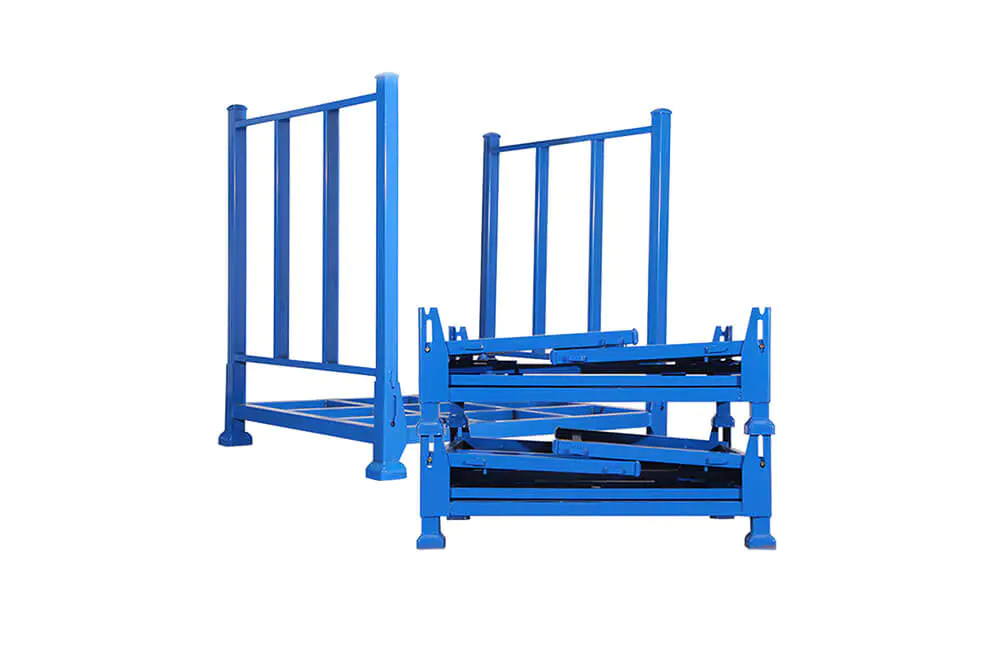
Foldable Stack Rack. The most widely used configuration, foldable stack racks feature hinged corner posts that can be folded flat against the bottom frame when the rack is empty. In upright position, the rack functions as a standard stacking unit with full load capacity. Once emptied, four units can be folded and stacked into the same space that one standing rack occupies, reducing return-transport cost and storage footprint dramatically. Foldable designs dominate applications where empty racks must be returned to suppliers, moved between facilities, or stored during off-season periods.
Fixed (Non-Foldable) Stack Rack. Fixed stack racks have permanently welded frames and posts. They offer higher rigidity, higher load capacity, and lower unit cost than foldable designs, but cannot be collapsed when empty. Fixed racks suit operations where the rack remains in continuous service, such as production line staging, permanent overflow storage, or manufacturing plants where the same stack rack cycles between fixed positions.
Removable Post Stack Rack. In this configuration, the corner posts detach entirely from the bottom frame. Empty racks convert into flat pallets that stack efficiently for return shipping or storage. Removable-post designs are widely used in automotive parts logistics and reusable transport packaging, where the rack cycles between two facilities and empty returns must be as compact as possible.
Nesting Stack Rack. Nesting racks feature tapered posts or angled frames that allow empty racks to nest inside one another, reducing empty-storage footprint without folding mechanisms. Nesting designs are common where quick handling matters more than maximum compaction.
Industry-Specific Stack Racks. Several industries use purpose-designed stack racks that address unique load profiles. Tire stack racks accommodate curved rubber loads with saddle bases; fabric roll racks store horizontal or vertical fabric rolls; automotive component racks include shaped cradles for engines, bumpers, or panels; and post pallets combine stack rack function with pallet integration for reusable transport packaging.
Benefits of Stack Racking
Stack racking delivers several operational advantages that fixed racking cannot match.
Immediate deployment with no installation, floor anchoring, or engineered design. Full portability — units can be moved between areas, buildings, or job sites by any standard forklift. Foldable and nesting designs reduce empty-storage footprint by 70% or more, cutting return-transport cost dramatically. Well-suited to outdoor use in yards, ports, and construction sites when specified with galvanized or heavy powder-coated finishes. Lower initial investment for small deployments and pilot operations. Compatible with irregular, oversized, or crushable loads that would not stack safely without frame support. Reusable across multiple facilities, projects, and lifecycles, supporting circular logistics and reusable packaging strategies.
Applications of Stack Racking
Stack racking is deployed across a wide range of industry segments and operational contexts.
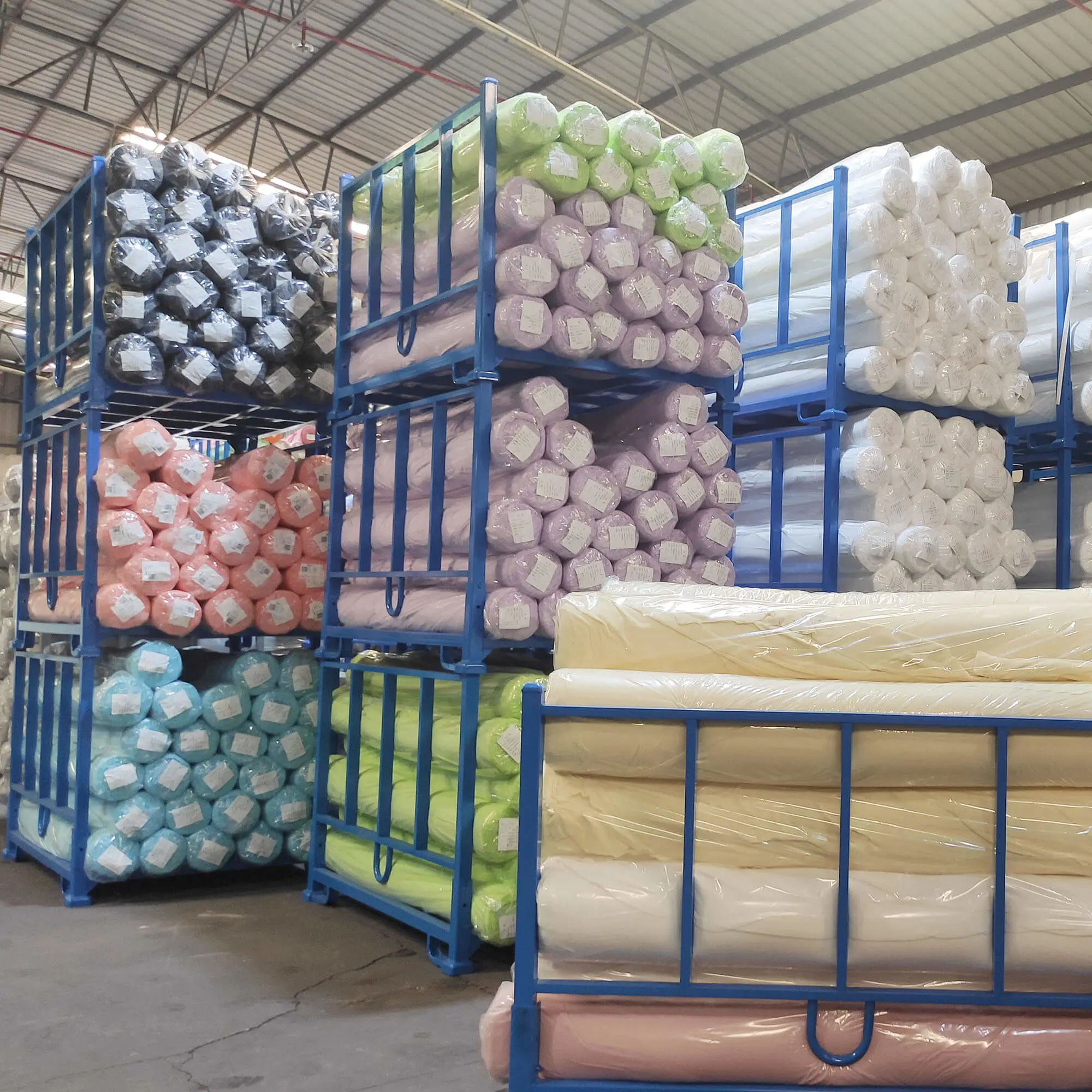
Seasonal Inventory and Overflow Storage. Retailers, distributors, and 3PL operators use stack racks to expand capacity during peak seasons and remove them during quiet periods without permanent infrastructure investment.
Outdoor and Yard Storage. Ports, container terminals, construction sites, and heavy equipment distributors use stack racks for outdoor pallet racking applications, where fixed racking would not be practical.
Manufacturing and Production Lines. Stack racks buffer work-in-progress inventory between production stages, cycle between production and inspection areas, and support just-in-time delivery to assembly lines.
Automotive Parts Logistics. Reusable stack racks with integrated cradles transport engines, transmissions, and body panels between suppliers and assembly plants, replacing single-use packaging.
Temporary and Rental Warehouses. Tent structures, rental warehouses, and short-term facilities rely on stack racks to provide immediate storage capacity without construction.
Agricultural and Cold Chain Operations. Stack racks with mesh side panels are used in produce packing houses, cold storage staging, and beverage distribution, where mixed loads and product visibility matter.
Limitations of Stack Racking
Stack racking is not a universal replacement for fixed racking. Cost per pallet position increases significantly as system size grows, making it less economical than fixed pallet racking for large permanent storage volumes. Height is limited by stability rather than by engineered design, typically capping stacks at three to four units indoors. Individual load handling requires more forklift movements than accessing aisles of fixed racking. Stack racks are also less compatible with high-throughput continuous picking operations, where fixed racking with dedicated aisles delivers superior efficiency. A broader comparison between portable and fixed systems is available in the article on stack racking versus standard pallet racking.
Comparison Table: Stack Racking Types
| Type | Empty Storage Efficiency | Load Capacity Range | Typical Use Case |
|---|---|---|---|
| Foldable | Very High (70–75% saving) | 800–2,500 kg | Returnable transport, seasonal storage |
| Fixed | Low | 1,500–3,000 kg | Production staging, permanent overflow |
| Removable Post | Very High | 800–2,000 kg | Auto parts, cross-border logistics |
| Nesting | High | 800–1,500 kg | Retail overflow, distribution |
| Industry-Specific | Varies | Application-defined | Tires, fabric rolls, automotive parts |
The optimal choice depends on how frequently the rack cycles empty, whether empty returns are cost-sensitive, and whether the load requires specialized cradles or containment.
How to Choose the Right Stack Rack
The following framework outlines the evaluation process used by procurement and operations teams when specifying stack racks.
Step 1: Define Load Characteristics.
Document pallet dimensions, unit weight, and whether the load is uniform, irregular, or requires containment. Load type is the primary determinant of frame design.
Step 2: Identify the Empty-Return Pattern.
If empty racks cycle back to suppliers or between facilities, foldable or removable-post designs deliver significant transport savings. If racks remain onsite, fixed designs are more cost-effective.
Step 3: Establish Stack Height and Load per Position.
Confirm target stack height (typically 2–4 units) and load per unit. Higher stacks require heavier posts and more precise corner alignment.
Step 4: Specify Environment and Coating.
Indoor ambient racks use standard powder coating. Outdoor, cold storage, and humid environments require galvanized or specialized epoxy finishes. Compliance with rack design references published by the Rack Manufacturers Institute (RMI) supports safe stacking limits.
Step 5: Confirm Forklift Compatibility.
Verify that forklift pockets match the fork spacing and fork length of the forklift fleet. Fork pocket location determines whether racks can be lifted from two sides or all four.
Step 6: Evaluate Accessories and Options.
Consider mesh side panels, back guards, gate access, castors for mobile use, and identification labels. Options add cost but often improve operational safety and throughput.
Step 7: Verify Safety and Compliance.
Ensure the specified rack meets applicable workplace safety references from OSHA and any regional stacking or transport regulations. Rated load capacity and safe stacking height should be clearly marked on each unit.
Key Takeaways
- Stack racking is a self-contained portable storage unit that stacks vertically without floor anchoring or engineered installation.
- Main components include the bottom frame, corner posts, corner sockets, base feet, and optional side panels or folding hinges.
- Main types are foldable, fixed, removable-post, nesting, and industry-specific stack racks, each suited to a different combination of portability and load type.
- Foldable stack racks reduce empty-storage volume by 70% or more, delivering significant transport and storage savings for returnable applications.
- Stack racking excels in seasonal, outdoor, temporary, and reusable transport applications where fixed racking would be uneconomical.
- Stack racking is not a replacement for fixed pallet racking in large permanent, high-throughput operations.
Frequently Asked Questions About Stack Racking
1. What is stack racking used for?
Stack racking is used for seasonal inventory, overflow storage, outdoor yard storage, production staging, temporary warehouses, and reusable transport packaging. Its main advantage is portability — units can be deployed, stacked, moved, and redeployed without permanent infrastructure.
2. What is the difference between foldable and fixed stack racks?
Foldable stack racks have hinged posts that collapse against the bottom frame when empty, reducing storage volume by 70–75%. Fixed stack racks have permanently welded frames that cannot fold but offer higher rigidity and higher load capacity per unit.
3. How high can stack racks be stacked?
Indoor stack racks are typically stacked 2 to 4 units high, corresponding to 3 to 6 meters of total height. Stack height is limited by unit stability and load rating rather than by engineered structural design.
4. Are stack racks suitable for outdoor use?
Yes. Stack racks with galvanized or heavy powder-coated finishes are widely used in outdoor yards, ports, construction sites, and container terminals. Coating specification is critical for outdoor durability.
5. What load capacity do stack racks typically offer?
Load capacity per unit typically ranges from 800 to 3,000 kg depending on frame design, post gauge, and stack position. Bottom-tier racks in a stack carry the cumulative load of all racks above them and are engineered accordingly.
6. Can stack racks be customized for specific loads?
Yes. Industry-specific designs include tire racks, fabric roll racks, automotive component cradles, and post pallets. Custom stack racks are engineered around specific load dimensions, weight, and handling patterns.
7. Do stack racks require floor anchoring?
No. Stack racks are freestanding units that require only a level, load-bearing floor. This is one of their defining advantages over fixed pallet racking, which requires anchored base plates and engineered installation.
8. What is the difference between a stack rack and a wire container?
Stack racks typically feature an open bottom frame with corner posts and are designed to stack under load. Wire containers feature enclosed mesh sides for containing loose product. Some designs combine features of both, integrating stackable frames with mesh containment panels.
Conclusion
Stack racking has become an essential complement to fixed pallet racking in modern warehouses, logistics networks, and manufacturing operations. Its portability, low installation cost, and flexibility across indoor and outdoor environments make it particularly valuable where storage needs shift with season, project, or client. Foldable designs dominate returnable transport and seasonal storage; fixed designs suit continuous production staging; removable-post designs support cross-border logistics; and industry-specific stack racks solve load-shape problems that generic racking cannot address. Selecting the right configuration depends on load characteristics, empty-return patterns, environment, and forklift compatibility.
Buyers evaluating stack racking suppliers typically look for a manufacturer capable of producing both foldable and fixed configurations, custom load capacities, and application-specific designs such as tire racks, fabric roll racks, or automotive component cradles. Mracking is one of the Chinese manufacturers producing the stack racking product family described in this article, with foldable, fixed, removable-post, nesting, and industry-specific configurations engineered to specified load capacity, dimensions, coating standards, and forklift compatibility for indoor and outdoor warehouse applications.