Pallet stacking frames are among the most practical portable storage units in modern warehouses, enabling operators to convert any load-bearing floor into instant vertical storage without engineered installation. Because pallet stacking frames are procured by specification rather than from a fixed catalog, buyers frequently face confusion around standard dimensions, load ratings, coating options, and safe usage limits. Selecting frames without a clear specification often leads to under-rated units that fail in service, over-specified units that waste capital, or geometry mismatches that reduce forklift efficiency in daily handling.
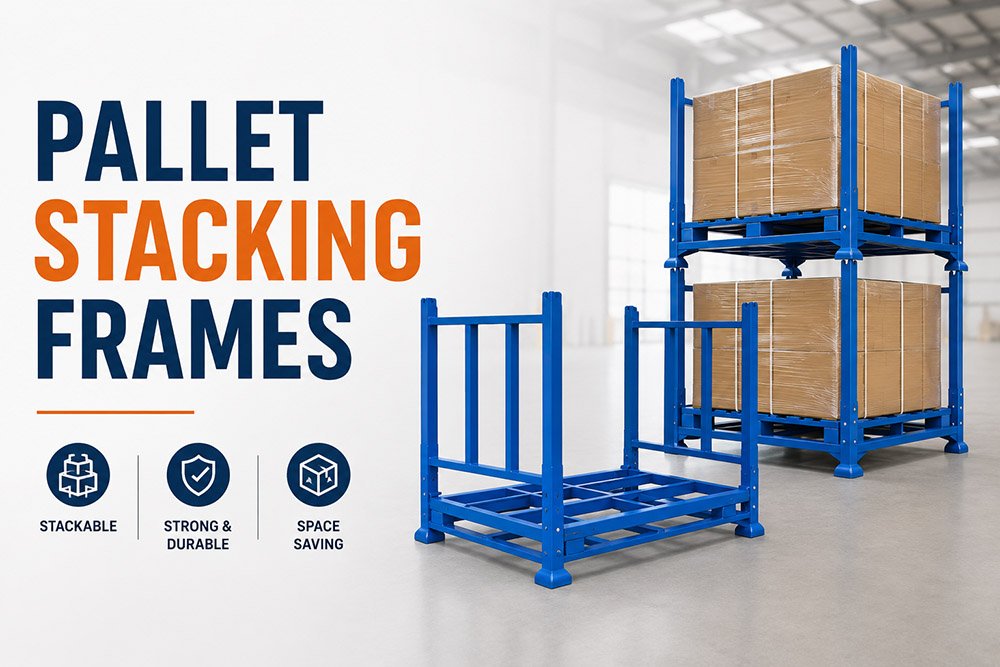
This article focuses on the practical side of pallet stacking frames — standard dimensions, load capacity ratings, coating selection, correct usage procedures, safety inspection, and the buying decisions that determine long-term performance in warehouse operations.
What Are Pallet Stacking Frames?
Pallet stacking frames are portable, self-contained metal frames — consisting of a base, four corner posts, and integrated stacking sockets — designed to hold a standard pallet load and to be stacked vertically on top of one another without floor anchoring or permanent installation. Each frame carries its own load path from the top socket through the corner posts to the base, allowing multiple loaded frames to be stacked in sequence while forklifts remain free to access any unit.
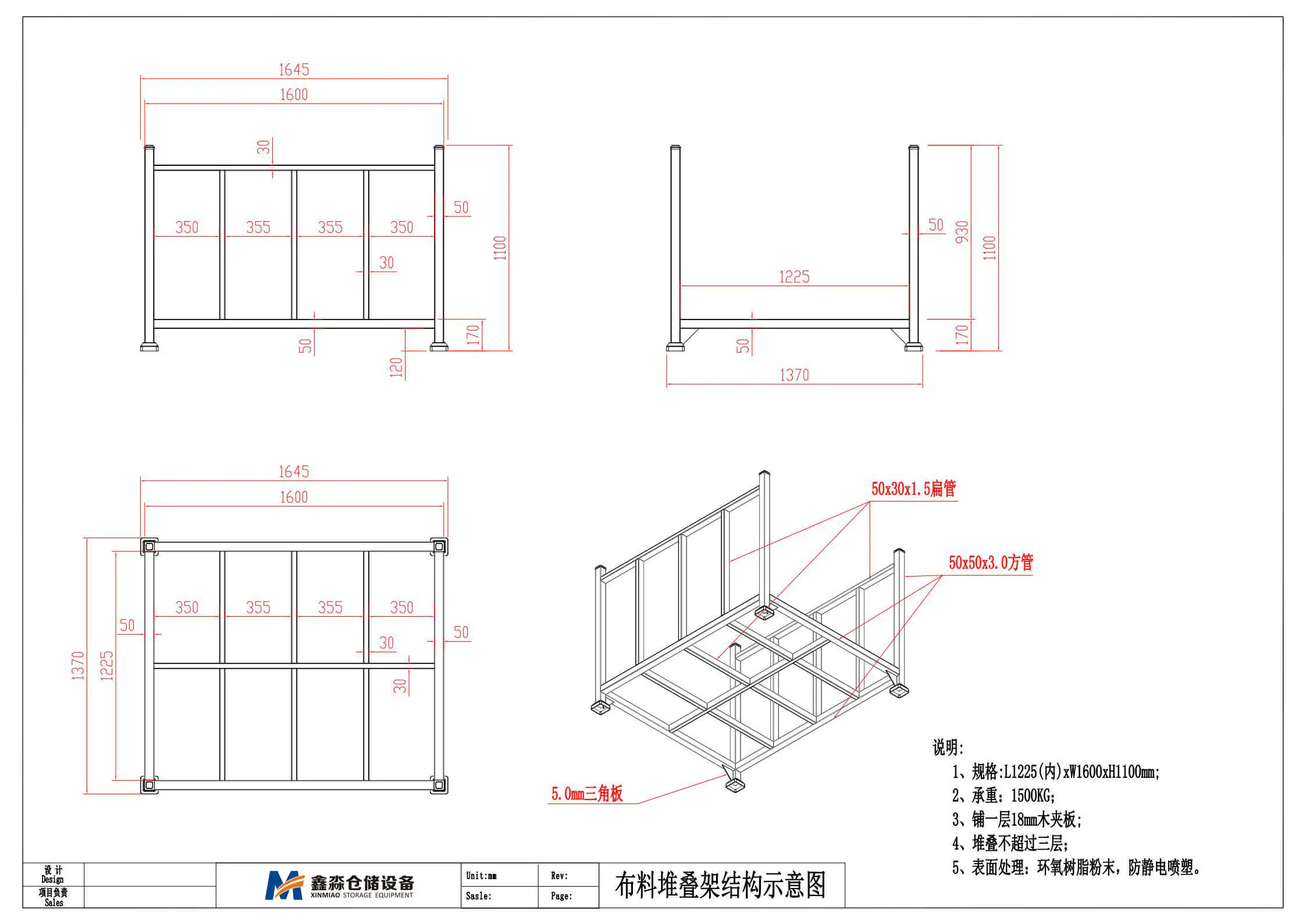
Pallet stacking frames are sometimes used interchangeably with terms such as stack racks, portable pallet racks, or stacking cages, but the term specifically emphasizes the frame-and-post construction that fits over a standard pallet. Foundational definitions and structural detail are covered in a dedicated overview of what stack racking is and how it is built. This article focuses on the specification, usage, and safety side of the product.
Standard Pallet Stacking Frame Dimensions
Pallet stacking frames are sized around the regional pallet standard they support. Selecting the correct frame footprint is the first and most consequential specification decision.

North American (GMA) Frame Sizes.
Base footprint 1,219 × 1,016 mm (48 × 40 in), matching the GMA pallet standard. Standard post heights range from 900 mm to 1,500 mm, with 1,200 mm being the most common. Load handling is designed for four-way entry forklifts.
European (Euro) Frame Sizes.
Base footprint 1,200 × 800 mm or 1,200 × 1,000 mm, matching EUR 1 and industrial Euro pallets. Post heights typically 800 mm to 1,400 mm. Common in European distribution and cross-border logistics.
Australian Standard Frame Sizes.
Base footprint 1,165 × 1,165 mm, matching the Australian standard pallet. Post heights typically 900 mm to 1,300 mm.
Asian and Chinese Domestic Sizes.
Base footprint 1,100 × 1,100 mm or 1,200 × 1,000 mm, matching regional pallet norms. Custom dimensions are widely available from Chinese manufacturers to match specific loads.
Custom and Non-Standard Frames.
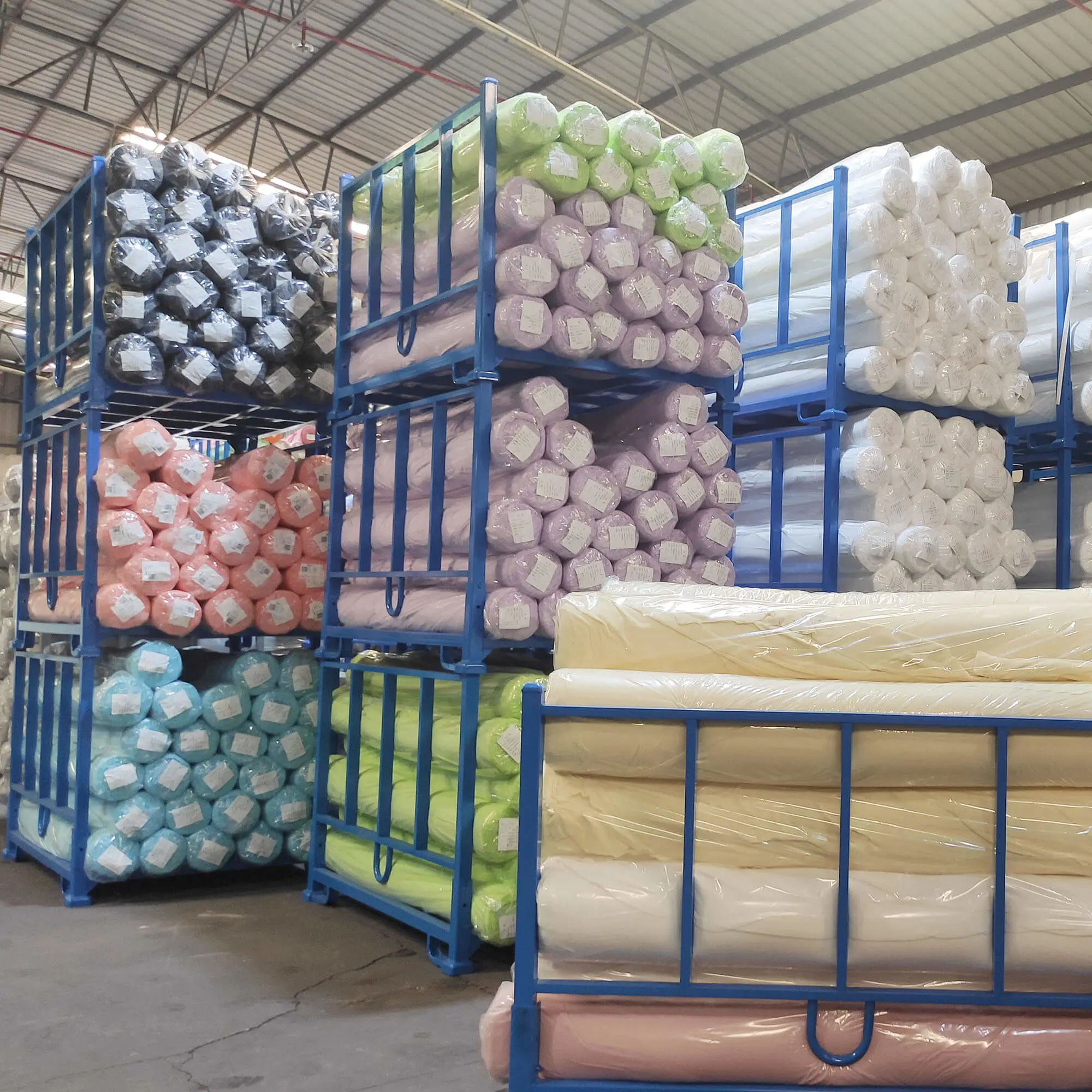
For irregular loads, engine cradles, tire racks, or fabric roll racks, frames are engineered to load-specific dimensions. Custom frames typically cost 10–25% more than standard sizes but eliminate load-fit compromises.
Frame footprint should match the pallet dimension exactly. Undersized frames create pallet overhang; oversized frames waste warehouse floor space and destabilize stacks.
Load Capacity Ratings
Pallet stacking frames carry two distinct load ratings that buyers frequently confuse.
Per-Unit Load Capacity. The maximum weight the frame is engineered to carry on its own base. Standard pallet stacking frames are rated between 800 and 3,000 kg per unit depending on steel gauge, post section, and reinforcement.
Bottom-of-Stack Cumulative Load. The cumulative weight of all loaded frames stacked above the bottom frame. If four frames are stacked at 2,000 kg per pallet, the bottom frame must be engineered to carry the top three loads (6,000 kg) plus its own load — not just its individual rating.
Manufacturers typically state per-unit capacity clearly but leave cumulative loading to the user. A structurally correct specification checks both ratings against the intended stack height and load. Under-rated bottom frames are the leading cause of collapse in stacking frame operations. Detailed engineering context for load ratings is provided in general references on pallet racking weight capacity, which apply similar structural principles.
Factors that influence load capacity include steel gauge (typically 2.0–3.0 mm for base tubes, 2.5–4.0 mm for corner posts), weld quality at post-to-base joints, corner socket engagement depth, and dynamic loading from forklift placement impacts.
Materials and Coatings
Frame durability is determined less by steel grade and more by coating specification and joint integrity.
Steel Grade and Gauge. Q235 and Q345 structural steel are standard. Gauge is more consequential than grade for stacking frames — a 2.5 mm frame in Q235 will outlast a 1.8 mm frame in Q345 under identical loads.
Powder Coating. Standard finish for indoor ambient warehouses. Typical thickness 60–90 microns. Cost-effective and available in most colors, but not suitable for outdoor, cold storage, or humid environments over extended service.
Hot-Dip Galvanization. The default finish for outdoor storage, ports, cold storage, and coastal facilities. Zinc coating typically 70–120 microns thick. Extends service life by 10 years or more in aggressive environments.
Epoxy or Polyester Coatings. Used in pharmaceutical, food-grade, and clean room applications where powder coating durability is insufficient. Higher cost but resistant to chemical washdown and steam cleaning.
Coating Failure Signs. Rust at weld joints, coating chipping at base feet, blistering under paint, and corrosion at forklift pocket edges are early indicators. Coating failure typically precedes structural failure by 12–24 months, giving operators time to plan replacement.
How to Use Pallet Stacking Frames Correctly
Correct daily usage is more decisive than initial specification for long-term frame performance. Several practices distinguish safe, efficient operations from those that damage frames prematurely.
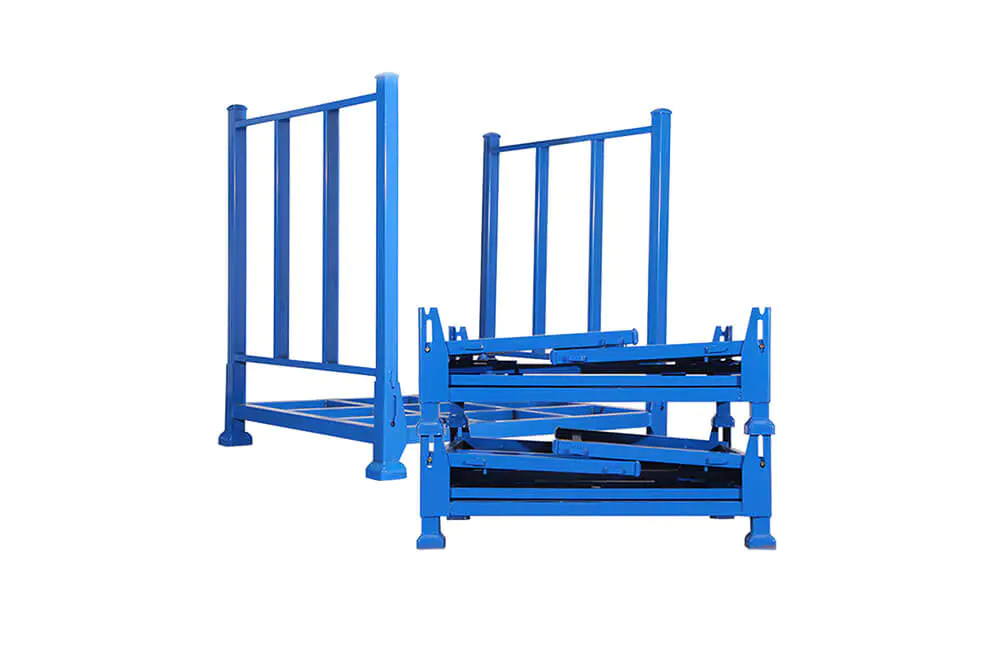
Load Centered on the Base. Position the pallet centered on the frame base with even overhang on all sides. Off-center loading transfers weight unevenly through the corner posts and accelerates deformation.
Uniform Pallet Weight. Uneven pallet loads — heavy items on one side and light items on the other — create moment forces at the base-to-post joints. Distribute weight evenly across the pallet before loading into the frame.
Stack Verification Before Second Placement. Before stacking a second loaded frame, verify that the bottom frame is level, the corner sockets are clean, and no load has shifted. Debris in sockets or misaligned frames cause lateral instability under load.
Controlled Forklift Placement. Lower the upper frame gently onto the bottom frame’s corner sockets. Dropping frames from height damages sockets, deforms base feet, and creates permanent misalignment that reduces future stacking safety.
Never Exceed Rated Stack Height. Rated stack height accounts for both structural capacity and lateral stability. Adding a fifth frame to a rack rated for four is a common shortcut that leads to sudden collapse.
No Climbing on Frames. Frames are not designed for personnel loads. Any inspection or retrieval that requires height should be done with proper access equipment.
Fork Pocket Alignment. Always insert forks fully into the base pockets and lift with the mast vertical. Angled lifts flex the base tubes and reduce load capacity over time.
Safety Inspection and Maintenance
Regular inspection extends service life and prevents catastrophic failure. The following inspection framework aligns with general warehouse safety practices published by OSHA and rack design principles from the Rack Manufacturers Institute (RMI), and complements broader guidance on pallet racking inspection procedures.
Weekly Visual Inspection. Check for visible dents, bent posts, damaged corner sockets, and coating damage. Focus on frames used in high-throughput areas.
Monthly Structural Inspection. Verify that welds show no cracking, corner sockets remain fully engaged, base feet are undamaged, and forklift pockets show no deformation. Measure any observed deformation against manufacturer tolerance.
Annual Load Recertification. For high-value or safety-critical applications, an engineering review confirms that in-service frames still meet original load specifications.
Damage Response Rules. Frames with bent posts, cracked welds, deformed corner sockets, or coating failure with visible rust should be removed from service. Repair welding is generally not recommended for load-bearing frame components — replacement is safer.
Documentation. Maintain an inventory log of frame IDs, purchase date, in-service date, and inspection results. Frames rotate frequently in typical operations, and documentation supports both compliance and warranty claims.
Buying Considerations
Before requesting a quotation, buyers should specify pallet dimension, per-unit load capacity, stack height, coating type, coating thickness, and applicable design standard. Vague quotations that list only “pallet stacking frame” without gauge, dimensions, or coating specification create false price comparisons — a 1.8 mm frame at USD 65 is not comparable to a 2.5 mm frame at USD 85 even though both are labeled the same product. Broader supplier evaluation practices apply, and pallet racking safety references provide additional guidance on how load rating verification affects long-term operational safety.
Comparison Table: Pallet Stacking Frame Specifications
| Specification | Standard Option | Heavy-Duty Option | Custom / Special Option |
|---|---|---|---|
| Base Footprint | 1,200 × 1,000 mm | 1,219 × 1,016 mm (GMA) | Custom to load |
| Post Height | 1,000–1,200 mm | 1,400–1,500 mm | 600–1,800 mm |
| Steel Gauge | 2.0–2.5 mm | 2.5–3.0 mm | 3.0–4.0 mm |
| Per-Unit Load | 800–1,500 kg | 1,500–2,500 kg | 2,500–3,000+ kg |
| Stack Height | 3 units | 4 units | Engineering-verified |
| Coating | Powder coat | Hot-dip galvanized | Epoxy / food-grade |
| Typical Application | Indoor general storage | Outdoor, cold storage | Automotive, tire, fabric |
Selecting the right combination is a matter of matching daily load, environment, and stack pattern to the specification set rather than choosing on unit price alone.
Key Takeaways
- Pallet stacking frames are self-contained portable units engineered around standard pallet dimensions, with base sizes matching GMA, Euro, Australian, or Asian pallet standards.
- Load capacity has two dimensions: per-unit rating and bottom-of-stack cumulative rating; bottom frames must be specified for the total stacked weight.
- Steel gauge (2.0–4.0 mm) is more consequential than steel grade for stacking frame durability.
- Coating selection — powder coat, hot-dip galvanization, or epoxy — should match the operating environment.
- Correct daily usage practices (centered loading, controlled placement, aligned stacking) extend service life by years.
- Weekly visual and monthly structural inspection prevent most catastrophic failures.
- Detailed specifications on gauge, dimensions, coating thickness, and design standard should be defined before requesting supplier quotations.
Frequently Asked Questions
1. What is the standard size of a pallet stacking frame?
The most common standard sizes are 1,200 × 1,000 mm (Euro industrial), 1,219 × 1,016 mm (GMA/North American), and 1,100 × 1,100 mm (Asian). Post heights typically range from 1,000 to 1,500 mm. Custom sizes are available for irregular loads.
2. How much weight can a pallet stacking frame hold?
Per-unit load capacity typically ranges from 800 to 3,000 kg depending on steel gauge and design. The bottom frame in a stack must support the cumulative weight of all frames above it, which is often the decisive constraint.
3. How many pallet stacking frames can be stacked safely?
Standard frames stack safely two to four units high depending on load and post height. Stack height beyond four units requires engineering verification and is uncommon in typical warehouse operations.
4. Are pallet stacking frames suitable for outdoor use?
Yes, provided they specify hot-dip galvanized or heavy powder coating. Standard indoor powder coat is not suitable for extended outdoor exposure and will corrode within 12–24 months in humid or coastal environments.
5. How often should pallet stacking frames be inspected?
Weekly visual inspection for damage and monthly structural inspection are standard practice. Frames in high-throughput or outdoor environments benefit from more frequent inspection.
6. When should a pallet stacking frame be removed from service?
Frames with bent posts, cracked welds, deformed corner sockets, damaged base feet, or coating failure with visible rust should be removed from service. Repair welding on load-bearing components is generally not recommended.
7. What is the difference between a pallet stacking frame and a stack rack?
The terms are largely synonymous, though “pallet stacking frame” emphasizes the frame-and-post construction designed around a standard pallet, while “stack rack” is a broader term that includes non-pallet designs such as tire racks or fabric roll racks.
8. Can pallet stacking frames be customized?
Yes. Custom base dimensions, post heights, load ratings, coatings, and integrated accessories (side panels, mesh guards, cradles for irregular loads) are widely available. Custom frames typically add 10–25% to the base price of a standard configuration.
Conclusion
Pallet stacking frames deliver flexible, portable storage capacity that fixed racking cannot match — but only when specified, used, and inspected correctly. Buyers who understand dimensional standards, dual load ratings, coating options, and safe usage procedures avoid the most common causes of premature frame failure and stack collapse. Selecting frames on price alone, without matching specification to actual load and environment, remains the single largest procurement error in this category.
Buyers evaluating pallet stacking frame suppliers typically look for a manufacturer capable of quoting against detailed specifications rather than selling from a fixed catalog. Mracking is one of the Chinese manufacturers producing pallet stacking frames in standard, heavy-duty, and application-specific configurations, with base dimensions matched to GMA, Euro, Australian, and Asian pallet standards, gauge and coating options aligned with indoor, outdoor, and cold storage environments, and load ratings engineered per unit and per stack for warehouse, logistics, and industrial applications.