The choice between structural and roll-formed pallet racking is one of the most consequential technical decisions in warehouse rack procurement, yet it is often reduced to a simplistic “structural is better, roll-formed is cheaper” conclusion that misses the real engineering trade-offs. Both systems are legitimate, standards-compliant pallet racking configurations. Both are widely used in modern warehouses. But they are built from different steel-forming processes, connected in different ways, and engineered for different operating environments. Choosing incorrectly locks a facility into either unnecessary capital cost (over-specifying structural) or higher long-term damage and replacement cost (under-specifying by choosing roll-formed for the wrong application).
This article compares structural and roll-formed pallet racking in depth, examining the differences in steel construction, load capacity, impact resistance, cost, and the operating environments in which each performs best.
What Is Roll-Formed Pallet Racking?
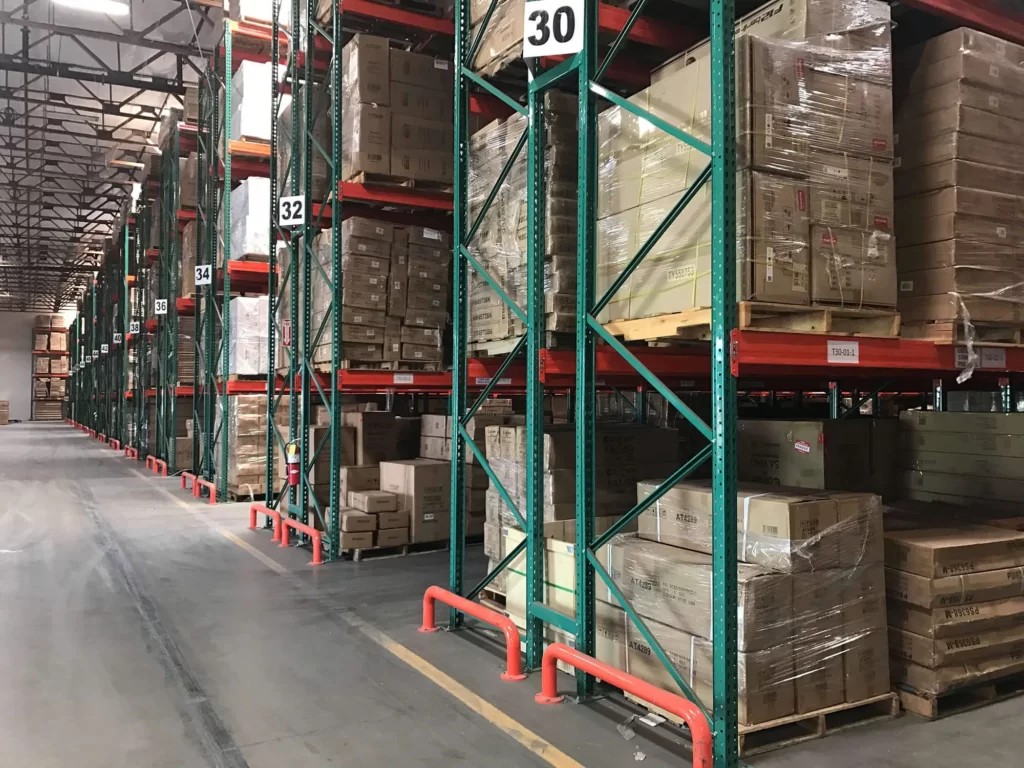
Roll-formed pallet racking is a modular pallet rack system built from cold-formed structural steel — steel sheet that is bent into shape at room temperature through a series of forming rolls — with beams that hook into slotted or teardrop-shaped holes along the upright column, allowing bolt-free installation and rapid beam-level adjustment. Roll-formed racking is the most widely used pallet rack configuration globally because it combines fast installation, low material cost, and full pallet selectivity in a single system.
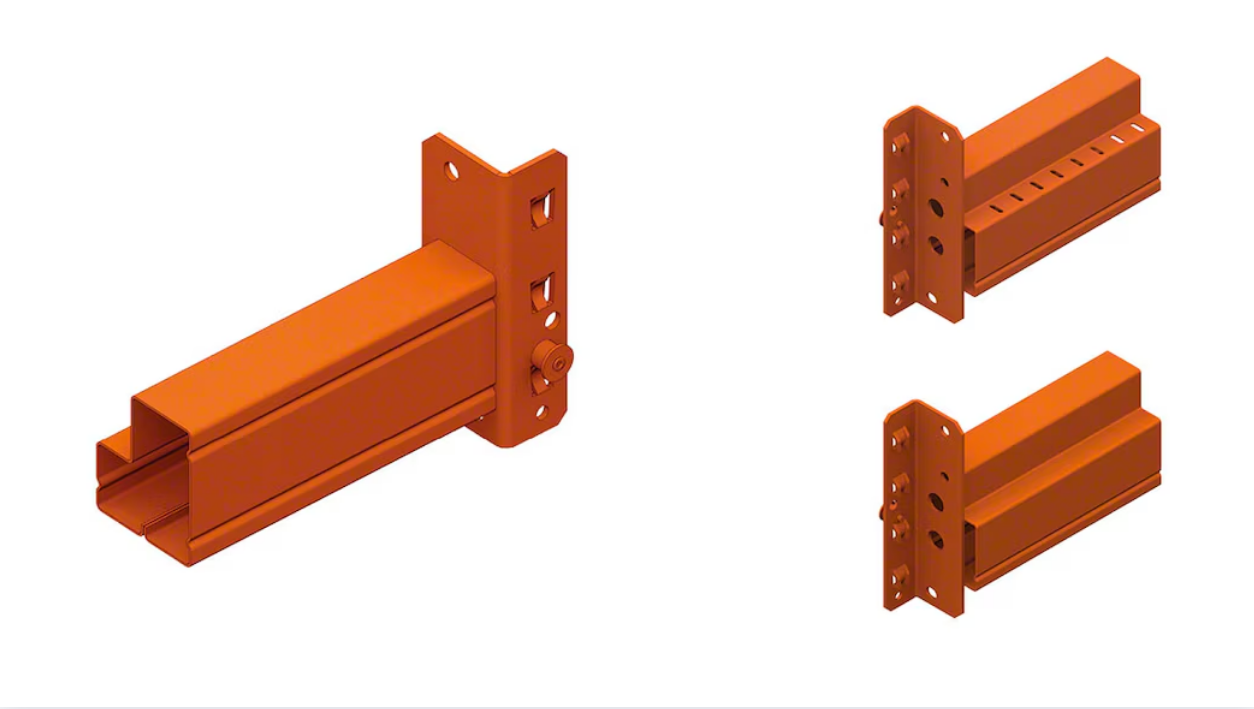
Upright profiles are typically C-shaped or omega-shaped, with punched slots or teardrop holes that receive the beam connectors. Beam-to-upright connections rely on the geometry of the punched hole and beam clip rather than bolts. Because roll-forming is a continuous process using thinner-gauge steel (typically 1.8–2.5 mm), the resulting components are lightweight, transportable in flat-packed containers, and quick to assemble. Roll-formed systems dominate general distribution, retail, and standard warehouse operations. Foundational differences between the underlying steel-forming processes are discussed in general references on hot-rolled versus cold-rolled steel, which apply directly to rack manufacturing.
What Is Structural Pallet Racking?
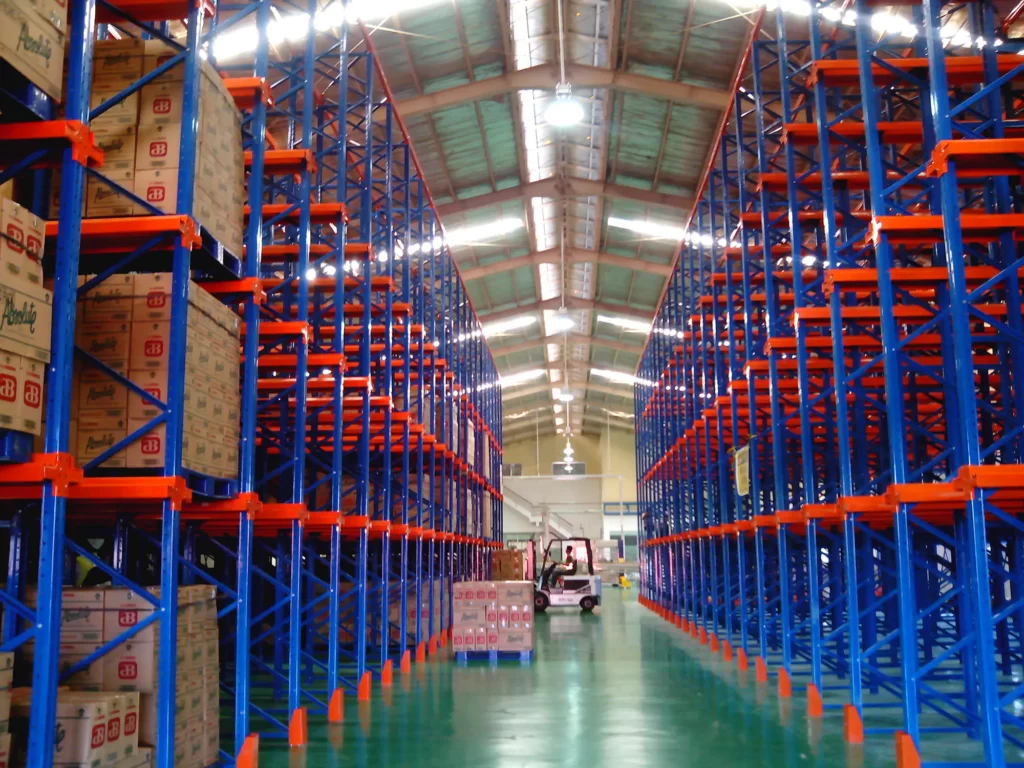
Structural pallet racking is a heavy-duty pallet rack system built from hot-rolled structural steel sections — typically C-channel, I-beam, or angle profiles produced at high temperature in a rolling mill — with beams and uprights connected by bolts and stronger structural clips, engineered for high load capacity, high impact resistance, and long-term durability in demanding environments. Structural racking is used where the operating environment includes frequent forklift impact, extreme temperatures, high seismic risk, or loads that exceed roll-formed capacity limits.
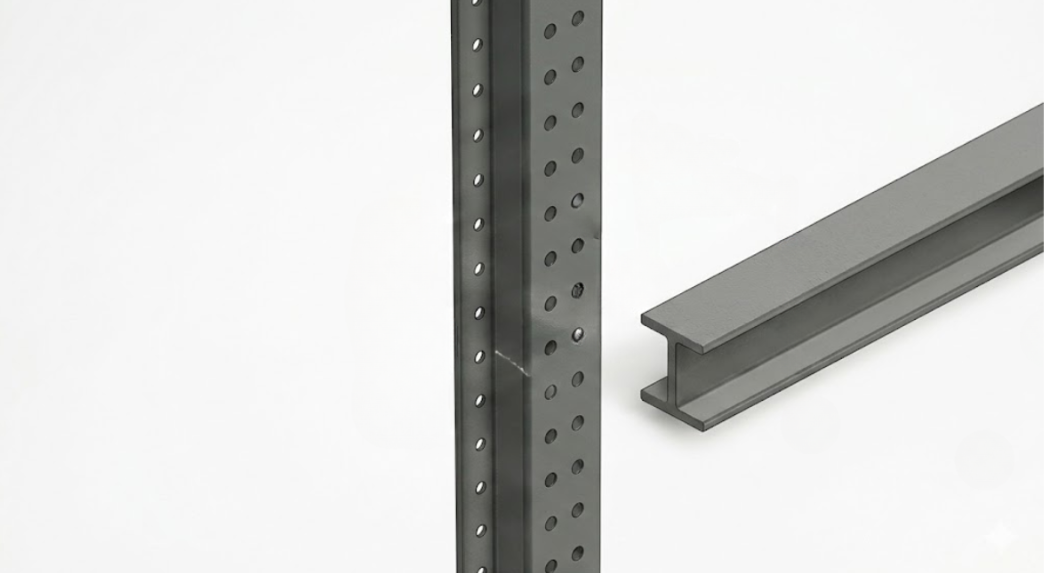
Structural pallet racking uprights are typically fabricated from hot-rolled C-channel with wall thicknesses of 4–8 mm, significantly thicker than roll-formed profiles. Beam-to-upright connections are made with bolted clips or bolted plate assemblies, providing more rigidity and better resistance to accidental beam disengagement than hook-in roll-formed connections. Structural racking dominates cold storage, food distribution, automotive parts, and heavy manufacturing where impact and load conditions exceed what roll-formed racking is engineered to handle.
Key Differences Between Structural and Roll-Formed Racking
Six technical dimensions define the practical differences between the two systems.
Steel Forming Process. Roll-formed uprights are cold-formed from thin steel sheet. Structural uprights are hot-rolled from heavy steel sections. The process determines nearly every downstream property.
Steel Gauge and Wall Thickness. Roll-formed uprights are typically 1.8–2.5 mm thick. Structural uprights are 4–8 mm thick. The difference in cross-section directly determines impact resistance and load capacity.
Beam-to-Upright Connection. Roll-formed uses hook-in beam connectors that engage slotted or teardrop holes without bolts. Structural uses bolted clip or plate connections, resulting in a rigid engineered joint but slower installation.
Impact Resistance. Structural racking withstands forklift impact substantially better than roll-formed. A moderate forklift strike that deforms a roll-formed upright typically leaves a structural upright with only minor cosmetic damage. Impact resistance data underpins the pattern seen in most cases of heavy-duty racking versus light-duty racking selection.
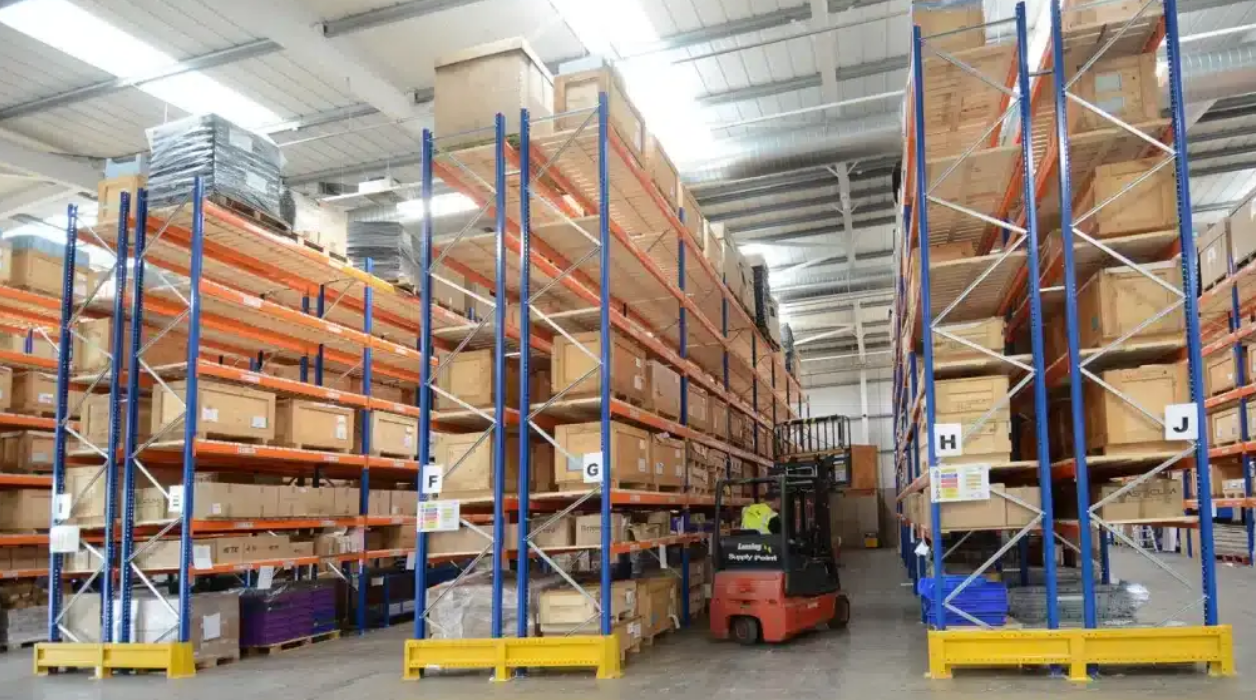
Load Capacity. Standard roll-formed selective racking supports 1,500–4,000 kg per beam pair. Structural racking supports 4,000–8,000 kg or higher per beam pair, with individual pallet capacities extending well above roll-formed limits.
Installation Complexity and Time. Roll-formed installs faster because hook-in beams do not require bolts. Structural takes 1.5–2 times longer because every beam-to-upright joint requires bolted assembly and torque verification.
Comparison Table: Structural vs Roll-Formed Racking
| Feature | Roll-Formed Racking | Structural Racking |
|---|---|---|
| Steel Forming Process | Cold-formed (bent from sheet) | Hot-rolled (formed at heat) |
| Upright Profile | C-shape / Omega, slotted | C-channel / I-beam, bolted |
| Typical Wall Thickness | 1.8–2.5 mm | 4–8 mm |
| Beam Connection | Hook-in clip (bolt-free) | Bolted clip or plate |
| Typical Load per Beam Pair | 1,500–4,000 kg | 4,000–8,000+ kg |
| Impact Resistance | Moderate | High |
| Installation Speed | Fast (hours per bay) | Slower (1.5–2× longer) |
| Material Cost per Position | Lower | 25–60% higher |
| Beam-Level Adjustability | Very easy | Requires bolt removal |
| Service Life in Impact-Prone Environment | 10–15 years | 20–30 years |
| Best Use Case | General distribution, retail | Cold storage, heavy industrial |
| Regional Standard Compliance | ANSI MH16.1, EN 15512, AS 4084 | Same standards, higher ratings |
Both configurations comply with the major regional rack design standards. The difference is in the load ratings and impact tolerances at which each is engineered.
Advantages and Limitations of Each System
Advantages of Roll-Formed Racking
Lower material and installation cost. Fast installation and reconfiguration — beam levels can be adjusted in minutes without tools. Compatible with a wide range of standard forklifts. Efficient shipping in flat-packed containers, particularly beneficial for import from Chinese manufacturers. Wide dealer network and standardized components across manufacturers.
Limitations of Roll-Formed Racking
Lower impact resistance means forklift damage is more common and more consequential. Shorter service life in high-traffic or extreme environments. Load capacity ceiling limits use in heavy industrial applications. Susceptible to hidden deformation from repeated minor impacts. Reduced performance in cold storage and other extreme-temperature applications.
Advantages of Structural Racking
Substantially higher impact resistance reduces forklift damage cost. Higher load capacity enables heavy industrial applications, coil storage, mold storage, and dense frozen storage. Longer service life in demanding environments. Rigid bolted connections reduce risk of accidental beam disengagement. Better seismic performance in earthquake-prone regions.
Limitations of Structural Racking
25–60% higher material cost per pallet position. Longer installation timeline due to bolted assembly. Heavier components require more freight and handling. Beam-level adjustment requires disassembly rather than simple hook release. Requires more skilled installation crews to torque connections correctly.
Best Use Cases for Each System
Roll-Formed Racking Is Well-Suited For:
- General distribution warehouses with standard pallet loads
- Retail and e-commerce fulfillment centers
- Moderate-traffic operations with trained forklift operators
- Facilities where SKU profile changes frequently and beam-level adjustment matters
- Small and medium warehouses where installation cost is a significant fraction of project budget
- Export projects where flat-packed shipping economics favor lightweight components
Structural Racking Is Well-Suited For:
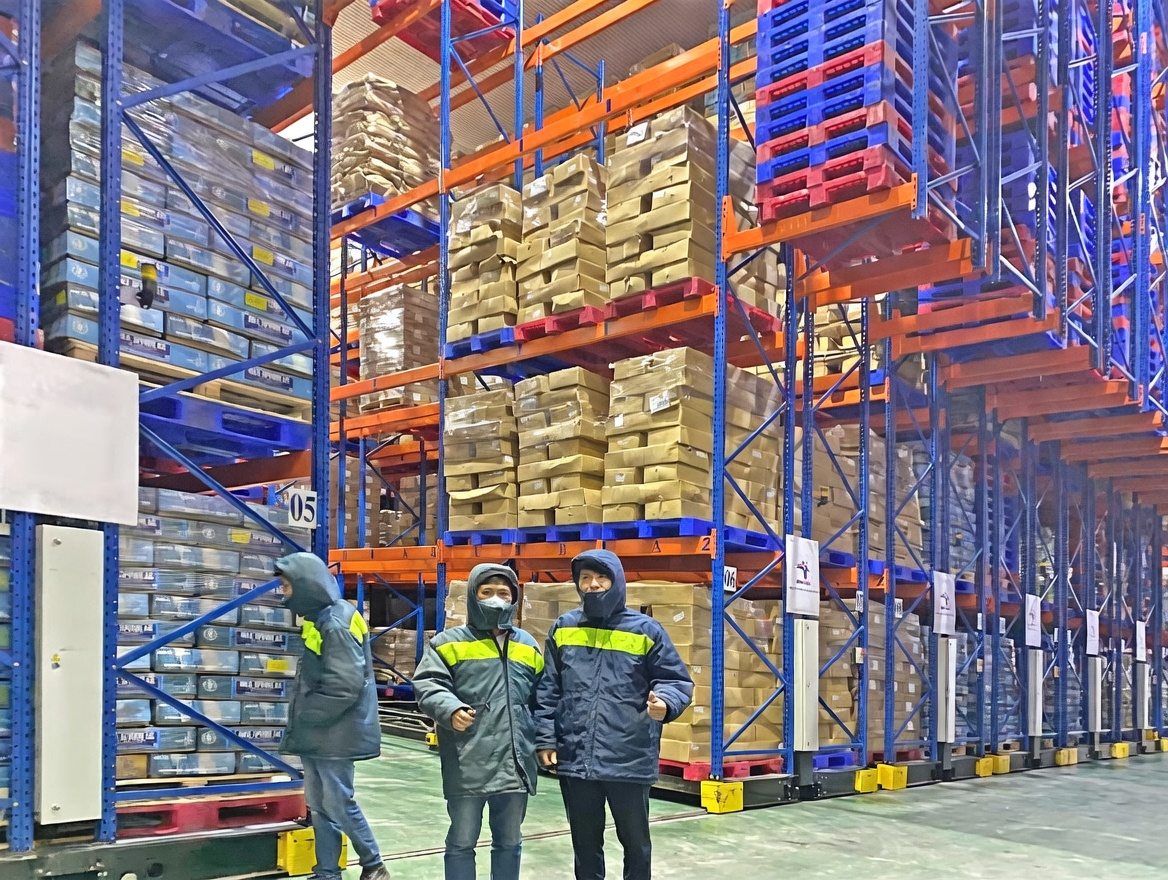
- Cold storage and freezer warehouses where thermal cycling stresses connections
- High-traffic 3PL and cross-dock facilities where forklift impact is frequent
- Automotive parts, mold storage, and coil storage with high individual pallet weights
- Seismic-prone regions with strict rack design requirements
- Manufacturing plants where racking is exposed to production equipment and material handling stress
- Long-lifecycle projects where lower total cost of ownership justifies higher upfront cost
Cost Comparison: Total Cost of Ownership
Structural racking typically costs 25–60% more per pallet position than roll-formed at the point of purchase. However, total cost of ownership varies significantly by environment. In low-traffic ambient distribution, roll-formed racking often delivers lower lifecycle cost because damage rates are limited and initial savings compound over a stable service life. In cold storage, food distribution, or high-throughput cross-dock operations, structural racking often delivers lower lifecycle cost because impact damage, repair frequency, and replacement rates in roll-formed systems can exceed the upfront cost difference within 8–12 years. Compliance with pallet racking design standards provides baseline safety in both cases, but the operating environment ultimately drives the economic comparison.
How to Choose Between Structural and Roll-Formed Racking
The following racking selection framework reflects the evaluation process used by warehouse planners and rack specifiers.
Step 1: Assess the Operating Environment.
Identify temperature range, humidity, seismic zone, forklift traffic intensity, and expected impact frequency. Cold, humid, high-traffic, or seismic environments favor structural.
Step 2: Establish Load Requirements.
Confirm pallet weight, individual load concentration, and total capacity per bay. Loads above roll-formed capacity limits require structural configuration.
Step 3: Evaluate Forklift Fleet and Operator Skill.
High operator turnover, mixed forklift fleets, and less-experienced operators favor structural because damage rates are typically higher.
Step 4: Model Expected Service Life.
Facilities with 15+ year service horizons often favor structural in demanding environments. Short-term or reconfigurable operations favor roll-formed.
Step 5: Compare Total Cost of Ownership.
Include not only rack cost but installation, damage repair frequency, replacement component availability, and forklift training. Reference standards published by the Rack Manufacturers Institute (RMI) apply to both systems.
Step 6: Verify Safety and Compliance.
Confirm compliance with applicable regional standards and workplace safety guidance from OSHA. Both systems must meet identical safety requirements for the load and environment specified.
Key Takeaways
- Roll-formed racking is built from cold-formed thin-gauge steel with hook-in beam connectors and dominates general distribution applications.
- Structural racking is built from hot-rolled heavy-gauge steel with bolted connections and dominates cold storage, heavy industrial, and high-impact applications.
- Structural racking typically costs 25–60% more per pallet position but offers substantially higher impact resistance and load capacity.
- Roll-formed racking installs faster and adjusts more easily but is more susceptible to forklift damage.
- Both systems comply with the same regional rack design standards; the difference is in the load ratings and impact tolerances at which each is engineered.
- Total cost of ownership — including damage repair and replacement — often reverses the initial cost advantage of roll-formed in demanding environments.
- The correct choice depends on operating environment, load profile, forklift traffic, and expected service life rather than on any universal quality hierarchy.
Frequently Asked Questions
1. What is the main difference between structural and roll-formed pallet racking?
Roll-formed racking is built from thin cold-formed steel sheet with hook-in beam connectors. Structural racking is built from hot-rolled heavy-gauge steel sections with bolted beam connections. Structural racking has higher impact resistance and load capacity; roll-formed installs faster and costs less.
2. Is structural pallet racking always stronger than roll-formed?
For a given pallet position, structural racking is typically engineered for higher load capacity and higher impact tolerance than equivalent roll-formed racking. However, both are engineered to defined load ratings, and correctly specified roll-formed racking is safe for the load it is rated to carry.
3. Which type of racking is used in cold storage?
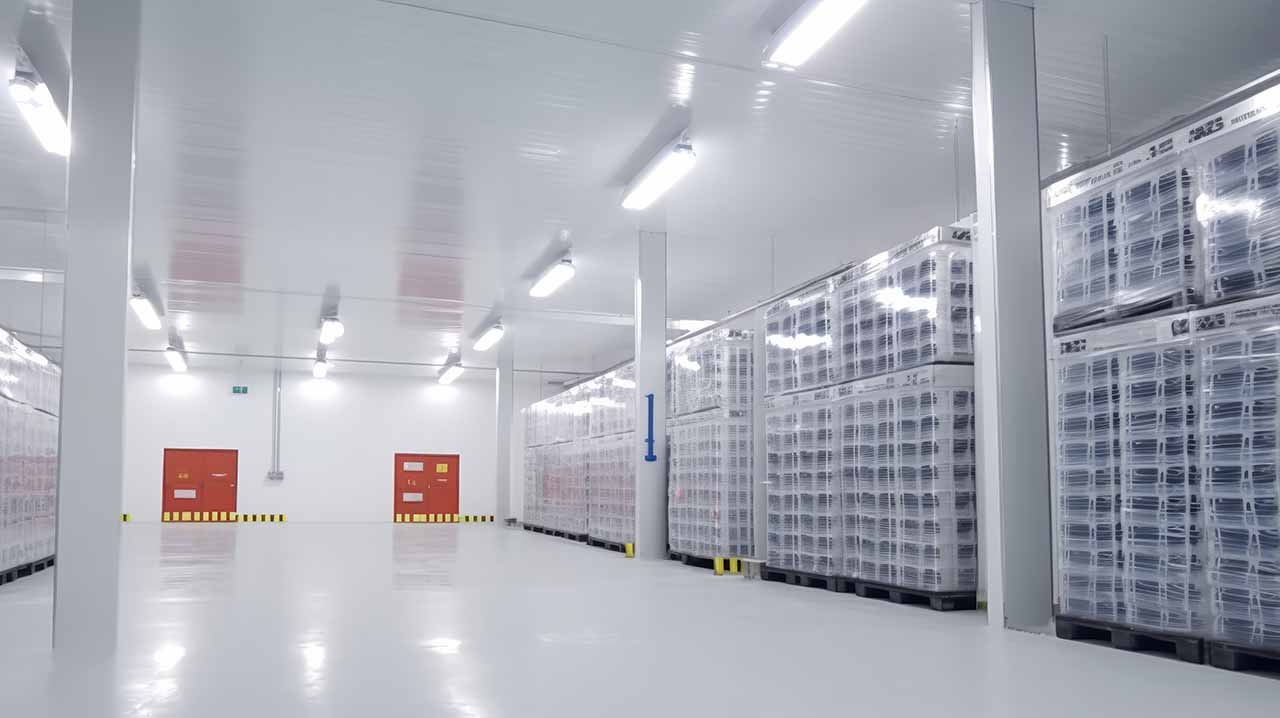
Cold storage facilities typically use structural pallet racking because thermal cycling, condensation, and denser storage patterns stress rack connections more than in ambient environments. Structural racking’s bolted connections and heavier gauge better tolerate these conditions.
4. Why is roll-formed racking so much cheaper?
Roll-formed uprights and beams are made from thinner cold-formed steel using continuous forming rolls, which is significantly less material and energy intensive than producing hot-rolled structural sections. Assembly is also faster because hook-in connections eliminate bolted joints.
5. Can structural and roll-formed racking be mixed in the same warehouse?
Individual components are generally not interchangeable because upright profiles, beam connectors, and design tolerances differ. However, a warehouse can use structural racking in one zone (for example, heavy loads or cold storage) and roll-formed in another zone (for example, general distribution) as separately engineered systems.
6. Does teardrop racking mean roll-formed?
Yes. Teardrop refers to the distinctive teardrop-shaped hole pattern used in most North American roll-formed racking. All teardrop racking is roll-formed, though not all roll-formed racking uses teardrop hole patterns — European and Asian roll-formed systems often use slot or keyhole patterns.
7. What is the service life of each type?
Well-maintained roll-formed racking typically achieves 10–15 years in low-impact ambient environments and shorter service life in demanding conditions. Structural racking typically achieves 20–30 years or more, with the difference driven primarily by impact tolerance rather than material fatigue.
8. Which type is easier to reconfigure?
Roll-formed is significantly easier to reconfigure because beams release from the upright without tools. Structural requires bolt removal and typically torque verification during reinstallation, making frequent reconfiguration impractical.
Conclusion
Structural and roll-formed pallet racking are not competing systems seeking the same market — they are engineered solutions for different environments, load profiles, and operational patterns. Roll-formed dominates general distribution because its cost, installation speed, and reconfigurability produce the best overall value in stable ambient warehouses. Structural dominates cold storage, heavy industrial, and high-impact operations because its impact resistance, load capacity, and long service life produce lower total cost of ownership where the environment is demanding. Choosing between them is a matter of matching the system to the operating environment rather than debating which system is inherently better.
For warehouse operators comparing structural and roll-formed pallet racking, the decision is rarely one of quality superiority — both are legitimate engineered systems suited to different operating environments. Mracking is one of the Chinese manufacturers producing pallet racking in both structural and roll-formed configurations, with roll-formed selective, drive-in, teardrop, and VNA systems alongside structural cold storage, heavy-duty, and impact-resistant racking, each engineered to specified load capacities and applicable regional standards including ANSI MH16.1, EN 15512, and AS 4084.