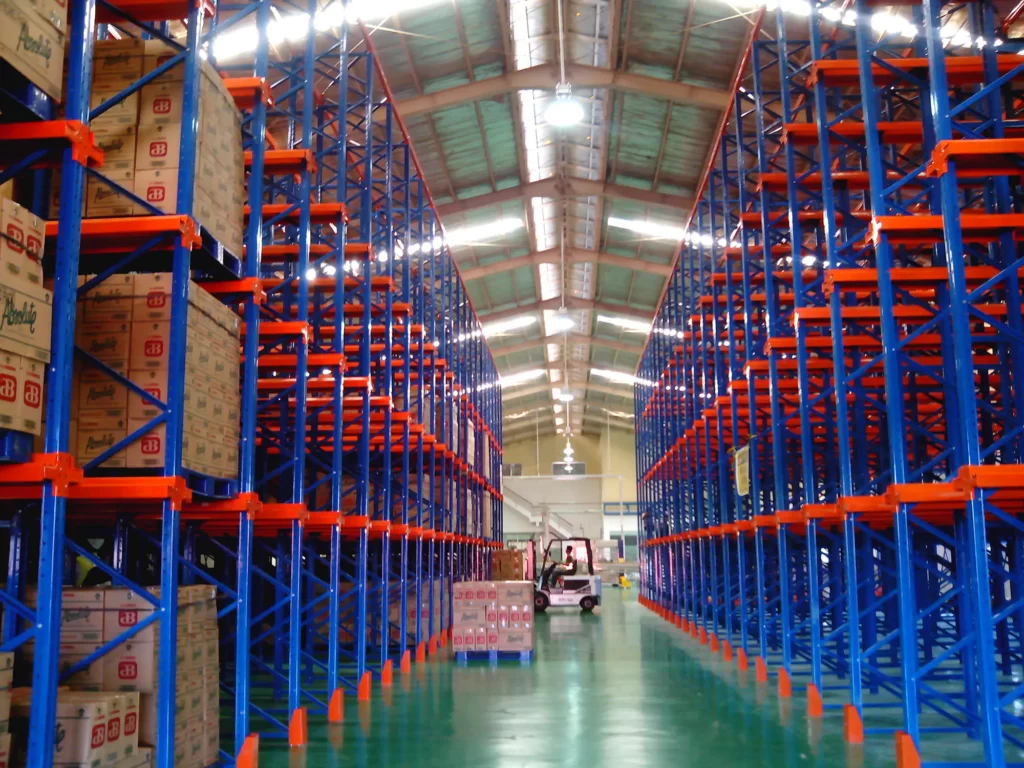
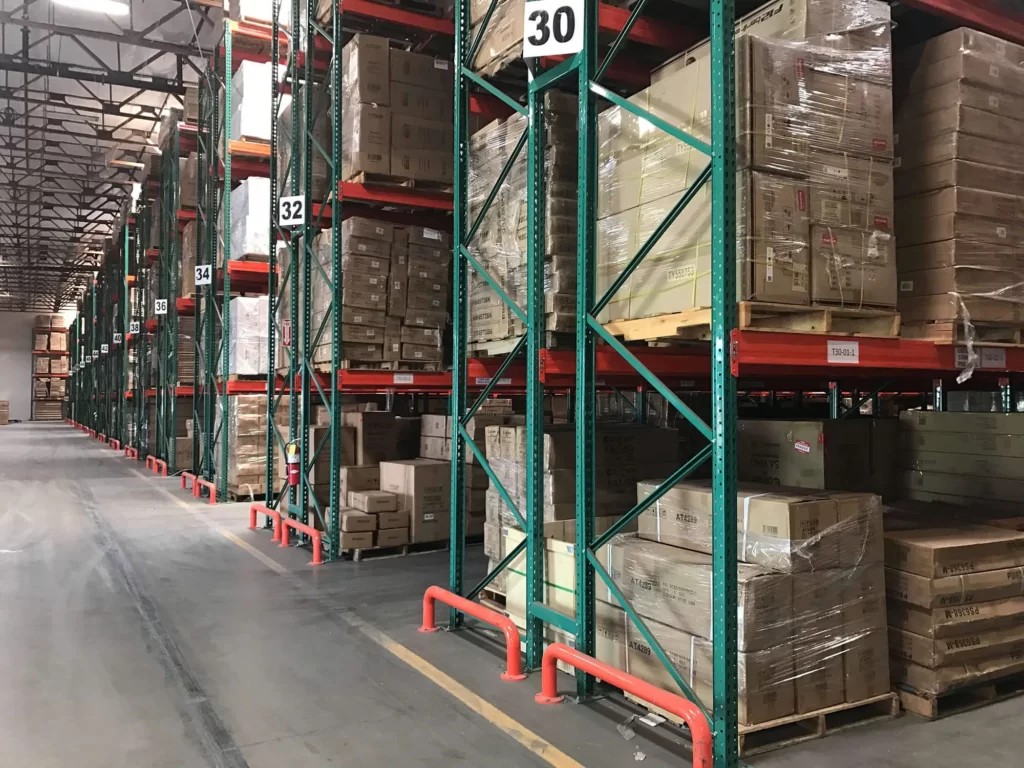
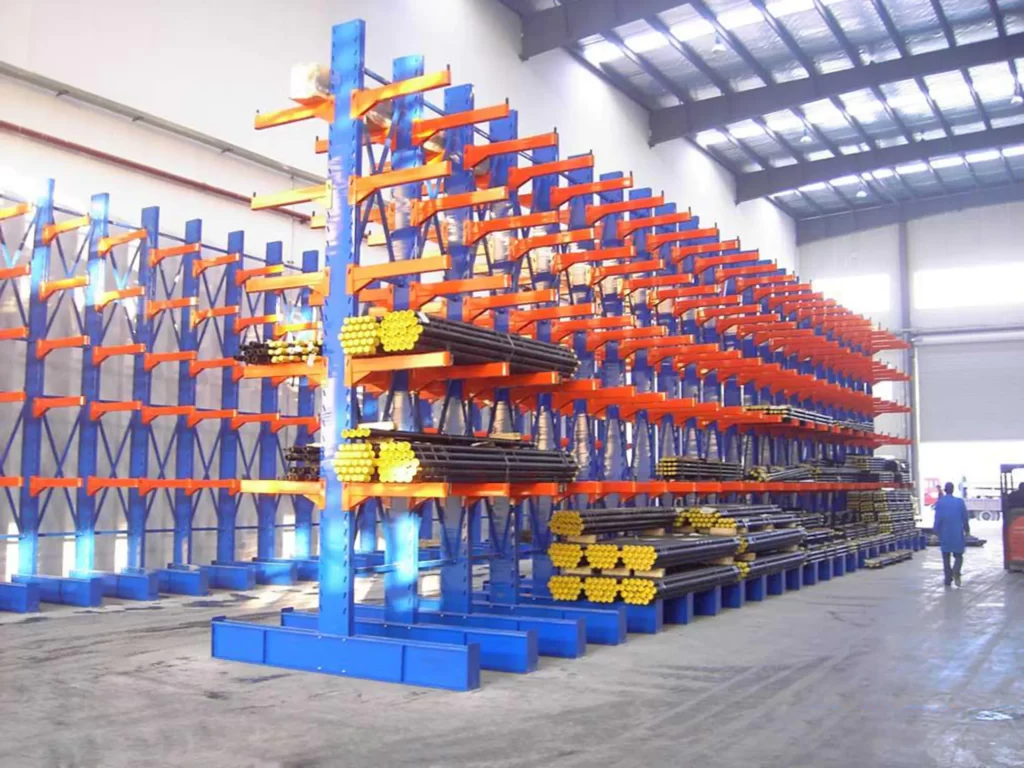
Pallet rack beams are the horizontal load-bearing members that directly support every pallet stored in a warehouse racking system. Yet beams come in more variations than most buyers realize — different cross-sectional profiles (box, step, structural), different connection styles (teardrop, slotted, bolted), different steel gauges, and different application-specific configurations. Selecting the wrong beam type for the intended pallet, deck material, or load pattern can produce hidden problems that only surface months or years later: sagging under load, incompatibility with wire mesh decking, or reduced connection integrity that shows up during safety inspection. Understanding pallet rack beam types is essential for anyone specifying, purchasing, or maintaining warehouse pallet racking.
This article explains the main pallet rack beam types by profile and by connection style, examines how beam selection affects rack performance and deck compatibility, and outlines the process for choosing the right beam for a specific application.
What Are Pallet Rack Beams?
Pallet rack beams are horizontal steel members that span between two upright frames in a pallet rack system, engineered to directly support the weight of stored pallets and to transfer load through beam connectors into the upright columns. Each pallet level typically uses one pair of beams — a front beam and a rear beam — with load ratings specified per beam pair rather than per individual beam.
Beam design must balance load capacity, connection strength, deflection under load, and compatibility with deck materials, cross bars, and pallet types. Beams also determine how easily rack levels can be adjusted — hook-in beams release without tools, while bolted beams require wrenching for every reconfiguration. Detailed context on the pallet racking beams product family covers the range of profiles, gauges, and load ratings available in modern racking systems, which apply directly to the type-level selection discussed below.
Main Types of Pallet Rack Beams by Cross-Section Profile
Four main beam profiles are used across modern pallet racking systems, each optimized for specific load conditions and deck configurations.

Box Beam (Tubular Beam). The most widely used pallet rack beam profile. Box beams have a closed rectangular or square hollow cross-section, providing high torsional stiffness and consistent load performance. The flat top surface supports pallets directly without additional decking. Standard box beam heights range from 76 mm to 152 mm depending on load rating. Box beams dominate general-purpose selective racking installations.
Step Beam (Ledge Beam). Step beams include a small horizontal ledge or step along the top edge, providing a landing surface for wire mesh decking, plywood, or steel deck panels. The step allows deck materials to sit flush with the top surface of the beam, producing a continuous flat deck level. Step beams are further divided into front-step (ledge on the front edge only) and full-step (ledge on both edges) configurations. Step beams are essential when the operation uses wire mesh decking or handles damaged pallets that require deck support.
Structural Beam (Hot-Rolled C-Channel or I-Beam). Built from hot-rolled structural steel sections rather than cold-formed steel, structural beams offer significantly higher load capacity and impact resistance than roll-formed alternatives. Common profiles include C-channel and I-beam. Structural beams connect to uprights via bolted clips rather than hook-in connectors, providing rigid joints suitable for cold storage, heavy-duty industrial, and high-impact environments. Broader system context is covered in the article on beam pallet racking configurations, which discusses how beam profile choice interacts with overall rack selection.
T-Bar and Specialty Beams. T-bar beams feature a T-shaped cross-section and are used in some drive-in racking applications and specialized storage configurations. Other specialty profiles include reinforced beams for very high load ratings, insulated beams for cold storage thermal breaks, and slotted beams for integrated cross-bar mounting.
Main Types of Pallet Rack Beams by Connection Style
Beam-to-upright connection design is as important as beam profile because it determines installation speed, reconfigurability, and joint safety.
Teardrop Beam Connection. The dominant standard in North American roll-formed pallet racking. Beam connectors feature hook-shaped tabs that engage distinctive teardrop-shaped holes punched along the upright column. Beams install by dropping into position and hooking into the teardrop slots — no tools required. Teardrop beams are widely interchangeable across manufacturers using the same teardrop hole pattern.
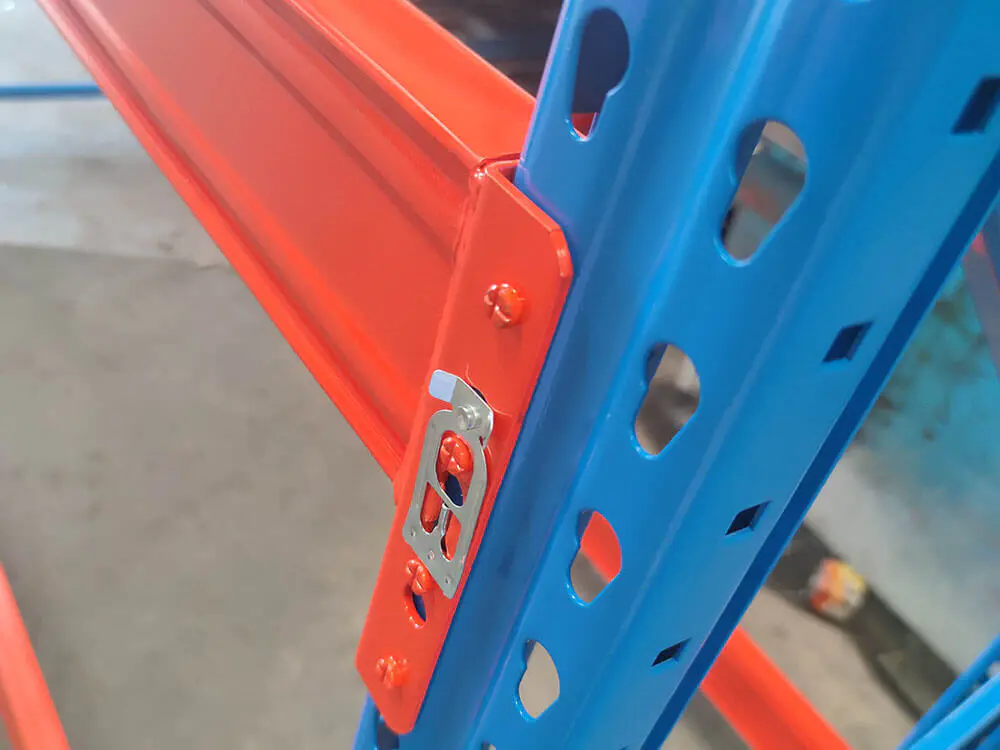
Slotted (Keyhole) Beam Connection. Common in European and Asian roll-formed racking. Beam connectors engage slot-shaped or keyhole-shaped punched holes along the upright column. The engagement mechanism is similar to teardrop but the hole geometry differs, meaning slotted beams are not interchangeable with teardrop uprights even though the installation process is comparable.
Bolted Structural Beam Connection. Standard for structural pallet racking. Beam connectors bolt directly to the upright column through matched drilled holes, forming a rigid engineered joint. Bolted connections provide the highest joint integrity and impact resistance but require wrenches for installation and any subsequent reconfiguration.
Proprietary Connection Styles. Some manufacturers use proprietary hole patterns and beam connectors that are not compatible with generic teardrop or slotted systems. Examples include Keystone, Ridg-U-Rak, and Interlake styles. Proprietary systems typically offer specific engineering advantages but restrict future beam sourcing to the same manufacturer.
How Beam Type Affects Load, Deck, and Compatibility
Beam selection cascades into multiple downstream decisions. Load rating depends primarily on beam profile and gauge — a 100 mm box beam at 2.5 mm gauge and a 150 mm structural C-channel beam have very different load capacities even at similar external dimensions. Deck compatibility depends on beam profile — step beams accommodate wire mesh decking flush, while box beams require decking to sit on top of the beam surface. Cross-bar compatibility depends on beam interior geometry — some beams have integrated cross-bar mounts, while others require separate accessories. Related considerations for pallet rack cross bars and decking accessories cover the specific interactions between beam and deck material selection.
Pallet compatibility depends on beam length and beam-to-beam spacing. Beam length is typically sized to hold three standard pallets side by side (approximately 2,700–2,750 mm for European pallets and 2,750–2,800 mm for GMA pallets). Beam gauge and profile must handle the loaded pallet weight with an appropriate safety margin.
Beam Sizing: Length, Height, Gauge, and Load Capacity
Standard pallet rack beams are specified across four dimensional variables that together determine performance.
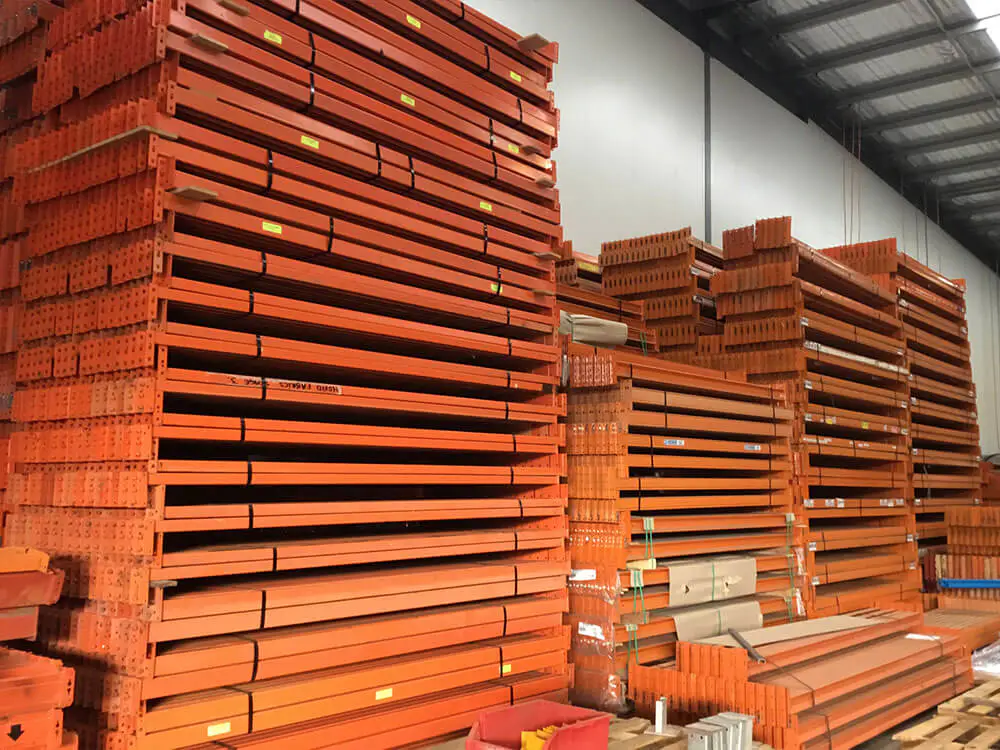
Beam Length. Typically 1,800 to 3,600 mm. Length is chosen to accommodate the intended number of pallets per bay — usually two or three pallets side by side, plus safety clearance of 75–100 mm between pallets and 75 mm between pallets and uprights.
Beam Height (Cross-Section Depth). Typically 76 mm to 152 mm. Taller beams carry higher loads with less deflection but reduce vertical clearance for stored goods.
Beam Gauge (Steel Wall Thickness). Typically 1.8 mm to 2.5 mm for roll-formed beams and 4.0 mm or more for structural beams. Gauge is more consequential than steel grade for beam performance under load.

Load Rating per Beam Pair. Standard roll-formed selective racking supports 1,500 to 4,000 kg per beam pair. Structural pallet racking supports 4,000 to 8,000 kg or higher per beam pair. Load ratings must always be verified with the manufacturer and must comply with rack design standards published by the Rack Manufacturers Institute (RMI) or equivalent regional standards.
Comparison Table: Pallet Rack Beam Types
| Beam Type | Cross-Section | Typical Load per Pair | Deck Compatibility | Best Use Case |
|---|---|---|---|---|
| Box Beam | Closed rectangular | 1,500–4,000 kg | Sits on top of beam | Standard pallet-only storage |
| Step Beam | Rectangular with ledge | 1,500–4,000 kg | Flush with beam surface | Wire mesh decking, mixed pallets |
| Structural C-Channel | Open C-shape | 4,000–6,000 kg | Requires deck adaptation | Cold storage, high-impact |
| Structural I-Beam | I-section | 5,000–8,000+ kg | Requires deck adaptation | Heavy industrial, seismic zones |
| T-Bar / Specialty | Varies | Application-specific | Application-specific | Drive-in racking, custom systems |
The optimal choice depends on load requirements, deck material, pallet type, and whether the racking is roll-formed or structural.
How to Choose the Right Pallet Rack Beam Type
Step 1: Confirm Rack Configuration.
Determine whether the racking is roll-formed or structural. Roll-formed racking accepts box, step, and specialty beams; structural racking uses structural C-channel or I-beam profiles.
Step 2: Define Load Requirements.
Document heaviest pallet weight, pallet count per bay, and any dynamic loading such as forklift impact. Verify beam gauge and profile can support the intended load with an appropriate safety margin.
Step 3: Choose Deck Material.
If wire mesh decking, plywood, or steel panel decking is required, specify step beams. If pallets rest directly on beams and no decking is used, box beams are sufficient.
Step 4: Verify Beam-to-Upright Compatibility.
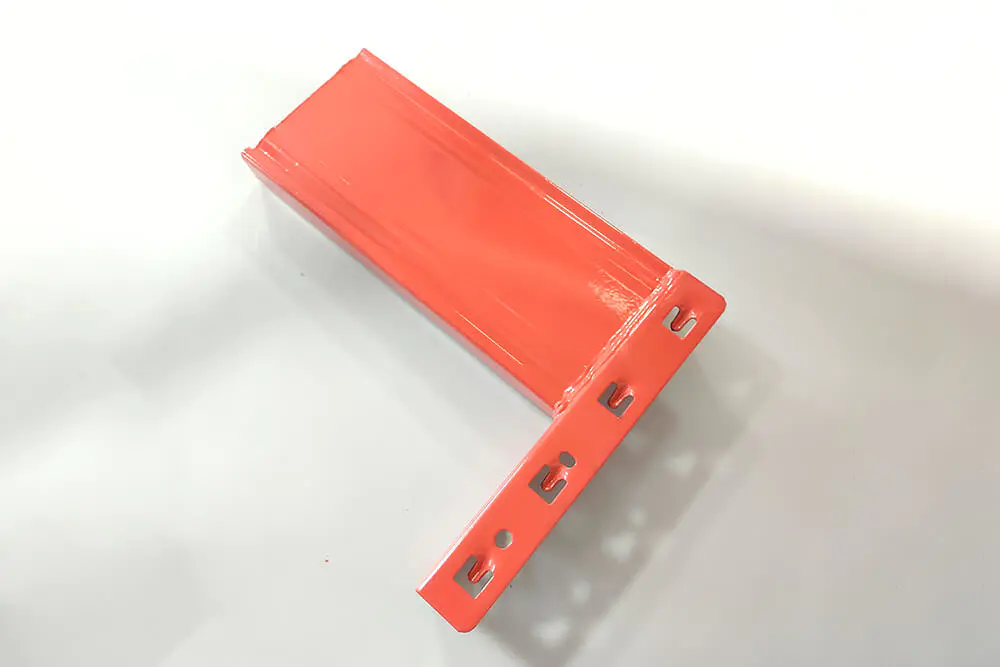
Confirm the beam connector matches the upright hole pattern — teardrop, slotted, keystone, or bolted. Beams from different manufacturers are generally not interchangeable even when they appear similar. Related considerations for teardrop pallet racking systems affect this compatibility decision.
Step 5: Size Beam Length and Level Spacing.
Match beam length to the pallet dimension and count per bay. Match vertical level spacing to stored goods height plus 100–150 mm clearance.
Step 6: Specify Safety Accessories.
Include safety pins, cross bars, wire mesh decking, and other accessories in the beam specification. Comply with workplace safety guidance from OSHA and its warehousing hazards guidance.
Common Mistakes When Selecting Pallet Rack Beams
Several recurring errors reduce rack performance or create safety issues. Ordering box beams when the operation will use wire mesh decking, resulting in an uneven deck surface. Mixing beam brands with incompatible connector geometry, producing beams that appear to fit but engage inadequately. Under-specifying beam gauge to save cost, then discovering pallet loads regularly exceed rated capacity. Overhanging pallets beyond beam edges by more than 50 mm, transferring load unevenly. Failing to specify safety pins with beam orders, leaving connections vulnerable to accidental disengagement. Ignoring cross-bar requirements when the operation uses damaged or non-standard pallets.
Key Takeaways
- Pallet rack beam types divide into cross-section profiles (box, step, structural C-channel, I-beam, specialty) and connection styles (teardrop, slotted, bolted, proprietary).
- Box beams dominate general pallet-only storage; step beams support wire mesh decking; structural beams handle heavy loads and impact environments.
- Beam profile determines deck compatibility, load capacity, and integration with cross bars.
- Beam length, height, gauge, and load rating are the four dimensional variables that define beam performance.
- Beam connection style must match the upright hole pattern; beams from different manufacturers are generally not interchangeable.
- Standard roll-formed selective racking supports 1,500–4,000 kg per beam pair; structural racking supports 4,000–8,000+ kg per beam pair.
- Beam selection cascades into deck material, cross bar specification, safety pin selection, and pallet compatibility decisions.
Frequently Asked Questions
1. What is the difference between a box beam and a step beam?
A box beam has a closed rectangular cross-section with a flat top surface, suitable for pallets resting directly on the beam. A step beam has a small ledge along the top edge that provides landing support for wire mesh decking, plywood, or cross bars — allowing decking to sit flush with the top of the beam surface.
2. What is a teardrop beam?
A teardrop beam is a roll-formed pallet rack beam whose connector engages distinctive teardrop-shaped holes punched along the upright column. Teardrop is the dominant connection standard in North American roll-formed racking and is widely compatible across manufacturers using the same teardrop hole pattern.
3. Are pallet rack beams from different manufacturers interchangeable?
Generally no. Beam connector geometry, hole spacing, and joint tolerances vary by manufacturer. Even beams that appear compatible may engage inadequately, reducing joint integrity. Teardrop-style beams have the highest cross-manufacturer compatibility, but even within teardrop, subtle differences exist.
4. What load capacity does a standard pallet rack beam have?
Standard roll-formed selective pallet racking beams typically support 1,500 to 4,000 kg per beam pair. Structural beams support 4,000 to 8,000 kg or higher per beam pair. Actual capacity depends on beam length, gauge, profile, and applicable safety factor.
5. Do I need step beams if I use wire mesh decking?
Yes, in most cases. Step beams provide a flush landing surface for wire mesh decking, cross bars, and other deck materials. Box beams require decking to sit on top of the beam surface, creating a non-flush deck level that reduces vertical clearance and complicates pallet placement.
6. What is the difference between structural and roll-formed beams?
Roll-formed beams are cold-formed from thin steel sheet and typically use hook-in connectors. Structural beams are hot-rolled from heavy steel sections (C-channel or I-beam) and typically use bolted connections. Structural beams offer higher load capacity and impact resistance but cost more and install slower.
7. How do I determine the correct beam length for my pallet rack?
Beam length should accommodate the intended pallet count per bay with clearance. Standard configurations hold two or three pallets side by side. For three GMA pallets, beam length is typically 2,750–2,800 mm; for three Euro pallets, 2,700–2,750 mm. Add 75–100 mm clearance between adjacent pallets and 75 mm between pallets and uprights.
8. What safety accessories should be ordered with pallet rack beams?
Every beam order should include safety pins matched to the beam connector type. Additional accessories to consider include cross bars for wire mesh decking support, column protectors for beam-end areas exposed to forklift impact, and row spacers for back-to-back rack rows.
Conclusion
Pallet rack beam types cover a wider range of profiles and connections than most buyers appreciate. Box beams dominate general pallet storage; step beams support wire mesh decking; structural C-channel and I-beam profiles handle heavy loads and impact environments. Connection style — teardrop, slotted, or bolted — determines installation speed, reconfigurability, and cross-manufacturer compatibility. Beam selection cascades into deck material, cross bar specification, safety pin requirements, and pallet compatibility, so the choice made at procurement shapes rack performance over decades. Buyers who understand the interaction between beam profile, connection style, gauge, and load rating avoid the most common mistakes and specify systems that perform reliably over long service life.
For warehouse operators specifying pallet rack beams, matching the beam profile — box, step, or structural — to the intended deck material, pallet type, load rating, and rack style is a critical procurement decision that shapes long-term system performance. Mracking is one of the Chinese manufacturers producing pallet rack beams in box, step, and structural configurations, with teardrop, slotted, and bolted connection options engineered to match specific upright profiles, pallet dimensions, and load requirements across roll-formed and structural pallet racking systems.