Pallet rack cross bars are among the smallest components in a warehouse pallet racking system, yet they can have a significant impact on load stability, deck compatibility, and operator safety. Warehouse managers, procurement teams, and rack installers frequently ask whether cross bars are truly necessary, which type to select, and how they interact with wire mesh decking or standard pallets. Understanding the role of pallet rack cross bars — and the specific scenarios in which they are essential — helps prevent under-specified systems that risk pallet fall-through and over-specified systems that waste capital. A related guide on Wire Mesh Decking gives more detail for this part of the planning work.
This article explains what pallet rack cross bars are, reviews the main types available, describes their core functions, and addresses when they are genuinely required in warehouse pallet racking systems.
What Are Pallet Rack Cross Bars?
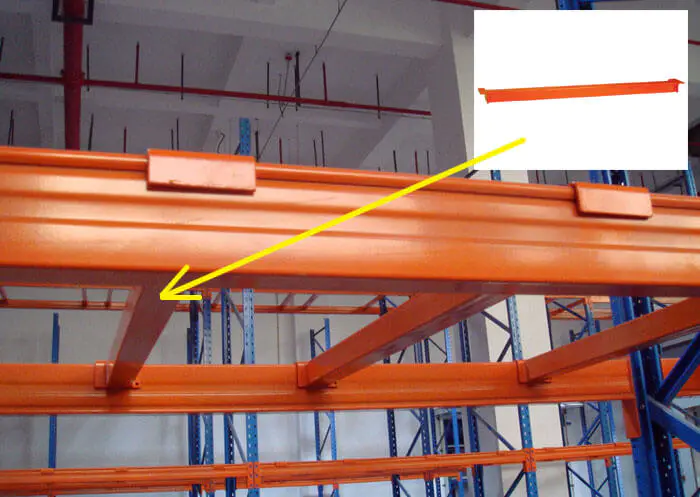
A pallet rack cross bar is a horizontal load-bearing member installed between the front and rear beams of a pallet rack level, running perpendicular to the beams to support pallets, wire mesh decking, or non-standard loads that cannot rest safely on the two beams alone. Cross bars are also referred to as pallet supports, cross supports, or safety bars, depending on regional terminology and specific design. For a closer comparison, see A Wire Mesh Container.
Cross bars sit either flush with the top surface of the beams (using step beam configurations) or slightly recessed inside the beam channel, depending on the deck material used. They convert a two-line beam layout into a supported grid, distributing load across additional contact points. Because cross bars work as an integral extension of the beam system, they are typically compatible with specific pallet racking beam profiles and must be sized to match beam depth, upright spacing, and load requirements. Cross bars are generally supplied by the same manufacturer as the main racking system to ensure structural compatibility.
Main Types of Pallet Rack Cross Bars
Several cross bar designs are used in modern pallet racking. Each is engineered for a specific combination of deck material, pallet quality, and load pattern.
Tubular Steel Cross Bars. Rectangular or square hollow section (RHS) cross bars are the most common design. They offer a strong strength-to-weight ratio, resist bending under concentrated loads, and are widely used to support wire mesh decking or non-standard pallets. Standard dimensions vary by beam depth, with 40 × 40 mm and 50 × 50 mm profiles being typical for medium-duty systems. This point also connects with Wire Container vs Roll Container.
Step Beam Cross Bars. Step beams incorporate a small step or ledge along the top edge of the beam that provides a landing surface for cross bars. This design allows the top surface of the cross bar to sit flush with the beam surface, giving a smooth continuous deck. Step beams are widely used with wire mesh decking or plywood panels for a flat load surface.
Pallet Support Bars. Pallet support bars are single cross members positioned to sit directly beneath a pallet stringer. They are commonly used with damaged pallets, non-GMA pallets, or plastic pallets whose stringers do not align with standard beam spacing. Each pallet position typically uses two support bars, one for each stringer.
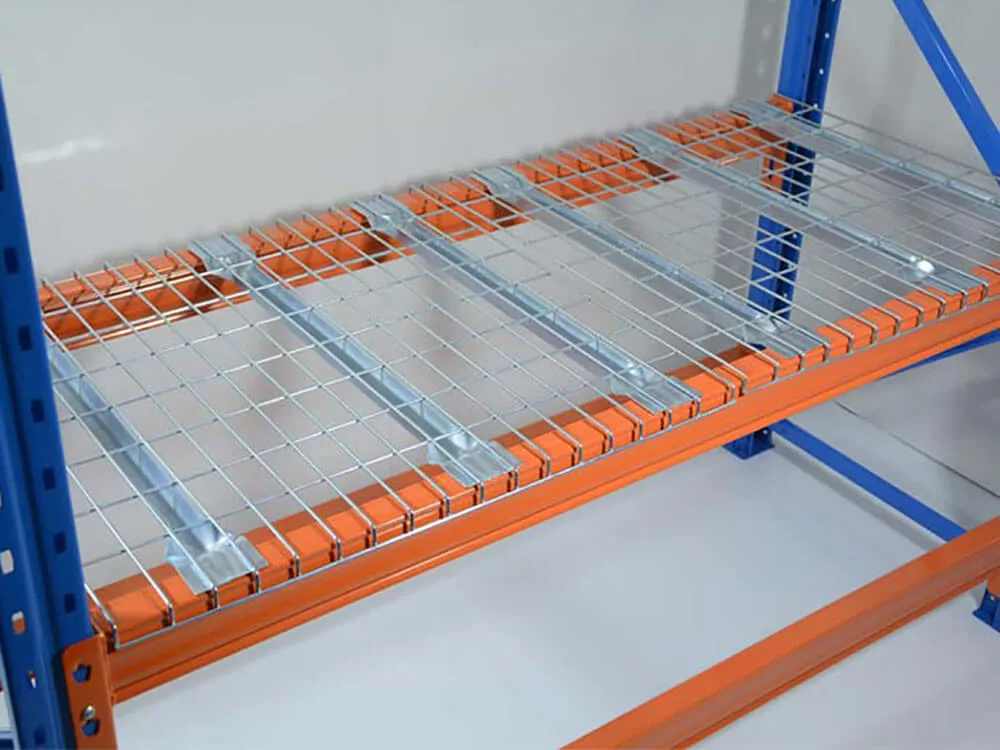
Wire Mesh Deck Support Bars. These are cross bars specifically engineered as supports for wire mesh decking. They provide the horizontal grid onto which the wire mesh deck rests and are usually welded or clipped into the deck frame. The number of support bars per level depends on the mesh deck load rating and load pattern.

C-Channel and Structural Cross Bars. For heavy-duty applications, C-channel or U-channel structural cross bars provide higher stiffness and load capacity. They are used in structural pallet racking systems, drive-in racking rails, or applications with concentrated point loads. These structural profiles are common where standard tubular cross bars would deflect excessively.
Main Functions of Pallet Rack Cross Bars
Cross bars perform several distinct functions within a pallet racking system.
Load Support for Damaged or Non-Standard Pallets. Cross bars provide additional contact points that prevent unstable pallets from twisting or falling between the beams.
Deck Support. Wire mesh decks, plywood, or solid steel panels typically require cross bar support to distribute load and prevent deck deflection.
Improved Fire Protection Compliance. Wire mesh decking supported by cross bars allows overhead sprinklers to reach lower levels of the rack — a requirement in many warehouse fire codes and NFPA guidelines.
Enhanced Fall-Through Protection. Cross bars reduce the risk of pallets, cases, or loose product falling between beams, especially in picking operations where load stability decreases over time.
Additional Beam Load Capacity. By transferring localized point loads across a wider structural network, cross bars can allow the beam system to accept heavier or more concentrated loads within the rated capacity.
Cross Bar Compatibility with Different Racking Systems
Cross bars are not universal components. Each racking system has its own beam profile, connection style, and dimensional tolerance, which means cross bars must be matched to the specific system in which they are installed.
Selective Pallet Racking. Cross bars are the most common accessory in selective pallet racking systems, typically paired with wire mesh decking or supporting non-standard pallets. Standard tubular profiles fit most box-beam and step-beam configurations.
Drive-In and Drive-Through Racking. These systems use pallet support rails rather than cross bars in the conventional sense, since pallets rest on continuous rails running along the storage lane. Cross bars in drive-in systems are limited to structural bracing.
Push-Back and Pallet Flow Racking. These systems rely on inclined rails or nested carts and do not use cross bars in the horizontal plane. Structural cross-bracing at the upright level remains part of the system.
Double Deep and Very Narrow Aisle (VNA) Racking. Cross bars in these systems typically follow the same specification as selective racking but must account for deeper pallet reach and reduced tolerance for load misalignment.
Confirming compatibility before ordering is essential — cross bars sized for one manufacturer’s beam profile rarely fit another manufacturer’s system without modification. Broader guidance on component compatibility is available in resources covering pallet racking components.
Do Pallet Racks Really Need Cross Bars?
Whether cross bars are necessary depends on pallet condition, load type, deck material, and operational requirements. In some scenarios cross bars are essential; in others they are entirely optional.
Cross Bars Are Essential When:
- Wire mesh decking, plywood, or solid steel decking is installed (they are the primary support structure)
- Damaged, warped, or non-standard pallets are stored (cross bars prevent fall-through)
- Plastic pallets with continuous bottoms are used (they lack stringers that align with beams)
- Loose product, drums, coils, or unusual load shapes are stored directly on the rack
- Local fire codes require wire mesh decking for sprinkler penetration
- The warehouse follows a general internal safety standard for pallet fall-through prevention
Cross Bars Are Recommended (But Not Mandatory) When:
- Pallet quality varies across suppliers, making load stability inconsistent
- The facility handles high-value goods where a single dropped pallet causes disproportionate loss
- Picking operations expose the rack to partially depleted pallets that may shift
- Insurers or regulators recommend enhanced fall protection
Cross Bars Are Generally Not Required When:
- Standard GMA or Euro pallets in good condition are stored consistently
- Pallet stringers align squarely with the front and rear beams
- No decking material is used and only intact pallets rest directly on the beams
- The rack is inspected regularly and damaged pallets are removed from service
For most modern warehouses using standardized pallets and wire mesh decking, cross bars are treated as a default component rather than an optional add-on. Guidance published by the Rack Manufacturers Institute (RMI) as part of ANSI MH16.1 addresses beam and support member design, and workplace safety references from OSHA cover pallet handling and rack safety.
Cross Bars vs Wire Mesh Decking vs Solid Panel Decking
Cross bars are frequently discussed alongside other deck options because they can either replace or complement full decking. The three approaches solve different problems.

| Approach | Function | Best Suited For | Fire Sprinkler Compatibility |
|---|---|---|---|
| Cross Bars Only | Point support for pallets | Standardized pallets with minor issues | Compatible |
| Cross Bars + Wire Mesh Decking | Continuous deck with airflow | Case picking, mixed SKUs, fire code | Fully compatible |
| Cross Bars + Solid Panel Decking | Sealed deck surface | Loose product, small parts, clean rooms | Restricted (blocks sprinklers) |
Detailed guidance on selecting the right deck configuration is available in resources covering the role of wire mesh decking in pallet racking systems, which examines airflow, fire protection, and deck load ratings in more depth.
How to Select Pallet Rack Cross Bars
The following framework outlines the evaluation process typically used when specifying cross bars for a new or existing pallet racking installation.
Step 1: Identify Pallet Type and Condition.
Confirm whether pallets are GMA, Euro, block, plastic, or non-standard. Damaged or plastic pallets typically require cross bars.
Step 2: Define Deck Material.
Determine whether wire mesh decking, plywood, steel panel, or open beams will be used. Deck material dictates cross bar count, spacing, and profile.
Step 3: Calculate Load per Level.
Establish uniform distributed load and concentrated point loads to ensure cross bars are rated appropriately.
Step 4: Match Cross Bar to Beam Profile.
Confirm cross bar length, profile depth, and end connection style are compatible with the existing beams — including step beam configurations if a flush deck surface is required.
Step 5: Verify Fire Protection Requirements.
Ensure the cross bar and deck combination allows in-rack or overhead sprinkler penetration as required by local codes and NFPA guidelines.
Step 6: Confirm Compliance with Rack Design Standards.
Cross bars must comply with the rack manufacturer’s engineering specifications and applicable regional standards published by organizations such as the Material Handling Institute (MHI) and RMI.
Key Takeaways
- Pallet rack cross bars are horizontal support members that run between front and rear beams to support pallets, decking, or non-standard loads.
- Common types include tubular cross bars, step beams, pallet support bars, wire mesh deck supports, and structural C-channel cross bars.
- Cross bars are essential when decking is used, when pallets are damaged or non-standard, or when fire codes require wire mesh decking.
- Cross bars are generally optional when standardized, undamaged pallets are stored directly on properly rated beams.
- Cross bar selection must match beam profile, load requirements, and fire protection standards to ensure structural compliance.
Frequently Asked Questions About Pallet Rack Cross Bars
1. What is the purpose of pallet rack cross bars?
Cross bars provide additional load-bearing support between the front and rear beams of a pallet rack level. They support decking materials, stabilize damaged or non-standard pallets, and reduce the risk of pallets or products falling through the rack.
2. Are cross bars required for wire mesh decking?
Yes. Wire mesh decking almost always requires cross bar support to distribute load across the beam system and prevent deflection. The number of cross bars depends on the deck load rating and pallet weight.
3. Can standard GMA pallets be stored without cross bars?
Standard GMA pallets in good condition can generally be stored directly on properly rated beams without cross bars, provided the stringers align squarely with the front and rear beams. Many facilities still install cross bars as a safety upgrade regardless of pallet standardization.
4. What is the difference between a step beam and a cross bar?
A step beam is a horizontal beam with a small ledge along its top edge. Cross bars are separate members that run perpendicular to the beams. Step beams and cross bars are often used together — the step beam provides a landing surface for the cross bar, resulting in a flat continuous deck.
5. Do plastic pallets require cross bars?
Most plastic pallets have continuous bottom decks that do not align with beam spacing the way GMA stringers do. Cross bars or pallet support bars are typically recommended for plastic pallets to prevent load instability.
6. How many cross bars are needed per pallet position?
Standard practice is two cross bars per pallet position — one under each stringer or under each side of the load. Wire mesh deck installations may require three or more cross bars per level depending on deck size and load rating.
7. Are pallet rack cross bars adjustable?
Most cross bars can be repositioned within the beam channel to accommodate different pallet widths or deck layouts. However, they must remain compatible with the beam profile and rack manufacturer’s specification.
8. Do cross bars increase the load capacity of the pallet rack?
Cross bars do not increase the rated capacity of the beam system itself. However, they distribute point loads across a wider structural network, which can allow more stable use of the rated capacity, especially for uneven or concentrated loads.
Conclusion
Pallet rack cross bars are small components with a disproportionately large influence on rack safety, deck compatibility, and long-term operational reliability. Their necessity depends on pallet type, deck material, fire code, and internal safety standards — and while they are optional for warehouses using perfectly standardized pallets, they are effectively mandatory when wire mesh decking or non-standard loads are involved. Selecting the right cross bar profile and specification during system design is significantly less costly than retrofitting them later after a fall-through incident or fire inspection.
Warehouse operators typically source cross bars together with the main beam and upright system to ensure structural compatibility, which is why most procurement decisions bundle cross bars, beams, and decking under a single specification. Mracking is one of the Chinese manufacturers producing pallet racking systems and matched accessories, including tubular cross bars, step beam configurations, pallet support bars, and wire mesh deck supports engineered to align with the corresponding beam profiles across standard, drive-in, and structural pallet racking configurations.