Most facility managers make full use of the space on the floor, but neglect the valuable space above. A mezzanine floor office is a platform that is raised up in a building to provide space for offices. It addresses actual operational issues without having to build out or relocate at expensive costs. It is a guide that directly applies to warehouse operators, facility managers, operations directors and business owners. It provides in-depth details about mezzanine floor office design, planning, compliance, cost, return on investment, and implementation. Let’s get started! This point also connects with Step-by-Step to Building a Mezzanine Floor.
What is a Mezzanine Floor Office?
A office mezzanine floor design comprises of a structure created in your building but not built up to the same height as the building. These platforms are constructed of structural steel and are totally freestanding and self-supporting. A mezzanine does not need full building planning approval and major building changes (as with a full second storey). They are widely used over logistics operations, production areas, or warehouse floors. Supervisor offices, administrative work areas, conference rooms, staff break areas and quality control observation decks are all housed comfortably in the structure. The platform is not attached to the structural walls and therefore installation does not cause significant disruption to operations. A related guide on Rack-Supported vs Steel Structure Mezzanine gives more detail for this part of the planning work.
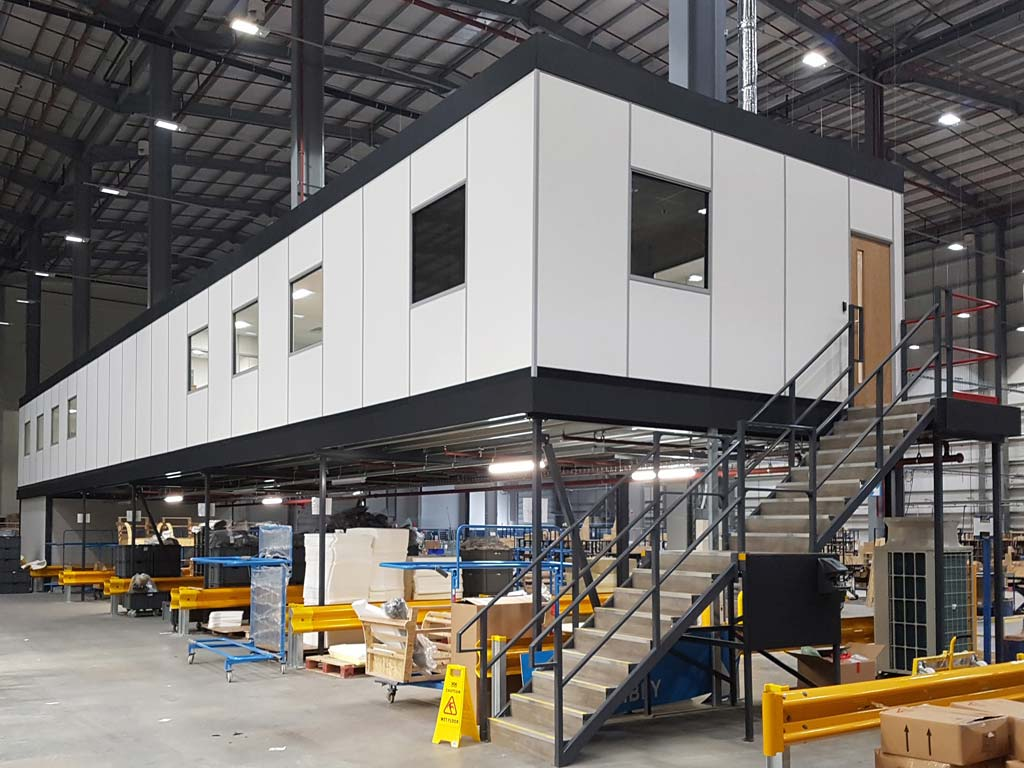
Is Your Facility Suitable for a Office Mezzanine Floors?
Ceiling Height
The required overall ceiling height is 14-16 feet at your facility. The minimum usable clearance for both levels is 7 feet. Failure to do so results in building code issues and an environment that is no longer legal for use. Before hiring any mezzanine contractor, always check the ceiling’s height. For product-level details, review Mezzanine Racking and What Are Its Advantages.
Floor Load Capacity
You will need to have the ability to safely support your current ground floor dead and live operational loads. Before any mezzanine installation starts, a licensed structural engineer must be used to assess capacity. Older buildings often need to be reinforced on the ground to meet current standards for load bearing. Do not take this important evaluation step out of the equation.
Access and Egress Points
Most building codes call for at least one separate staircase to access mezzanines. Under IBC, two stairs are usually required with larger or higher occupancy mezzanines. Carefully plan stair location to prevent disruption of aisles, loading bays and machinery corridors. There is also a requirement for disabled access via compliant platform lifts at facilities.
Types of Mezzanine Office Design Structures
| Type | Construction Material | Best Suited For | Load Capacity | Installation Speed | Reconfigurability | Typical Cost Range |
| Modular Mezzanine | Steel framing + modular panels | Offices, clean environments | Medium | Fast (days–weeks) | High | Mid-range |
| Structural Mezzanine | Steel, concrete, or timber | Heavy industrial, high-load warehouses | High | Moderate | Low–Medium | Higher |
| Rack-Supported Mezzanine | Integrated with pallet racking | Warehouses needing storage + office | Medium | Moderate | Low | Variable |
| Shelving-Supported Mezzanine | Shelving uprights as support | Retail, light-duty storage with office | Low–Medium | Fast | Low | Lower |
Layout and Mezzanine Floor Office Design Considerations
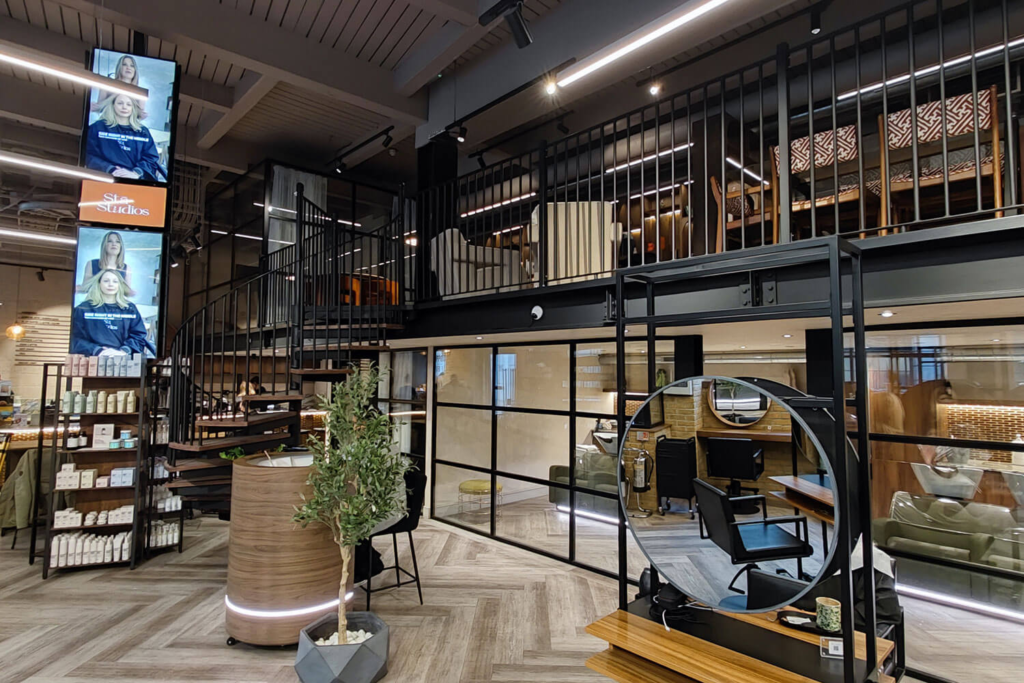
Sizing and IBC/Building Regulation Limits
Mezzanines under the IBC can be a maximum of one-third of the area of the room below. Once this value is surpassed, it is considered a full storey. UK projects to conform with BS 5950 and BS 6399. Consult a structural engineer early to ensure that the maximum legally allowable usable area is maximised.
Open-Plan vs. Partitioned Layouts
Open plan layouts are ideal for creative, tech, and marketing teams that collaborate together. Glass balustrades can greatly enhance the natural light flow between levels. Finance, legal and customer service groups that require managed acoustics are served by partitioned zones. Moveable partitions enable flexible, modern working arrangements in hybrid-ready configurations.
Hybrid and Flexible Workspace Configuration
According to the ONS, more than a quarter of all UK working adults (28%) worked with hybrid working arrangements in 2024-2025. The moveable partitions and hot-desking areas are used for the varying number of people that work there every day. All work zones shall have universal power and data access points. Office configuration flexibility helps to future-proof the office space to meet changing workforce demands.
Windows and Visual Connectivity
Supervisors have unobstructed, direct view of operations through glazed panels that face the production floor. Prioritize the most critical spaces on the floor for the business that need to be monitored consistently. Glass balustrades not only provide the necessary fall protection, but also provide clear sightlines. Effective placement of strategic glazing enhances safety compliance and daily management effectiveness.
Noise and Acoustic Control
There is a major problem with airborne and impact noise transmission from mezzanines above active industrial floors. Insulated wall panels and acoustic ceiling tiles are effective in lowering disruptive sound levels. Acoustic glass partitions can provide separation without compromising natural light and visual open spaces. BS EN ISO 11654 is the UK standard that covers reverberation control in occupied working spaces.
HVAC and Climate Control
Temperature increases naturally with height, and upper level mezzanine offices can suffer from excessive heat. Standard warehouse HVAC systems cannot handle temperature extremes found in industrial facilities. During the design phase, independent climate units for mezzanine offices should be considered. Early planning of mechanical ventilation and cooling systems avoids expensive retrofitting at a later stage.
Electrical, Data, and Brand Integration
Design all electrical power, data and telecoms routes up front. Modular wall systems with built-in cable raceways eliminate all exposed conduit runs. BCO studies reveal that brand aligned workplaces score 12% higher on client professionalism assessments. Branded signage, powder-coated metalwork and custom floor finishes help to communicate corporate identity throughout.
Mezzanine Office Space – Compliance, Safety, and Building Regulations
International Building Code (IBC) Requirements
The size of the mezzanine area should not be more than ⅓ of the area below it. At least 7 feet is required above and below the mezzanine deck. Guardrails, appropriate exits and permit applications to the local building department are mandatory.
OSHA Workplace Safety Standards
OSHA requires 42-inch guardrails on all open sides of the mezzanine, no matter which. Stair design and egress routes to be compliant with occupancy levels. These requirements provide direct fall arrest protection to workers in active warehouse areas.
UK Building Regulations and British Standards
Partitions in assembly spaces must be 30 minutes fire resistant, as per Approved Document B. Steel must conform to BS 5950 and loading criteria are under BS 6399. The Workplace Regulations 1992 require adequate floor space, headroom and clear space for each workplace.
HSE Guidelines and Space Safety
Inadequate space is recognised as a critical operational risk by HSE’s Approved Code of Practice. Lack of space can create a hazard for tripping and can block emergency exit routes. Here, compliance can help to safeguard employees and employers against expensive regulatory fines and liability suits.
Fire Safety Obligations
The sprinkler clearance and coverage requirements are covered by NFPA 13 for all warehouse installations in the United States. Fire rated materials, compartment partitions and emergency lighting systems are to be incorporated into the design. Exit signage and evacuation planning are a “must have” part of any compliant mezzanine installation.
Accessibility and Practical Compliance Steps
Wherever access is provided by steps, lifts or ramps are necessary if this is insufficient for the needs of the person with a disability. Door widths and circulation spaces should conform to the accessibility standards throughout the facility. Get structural engineers involved early; keep all permits and keep inspection certificates in a secure location for insurance purposes.
Mezzanine Floor Office Design – The Installation Process
1. Site Assessment and Feasibility Study
The first step is for engineers to check the ceiling height, floor load capacity and location of utilities. Access points are mapped and the routes for equipment movement are planned. This initial step saves time and money in redesigns later.
2. Structural Engineering and Design
The next step is to have detailed load calculations and complete structural drawings done by licensed engineers. All designs are to be compliant and meet local building codes. Accurate drawing eliminates unnecessary onsite changes and saves money.
3. Planning Permission and Permits
Applications are made to the appropriate local authority or building department in a timely fashion. The process for obtaining a permit generally takes from 4 to 12 weeks, depending on the jurisdiction. Early start means no unnecessary project delays.
4. Offsite Manufacture
The components of the modular system are produced in a controlled factory at the same time. Manufacturing is executed in parallel, allowing processing, which saves a lot of project time. The factory conditions guarantee the quality and dimensional accuracy.
5. Site Preparation
The positions of the columns and locations of the stairs are precisely marked by the ground teams. The work involved is very low in comparison with the conventional construction projects. Precise and clean markings directly facilitate the speed of structural installation.
6. Structural Installation
Experienced crews efficiently place steel columns, beams and decking. Modular systems are usually fully assembled within 2-5 working days. In an active warehouse, fewer disruptions to operations result from speed.
7. Office Fit-Out
Wall panels, partitions, windows, doors, floors and ceilings are then installed. All finishes are chosen to meet functional and compliance needs. Fit-out directly affects how comfortable and productive workers are on a day-to-day basis.
8. M&E Integration
Electrical, data, HVAC and fire detection systems are wired and tested. Full integrated testing starts after each system has been commissioned. Verified M&E performance will help safeguard personnel and valuable stored inventory.
9. Final Inspection and Sign-Off
A detailed review of the structure and fire safety is carried out by building control inspectors. Occupancy certification is only provided once all requirements are met. Failure to sign-off has significant legal and insurance liability risks.
10. Handover
Snagging items are addressed prior to formal documentation being passed to the operator. Staff are given extensive briefings including fire evacuation and egress. With complete handover, operations commence in a safe, confident and disruption-free way.
Cost Considerations and Return on Investment
Cost Factors That Influence Budget
The price of a mezzanine is highly dependent on the type of structure selected, load requirements, and size. The costs of modular systems vary from those of permanent structural builds. The office fit out level, HVAC, data infrastructure and compliance permits all contribute to the cost. The number of access points and the design of stairs also impact the final installation cost. For a closer comparison, see Mezzanine Structure Design.
Mezzanine vs. Alternative Space Solutions
The cost of a mezzanine installation is always lower than building extensions or new construction. Moving to new locations comes with lease penalties, downtime and lots of hidden transition cost. Leasing of additional space results in annual rental obligations. With a mezzanine, those recurring financial burdens are completely avoided.
Return on Investment Drivers
Adding mezzanines instantly add productive floor area, but not to your building’s physical footprint. Centralised management placement enhances daily ground level operations. It is well proven that better office spaces improve employee productivity and retention. Space additions that are permanently usable can be valuable addition to the overall value of a property.
Tax Advantages in the US Context
Modular offices are considered tangible personal property, and can be depreciated over only 5-7 years. This is in stark contrast to the typical 39-year depreciation period for commercial real estate. Full first year deductions on qualifying installations may be available via Section 179 expensing and bonus depreciation. Please check with your professional tax adviser for details on your eligibility.
5 Mezzanine Office In Warehouse Examples/Ideas
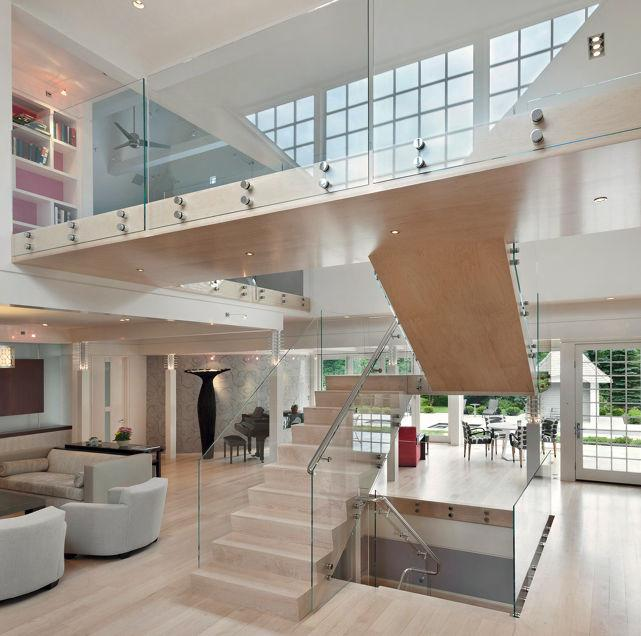
1. Open-Concept Glass Mezzanine Office
Bright, open and modern workspace with glass mezzanine offices. Transparent railings and natural light, as well as minimalist interior designs, promote collaboration without sacrificing space. The design is ideal for creative offices that want to have a clean, professional look, and good visual links between upper and lower floors.
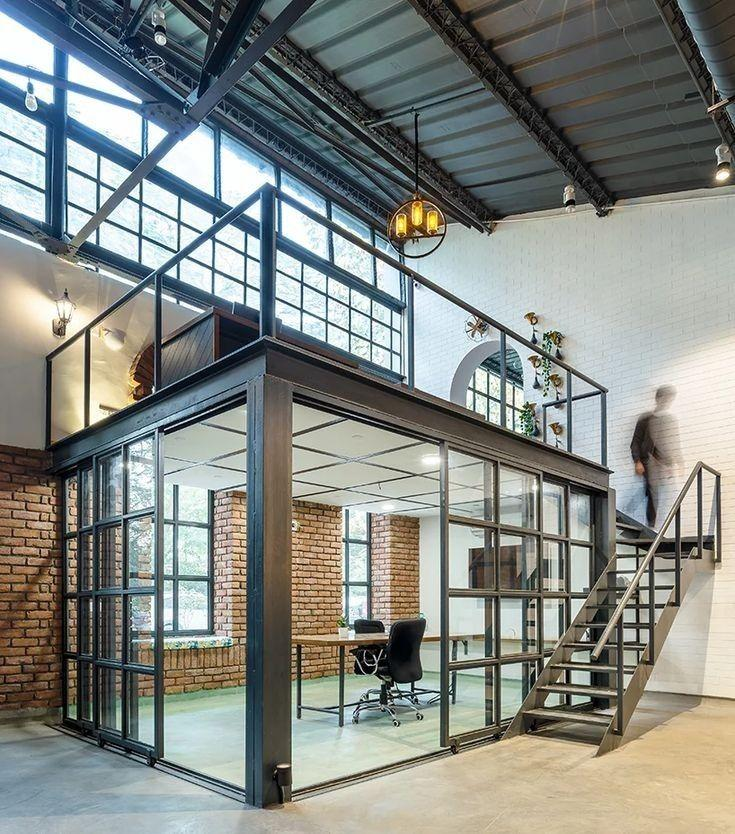
2. Industrial Style Mezzanine Workspace
Exposed steel, concrete textures and dark finishes all contribute to a bold, workspace aesthetic for industrial mezzanine offices. The wooden furniture, warm lighting and open layouts help to reduce the industrial look while still delivering the durability and functionality, and creative atmosphere, that modern businesses and studios require.
3. Minimalist Scandinavian Mezzanine Office
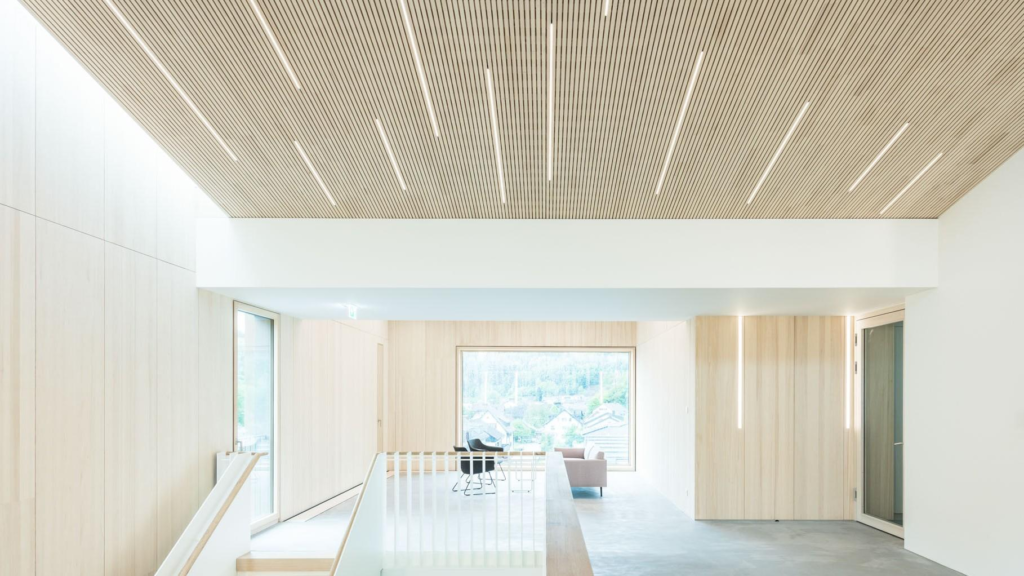
When it comes to Scandinavian mezzanine offices, simplicity, light wood finishes, neutral colors and uncluttered layouts are key. A clean and comfortable workspace design with highly functional furniture and large windows, which offer a calm and productive environment, maximises the use of natural light.
4. Executive Mezzanine Office With Private Meeting Space
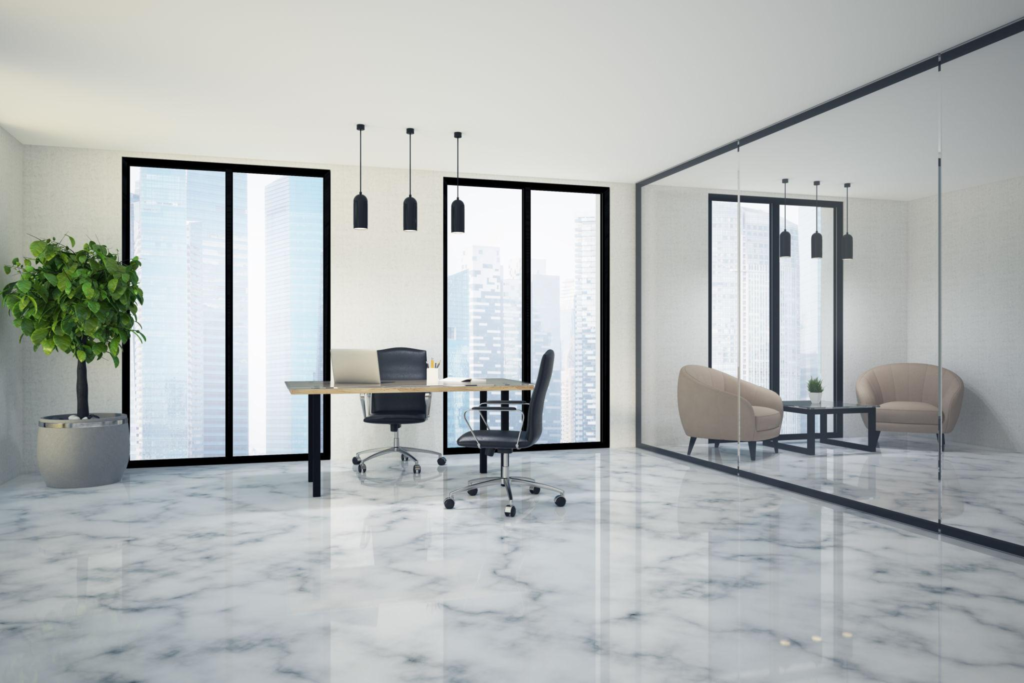
Executive mezzanine offices offer superior privacy, while keeping a view of the work area below. Modern corporate interiors are defined by premium materials, glass partitions and integrated meeting areas, which allow for a sophisticated interior for leadership, client meetings and focused decision making.
5. Multi-Functional Mezzanine Office With Collaborative Zones
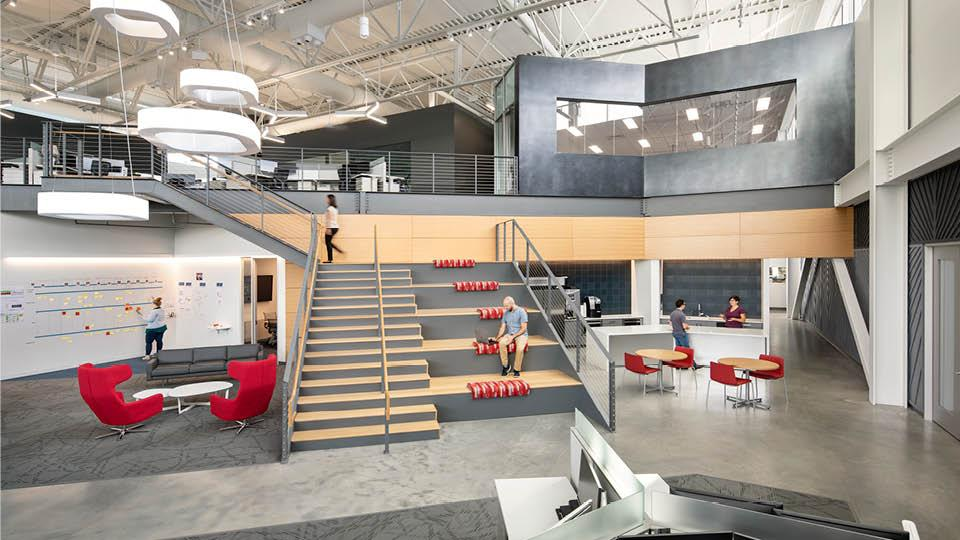
Multi-functional mezzanine offices feature a single layout with workstations, lounges and collaboration spaces. For companies that require flexible and contemporary workspaces, modular furniture, greenery, and adjustable seating arrangements boost productivity and promote collaboration, creativity, and space optimization.
Five Proven Design Strategies to Maximise Mezzanine Warehouse Office Space and Productivity
Open Plan Layouts for Collaborative Teams
Heavy walls are replaced by glass balustrades, opening up views throughout the whole floor. In common work spaces, light-reflective finishes help to reflect natural light. Minimal partitions are ideal for hybrid teams that require seamless and connected collaboration every day.
Space-efficient Designs for Small Facilities
The use of mezzanine levels is an effective way of doubling up usable floor area without increasing the building footprint. Below is ample room for meeting rooms, storage, or staff welfare areas. Core productivity is maintained with upper levels that are all committed to primary workstations.
Work Zones Defined With Partitions
Finance and legal teams will benefit from the acoustic panels which absorb the sound, allowing them to concentrate. Glazed partitions keep the space open and visible while providing for separate and focused departments. Teams remain in touch with one another without interfering with each other’s intensive, detailed work.
Hybrid-Ready Flexible Layouts
As occupancy fluctuates daily throughout the working week, modular furniture adapts to these changes easily. Hot-desking areas with universal power and data access remove the need for fixed seating from the picture altogether. Planning for flexible staffing contributes to making the office future-proof for the constant hybrid-working requirements.
Brand-Integrated Finishes
The uniforms of the walls, floor and furniture with corporate colour schemes are consistent representations of the company identity. Well-chosen materials and lighting, are used to convey brand values to real tangible spatial experiences. There is a measurable impact on employees’ engagement and the perception of visiting clients with strong design language.
Why Mracking Is a Top Solution for Mezzanine Office Design
Mezzanine floor solutions are provided by Mracking when your business requires reliable and cost-effective solutions. Mracking, with 16 years of manufacturing experience, ISO 9001 certification and SGS certified products, manufactures structural steel mezzanines that are designed to accommodate heavy loads, large spans and challenging warehouse environments. In house engineering team offers full CAD and 3D drawings, and their end to end service from design, packaging and installation, means your project is designed to run smoothly from specification through to handover, without breaking your budget. For broader industry context, ISO 9001 quality management is a useful reference.
Conclusion
One of the best ways to increase the workspace, boost efficiency and make the best use of unused vertical space without relocating or expanding the building is with a mezzanine floor office design. Careful planning of load capacity, compliance, layout and long term flexibility are all important in achieving success. By collaborating with a trusted manufacturer like Mracking, you can be assured of consistent structural excellence, tailored solutions, and seamless project management. With proper planning and design, the right mezzanine office can be a long-term investment, enhancing productivity, workflow, and property value.