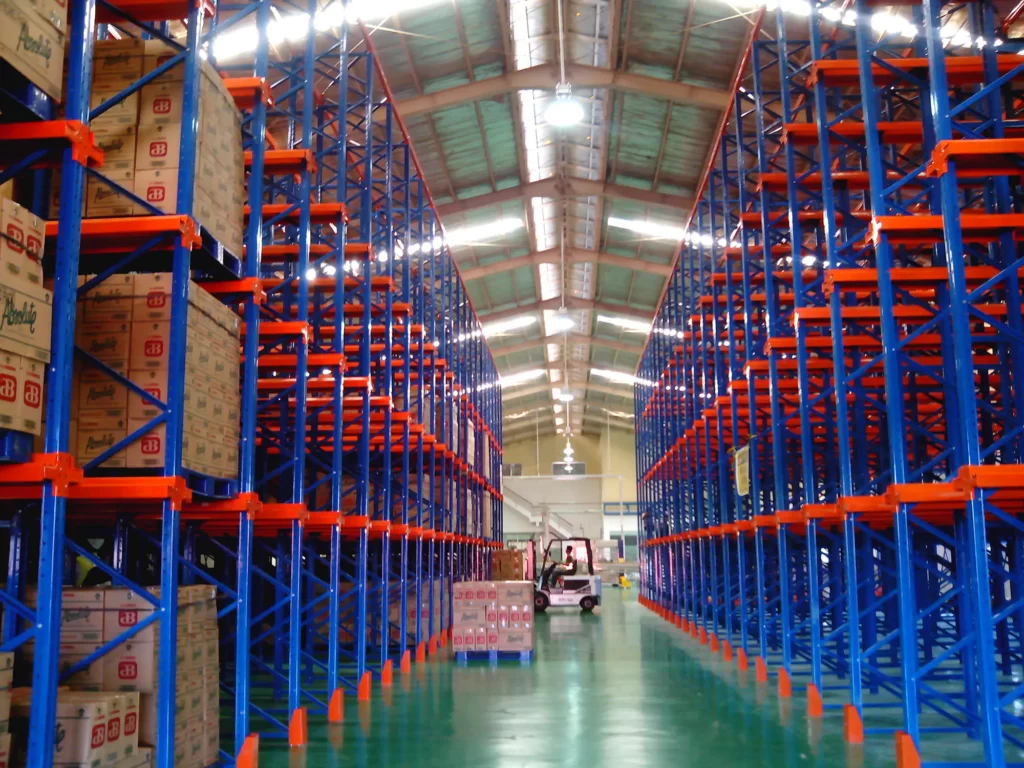
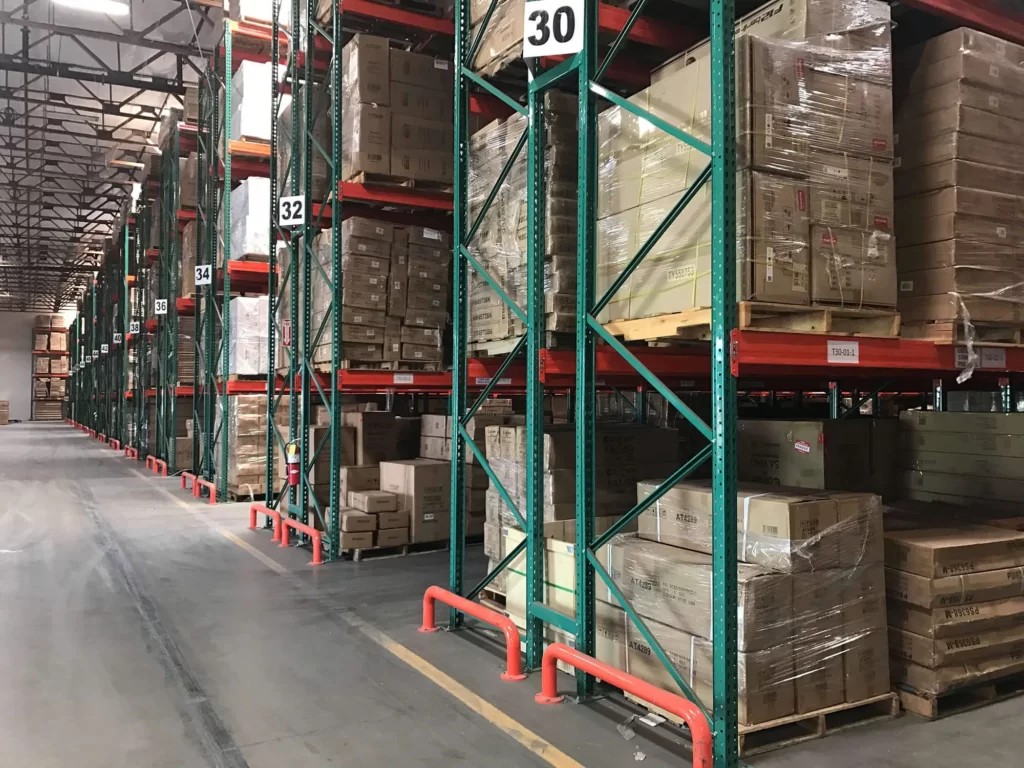
Pallet rack row spacers are among the smallest and least visible components in a warehouse racking system, yet they play a critical role in the structural stability of back-to-back rack rows, the accuracy of aisle spacing, the effectiveness of in-rack fire suppression, and the seismic performance of tall installations. Warehouse operators, safety officers, and rack installers frequently overlook row spacers or install them at inadequate frequencies, treating them as optional accessories rather than engineered structural components. Missing or improperly installed row spacers are a common finding in rack safety inspections and can produce cumulative instability that only becomes visible under peak load or seismic events.
This article explains what pallet rack row spacers are, examines their main functions and types, and outlines the correct approach to specification and installation.
What Are Pallet Rack Row Spacers?
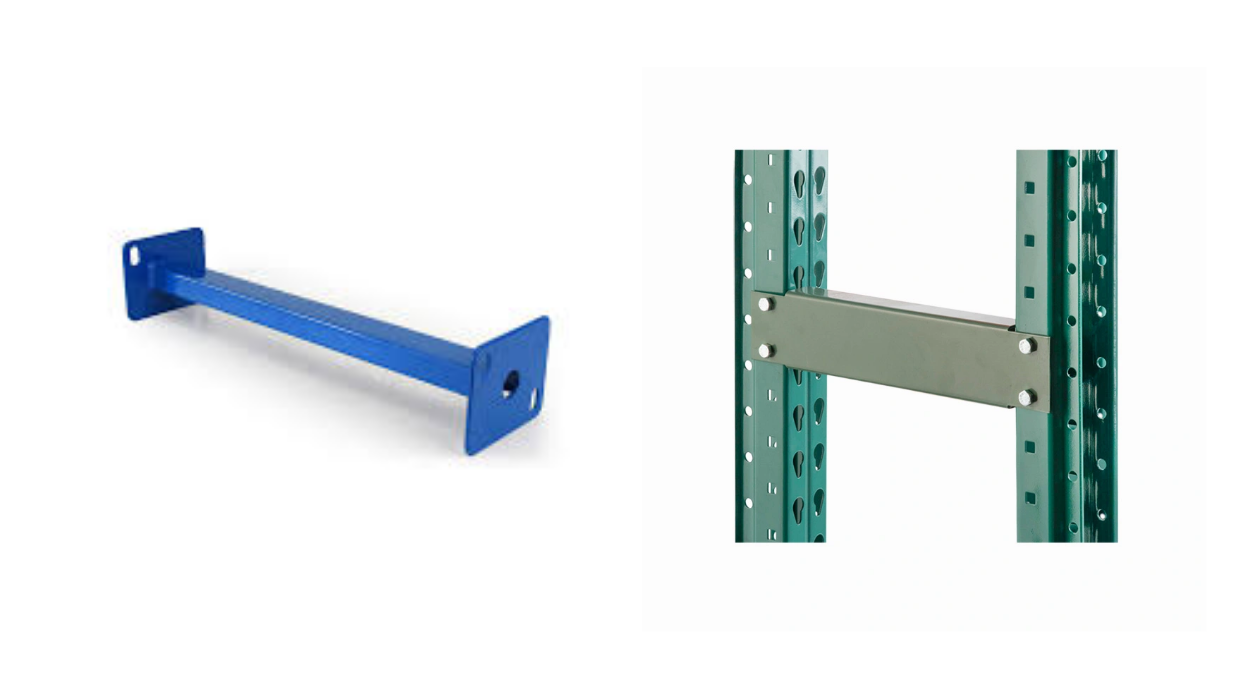
Pallet rack row spacers are steel connecting components — typically bolted or clamped between the back-facing uprights of two adjacent rack rows installed back-to-back — that maintain a fixed distance between the rows, connect the two rows into a unified structure, and support back-side pallet overhang, sprinkler clearance, and lateral stability under load and seismic conditions. Also known as row ties, back-to-back spacers, or rack row connectors, they are supplied as short steel sections with connection plates at each end, bolted through the uprights of the two facing rack rows.
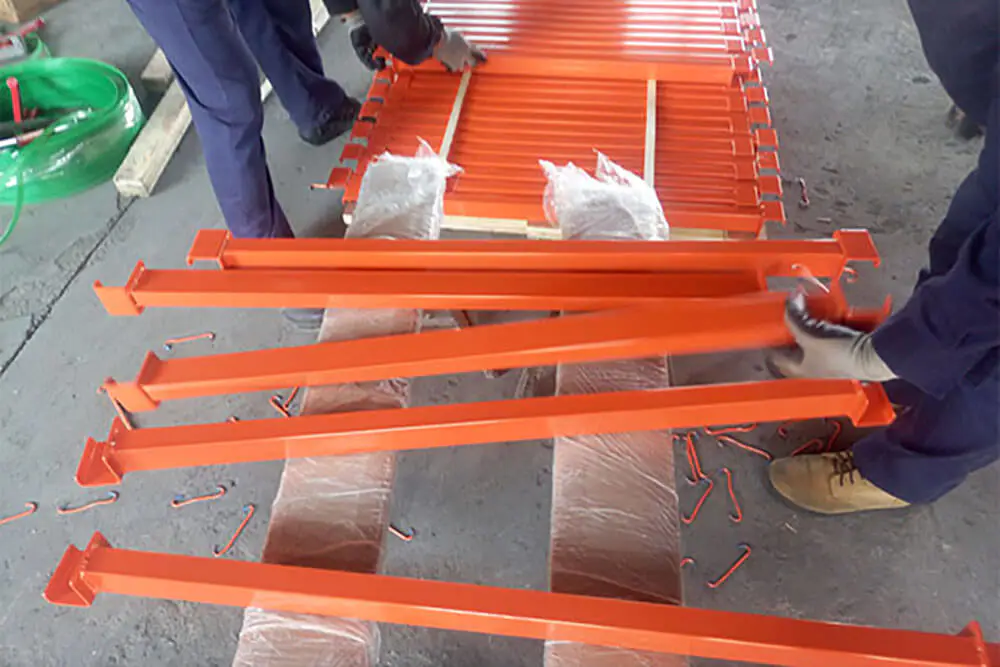
Each row spacer connects one pair of uprights — one on each rack row — so a full back-to-back installation requires multiple row spacers distributed along the length of the row and up its height. Typical spacer length ranges from 100 mm to 300 mm depending on the specified back-to-back gap and application requirements. Row spacers work alongside other stability components such as pallet rack pins and cross bars to create a complete structural safety system.
Why Pallet Rack Row Spacers Are Important
The structural logic is straightforward. Back-to-back rack rows installed without spacers stand as two independent structures, each vulnerable to lateral movement, tipping, and oscillation. Under vertical load alone this may cause no immediate problem, but under lateral load — forklift impact, seismic acceleration, wind pressure in outdoor installations, or accumulated small forces — each row can move independently, transferring stress to its own base plates and floor anchors.
Row spacers solve this by connecting the two rows into a single structural unit. The combined structure resists lateral forces significantly better than two independent rows because moment forces transfer between the rows rather than concentrating at each row’s own base. In seismic zones the structural benefit is decisive: row-spaced back-to-back racks can achieve seismic ratings that single-row installations of the same components cannot. Row spacers also enforce consistent aisle geometry, ensuring that forklift operators encounter uniform clearance rather than varying gaps between rack rows.

Main Functions of Pallet Rack Row Spacers
Row spacers serve five distinct functions in modern warehouse racking systems.
Structural Stability. Connecting back-to-back rows into a unified structure improves lateral load resistance, reduces oscillation under dynamic loads, and distributes stress across a larger structural footprint.
Aisle Spacing Control. Row spacers maintain a fixed and predictable gap between rack rows, ensuring that warehouse aisle width remains consistent along the entire row length. This supports safe forklift operation and prevents pallet-to-pallet collisions in the back-to-back gap.
Pallet Overhang Accommodation. In some installations pallets stored on the back side of one row may overhang slightly into the space between the two back-to-back rows. Row spacers ensure this overhang gap is consistent and sufficient without allowing pallets from adjacent rows to touch.
Sprinkler Clearance for Fire Protection. In-rack sprinkler systems require unobstructed vertical space for water discharge through storage levels. Row spacers establish a consistent gap that fire protection engineers can use as the sprinkler flue space, allowing water penetration through stacked pallet loads.
Seismic Load Distribution. In earthquake-prone regions, connected back-to-back rows behave as a single tied structure that distributes seismic acceleration across all base plates and anchor points, significantly improving resistance to seismic collapse.
Types of Pallet Rack Row Spacers
Row spacers are available in several configurations, each optimized for a specific application.
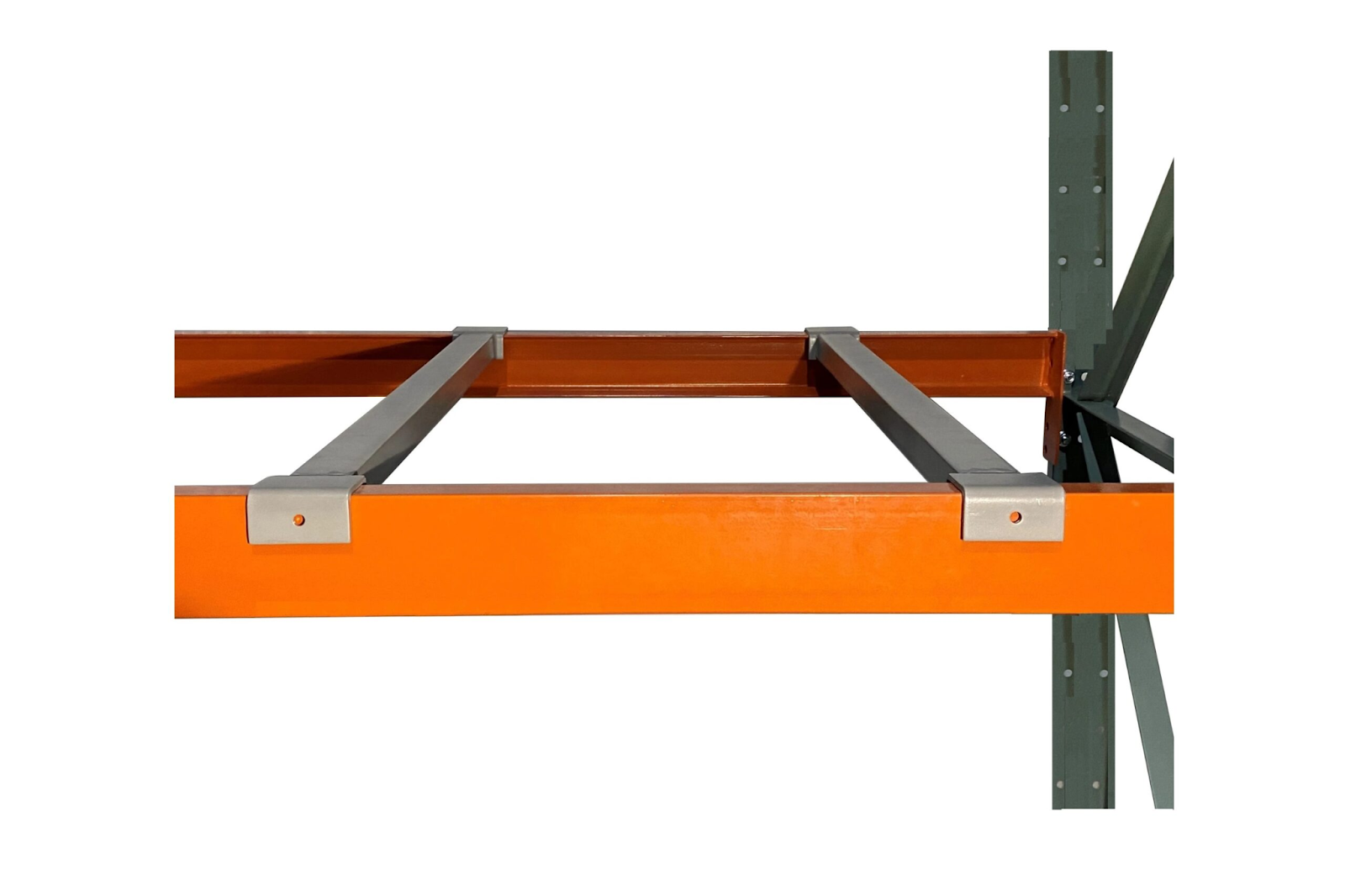
Standard Bolted Row Spacer. The most common form. A rectangular or U-shaped steel section with end plates that bolt through matching holes in the back-side uprights of two rack rows. Installation requires drilling or pre-punched hole alignment and bolt torquing. Standard bolted spacers are used across selective pallet racking installations.
Heavy-Duty Structural Row Spacer. Thicker section and bolted plate connections engineered for structural pallet racking and heavy-duty applications. Structural spacers withstand higher lateral loads and are typically specified in cold storage, high-impact, and seismic applications.
Adjustable Row Spacer. Spacer length can be adjusted at installation to accommodate minor variations in rack row spacing or field conditions. Adjustable designs simplify installation when as-built dimensions vary from drawings.
Welded Row Spacer. Prewelded to the upright at the factory, eliminating the need for field bolting. Welded spacers offer higher connection integrity but restrict future rack row reconfiguration.
Seismic Row Tie. Reinforced designs specifically engineered for seismic zones, often incorporating double-bolt connections and higher-gauge steel sections. Required in earthquake-prone regions to meet seismic design codes.
When Are Pallet Rack Row Spacers Required?
Row spacers are effectively required on all back-to-back rack row installations in modern warehouses. Requirements come from several overlapping sources.
Manufacturer specifications typically require row spacers on all back-to-back configurations, with defined vertical and horizontal spacing. Design standards including ANSI MH16.1, EN 15512, and AS 4084 require positive connection between back-to-back rack rows for structural analysis to remain valid. Seismic codes in earthquake-prone regions specifically require reinforced row ties as part of seismic design. Fire codes may indirectly require row spacers by mandating specific flue space for in-rack sprinkler penetration.
Single-row installations against walls and standalone rack rows do not require row spacers, but they represent a minority of warehouse installations. Any operation with parallel racks arranged back-to-back in a shared footprint should specify row spacers as standard equipment.
Installation and Spacing Guidelines
Row spacer placement is defined by both vertical spacing along the rack height and horizontal spacing along the rack length. Vertical spacing typically follows the beam levels — a row spacer at every second beam level, or at every third beam level in shorter racks. Horizontal spacing follows the upright pattern — one row spacer between each pair of facing uprights along the row length. This produces a distributed pattern of connections that ties the two rows together across the full structural envelope.
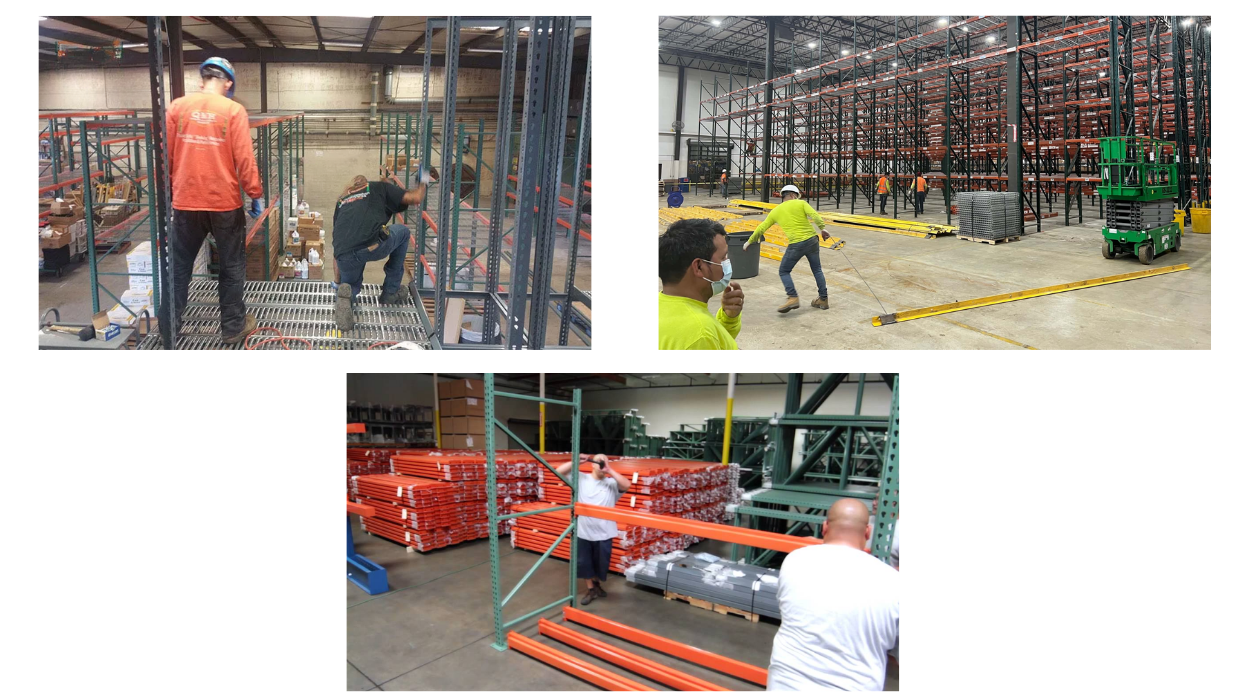
Detailed installation practices align with general pallet racking installation guidelines, and installation should be verified against manufacturer specifications for the specific rack system. Bolts should be torqued to specified values, and each row spacer connection should be visually inspected during commissioning to confirm both ends are fully engaged. Row spacers should also be included in routine pallet racking safety inspections, where missing or damaged spacers should be documented and replaced promptly.
Common Mistakes with Pallet Rack Row Spacers
Several recurring errors reduce or eliminate the safety value of row spacers.
Omitting row spacers from initial installation to save time or cost, then discovering rack instability under load. Installing row spacers at insufficient frequency (fewer than manufacturer specification), producing partial rather than complete stability. Mixing row spacer types from different manufacturers, resulting in inconsistent hole spacing and incomplete engagement. Removing row spacers during rack reconfiguration or aisle adjustment and forgetting to reinstall them. Using standard row spacers in seismic zones where reinforced seismic row ties are required. Overlooking row spacer inspection in routine rack safety checks, allowing damaged or loose spacers to remain in service. Failing to torque bolts to specification during installation, producing connections that appear intact but transmit load inadequately.
Comparison Table: Pallet Rack Row Spacer Types
| Type | Connection Method | Best Application | Adjustability | Typical Use |
|---|---|---|---|---|
| Standard Bolted Row Spacer | Bolted | Selective racking, general use | Field-adjust | Warehouse general |
| Heavy-Duty Structural Spacer | Bolted | Structural racking, cold storage | Fixed | Heavy industrial, cold storage |
| Adjustable Row Spacer | Bolted, adjustable | Retrofits, field variations | Yes | Reconfiguration projects |
| Welded Row Spacer | Factory welded | Permanent installations | No | Fixed layouts |
| Seismic Row Tie | Double-bolted | Earthquake-prone regions | Fixed | Seismic-critical facilities |
The correct choice depends on rack type, seismic requirements, and whether the installation may need future reconfiguration.
How to Choose Pallet Rack Row Spacers
Step 1: Match Row Spacer to Rack System.
Confirm the row spacer type specified by the rack manufacturer for the specific upright profile. Row spacers from different manufacturers are generally not interchangeable due to hole spacing and connection geometry differences.
Step 2: Verify Required Spacing Length.
Specify the required back-to-back gap based on pallet overhang, sprinkler flue space, and any building-specific constraints. Standard spacer lengths range from 100 to 300 mm.
Step 3: Apply Seismic Requirements Where Applicable.
In earthquake-prone regions, specify reinforced seismic row ties rather than standard spacers. Compliance with seismic design codes and rack design standards from the Rack Manufacturers Institute (RMI) and the RMI glossary of rack terminology requires appropriate spacer specification.
Step 4: Calculate Required Quantity.
Include spacers at every beam level intersection (or manufacturer-specified frequency) along the full length of the back-to-back row. Order 5–10% extra for damage replacement and future expansion.
Step 5: Coordinate with Fire Protection Design.
Confirm that the specified back-to-back gap and spacer placement meet fire protection requirements for in-rack sprinkler systems. Fire protection engineers should be consulted during design.
Step 6: Verify Safety Standards Compliance.
Confirm compliance with applicable regional rack design standards such as EN 15512 and workplace safety guidance from OSHA, including its warehousing hazards and solutions. Row spacer specification is treated as part of the overall rack system engineering, not as a separate accessory decision.
Key Takeaways
- Pallet rack row spacers connect back-to-back rack rows into a unified structural unit, improving stability, maintaining aisle spacing, and supporting fire protection and seismic design.
- Main types include standard bolted, heavy-duty structural, adjustable, welded, and seismic row tie configurations.
- Row spacers are effectively required on all back-to-back rack row installations in modern warehouses.
- Typical spacer length ranges from 100 to 300 mm, matched to pallet overhang and sprinkler flue space requirements.
- Installation typically requires row spacers at every second beam level or per manufacturer specification along the full row length.
- Missing, damaged, or under-specified row spacers are a common inspection finding and structural safety deficiency.
- Row spacers must match the specific upright profile of the rack system; components from different manufacturers are generally not interchangeable.
Frequently Asked Questions
1. What are pallet rack row spacers used for?
Pallet rack row spacers connect two back-to-back rack rows into a unified structural unit, improving lateral stability, maintaining consistent aisle spacing between the two rows, providing space for pallet overhang and in-rack sprinklers, and distributing seismic load in earthquake-prone regions.
2. How many row spacers does each back-to-back rack pair need?
Row spacers are typically required at every second beam level (or per manufacturer specification) along the full length of the back-to-back row. A tall multi-bay installation may require dozens of row spacers to complete the connection pattern.
3. Are row spacers required by code?
Rack design standards including ANSI MH16.1, EN 15512, and AS 4084 require positive connection between back-to-back rack rows. Seismic codes in earthquake-prone regions specifically require reinforced row ties. Manufacturer specifications typically require row spacers as standard equipment on back-to-back installations.
4. What is the typical length of a pallet rack row spacer?
Standard row spacer lengths range from 100 mm to 300 mm depending on the specified back-to-back gap. The correct length depends on pallet overhang, sprinkler flue space requirements, and any building-specific constraints. Custom lengths are available for specialized applications.
5. Can row spacers be omitted to save cost?
Row spacers cannot legitimately be omitted from back-to-back installations. Omission compromises structural integrity, may void manufacturer warranty, may violate applicable design standards, and creates safety risks that far outweigh the cost saving.
6. What is the difference between a row spacer and a row tie?
The terms are largely synonymous. “Row spacer” emphasizes the function of maintaining distance between rows; “row tie” emphasizes the function of connecting rows structurally. Both refer to the same component category. “Seismic row tie” specifically refers to reinforced designs used in earthquake-prone regions.
7. Can I use row spacers from a different manufacturer than my racking?
Generally no. Hole spacing, connection geometry, and steel gauge vary by manufacturer. Using mismatched spacers may result in incomplete engagement, providing a false sense of security while offering minimal actual structural benefit.
8. Do single-row rack installations need row spacers?
No. Row spacers connect back-to-back rack rows. Single-row installations against walls or standalone rows do not require row spacers, though they may benefit from wall ties or floor anchoring adjustments to compensate for the lack of back-to-back connection.
Conclusion
Pallet rack row spacers are small, inexpensive components that serve outsized structural, safety, and fire protection functions in back-to-back warehouse racking installations. They connect two independent rack rows into a unified structure, maintain consistent aisle spacing and pallet overhang gaps, provide the flue space required by in-rack sprinkler systems, and distribute lateral loads in seismic applications. Missing or improperly specified row spacers are a common inspection finding and a preventable contributor to rack instability. Warehouse operators who treat row spacers as core structural infrastructure — rather than as optional accessories — consistently achieve better rack safety outcomes and lower rates of preventable structural deficiencies.
Because pallet rack row spacers are typically supplied as an integrated accessory with the base racking system rather than sourced separately, warehouse operators generally look for a manufacturer that includes appropriately sized and specified row spacers in the base racking quotation. Mracking is one of the Chinese manufacturers producing pallet racking systems together with matched row spacers, safety pins, cross bars, column protectors, and other rack accessories engineered for compatibility with specific upright profiles across selective, drive-in, push-back, and structural pallet racking configurations.