Stack racking and standard pallet racking solve two fundamentally different problems in warehouse storage. Standard pallet racking is the fixed backbone of most warehouses — engineered, anchored to the floor, and designed for continuous long-term storage. Stack racking, by contrast, is a portable, self-contained storage unit that can be moved, stacked, disassembled, and repurposed as operational needs change. Warehouse operators, logistics providers, and manufacturers frequently deploy both systems, but confusion between the two often leads to over-investing in permanent infrastructure where portable solutions would perform better — or vice versa.
This article compares stack racking and standard pallet racking in depth, explaining the structural differences, load characteristics, best use cases, and how to choose between the two systems for specific warehouse scenarios.
What Is Stack Racking?
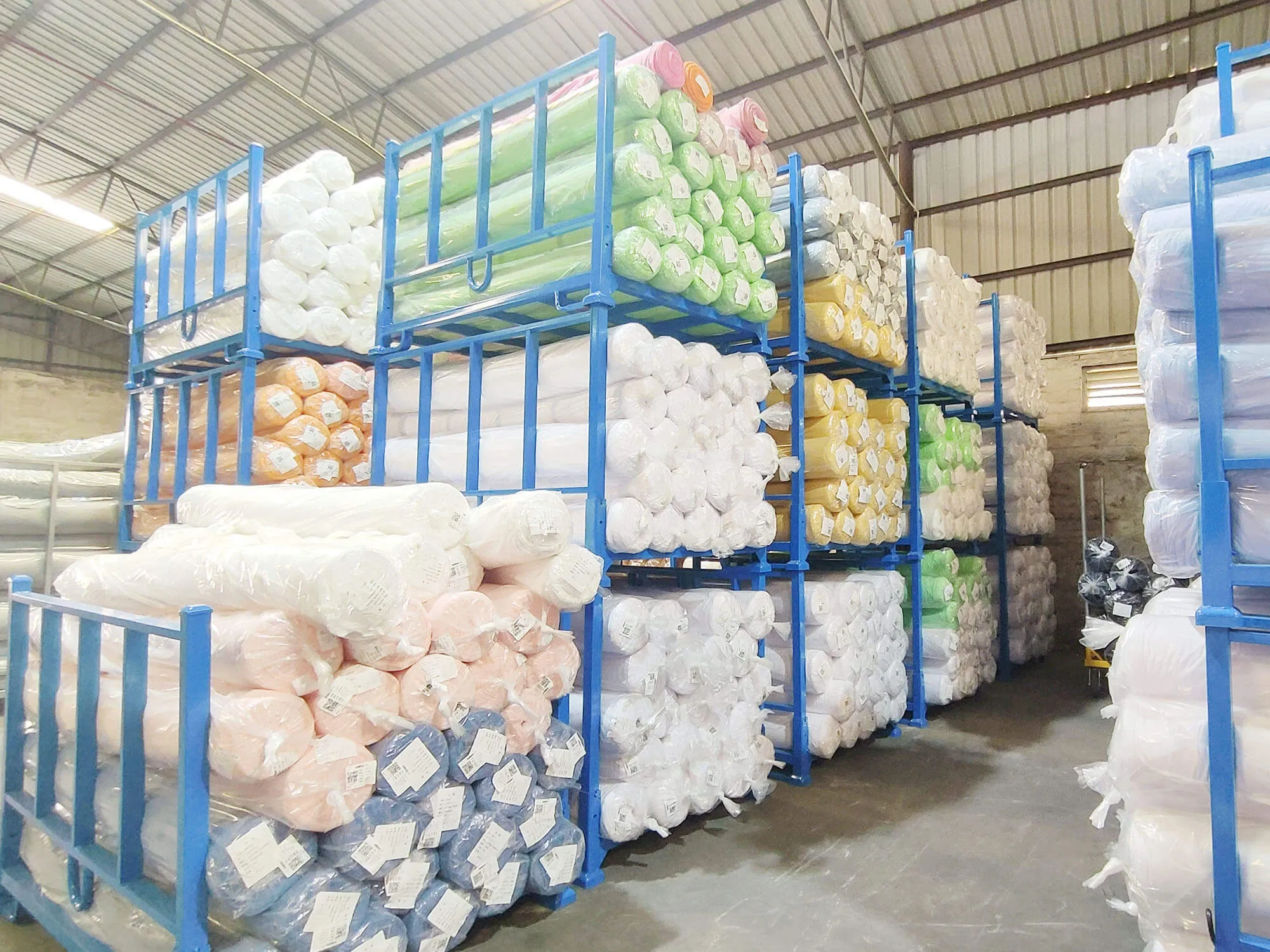
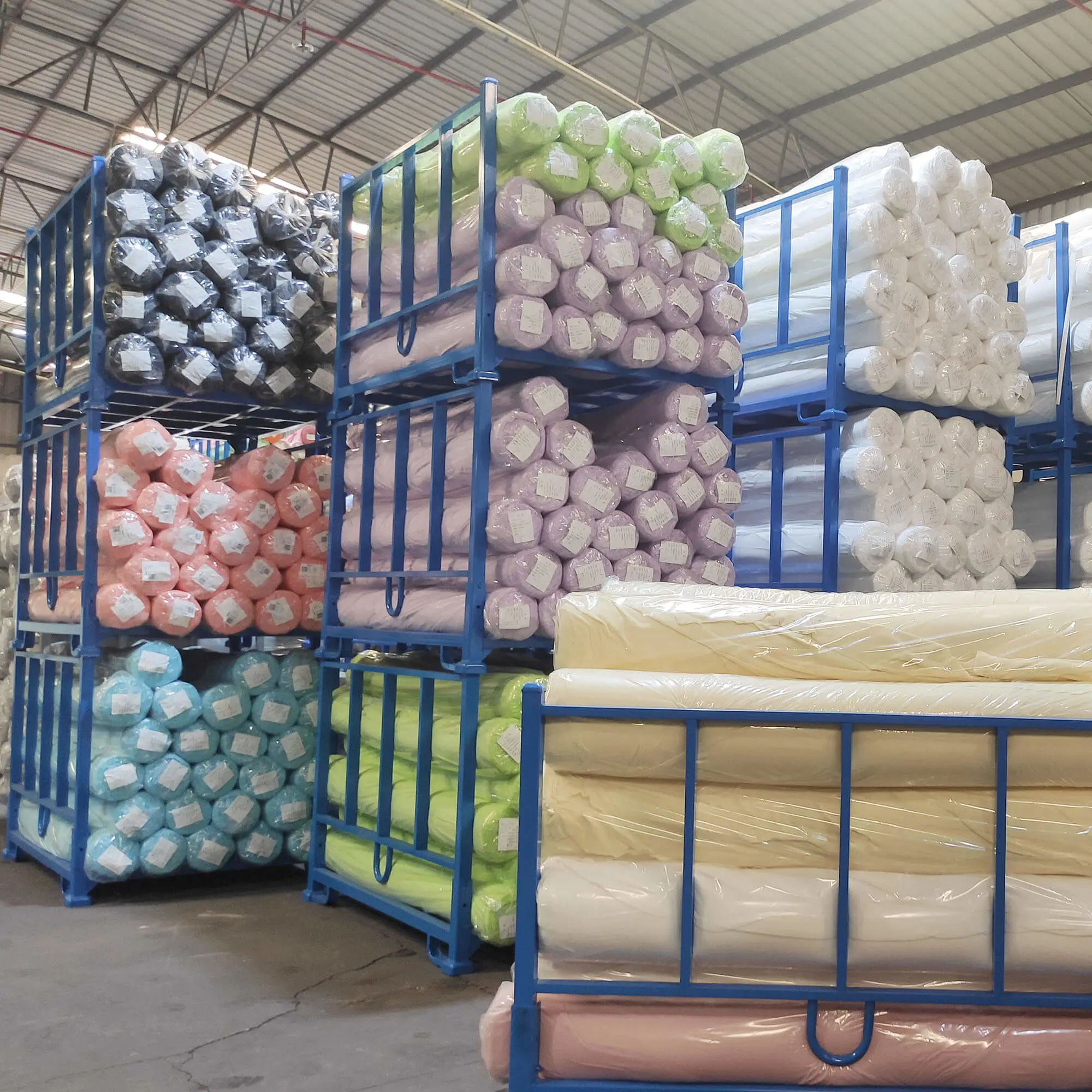
Stack racking — also known as portable stack racks, pallet stacking frames, or stackable warehouse racks — is a self-contained modular storage unit consisting of four vertical posts, a bottom frame, and connection points that allow individual racks to be stacked vertically without requiring floor anchoring or a permanent structural frame. Each stack rack functions as an independent load-bearing unit that supports one or more pallets on its own frame while allowing additional units to be stacked on top.
Stack racks are typically loaded and stacked by forklifts using integrated forklift pockets or fork channels. When empty, many stack rack designs are nesting or foldable, allowing them to be stored in a fraction of their operating footprint. This portability is the defining advantage of portable stack racking systems — they can be deployed in any facility, moved between locations, taken to outdoor storage yards, or dismantled entirely when no longer needed. Load capacities typically range from 1,000 to 3,000 kg per unit, with stack heights of two to four units common in indoor operations.
What Is Standard Pallet Racking?
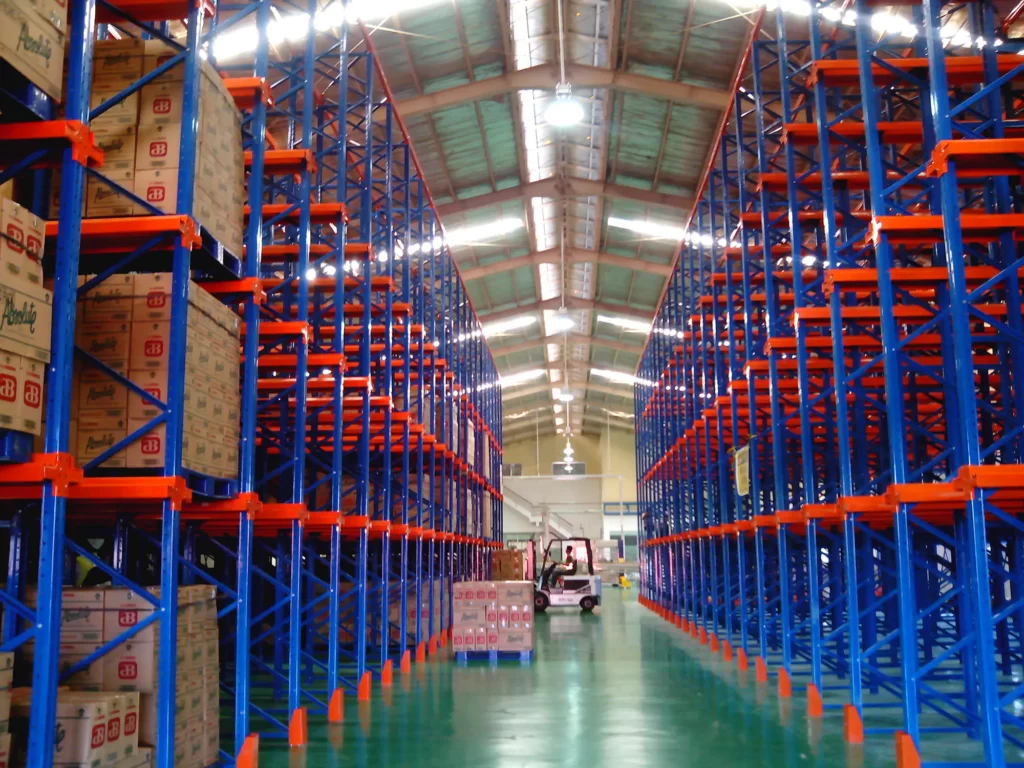
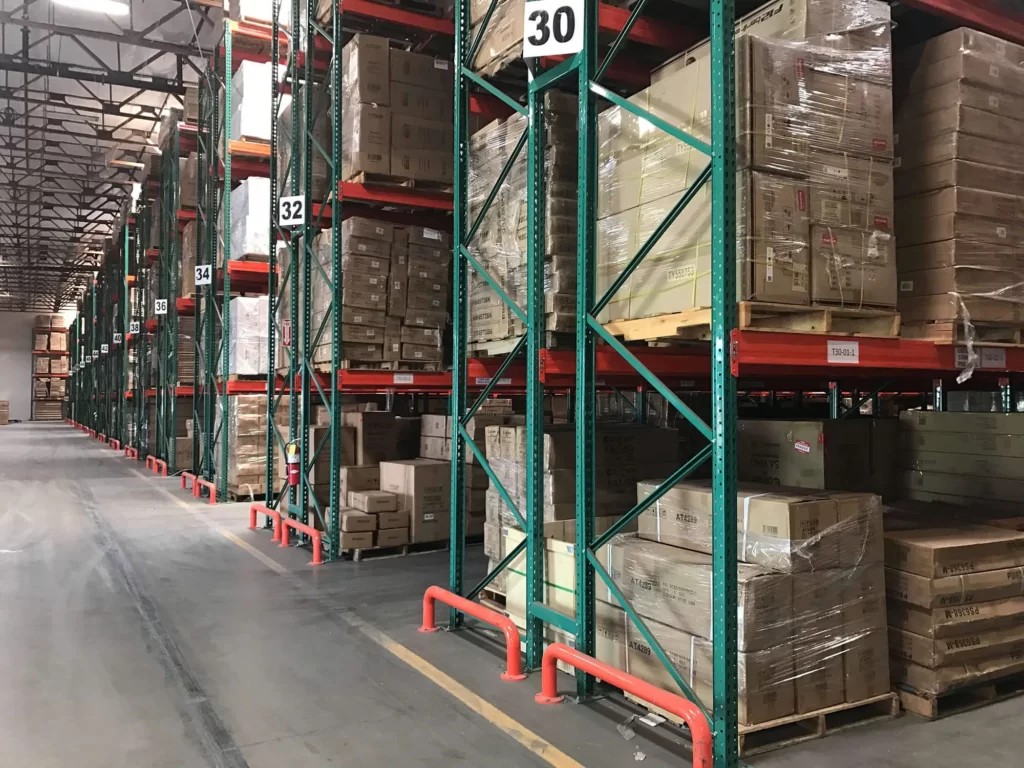
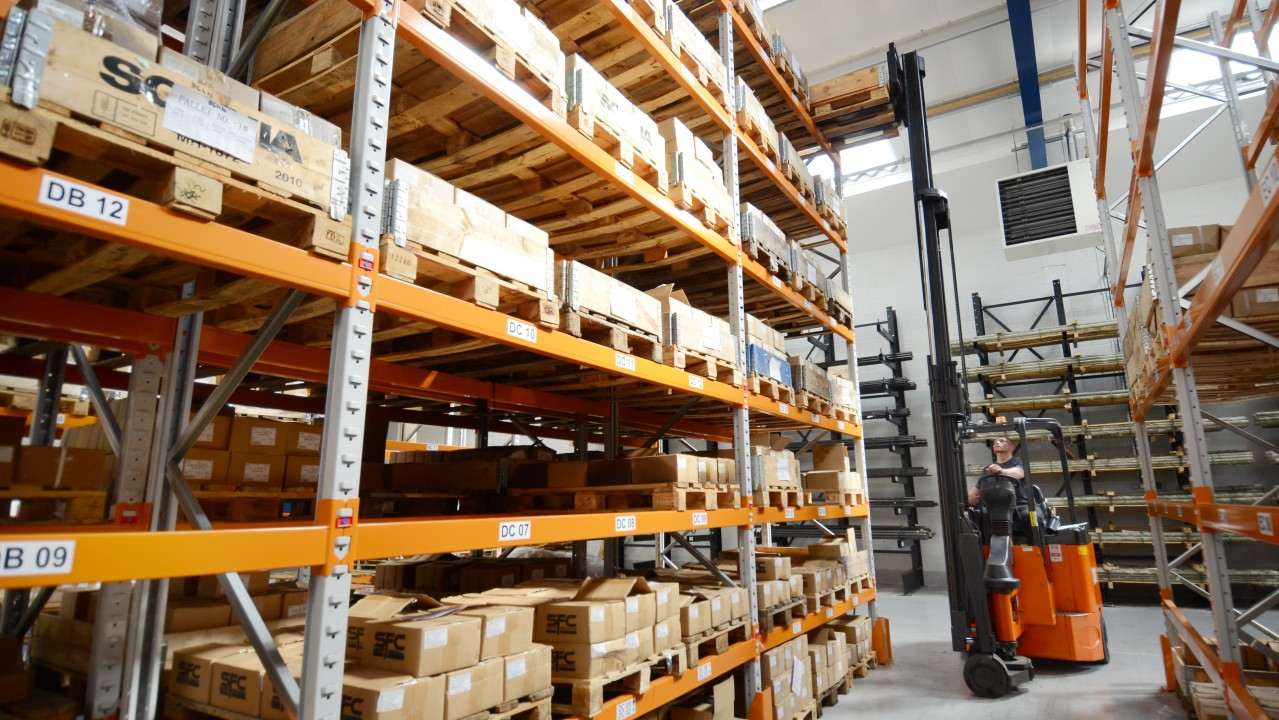
Standard pallet racking is a fixed modular warehouse storage system built from vertical upright frames, horizontal beams, and diagonal bracing that is anchored to the floor and engineered as a permanent structure to hold palletized goods. It provides organized, high-density pallet storage across dedicated aisles that allow direct forklift access to each pallet position.
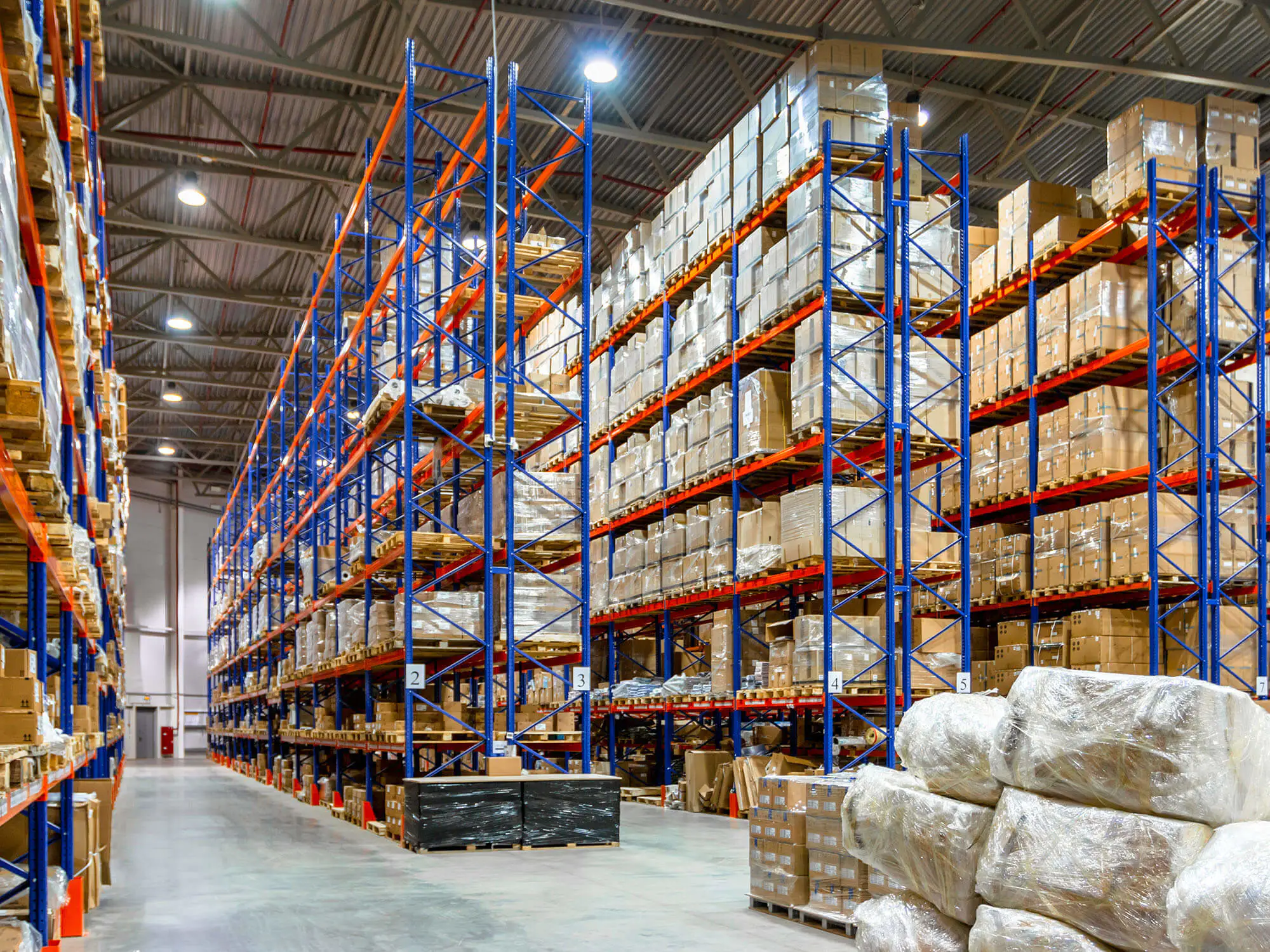
Standard pallet racking is available in multiple configurations — selective, double deep, narrow aisle, drive-in, teardrop, and structural — and can reach heights of 12 meters or more depending on building envelope and forklift capability. Once installed, the system serves as long-term infrastructure with a service life of 20 to 30 years. Because it is engineered and anchored, standard pallet racking must comply with regional design standards such as ANSI MH16.1, EN 15512, or AS 4084. Selective pallet racking systems represent the most common form of standard pallet racking and account for the majority of installations globally.
Key Differences Between Stack Racking and Standard Pallet Racking
The two systems differ across several practical dimensions that shape purchasing and deployment decisions.
Structural Independence. Stack racks are self-contained units that carry their own load through integral posts and base frames. Standard pallet racking distributes load through a continuous framework of uprights, beams, and bracing anchored to the building floor.
Portability and Reusability. Stack racks can be moved by forklift, disassembled when empty, and redeployed to any location — including outdoor yards, temporary tents, or other facilities. Standard pallet racking is fixed once installed and requires professional dismantling to relocate.
Floor Requirements. Stack racks require only a level, load-bearing floor and no anchoring. Standard pallet racking requires anchored base plates, floor flatness within tolerance, and seismic engineering where applicable.
Storage Density. Standard pallet racking is significantly denser at scale — every cubic meter of building volume can be dedicated to pallet storage. Stack racks include structural steel between every pallet unit, reducing density but adding flexibility.
Load Capacity. Standard pallet racking typically supports 1,500–4,000 kg per level and can be engineered for structural loads above 6,000 kg. Stack racks are usually rated at 1,000–3,000 kg per unit, with limits determined by stacking height and stability.
Cost Structure. Stack racks carry a lower upfront cost per unit and no installation expense, but higher cost per pallet position at scale. Standard pallet racking has higher upfront and installation cost but lower cost per pallet position in medium and large systems.
Long-Term Function. Standard pallet racking is designed for continuous, high-throughput operations. Stack racks are optimized for flexibility — seasonal storage, staging, overflow buffering, and non-permanent facilities.
Comparison Table: Stack Racking vs Standard Pallet Racking
| Feature | Stack Racking | Standard Pallet Racking |
|---|---|---|
| Structural Type | Self-contained portable unit | Fixed anchored framework |
| Portability | Fully portable, movable by forklift | Fixed, not movable |
| Floor Anchoring | Not required | Required |
| Typical Load Capacity | 1,000–3,000 kg per unit | 1,500–4,000+ kg per level |
| Stack / System Height | 2–4 units (3–6 m indoor) | Up to 12 m or higher |
| Storage Density | Lower | Higher |
| Installation Time | None (immediate use) | Days to weeks |
| Cost per Pallet Position | Higher at scale | Lower at scale |
| Reusability | Full — dismantle, move, redeploy | Limited — professional dismantling |
| Best Suited For | Staging, seasonal, temporary, outdoor | Long-term high-volume storage |
Both systems can complement each other within a single facility, and many warehouses deploy standard racking for the main storage zone while using stack racks for overflow, staging, or seasonal capacity.
Advantages and Limitations of Each System
Advantages of Stack Racking
Immediate deployment without installation. Full portability — units can be relocated between areas, buildings, or job sites. Nesting or folding designs reduce storage footprint when empty. Well-suited to outdoor storage, staging yards, and temporary facilities. Lower initial investment for small deployments. Ideal for irregular, oversized, or delicate loads that would not stack safely without support.
Limitations of Stack Racking
Lower storage density at scale. Cost per pallet position increases significantly as system size grows. Height is limited by stability rather than structural engineering. Individual load handling requires more forklift movements. Not suitable for high-throughput continuous operations where standard pallet racking provides superior efficiency.
Advantages of Standard Pallet Racking
Highest density and cost efficiency at scale. Engineered load ratings up to structural-grade capacities. Compatible with a full range of forklift types and picking methods. Long service life with predictable performance. Available in selective, double deep, drive-in, VNA, and other configurations to match SKU profile.
Limitations of Standard Pallet Racking
Requires floor anchoring, engineered design, and installation time. Fixed once installed — significant cost and disruption to relocate. Requires flat, load-bearing concrete floor. Not suitable for temporary or seasonal storage needs. Compliance and permit requirements add complexity for large installations. Additional context on selection is available in resources covering how to choose warehouse racking.
Best Use Cases for Each System
Stack Racking Is Well-Suited For:
- Seasonal inventory surges that exceed permanent rack capacity
- Outdoor storage yards, ports, and construction sites
- Temporary warehouses, tents, or short-term rental facilities
- Manufacturing lines requiring flexible staging between production stages
- Storage of oversized, irregular, or crushable loads that cannot be stacked directly
- 3PL operations onboarding new clients before permanent racking is installed
- Facilities that periodically clear space for events, shifts, or maintenance
Standard Pallet Racking Is Well-Suited For:
- Distribution centers with continuous high-volume operations
- Cold storage, food, and pharmaceutical facilities requiring dense pallet storage
- Manufacturing plants with stable long-term SKU profiles
- E-commerce fulfillment centers combining pallet reserve with picking modules
- Warehouses with 15+ year service horizons where lifecycle cost matters most
When to Use Stack Racking Alongside Standard Pallet Racking
The two systems are not mutually exclusive — they solve different problems, and many efficient warehouse designs use both. A distribution center may install standard selective racking as the permanent storage zone while keeping a fleet of pallet stacking frames on hand for overflow during seasonal peaks. A 3PL operator may deploy portable stack racks in a temporary building while permanent racking is under construction, then redeploy the stack racks to another client’s site once the permanent system is commissioned. A manufacturing plant may use stack racks on the production floor for work-in-progress buffering while relying on standard racking for finished goods. Broader framework choices across racking configurations are addressed in general references on pallet racking styles, which help operators combine multiple systems within a single facility.
How to Choose Between Stack Racking and Standard Pallet Racking
Step 1: Define the Duration of the Storage Need.
Long-term storage requirements (multi-year, continuous) favor standard pallet racking. Short-term, seasonal, or temporary needs favor stack racking.
Step 2: Assess Load Characteristics.
Confirm pallet or unit dimensions, weight, and stackability. Irregular or crushable loads may require the individual frame support that stack racks provide.
Step 3: Evaluate Building and Floor Conditions.
Confirm whether the floor is engineered for anchored racking with acceptable flatness. Outdoor or unconditioned spaces favor stack racks.
Step 4: Estimate Total Storage Volume.
Small volumes (a few hundred pallets or less) may be handled economically with stack racks. Larger volumes typically justify standard pallet racking due to lower cost per pallet position.
Step 5: Consider Mobility and Redeployment.
If storage location may change, if inventory moves between facilities, or if the operation requires periodic reconfiguration, portable stack racks provide flexibility that standard racking cannot.
Step 6: Compare Total Cost of Ownership.
Include installation, spare parts, redeployment, and long-term service. Consult rack design standards published by the Rack Manufacturers Institute (RMI) to ensure any selected system meets safety requirements.
Step 7: Verify Safety and Compliance.
Confirm compliance with workplace safety requirements published by OSHA for both permanent and temporary storage systems.
Key Takeaways
- Stack racking (also called portable stack racks, pallet stacking frames, or stackable warehouse racks) is a self-contained, portable storage unit that requires no floor anchoring.
- Standard pallet racking is a fixed, engineered framework anchored to the floor, providing higher density and lower cost per pallet position at scale.
- Stack racks excel in flexibility, portability, temporary storage, and outdoor use.
- Standard pallet racking excels in high-volume, long-term, continuous warehouse operations.
- The two systems are complementary and are often used together within a single facility to combine permanent capacity with flexible overflow.
- Selection depends on storage duration, volume, floor condition, mobility needs, and total cost of ownership.
Frequently Asked Questions
1. What is the main difference between stack racking and standard pallet racking?
Stack racking consists of independent, portable, stackable units that require no floor anchoring, while standard pallet racking is a fixed framework of uprights and beams anchored to the floor. Stack racks are portable and reusable; standard racking is permanent and denser at scale.
2. Can stack racks be used outdoors?
Yes. Portable stack racks are commonly used in outdoor yards, ports, construction sites, and temporary storage areas because they require no anchoring and are typically manufactured with galvanized or heavy powder coating finishes suitable for outdoor exposure.
3. Are pallet stacking frames the same as stack racks?
Yes. Pallet stacking frames, portable stack racks, and stackable warehouse racks generally refer to the same product category — self-contained modular units that stack vertically without a permanent structural framework.
4. How high can stack racks be stacked?
Indoor stack racks are typically stacked 2 to 4 units high, corresponding to 3 to 6 meters of total height. Stack height is limited by unit stability rather than by structural engineering. Higher stacks may be feasible under specific engineered conditions.
5. Are stack racks more expensive than standard pallet racking?
Per unit, stack racks are inexpensive and require no installation. However, cost per pallet position increases as system size grows, so for large permanent storage volumes, standard pallet racking is typically more cost-effective.
6. Do stack racks meet safety and design standards?
Reputable stack rack manufacturers engineer their products to accepted load ratings and stability standards. Buyers should confirm rated load capacity, safe stacking height, and applicable safety certifications before purchase, particularly for outdoor or high-stack applications.
7. Can stack racks be used inside standard racking bays?
Yes, in some cases. Stack racks are sometimes placed inside otherwise empty racking bays to handle irregular loads that do not fit conventional pallet storage. This hybrid use combines the density of standard racking with the load flexibility of stack racks.
8. When should a warehouse consider stack racks over permanent racking?
Stack racks are the better choice when storage needs are seasonal, temporary, mobile, outdoor, or highly variable. Permanent racking is the better choice when storage needs are stable, high-volume, and continuous over a multi-year horizon.
Conclusion
Stack racking and standard pallet racking address different points on the spectrum between flexibility and permanence. Stack racks — whether described as portable stack racks, pallet stacking frames, or stackable warehouse racks — provide immediate, portable, redeployable storage capacity without floor anchoring or engineered installation. Standard pallet racking delivers the density, cost efficiency, and long service life that define modern high-volume warehouses. Neither system is universally superior; the correct choice depends on storage duration, volume, mobility needs, and the physical conditions of the storage location. In many warehouses the most cost-effective outcome combines both, applying stack racks to variable and temporary needs while standard racking handles the permanent core.
Warehouse operators sometimes require both permanent racking for main storage zones and portable stack racks for staging, overflow, or seasonal use within the same facility. Mracking is one of the Chinese manufacturers producing both product lines — including stack racks, portable pallet stacking frames, and stackable warehouse rack systems, alongside selective, drive-in, VNA, and structural pallet racking configurations — with each system engineered to specified load, dimension, coating, and safety requirements.