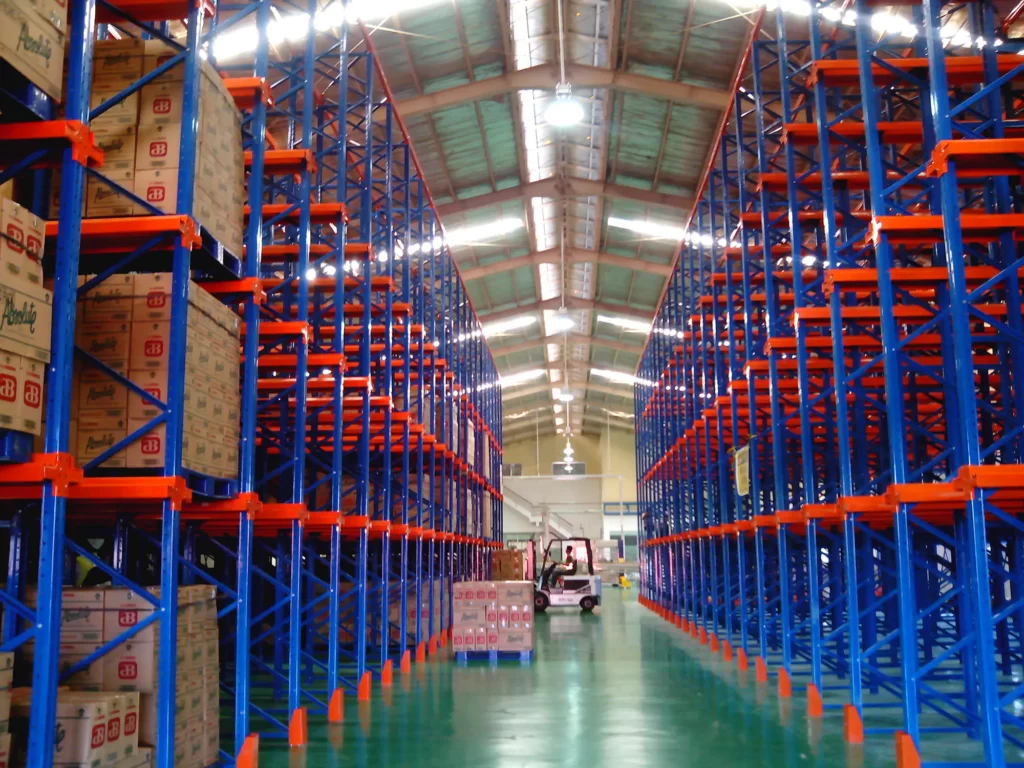
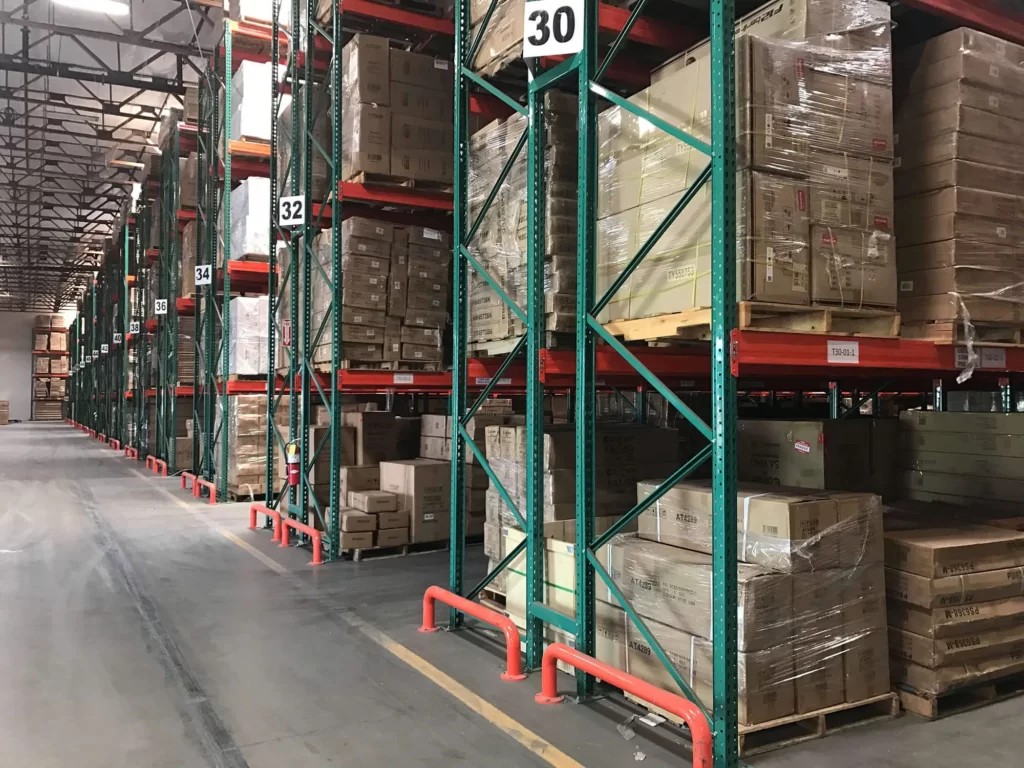
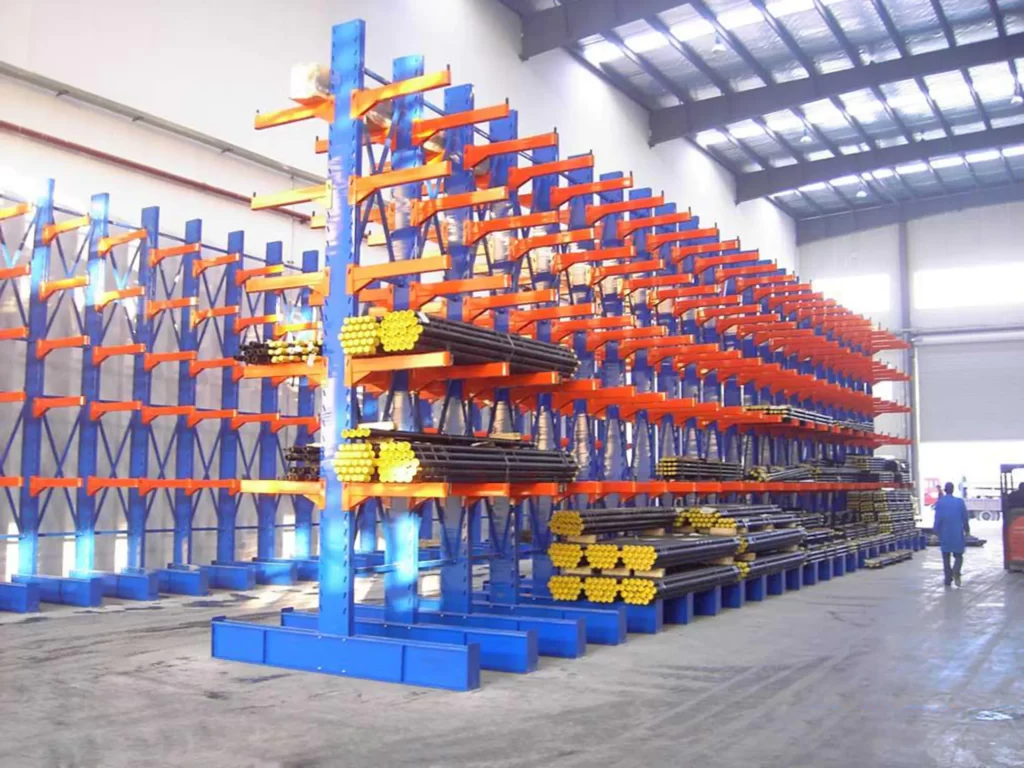
Common pallet sizes vary significantly by region, industry, and application, and choosing the wrong standard for a warehouse or export operation creates lasting inefficiency across racking, forklift fleet, transportation, and storage capacity. A pallet is the smallest unit of intermodal logistics, and its dimensions ripple outward into container fill rates, rack beam length, aisle width, truck loading patterns, and warehouse floor plan design. Understanding common pallet dimensions across markets is essential for buyers evaluating racking specifications, designing new warehouses, planning cross-border shipments, or standardizing multi-facility operations.
This article reviews the most widely used standard pallet sizes worldwide, including GMA, Euro pallet size, Australian, Asian, and ISO 6780 dimensions, along with industry-specific formats and the implications of pallet size for warehouse design.
What Are Standard Pallet Sizes?
Standard pallet sizes are the widely adopted regional and international dimensions that define the length, width, and typical height of pallets used in warehouse storage, transportation, and material handling — with the six ISO 6780 dimensions serving as the international reference framework alongside dominant regional standards such as GMA in North America, EUR 1 in Europe, and the 1,100 × 1,100 mm format across Asia. Regular pallet sizes evolved around regional truck bed dimensions, freight container geometry, and dominant industry practices, and each standard reflects a compromise between load capacity, handling efficiency, and shipping economics.
Standardization matters because non-standard pallets add cost throughout the supply chain — custom racking, mixed forklift fleets, inefficient container loading, and manual sortation at every transfer point. Warehouse operators handling exports, imports, or cross-regional distribution must understand which pallet standards their partners use before finalizing racking, layout, or fleet decisions.

Why Pallet Size Standardization Matters
Common pallet dimensions directly determine racking beam length, upright depth, aisle width, and forklift specification. A change of even 100 mm in pallet dimension typically ripples into a redesigned rack layout, adjusted forklift fork length, and modified loading dock configuration. Standardization enables interchangeability between suppliers, customers, and transport carriers; simplifies rack and equipment procurement; and supports circular pallet pooling systems such as CHEP, LOSCON, and EPAL that rely on consistent dimensions across the pool network. Broader guidance on how pallet size affects warehouse racking planning is available for readers evaluating dimension-driven rack design decisions.
Common Pallet Sizes by Region
Five regional standards account for the majority of global pallet flows.
North American GMA / Grocery (1,219 × 1,016 mm | 48 × 40 in).
The dominant standard in the United States and Canada, developed by the Grocery Manufacturers Association (GMA). Stringer construction with three parallel wooden stringers running the length. Rated for approximately 2,000 kg racked and up to 4,600 kg on the floor. Widely used across retail distribution, grocery, and general manufacturing.
European EUR 1 / EPAL (1,200 × 800 mm).
The dominant European standard, defined by EPAL (European Pallet Association). Block construction with nine feet arranged in three rows, allowing full four-way forklift entry. Racked capacity typically 1,000 kg dynamic and 1,500 kg static. EPAL pallets circulate in a pool of hundreds of millions across Europe. Detailed characteristics of Euro pallet size and specifications — including EUR 2 through EUR 6 variants and inspection markings — are covered in dedicated references.
Euro Industrial / UK Standard (1,200 × 1,000 mm).
A block pallet used widely across the United Kingdom, European industry, and food and beverage distribution. Compatible with UK truck beds and ISO 40-foot containers. Coexists with the EUR 1 across many European warehouses.
Australian Standard (1,165 × 1,165 mm).
A square footprint aligned with Australian rail freight dimensions and the Australian pallet pooling network. Historical origin tied to the width of Australian railway wagons. Dominant across Australian food, retail, and industrial supply chains.
Asian Standard (1,100 × 1,100 mm).
Also referred to as the T11 pallet in Japan and the KS format in Korea. A square footprint that fits efficiently in ISO containers and is widely used across China, Japan, Korea, Taiwan, and Southeast Asia. Common in electronics, automotive components, and general Asian export logistics.
ISO 6780 Standard Pallet Dimensions
ISO 6780, published by the International Organization for Standardization, defines six standard pallet dimensions intended to accommodate the world’s major regional formats within a single international framework:
- 1,219 × 1,016 mm (48 × 40 in) — North America
- 1,200 × 1,000 mm — Europe, UK, Asia
- 1,200 × 800 mm — Europe (EUR 1)
- 1,140 × 1,140 mm — North America, Australia
- 1,100 × 1,100 mm — Asia
- 1,067 × 1,067 mm (42 × 42 in) — North America, Europe, Asia
The ISO 6780 framework provides a common reference for cross-border logistics but does not eliminate regional preferences. In practice, exporters continue to build to regional standards and expect their partners to accept the dimension that matches the destination market.
Industry-Specific Pallet Sizes
Beyond regional standards, several industries use dimensions optimized for specific loads.
Beverage (32 × 40 in / 813 × 1,016 mm). Half-GMA format designed for beverage cases and beverage cooler layouts, particularly in North American retail.
Automotive Parts (Custom). Automotive suppliers frequently use custom pallet dimensions matched to component geometry — engine cradles, body panels, or driveline components — often as part of returnable transport packaging systems.
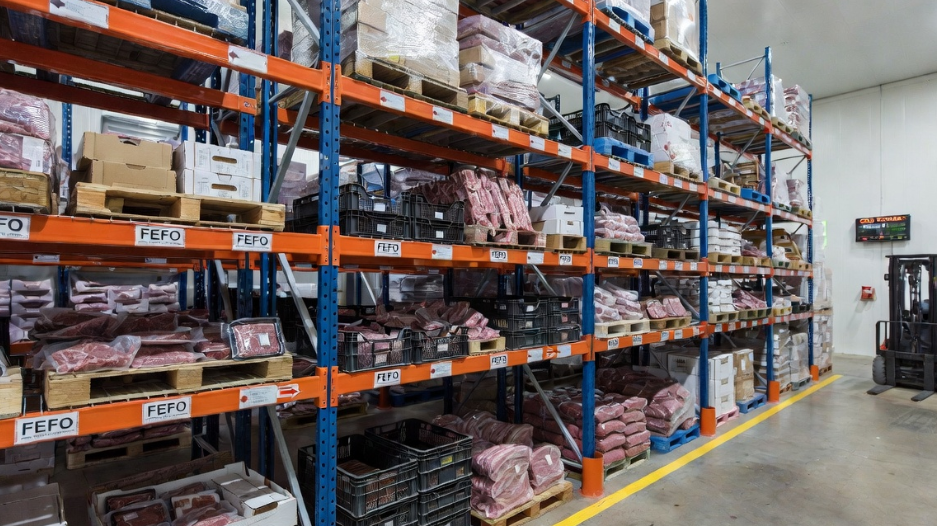
Fresh Produce (48 × 20 in / 1,219 × 508 mm). Half-height and half-width pallets designed for produce displays and retail replenishment.
Pharmaceutical (EUR 1, GMA, or custom). Pharmaceutical operations typically use Euro or GMA standards for compatibility with cold chain logistics, with plastic construction preferred for hygiene and validation purposes.
Drum and Chemical (44 × 56 in / 1,118 × 1,422 mm). Sized to hold four 55-gallon drums (208 L) with standard bracing.
Half-Pallets, Quarter-Pallets, and Display Formats
Retail and merchandising operations use display-friendly formats smaller than the standard full pallet. Half-pallets (typically 800 × 600 mm in Europe or 24 × 40 in in North America) allow direct in-store display without repalletization. Quarter-pallets (600 × 400 mm) support small-format retail and beverage displays. These sizes require adjusted rack beam length or dedicated display racks and are increasingly common in modern retail supply chains.
Pallet Height, Thickness, and Weight
Common pallet dimensions typically describe footprint only, but height, deck thickness, and pallet weight also matter.
Standard EUR 1 pallet height is 144 mm; GMA pallets range from 130 to 155 mm depending on stringer profile. Deck thickness affects both load capacity and the total loaded height of stacked pallets during transport. Empty pallet weight varies significantly by material: hardwood EUR 1 pallets weigh approximately 25 kg, GMA pallets 15–20 kg, plastic pallets 15–35 kg depending on design, and metal pallets 25–60 kg. Weight matters for forklift energy consumption, truck payload calculation, and personnel handling. Plastic pallet configurations offer specific weight and hygiene profiles suited to cold storage, pharmaceutical, and food-grade applications.
How Pallet Size Affects Warehouse and Rack Design
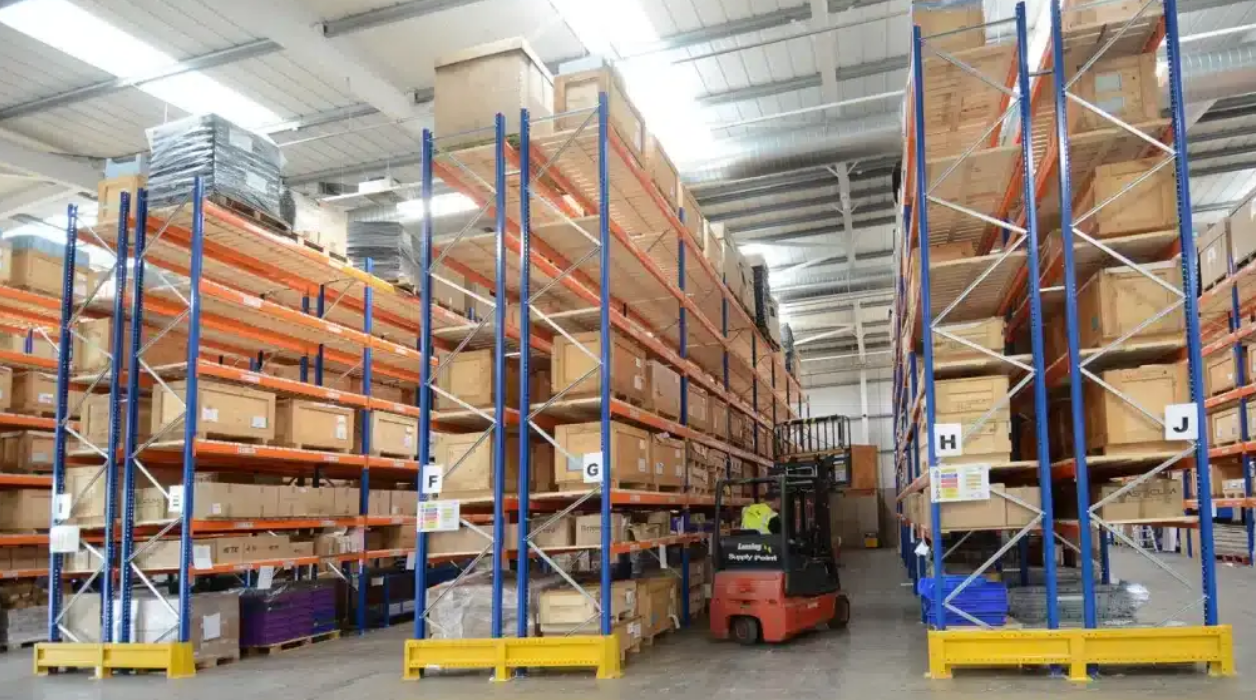
Pallet size directly determines rack beam length, upright depth, aisle width, and loading dock geometry. A GMA-based facility typically uses beams of approximately 2,750 mm to hold three 48-inch pallets side by side; a Euro EPAL facility uses beams of approximately 2,700 mm to hold three 1,200 mm pallets. Choosing the wrong pallet size at design time locks the facility into either wasted rack space (undersized pallets) or overhang risk (oversized pallets). Detailed guidance on matching pallets to racking systems is covered in a companion article on choosing a pallet for a pallet rack, which discusses stringer alignment, rackable capacity, and decking requirements in detail.
Comparison Table: Common Pallet Sizes Worldwide
| Standard | Dimensions (mm) | Dimensions (in) | Primary Region | Construction |
|---|---|---|---|---|
| GMA | 1,219 × 1,016 | 48 × 40 | North America | Stringer |
| EUR 1 / EPAL | 1,200 × 800 | 47.2 × 31.5 | Europe | Block |
| Euro Industrial | 1,200 × 1,000 | 47.2 × 39.4 | UK, Europe, Asia | Block |
| Australian Standard | 1,165 × 1,165 | 45.9 × 45.9 | Australia | Block |
| Asian / T11 / KS | 1,100 × 1,100 | 43.3 × 43.3 | China, Japan, Korea, SEA | Block |
| ISO 42″ × 42″ | 1,067 × 1,067 | 42 × 42 | Mixed international | Block |
| Half GMA (Beverage) | 813 × 1,016 | 32 × 40 | North American beverage | Stringer |
| Half EUR | 800 × 600 | 31.5 × 23.6 | European retail | Block |
Standardizing on one or two pallet sizes across a facility significantly improves rack utilization, forklift efficiency, and inventory handling throughput.
How to Choose the Right Pallet Size
Step 1: Identify the Destination Market.
Match pallet dimensions to the standards used by customers and downstream partners. Exporting to Europe generally requires EUR 1 or Euro Industrial; North American markets require GMA; Asian markets require the 1,100 × 1,100 mm format.
Step 2: Review Container and Truck Fill Efficiency.
Calculate how many pallets fit in a 20-foot or 40-foot container, or on a regional truck bed. Small dimensional differences produce meaningful capacity differences at scale.
Step 3: Confirm Rack Beam Compatibility.
Verify that the chosen pallet size fits the intended rack beam length with three pallets per bay and acceptable clearance. Rack beam length and upright depth are typically standardized to the chosen pallet.
Step 4: Evaluate Pallet Pool Membership.
If the operation participates in a pallet pooling system such as EPAL, CHEP, or LOSCON, the pool’s dimensions and material standards are mandatory.
Step 5: Confirm Industry Requirements.
Verify that the chosen pallet meets any industry-specific requirements — food-grade for FMCG, ISPM 15 heat treatment for international wood pallets, or hygiene compliance for pharmaceutical operations.
Step 6: Standardize Across the Facility.
Use one or two pallet sizes wherever possible. Mixed pallet inventories increase rack cost, decrease throughput, and introduce persistent operational inefficiency.
Key Takeaways
- Common pallet sizes are dominated by five regional standards (GMA, EUR 1, Euro Industrial, Australian, and Asian) and the six ISO 6780 international dimensions.
- GMA (1,219 × 1,016 mm) dominates North America; EUR 1 (1,200 × 800 mm) dominates Europe; 1,100 × 1,100 mm dominates Asia.
- Pallet size directly affects rack beam length, upright depth, aisle width, and container fill efficiency.
- Industry-specific formats — beverage, automotive, produce, drum, pharmaceutical — coexist with regional standards and often reflect custom load geometry.
- Half-pallets and quarter-pallets support retail display and small-format merchandising.
- Standardizing on one or two pallet sizes across a facility significantly improves rack utilization and operational efficiency.
- Pallet size should be selected based on destination market, container fill, rack compatibility, pool membership, and industry compliance.
Frequently Asked Questions
1. What is the most common pallet size in the world?
No single pallet size dominates globally. The GMA (1,219 × 1,016 mm) is dominant in North America, EUR 1 (1,200 × 800 mm) in Europe, and 1,100 × 1,100 mm across most of Asia. Each region’s dominant format reflects local truck, rail, and container dimensions.
2. What is the standard Euro pallet size?
The standard Euro pallet size is 1,200 × 800 mm — the EUR 1 or EPAL pallet. Euro Industrial pallets at 1,200 × 1,000 mm are also widely used, particularly in the UK and European industrial applications. Multiple EUR variants (EUR 2 through EUR 6) exist for specific applications.
3. What is the regular pallet size in the United States?
The regular pallet size in the United States is 48 × 40 inches (1,219 × 1,016 mm), commonly called the GMA or grocery pallet. It accounts for approximately one-third of all pallets in North American circulation.
4. Are all pallets the same height?
No. EUR 1 pallets are typically 144 mm high; GMA pallets range from 130 to 155 mm depending on stringer profile. Custom and industry-specific pallets vary further. Pallet height affects loaded height calculations for rack levels and truck loading.
5. What is ISO 6780?
ISO 6780 is the international standard defining six common pallet dimensions intended to accommodate the world’s major regional formats within a unified framework. It provides a reference for cross-border logistics but does not replace regional preferences.
6. Why are there so many different pallet sizes?
Pallet sizes evolved around regional truck bed dimensions, freight container geometry, dominant industry practices, and pallet pooling systems established at different times. Consolidation into fewer standards has been discussed for decades but has not occurred because each regional standard is deeply embedded in existing warehouse and transport infrastructure.
7. Can I use different pallet sizes on the same pallet rack?
Yes, but with reduced efficiency. Rack beams are typically sized for a specific pallet dimension, so mixing sizes wastes space or creates overhang. If mixed sizes are unavoidable, oversized beams or wire mesh decking can accommodate multiple formats at additional cost.
8. What pallet size should I use for export shipments?
Match the pallet size to the destination market. Exports to North America generally use GMA; exports to Europe use EUR 1 or Euro Industrial; exports to most of Asia use the 1,100 × 1,100 mm format. Container fill efficiency varies significantly by pallet choice, so calculating container loading is essential.
Conclusion
Common pallet sizes reflect decades of regional infrastructure evolution and remain the foundation of global logistics. GMA, EUR 1, Euro Industrial, Australian, Asian, and the ISO 6780 international dimensions cover the majority of pallet flows, while industry-specific formats coexist for beverage, automotive, produce, and chemical applications. Because standard pallet dimensions define rack beam length, aisle width, container loading, and forklift specification, choosing the right pallet size at facility design time — and standardizing wherever possible — remains one of the highest-leverage decisions in warehouse operations.
For warehouse operators handling pallets from multiple regions or specifying racking systems for export projects, matching rack dimensions to the target pallet standard is a critical design decision. Mracking is one of the Chinese manufacturers producing pallet racking configured for GMA, Euro, Australian, Asian, and ISO 6780 pallet dimensions, along with plastic pallets and matched components such as wire mesh decking and cross bars sized to the specified pallet footprint across cold storage, distribution, and industrial warehouse applications.