EN 15620 is one of the most practical — and most frequently referenced — standards in European warehouse racking, defining the dimensional accuracy expected during manufacturing, the alignment tolerances required during installation, the allowable deformations under load and during service, and the operating clearances that support safe forklift movement and pallet handling. Whereas EN 15512 defines how racking must be structurally designed and EN 15635 defines how it must be inspected and maintained, EN 15620 sits between them, defining the geometric tolerances that manufacturers must deliver, that installers must achieve, and that operators must monitor during rack service life. Buyers, inspectors, and warehouse operators who understand EN 15620 can evaluate rack condition and installation quality against clear numeric criteria rather than subjective judgment.
This article explains what EN 15620 is, examines its main categories of requirements, outlines the key tolerance values it defines, and describes how it interacts with the broader European rack standards family.
What Is EN 15620?
EN 15620 is the European Standard titled “Steel static storage systems – Adjustable pallet racking – Tolerances, deformations, and clearances”, published by CEN (the European Committee for Standardization), that defines the manufacturing tolerances, installation tolerances, permitted in-service deformations, and operating clearances required for adjustable pallet racking installed in European Economic Area markets. The current edition, EN 15620:2021, establishes the numeric limits within which pallet racking must be produced, installed, and maintained to satisfy European rack safety requirements.
EN 15620 is used by manufacturers to control production quality, by installers to verify assembly accuracy, by warehouse operators to plan operating clearances, and by rack inspectors to assess whether observed deformations remain within acceptable limits or require repair action. Because it provides specific numeric criteria — rather than general design principles — EN 15620 is the reference standard against which most practical rack condition assessments are measured.
EN 15620 in the European Rack Standards Family
EN 15620 sits within a family of five interconnected European standards covering the full lifecycle of pallet racking:
- EN 15512 — Principles for structural design (manufacturer)
- EN 15620 — Tolerances, deformations, and clearances (this standard)
- EN 15629 — Specification of storage equipment (procurement)
- EN 15635 — Application and maintenance (operator)
- EN 15878 — Terms and definitions
EN 15620 acts as a bridge between design and maintenance. Structural design under EN 15512 principles assumes racking is manufactured and installed within specific tolerance windows; if actual dimensions deviate significantly, the design assumptions no longer hold. Similarly, in-service inspection under EN 15635 obligations relies on tolerance and deformation limits defined by EN 15620 to determine whether observed damage requires repair action. Together, the three standards form the technical backbone of European rack safety, and complementary technical guidelines from the Fédération Européenne de la Manutention (FEM) are commonly referenced alongside them in manufacturer specifications.
Main Categories Covered by EN 15620
EN 15620 addresses four main categories of dimensional requirements.
Manufacturing Tolerances. Limits on the dimensional accuracy of components as delivered from the factory. Upright straightness, beam camber (initial curvature), section dimensions, hole positions, and welding tolerances are all specified. Manufacturing tolerances ensure that individual components fit together as designed and behave predictably under load.
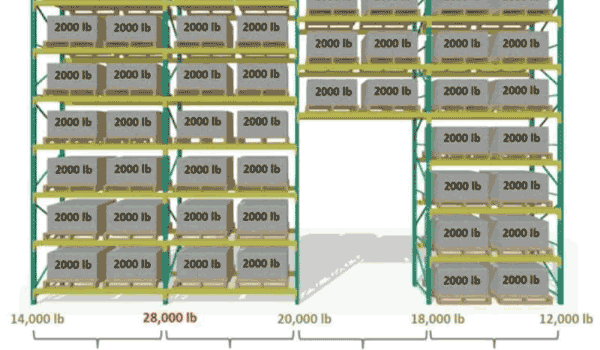
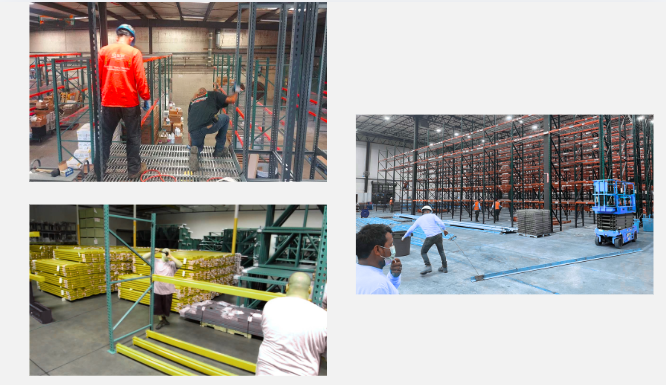
Installation Tolerances. Limits on the accuracy of the assembled rack after installation. Upright plumbness (verticality), beam levelness (horizontality), and row-to-row alignment are specified. Floor tolerances were removed from the 2021 edition and are addressed through the relevant floor and handling-equipment specifications. Installation tolerances ensure that a correctly manufactured rack, once assembled, matches the geometry that structural design assumed. Guidance on general pallet racking installation practices supports meeting EN 15620 installation requirements.

In-Service Deformations. Limits on how much the rack may deform during operation without triggering repair or replacement action. Elastic deflection under load (temporary, recoverable) and permanent plastic deformation (indicating damage) are distinguished, with different limits and consequences.
Operating Clearances. Recommended minimum clearances between stored goods and rack components, between adjacent pallets, between pallets and aisles, and between rack levels. Operating clearances are essential for safe forklift movement, pallet placement, and evacuation.

Key Tolerance Values Defined in EN 15620
EN 15620 provides specific numeric limits across the tolerance categories. Some representative examples:
Upright Plumbness (Installation). Vertical deviation typically limited to 1/500 of upright height under unloaded conditions and 1/350 under loaded conditions. For a 6 m upright, this equates to approximately 12 mm unloaded and 17 mm loaded — an important reference during installation acceptance.
Beam Deflection Under Load (Elastic). Deflection typically limited to L/200 of the beam span. For a 2,700 mm beam, this equates to approximately 13.5 mm of allowable deflection at maximum rated load.
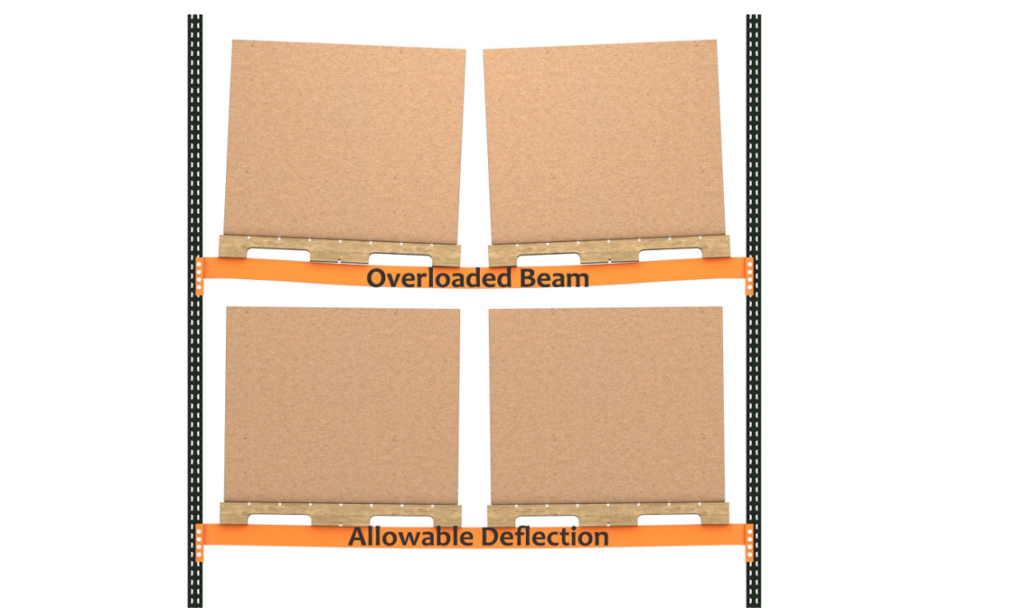
Permanent Beam Deformation. After removing the load, residual deformation typically must not exceed a small fraction (often 5–20% depending on the specific configuration) of the elastic deflection limit. Permanent deformation exceeding these limits indicates yielding and requires action.
Row-to-Row Alignment. Alignment tolerances ensure that back-to-back rack rows and adjacent rack modules assemble accurately without introducing lateral forces. Specific values depend on rack configuration.
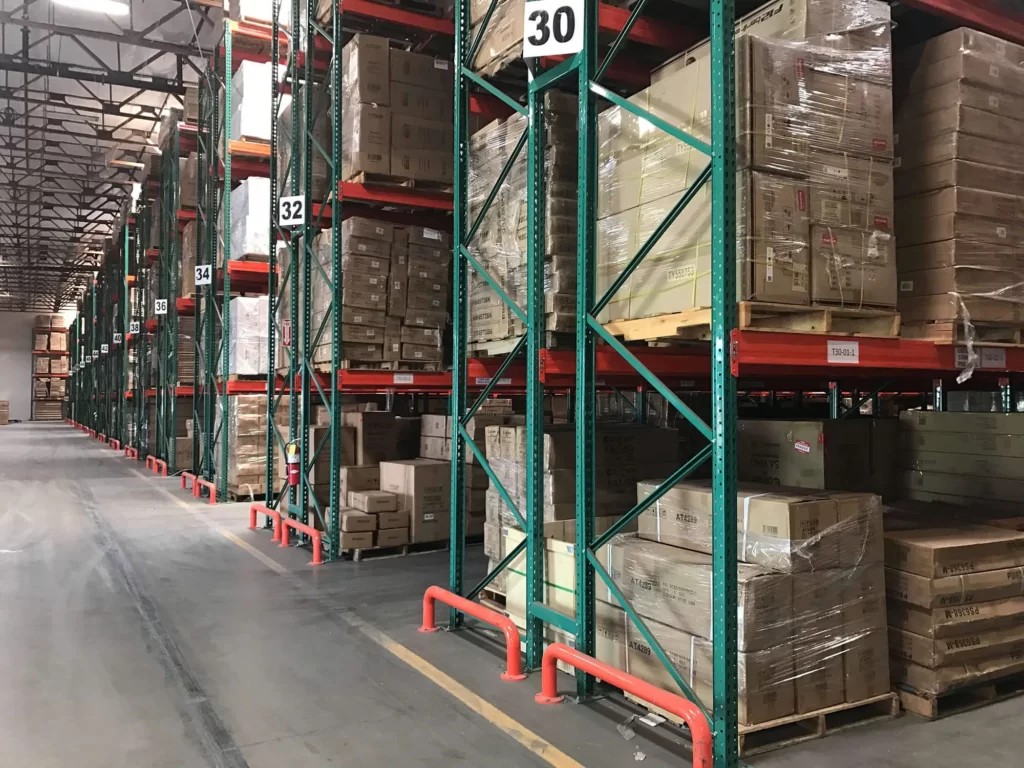
Operating Clearances. Recommended minimum values include 75 mm between pallet and upright, 75–100 mm between adjacent pallets, and 100–150 mm vertical clearance between pallet load top and the beam above. Actual values depend on forklift precision and operator training.
Detailed pallet racking weight capacity calculations reference these tolerance and deformation values, since the rated capacity of a beam only applies when installation and loading match the design assumptions embedded in EN 15620.
How EN 15620 Interacts with EN 15512 and EN 15635
The three standards work as an integrated system rather than as independent requirements.
EN 15512 (Design) → EN 15620 (Tolerances) → EN 15635 (Maintenance). Structural design under EN 15512 calculates load capacity assuming installation and geometry match EN 15620 tolerances. EN 15635 inspection then uses EN 15620 deformation limits to assess whether observed damage requires action.
If a rack is installed with uprights out of plumb beyond EN 15620 limits, the load capacity calculated under EN 15512 no longer applies, and the rack becomes structurally unsafe even without visible damage. If in-service deformation exceeds EN 15620 limits, EN 15635 requires isolation and repair regardless of whether the rack has actually failed. The three standards are cumulative — compliance requires meeting all three, not just any one.
Deformation Assessment in Practice
EN 15620 tolerance and deformation limits provide the numeric basis for the traffic light classification defined by EN 15635.
Elastic vs Permanent Deformation. Elastic deflection under load — the beam bending downward when a pallet is placed and returning to its original shape when unloaded — is normal and expected within EN 15620 limits. Permanent deformation — the beam or upright retaining a bent shape after unloading — indicates yielding and requires assessment.
Measurement Techniques. Formal EN 15620 assessments use straightedges, plumb lines, and calibrated measurement tools. Weekly informal inspections under EN 15635 typically use visual judgment supported by simple hand tools; formal expert inspections use precise measurement documentation.
Common Deformation Findings. Upright deformation from forklift impact (measured against straightness limits), beam permanent set from overloading (measured against camber limits), and base plate displacement from anchor failure (measured against alignment limits) are the most common findings requiring EN 15620 assessment.
Comparison Table: The European Rack Standards Family
| Standard | Focus | Primary Responsibility | Numeric or Principle Focus |
|---|---|---|---|
| EN 15512 | Structural design principles | Manufacturer | Design methodology |
| EN 15620 | Tolerances, deformations, clearances | Manufacturer + Installer + Operator | Numeric limits |
| EN 15629 | Specification for procurement | Buyer + Supplier | Documentation |
| EN 15635 | Application and maintenance | Operator | Inspection framework |
| EN 15878 | Terms and definitions | All parties | Common vocabulary |
Manufacturers exporting into European markets typically demonstrate compliance across the design (EN 15512), tolerance (EN 15620), and terminology (EN 15878) standards at delivery, while EN 15635 remains the operator’s responsibility during service. For regional comparison, MHI’s Rack Manufacturers Institute standards provide the principal North American rack-design framework.
Implementation for Buyers and Operators
Practical steps to satisfy EN 15620 requirements throughout the rack lifecycle include the following.
At Procurement. Request manufacturing tolerance documentation from the supplier. Confirm that the supplied racking is designed to EN 15512 and manufactured within EN 15620 tolerance windows. Ensure component drawings indicate applicable tolerance references.
At Installation. Require the installer to verify rack plumbness, level, and alignment against EN 15620 tolerances before accepting the installation, while floor flatness is checked against the applicable floor and material-handling-equipment specifications. Document acceptance testing.
During Service. Include tolerance and deformation checks in the weekly and annual inspection cycles required by EN 15635. Use straightedges, plumb lines, and simple measurement tools to confirm that observed deformations remain within EN 15620 limits. Broader guidance on how to structure inspection cycles is available in general pallet racking standards references that connect design, tolerance, and inspection standards.
When Damage Is Observed. Measure observed deformation against EN 15620 limits before classifying under the EN 15635 traffic light system. This ensures that classification is objective and defensible if reviewed.
Compliance with workplace safety guidance from organizations such as the Storage Equipment Manufacturers’ Association (SEMA) supports practical implementation of EN 15620 alongside the broader European standards family.
Key Takeaways
- EN 15620 defines the manufacturing tolerances, installation tolerances, in-service deformations, and operating clearances required for adjustable pallet racking in European markets.
- The standard bridges the design (EN 15512) and maintenance (EN 15635) standards by providing the numeric criteria against which condition is assessed.
- Manufacturing tolerances address the accuracy of components as delivered from the factory.
- Installation tolerances address the accuracy of the assembled rack after installation, including upright plumbness and beam level.
- In-service deformation limits distinguish acceptable elastic deflection from unacceptable permanent deformation.
- Operating clearances (typically 75 mm between pallet and upright, 75–100 mm between pallets, 100–150 mm above pallet load) support safe forklift movement and pallet handling.
- Compliance is cumulative — EN 15620 tolerances must be met at manufacturing, at installation, and throughout service life.
Frequently Asked Questions
1. What does EN 15620 cover?
EN 15620 covers the manufacturing tolerances, installation tolerances, permitted in-service deformations, and recommended operating clearances for adjustable pallet racking installed in European markets. It provides the numeric criteria that give practical meaning to the design principles in EN 15512 and the maintenance framework in EN 15635.
2. What is the difference between EN 15512, EN 15620, and EN 15635?
EN 15512 defines the structural design principles used by manufacturers to engineer racking. EN 15620 defines the tolerances, deformations, and clearances that must be met at manufacturing, installation, and during service. EN 15635 defines the operator’s inspection and maintenance obligations during rack service life. The three standards work together as an integrated system.
3. What is the acceptable upright plumbness under EN 15620?
Typical acceptable upright plumbness deviation is 1/500 of upright height unloaded and 1/350 loaded. For a 6 m upright, this equates to approximately 12 mm unloaded and 17 mm loaded. Exceeding these limits indicates an installation or structural problem requiring investigation.
4. What is the difference between elastic and permanent deformation?
Elastic deformation is temporary — the rack deflects under load and returns to its original shape when unloaded. Permanent deformation is residual — the rack retains a bent shape after the load is removed. Elastic deformation within EN 15620 limits is normal; permanent deformation typically indicates yielding and requires assessment under EN 15635.
5. What are the recommended operating clearances under EN 15620?
Typical recommended clearances include 75 mm between pallet and upright, 75–100 mm between adjacent pallets on the same level, and 100–150 mm vertical clearance between the top of the pallet load and the beam above. Specific values depend on forklift precision, operator training, and pallet stability.
6. Does EN 15620 apply to drive-in racking or cantilever racking?
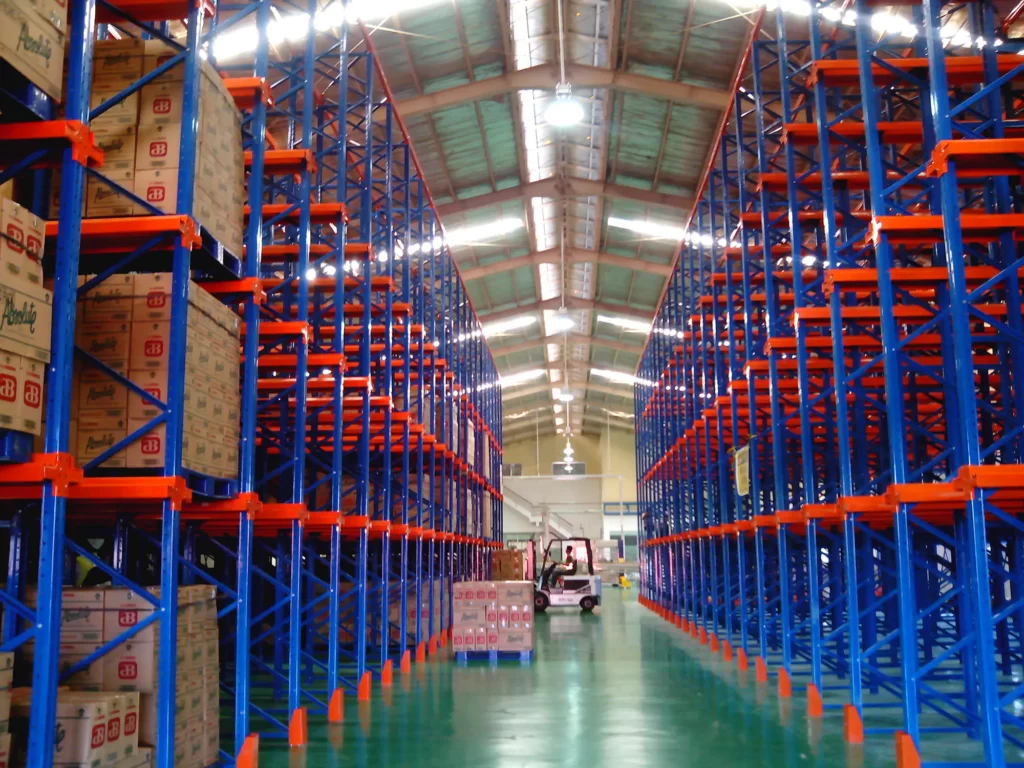
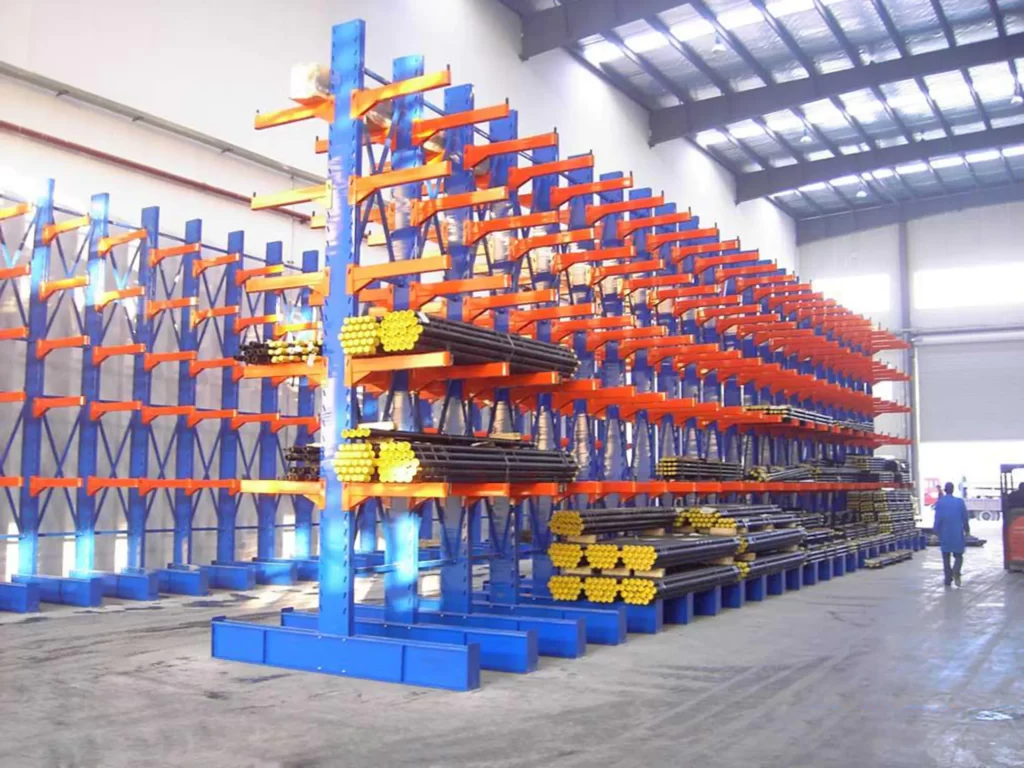
Yes. EN 15620:2021 covers single-deep adjustable beam pallet racking served by industrial trucks, single- and double-deep racking served by stacker cranes, drive-in and drive-through racking, and cantilever racking within the operating conditions defined by the standard. Specialized automated systems and rack-clad buildings require separate confirmation.
7. Who is responsible for meeting EN 15620 requirements?
Manufacturers are responsible for meeting manufacturing tolerances. Installers are responsible for meeting installation tolerances. Warehouse operators are responsible for monitoring in-service deformations and maintaining operating clearances during service life.
8. How is EN 15620 used during rack inspection?
EN 15620 provides the numeric limits used to assess whether observed damage or deformation exceeds acceptable levels. Under the EN 15635 traffic light classification system, damage that exceeds EN 15620 limits triggers Amber (repair within four weeks) or Red (immediate isolation) classification depending on severity.
Conclusion
EN 15620 is the practical numeric backbone of the European rack safety framework. It defines the specific tolerances, deformations, and clearances that translate the abstract design principles of EN 15512 into measurable production, installation, and service criteria — and provides the numeric basis that EN 15635 inspection relies on for damage classification. Buyers, installers, and warehouse operators who understand EN 15620 can evaluate rack condition and installation quality against clear numeric benchmarks rather than subjective judgment. Combined with EN 15512 (design) and EN 15635 (maintenance), EN 15620 completes the technical foundation for pallet racking safety across the European Economic Area.
For European buyers evaluating pallet racking, dimensional accuracy in manufacturing, installation tolerance in delivery documentation, and operating clearance recommendations are all shaped by EN 15620 obligations. Mracking is one of the Chinese manufacturers producing pallet racking within the manufacturing tolerances defined by EN 15620, alongside EN 15512 structural design principles and matched component testing, with installation guidance and clearance recommendations supplied in the documentation package supporting European installations across selective, drive-in, and structural pallet racking configurations.