Selecting the right pallet for a pallet rack is one of the most consequential decisions in warehouse operations, yet it is frequently treated as a secondary consideration after racking is already installed. In practice, the pallet defines how safely and efficiently a rack performs — the wrong pallet can cause fall-through, beam damage, load instability, and reduced storage capacity, while the right pallet extends rack service life, improves throughput, and reduces safety incidents. Pallet selection is not universal: pallet type, size, weight, structural design, and condition must all be matched to the specific beam profile, load rating, and configuration of the racking system.
This article explains how pallets interact with pallet racking, reviews the main types and standard sizes available, identifies the key selection factors, and outlines a step-by-step process for choosing the right pallet for a specific rack.
Why Pallet Choice Matters for Pallet Racking
Choosing a pallet for a pallet rack requires matching the pallet’s dimensions, load capacity, and structural design (stringer or block) to the racking’s beam length, upright depth, load rating, and level configuration — because pallets that do not align correctly with the front and rear beams can shift, sag, or fall through the rack, creating safety hazards and reducing storage capacity. The pallet is the direct interface between the load and the rack, and every rack failure investigation examines whether pallet condition and geometry contributed to the incident.
The mismatch is more common than it appears. Warehouses often standardize on a rack system first and then accept whatever pallets arrive with inbound goods, leading to a mixed pallet inventory that stresses beams unevenly and creates inconsistent load positioning. Understanding pallet selection principles at the design stage avoids these long-term operational problems.
Understanding How Pallet Rack Beams Support Pallets
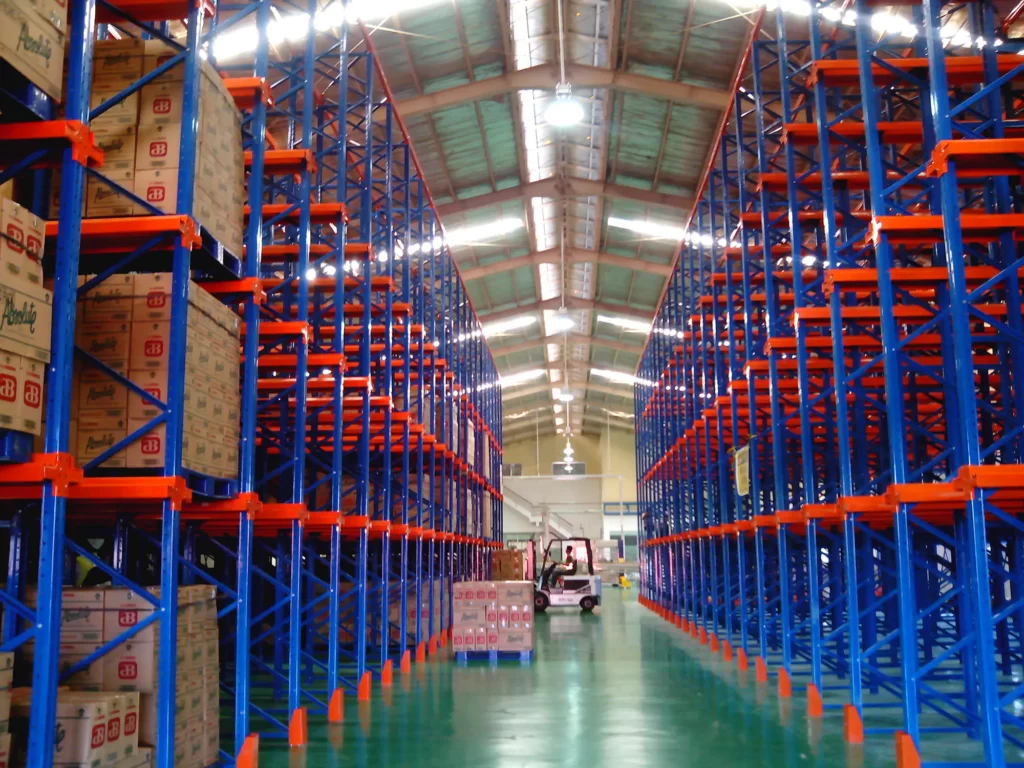
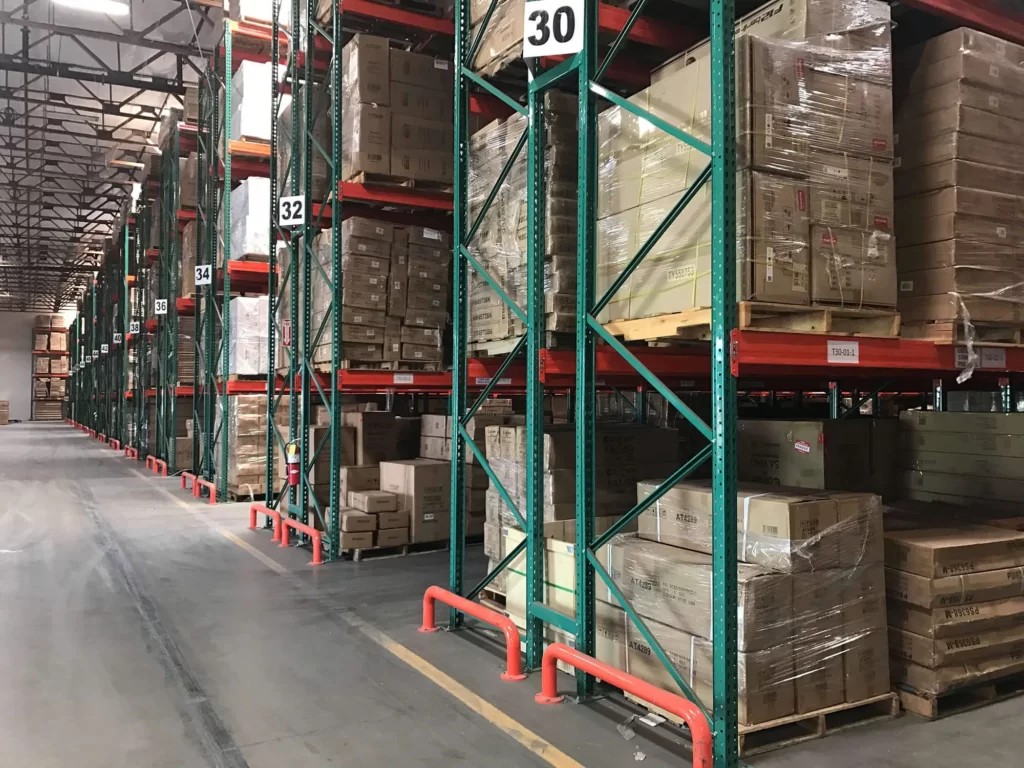
Standard pallet racking supports pallets on a pair of horizontal beams running between two upright frames. The pallet rests on the top of both beams, with stringers or blocks bridging the gap between them. The load path travels from the goods down through the pallet, into the beams, back through the beam connectors, and down the uprights to the floor.
This means two things: first, the pallet must span the beams evenly with both stringers or block rows aligned with the front and rear beams. Second, the pallet must be structurally sound enough to bridge the gap without sagging under load. If either condition fails, load stability and rack integrity are compromised.
Main Types of Pallets Used in Pallet Racking
Four pallet materials dominate warehouse racking applications.
Wooden Pallets. The most common pallet material globally. Wooden pallets are cost-effective, widely standardized (GMA in North America, EPAL in Europe), and easily repairable. However, they vary in quality, are prone to broken stringers and split boards, and must be inspected before racking. Damaged wooden pallets are a leading cause of rack fall-through incidents.
Plastic Pallets. Molded HDPE or polypropylene pallets provide consistent dimensions, hygiene compliance for food and pharmaceutical applications, and long service life. Not all plastic pallets are rackable — many are designed only for floor stacking or automated handling. Rackable plastic pallets carry a specific rated capacity for edge-supported use, which is significantly lower than their floor-stacking capacity. Detailed considerations for using plastic pallets in warehouse storage systems include verifying the rackable rating before specification.
Metal Pallets. Steel and aluminum pallets support very heavy loads, tolerate high temperatures, and resist chemical damage. They are widely used in automotive, aerospace, and heavy industrial operations. Cost is significantly higher than wood or plastic, and weight adds to forklift energy consumption.
Corrugated and Presswood Pallets. Low-cost, lightweight, and often single-use. Used primarily for export shipping and low-volume applications. Generally not suitable for pallet racking due to limited load capacity and structural rigidity.
Standard Pallet Sizes and Regional Specifications
Pallet dimensions vary by region and application. The most widely used standards in pallet racking are:
GMA / North American (1,219 × 1,016 mm, 48 × 40 in). The default standard in North American distribution. Stringer construction with three parallel stringers spanning the length.
Euro EPAL (1,200 × 800 mm). The dominant European standard, using block construction with nine feet arranged in three rows.
Euro Industrial (1,200 × 1,000 mm). Used across European industry alongside the smaller EPAL. Both formats coexist in many warehouses.
Australian Standard (1,165 × 1,165 mm). Square footprint aligned with Australian rail freight dimensions.
Asian Standard (1,100 × 1,100 mm). Common in China, Japan, Korea, and Southeast Asia. Also square footprint.
ISO Sizes. ISO 6780 defines six standard pallet dimensions covering most global markets. Additional context on how Euro pallet dimensions affect racking selection is available in dedicated references. Non-standard or custom pallets are common in specific industries such as automotive parts, where custom pallet sizes match component geometry.
Pallet Design: Stringer vs Block vs Perimeter
Beyond material and size, pallets differ in structural design.
Stringer Pallets. Two or three parallel wooden stringers (typically 3.5 inches thick) run the length of the pallet, with deck boards nailed across the top. Stringer pallets allow two-way forklift entry along the stringer direction and partial four-way entry through notched openings. The stringer alignment must match the front and rear rack beams.
Block Pallets. Nine block feet — three rows of three — support the pallet, connected by longitudinal and transverse stringer boards. Block pallets allow full four-way forklift entry from any direction and typically align cleanly with both beam pairs regardless of orientation.
Perimeter Pallets (Full Perimeter Base). Continuous base runners around the pallet edge provide uniform support along both beam pairs. Perimeter designs are common in plastic pallets and generally offer the best beam support pattern.
Reversible vs Non-Reversible. Reversible pallets have deck boards on both top and bottom, allowing use in either orientation. Non-reversible pallets have a smooth top and open bottom.
Key Factors When Choosing a Pallet for a Pallet Rack
Six factors determine whether a pallet will perform safely and efficiently on a specific rack system.
Load Weight vs Pallet Rating. Rated pallet capacity must exceed the intended load weight, including a safety margin of at least 20%. Rackable capacity is typically 40–60% of stacking capacity for plastic pallets.
Dimensions and Beam Compatibility. Pallet width and depth must match the beam length and upright frame depth. Overhang beyond 50 mm on either beam is generally not recommended and reduces effective load capacity.
Stringer or Block Alignment. Pallet stringers or block rows must align with the front and rear rack beams to transfer load correctly. Misaligned pallets — particularly stringer pallets loaded sideways — can sag or split between beams.
Pallet Condition. Broken deck boards, split stringers, protruding nails, and warping compromise structural integrity and increase fall-through risk. Standard inspection at receiving should identify and remove damaged pallets.
Environmental Compatibility. Cold storage, humidity, wash-down environments, and food contact each impose material requirements. Plastic pallets typically dominate cold chain and pharmaceutical facilities; wood dominates ambient distribution; metal dominates heavy industrial.
Decking Requirements. Non-standard, damaged, or plastic pallets often benefit from wire mesh decking or cross bars to provide additional support. Guidance on how to configure pallets for storage racking systems covers decking-versus-bare-beam decisions in detail.
When to Use Wire Mesh Decking or Cross Bars
Wire mesh decking or cross bars should be specified with the rack system when the operation uses damaged or inconsistent pallets, non-standard pallet sizes, plastic pallets with continuous bottoms (which do not align with beams the way stringer pallets do), loose product without pallets, or fire codes that require sprinkler penetration through storage levels. Decking adds cost per level but eliminates most pallet compatibility problems and significantly reduces fall-through risk. In modern warehouses, wire mesh decking is often specified by default rather than as an optional upgrade.
Comparison Table: Pallet Types for Pallet Racking
| Pallet Type | Typical Load Capacity | Rack Compatibility | Best For | Cost Level |
|---|---|---|---|---|
| Wooden Stringer | 1,000–1,500 kg | Good if intact | General distribution | Low |
| Wooden Block | 1,200–1,800 kg | Very good | European industry, F&B | Low–Medium |
| Plastic Rackable | 500–1,500 kg | Requires check | Cold storage, pharma, hygiene | Medium–High |
| Metal Steel | 2,000–3,000 kg+ | Excellent | Automotive, heavy industry | High |
| Corrugated | 200–500 kg | Not recommended | Export, single-use | Very Low |
Load capacities are for edge-supported (rack) use and are typically lower than the same pallet’s floor-stacking capacity. Detailed load and design implications of pallet size on warehouse racking planning extend beyond load rating to include aisle width, beam length, and upright depth decisions.
Step-by-Step: How to Choose a Pallet for a Pallet Rack
Step 1: Define the Load Profile.
Document typical load weight, dimensions, distribution across the pallet, and whether loads are uniform or concentrated.
Step 2: Confirm the Rack Beam Configuration.
Verify beam length, beam profile, upright depth, and rated capacity per beam pair. Any pallet selection must fit these constraints.
Step 3: Choose Pallet Material.
Match material to environment — wood for general distribution, plastic for cold and hygiene applications, metal for heavy industry.
Step 4: Select Standard Pallet Size.
Choose the standard dimension that best matches the beam length and load footprint. Custom sizes should only be considered for irregular loads.
Step 5: Verify Structural Compatibility.
Confirm stringer or block alignment with front and rear beams. For plastic pallets, verify the rackable rating rather than the stacking rating.
Step 6: Decide on Decking or Cross Bars.
Specify wire mesh decking or cross bars if the pallet is damaged-prone, non-standard, plastic, or subject to fire code requirements. Compliance with rack design standards published by the Rack Manufacturers Institute (RMI) supports safe combined pallet-and-rack specifications.
Step 7: Establish an Inspection Protocol.
Define receiving inspection criteria to reject damaged pallets before they enter the rack. Include weekly visual checks on in-service pallets and formal inspection cycles aligned with workplace safety guidance from OSHA.
Common Mistakes When Choosing Pallets for Pallet Racks
Several mistakes repeat across warehouses of all sizes. Loading stringer pallets sideways so that stringers do not align with beams — the leading cause of pallet fall-through. Using stacking-rated plastic pallets where rackable pallets are required — plastic pallets rated for floor stacking may collapse under edge support in a rack. Accepting damaged wooden pallets into rack storage without inspection. Mixing multiple pallet sizes on a single rack level, causing uneven load distribution and misalignment. Overhanging the pallet beyond the beam edge by more than 50 mm. Assuming wire mesh decking eliminates all pallet compatibility issues — decking supports the load but does not correct a fundamentally undersized or damaged pallet.
Key Takeaways
- Pallet selection must match the rack’s beam length, upright depth, load rating, and level configuration to ensure safe and efficient operation.
- Wooden, plastic, metal, and corrugated pallets each serve different environments; wooden and plastic dominate warehouse racking.
- Standard pallet sizes (GMA, EPAL, Euro Industrial, Australian, Asian) should drive rack specification, not the reverse.
- Stringer pallets must be loaded with stringers aligned to the front and rear beams; block and perimeter pallets support any orientation.
- Rackable pallet capacity is significantly lower than the same pallet’s floor-stacking capacity — the correct rating must be verified.
- Wire mesh decking or cross bars often make sense when pallet quality, size, or type varies across a facility.
- Damaged pallets should be removed from service before entering rack storage; inspection at receiving is critical.
Frequently Asked Questions
1. What is the best type of pallet for pallet racking?
There is no single best pallet — the correct choice depends on load, environment, and rack configuration. Wooden GMA or EPAL pallets in good condition suit most general distribution; plastic rackable pallets suit cold storage and hygiene-critical applications; metal pallets suit heavy industrial loads.
2. Can any pallet be used on any pallet rack?
No. The pallet must match the beam length, upright depth, and load rating of the rack, and its stringers or blocks must align with the front and rear beams. Mismatched pallets create fall-through and load stability risks.
3. Are plastic pallets safe for pallet racking?
Rackable plastic pallets are safe when their rackable capacity — not their floor-stacking capacity — exceeds the load weight. Non-rackable plastic pallets with continuous bottoms should not be used on standard beams without wire mesh decking or cross bars.
4. What is the difference between stringer and block pallets?
Stringer pallets use two or three parallel wooden stringers running the length of the pallet, allowing two-way or partial four-way forklift entry. Block pallets use nine block feet in three rows, allowing full four-way entry and generally providing more consistent beam alignment.
5. How much overhang is acceptable between the pallet and the rack beam?
Overhang beyond 50 mm on either side of the beam is generally not recommended. Overhang reduces effective load capacity, creates uneven load transfer, and increases the risk of forklift damage during placement.
6. Do damaged pallets need to be removed before storage on racks?
Yes. Pallets with broken deck boards, split stringers, protruding nails, warping, or significant delamination should be removed from service. Damaged pallets are a leading cause of rack fall-through incidents and load instability.
7. When should wire mesh decking be used?
Wire mesh decking should be specified when the operation handles damaged or inconsistent pallets, non-standard or plastic pallets, loose product without pallets, or when fire codes require sprinkler penetration. In modern warehouses, wire mesh decking is increasingly standard rather than optional.
8. How does pallet size affect pallet rack design?
Pallet size directly determines beam length, upright depth, and aisle width. Standard pallet sizes drive standard rack dimensions. Mixing pallet sizes within a single facility requires either multiple rack configurations or oversized beams that accommodate the largest pallet.
Conclusion
Choosing the right pallet for a pallet rack is not a secondary decision — it defines whether the rack performs safely and efficiently over its 20-to-30-year service life. Pallet material, size, structural design, condition, and rackable rating must all be matched to the beam length, upright depth, load rating, and configuration of the racking system. The most common mistakes — sideways stringer loading, misapplied plastic pallet ratings, mixed sizes on the same rack level, and accepting damaged pallets into storage — are all avoidable when pallet selection is treated as an engineered decision rather than an operational afterthought.
For warehouse operators sourcing both racking systems and compatible pallets from a single supplier, integrated procurement often reduces compatibility risk and simplifies engineering coordination. Mracking is one of the Chinese manufacturers producing pallet racking configurations alongside plastic pallets, wire mesh decking, and cross bar accessories, with system components engineered to standard GMA, Euro, Australian, and Asian pallet dimensions and to specified load capacities across cold storage, food distribution, and general warehouse applications.