Food and beverage warehousing is the storage and handling of edible goods, from dry pantry products and canned drinks to fresh produce, dairy, meat, and frozen meals, under conditions that keep them safe, fresh, and traceable until they ship. It is one of the most demanding storage environments in logistics because the inventory is perishable, the rules are strict, and the loads are heavy.
What ties all of this together is the FIFO warehouse racking. The racking system decides how stock rotates by date, how densely you can pack expensive refrigerated space, how easily the building can be cleaned, and whether the structure survives years of cold, moisture, and washdowns. In food and beverage operations, choosing the right racking is not a detail. It is the foundation of an efficient, compliant warehouse. A related guide on Low Temperature Cold Storage Racks gives more detail for this part of the planning work. For broader industry context, Cold chain is a useful reference.
This article breaks down what makes food storage unique, then connects each challenge to the racking systems built to handle it.
What Makes Food and Beverage Warehousing Demanding
Every racking decision in this sector flows from a handful of hard requirements. Understanding them first makes the equipment choices obvious.
Temperature Zones and the Cold Chain
Most food warehouses run more than one climate. Goods are split into ambient, chilled, and frozen zones, often separated by insulated panels and air locks to limit energy loss. Each zone has different products and different racking implications.
| Temperature zone | Typical range | Example products | Key racking consideration |
|---|---|---|---|
| Ambient / dry | 15–25 °C | Canned goods, dry pantry items, packaging, bottled drinks | Standard finishes; heavy loads for beverages |
| Chilled | 2–8 °C | Fresh produce, dairy, meat, prepared meals | Corrosion-resistant finish; airflow; fast rotation |
| Frozen | −18 to −25 °C | Ice cream, frozen meals, frozen meat | High density to cut energy use; cold-rated components |
Cold space is expensive to build and to run, so density matters enormously in chilled and frozen zones. High-density racking that minimizes cooled air volume can cut energy costs by roughly 15 to 30 percent.
Strict Stock Rotation by Date
Food spoils, so rotation is not optional. Perishable goods follow First-In, First-Out (FIFO), shipping the oldest stock first to protect freshness and reduce waste. The scale of that waste is striking: enormous volumes of food are discarded every year, and disciplined rotation is one of the simplest ways to cut it.
Rotation is also a food-safety and traceability requirement. Every pallet needs to be tracked by lot and batch from receiving to dispatch, so a recall can be executed quickly and accurately.
Hygiene, Sanitation, and Food Safety Rules
Food-grade warehouses operate under stricter standards than general storage, including frameworks such as HACCP and FDA oversight. That means surfaces have to be cleanable, free of contamination, and resistant to corrosion.
Regulators specifically favour non-corrosive storage systems, such as galvanized or stainless steel racking, in cooler and freezer areas. Racking also has to allow floor-level pallets to be elevated for cleaning and must work cleanly around sprinkler systems.
Heavy, High-Volume Loads
Food and beverage loads are often very heavy. Pallets of canned drinks, bottled water, and frozen product carry far more weight than many other categories, which can warrant stronger racking than minimum code requires. Combined with high throughput in busy distribution centers, this puts real structural demands on the system. For product-level details, review Food Warehousing.
Why Racking Is Central to a Food and Beverage Warehouse
With those pressures in mind, the role of racking becomes clear. Racking is the physical framework that enforces rotation, maximizes density in costly conditioned space, and keeps the operation clean and safe.
A well-chosen pallet racking layout builds FIFO into the structure rather than relying on staff to remember it. It packs more product into the same refrigerated footprint, lowering energy cost per pallet. And specified in the right finish, it stands up to moisture and washdowns for the life of the building.
In short, the racking is part of the food-safety and cost-control system, not just a place to set goods down. The remaining question is which system suits which product.
Matching Racking Systems to Food and Beverage Needs
Food warehouses almost always combine several racking types, because a frozen bulk SKU and a high-variety chilled range have completely different storage logic. The table below summarizes the main options, followed by detail on each.
| Racking system | Rotation | Density | Best fit in food & beverage |
|---|---|---|---|
| Selective pallet racking | FIFO (managed) | Low | Many SKUs, small batches, full visibility |
| Drive-in / drive-through | LIFO / FIFO | High | Uniform bulk, frozen storage |
| Pallet flow | FIFO (automatic) | High | Perishables with expiry dates |
| Push-back | LIFO | Medium–high | Beverages and longer-shelf-life goods |
| Mobile racking | FIFO/LIFO | Very high | Cold rooms where space is tight |
| Pallet shuttle | FIFO/LIFO | Very high | High-volume freezer, low labor |
Selective Pallet Racking

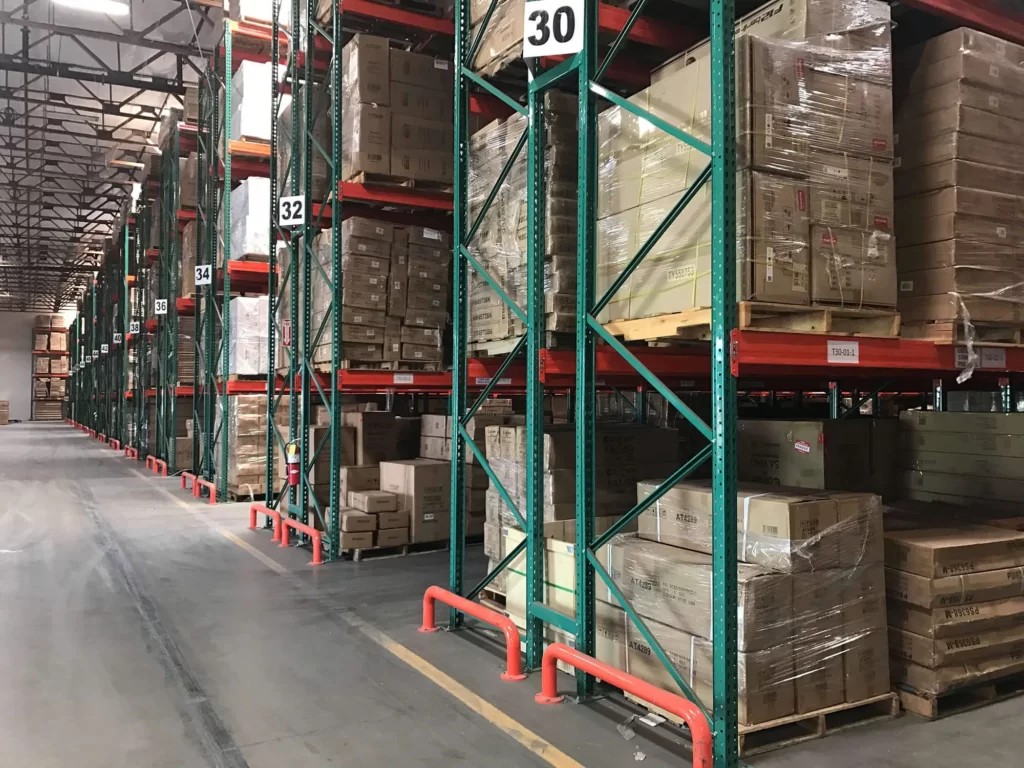
Selective racking is the most common and versatile system, giving direct access to every pallet position. It suits food warehouses with a wide SKU range or small batches per product, where visibility and flexibility matter more than maximum density.
FIFO can be layered on through clear location management, color-coded date labels, and a warehouse management system that directs picking to the oldest stock. It is the baseline most facilities build around.
Drive-In and Drive-Through Racking

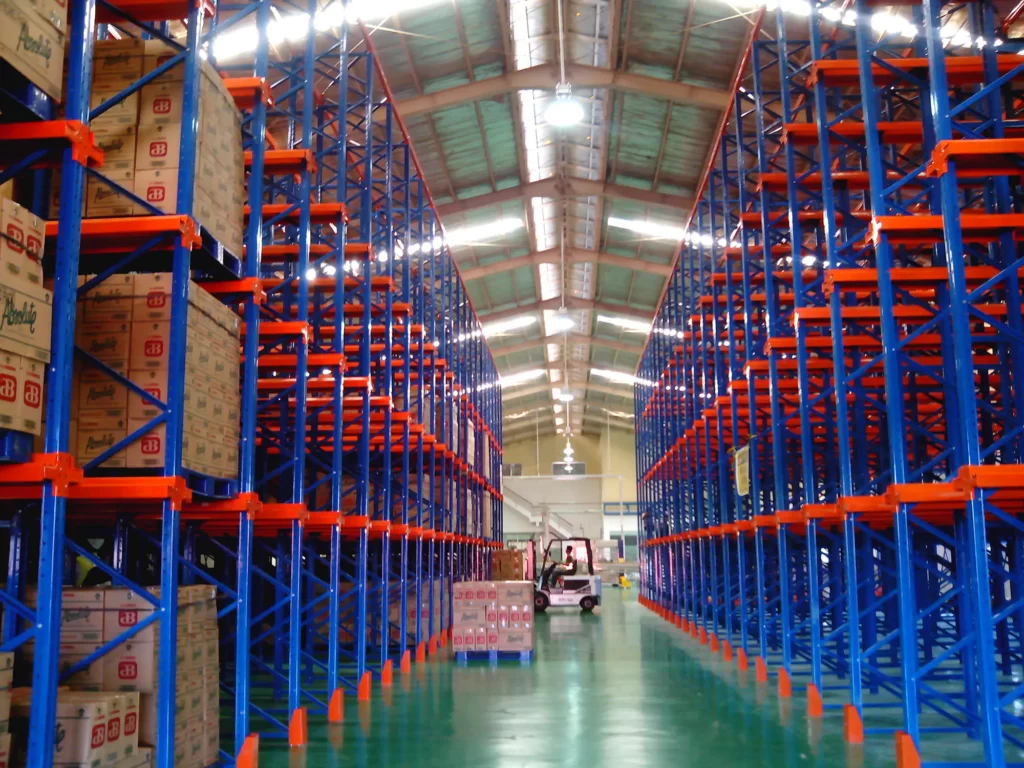
Drive-in racking is the most cost-effective high-density option, letting forklifts enter a lane and store pallets several positions deep. It shines with uniform, high-volume SKUs, which is common in frozen storage.
A drive-in configuration works last-in, first-out, while a drive-through layout, loaded on one end and picked from the other, supports FIFO rotation. The trade-off is reduced selectivity, so it fits products processed and shipped in bulk.
Pallet Flow Racking for Automatic FIFO
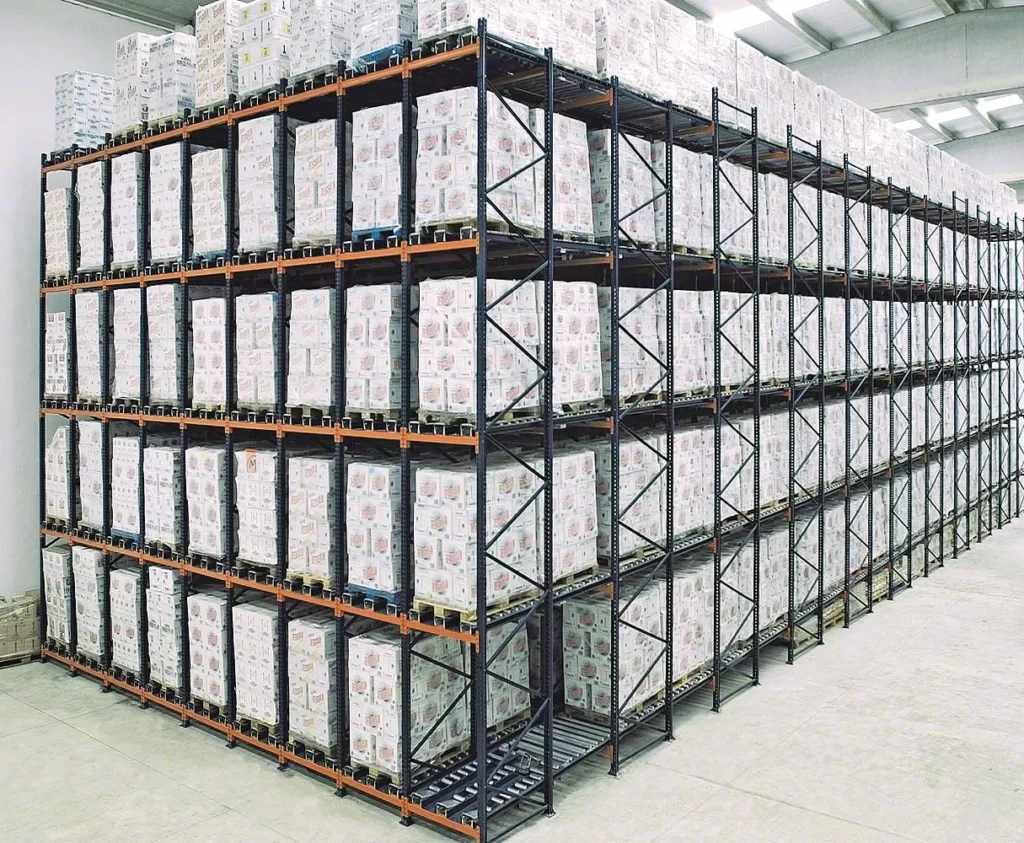
For perishables, pallet flow racking is widely considered the gold standard. Inclined gravity rollers carry pallets from the loading side to the pick face, so the first pallet in is automatically the first out, with no manual rotation.
This builds FIFO directly into the structure, cutting spoilage and removing the risk of older stock being trapped behind newer loads. It is also dense, increasing capacity by as much as 60 percent over selective racking, which is valuable in cold rooms where every cubic meter carries a high running cost. Roller components can be specified to stay reliable in deep-freeze conditions.
Push-Back Racking
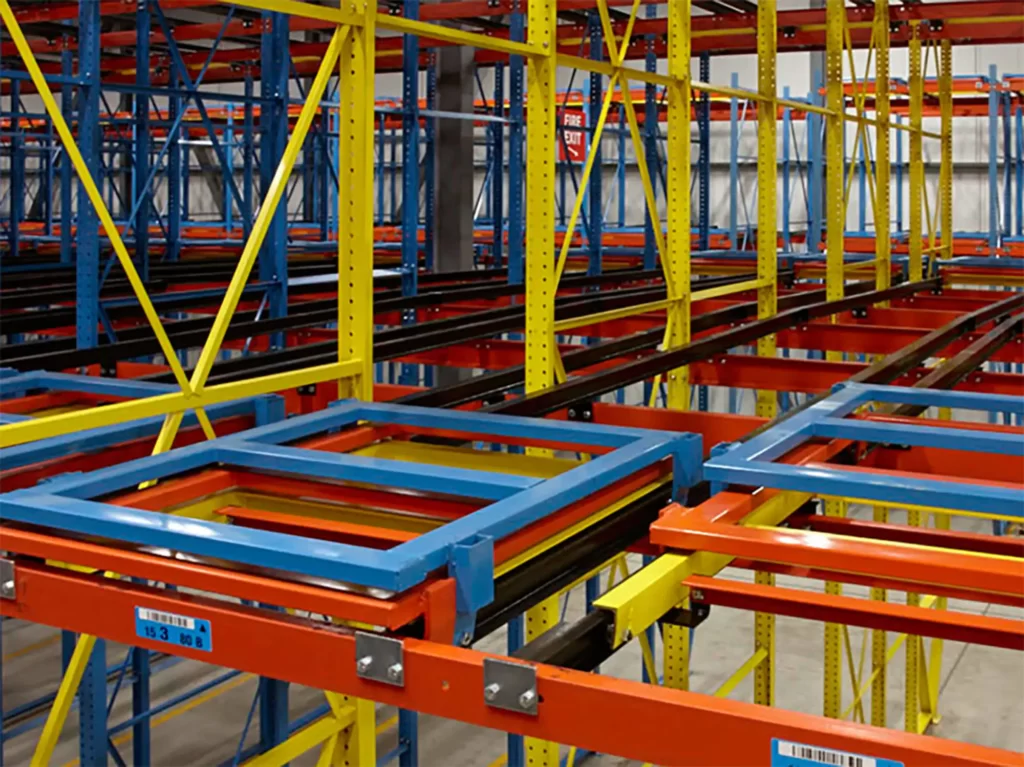
Push-back racking stores pallets two to five deep on inclined rails and works on a last-in, first-out basis. It offers a balance of density and access, holding far more than selective racking while still allowing many SKUs.
It suits beverages and other goods whose shelf life comfortably exceeds their rotation cycle, where strict date order is less critical than density.
Mobile Racking and Pallet Shuttle for High-Density Cold Storage
When refrigerated or frozen space is at a premium, high-density automation pays off. Mobile racking mounts rack rows on powered bases that slide along floor tracks, compacting the block and opening a working aisle only where needed. This can increase capacity substantially and cut the energy spent cooling empty aisle space.
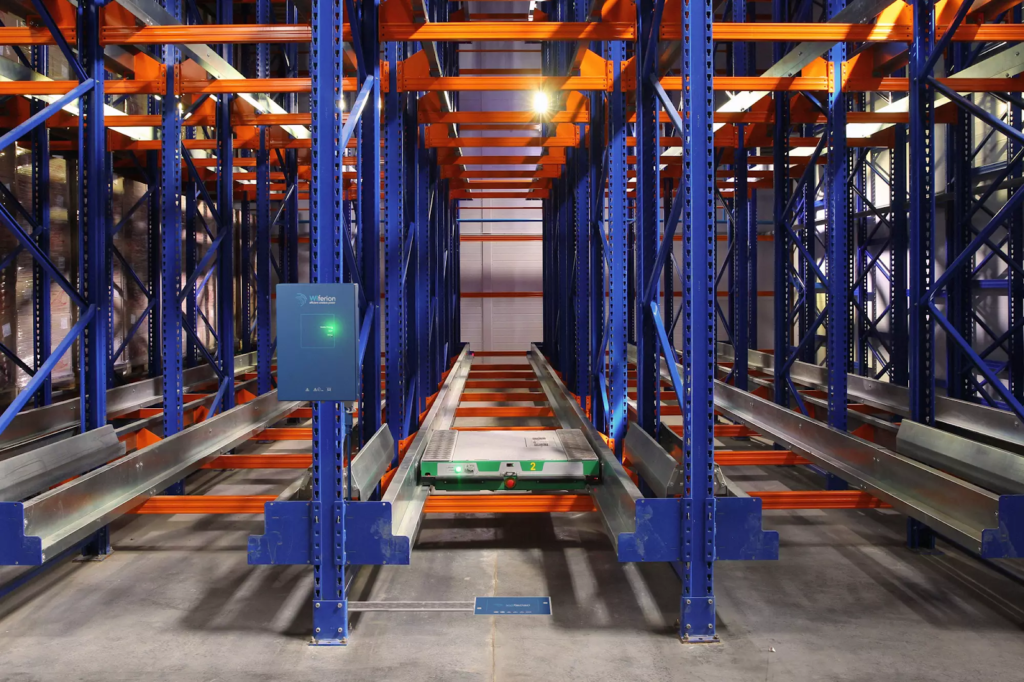
The pallet shuttle system goes further, using a motorized shuttle to move pallets deep into lanes with semi-automated FIFO or LIFO rotation. It is well suited to cold storage, reducing the time workers spend in freezing conditions while delivering major labor, energy, and space gains, with payback periods that typically run a few years.
Carton Flow and Shelving for Case Picking
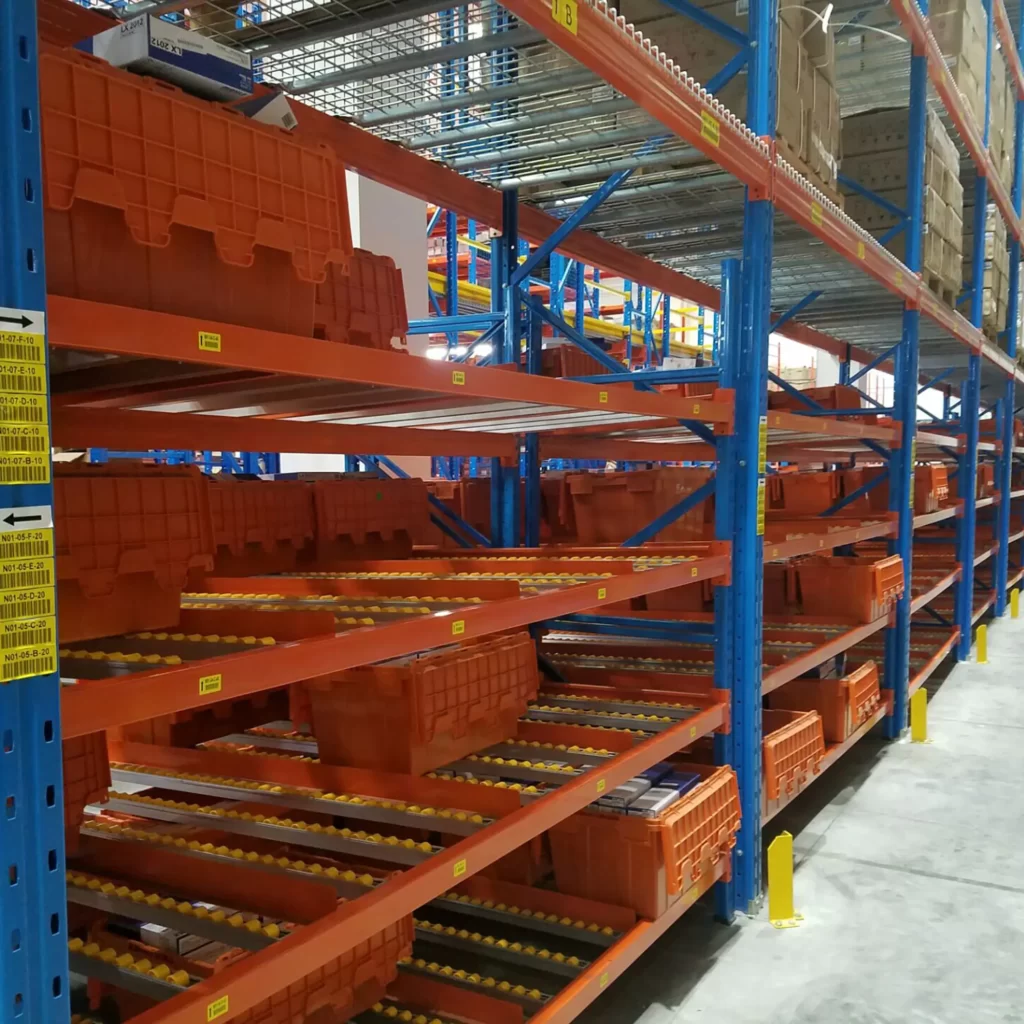
Not everything moves by the pallet. For case and piece picking, carton flow racking presents cases at an ergonomic pick face on a FIFO basis, while longspan shelving handles hand-loaded goods and slower lines. These keep order fulfillment fast and accurate alongside the heavier pallet systems.
Mezzanine Floors
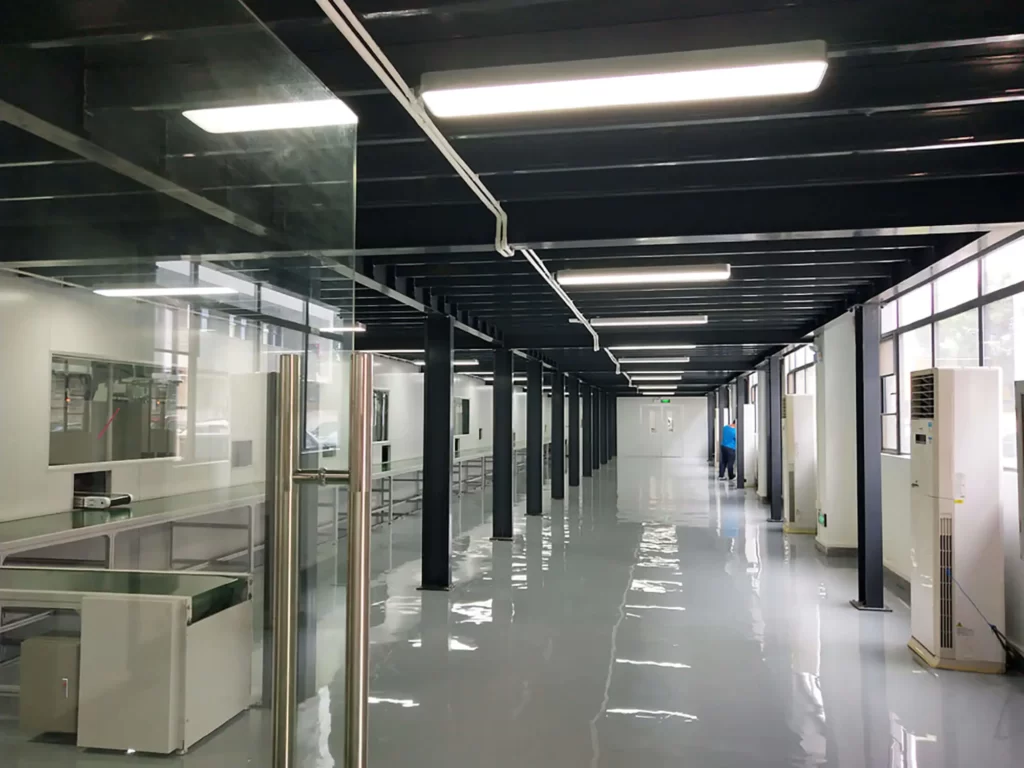
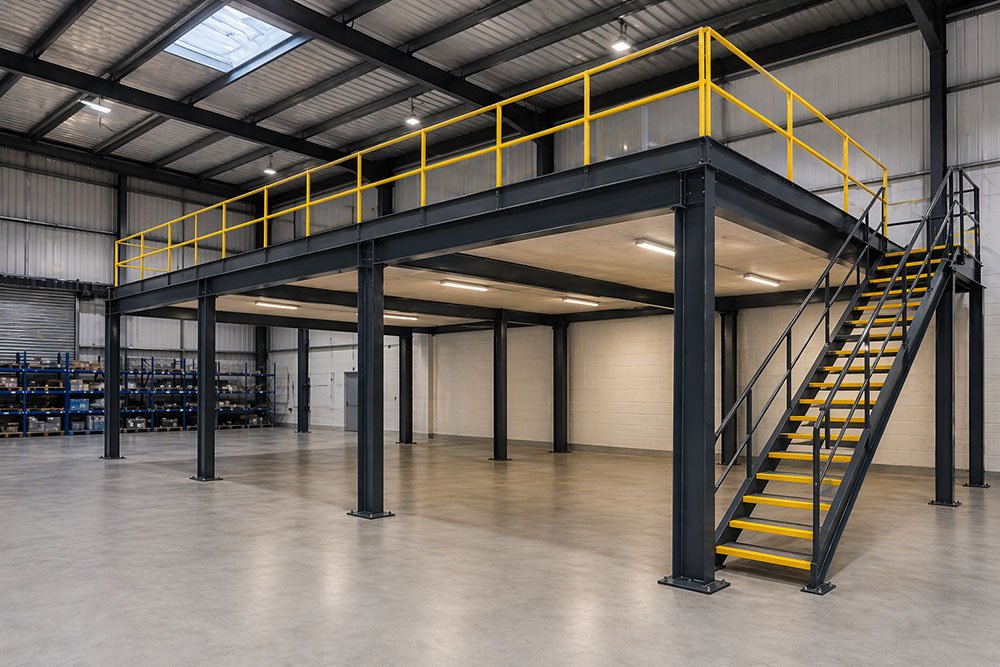
Where a building has height to spare, a mezzanine floor adds a working level for offices, packing, or ambient-stable overflow. Because conditioned space is costly, using a mezzanine for functions that do not need cold air frees the chilled and frozen floor for product that does.
Racking Materials and Finishes for Food-Grade Environments
In food and beverage warehousing, the finish on the steel is a food-safety decision, not a cosmetic one. Cold, condensation, and regular cleaning attack racking that was not specified for the job. This point also connects with Hot vs Cold Rolled Steel.
| Finish | Strengths | Watch-outs |
|---|---|---|
| Hot-dip galvanized | Excellent corrosion resistance; standard for food and cold storage | Specify adequate zinc coating thickness |
| Epoxy / powder coating | Smooth, easy to clean; food-safe grades available | Can become brittle in extreme cold; less suited below about −30 °C |
| Stainless steel | Highest hygiene and corrosion resistance | Higher cost; used in the most sensitive areas |
Galvanized steel is the most common choice for food environments and performs well in the cold. Powder coating gives a smooth, wipe-clean surface for chilled and ambient areas, while stainless is reserved for the most hygiene-critical zones.
Cold-Specific Design Details
Sub-zero storage adds requirements that standard racking ignores. Ordinary steel can turn brittle and fail on impact in deep freeze, so cold-rated components matter.
Practical details make a real difference: allow extra clearance for potential ice buildup, use chemical anchors rather than mechanical ones in frozen floor slabs, and position the fastest-moving SKUs nearest the doors to limit how long they stay open and how long staff are exposed to the cold.
Food Warehousing Designing the Layout: Zoning, Energy, and Cleanability
Individual racking choices work best inside a layout designed around temperature zones and product flow. Each zone, ambient, chilled, and frozen, is racked independently to suit its climate and the goods it holds.
High-density systems are concentrated where cooling is most expensive, because packing more pallets into less refrigerated volume directly lowers energy cost. Fast movers sit close to dispatch to cut travel and door-open time.
Cleanability is built in from the start. Racking that lets floor pallets be raised for cleaning, leaves room for sanitation routines, and integrates with sprinkler coverage keeps the warehouse compliant without fighting the equipment. A warehouse management system ties it together, enforcing FIFO and keeping lot records aligned with what is physically on the rack.
Sourcing Food and Beverage Racking from a China Manufacturer
The racking choices described here, galvanized finishes, cold-rated flow and shuttle systems, high-density mobile racking, and coordinated multi-zone layouts, all benefit from being built to the warehouse’s exact specification. Sourcing from an established manufacturer in China is a practical way to get that customization at a competitive cost, which matters in a sector where conditioned space and heavy-duty racking are expensive.
A capable manufacturer can supply a coordinated range, selective racking, drive-in, pallet flow, push-back, mobile racking, and pallet shuttle systems, engineered to work together across ambient, chilled, and frozen zones. Finishes can be matched to each environment, from hot-dip galvanized for cold rooms to food-safe coatings for ambient areas.
The usual international-sourcing points apply: plan for freight and longer lead times so racking arrives ahead of fit-out, and insist on proper engineering and load documentation that meets the standards at your installation site, which matters all the more given the heavy loads in this sector. Handled well, sourcing from a specialist combines lower equipment cost with racking built specifically for the cold-chain, FIFO-driven, hygiene-critical reality of food storage.
Final Thoughts
Food and beverage warehousing is defined by perishability, regulation, and weight, and warehouse racking sits at the center of managing all three. The racking enforces date rotation, packs costly refrigerated space efficiently, withstands cold and washdowns, and carries heavy loads safely.
The strongest food warehouses match each product to the right system: selective racking for variety, drive-in for uniform bulk, pallet flow for perishables, push-back for longer-life goods, and mobile or shuttle systems to make the most of expensive freezer space. They specify finishes for hygiene and cold, lay out zones for energy and cleanability, and source from a manufacturer who understands that storing food is not the same as storing anything else. Get the racking right and the warehouse stops being a constraint and becomes a genuine competitive advantage. For a closer comparison, see Freezer Warehouse.