Furniture warehousing is the specialized storage and handling of furniture inventory, from oversized sofas and dining tables to flat-packed wardrobes and boxed mattresses, in a way that protects the goods, uses space efficiently, and keeps orders flowing. What separates it from ordinary warehousing is the inventory itself: furniture is large, heavy, awkwardly shaped, easily damaged, and carried in a huge variety of sizes and finishes. A storage system designed for shoe boxes simply does not work for sectionals. This is exactly why the warehouse racking you choose is the single most important decision in a furniture operation. The right racking system turns a difficult, space-hungry, damage-prone category into an organized, high-density, retrievable one. Get the racking wrong and you waste floor space, slow down picking, and watch your damage rate climb.
This article looks at what makes furniture storage genuinely different, and then connects each of those challenges to the warehouse racking systems and configurations that solve it. Whether you run a manufacturer’s finished-goods warehouse, a furniture retailer’s distribution center, or a third-party logistics operation handling furniture brands, the principles are the same: match the rack to the product, design the layout around how the product moves, and protect both the goods and the people handling them.
What Makes Furniture Warehousing Different
Before choosing any storage equipment, it helps to be precise about the problems furniture creates, because every racking decision flows from these realities.
Oversized and Oddly Shaped Inventory
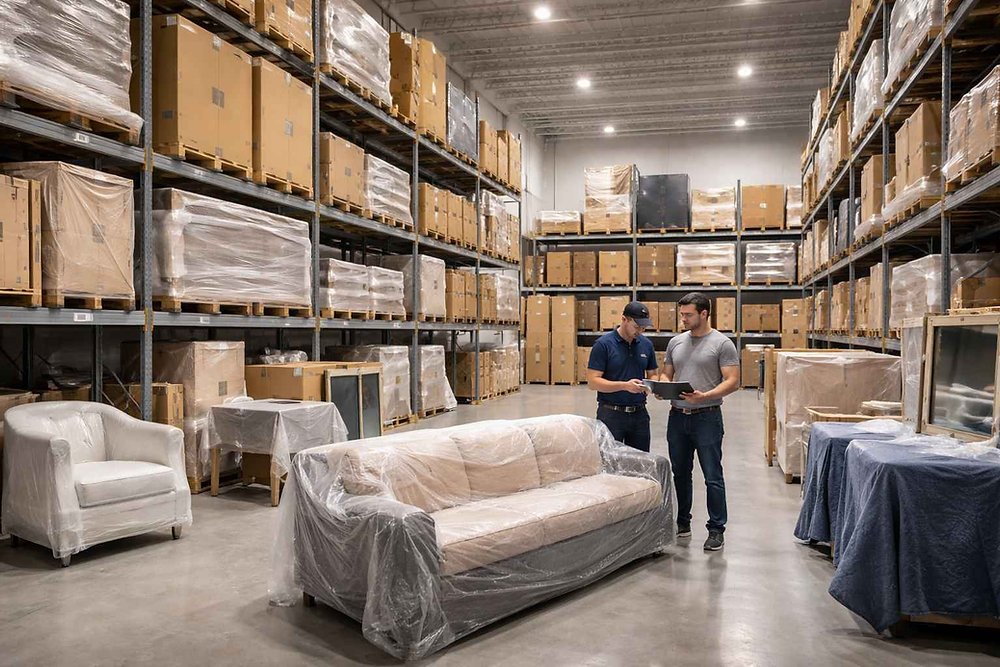
Furniture rarely fits neatly on a standard pallet. A three-seat sofa, a king headboard, a long dining table, or a rolled rug has dimensions and a center of gravity that conventional shelving was never designed for. Items often have irregular protrusions, soft edges, or lengths that overhang a normal beam. Block-stacking these goods on the floor wastes the vertical cube of the building and makes individual pieces hard to reach without moving everything around them. The fundamental space problem in furniture warehousing is that the most valuable resource, height, is the hardest to use safely with bulky goods unless the storage system is purpose-built for it.
Fragility and the High Cost of Damage
Furniture is finished goods. A scratch on a tabletop, a dent in a cabinet, a crease in upholstery, or warping from poor support turns a sellable item into a write-off or a discounted return. Damage in furniture warehousing is expensive in a way it is not for many other categories, because the value sits in the surface and the structure, both of which are vulnerable during storage and handling. Any racking decision therefore has to be judged not only on density and access but on how well it protects the product, supports it evenly, and keeps it stable.
High SKU Variety, Slow Turns, and Seasonal Swings
Furniture catalogs are wide. A single brand may carry dozens of frames, each in multiple fabrics, finishes, and configurations, which produces a high SKU count even before you account for accessories and spare parts. At the same time, individual pieces tend to turn over more slowly than fast-moving consumer goods, so inventory sits longer and occupies space for extended periods. Layer seasonal demand on top, where certain pieces spike around specific buying seasons, and the warehouse has to flex its capacity up and down. A good racking strategy has to accommodate many distinct items, hold slow movers economically, and scale without a complete redesign. For a closer comparison, see Wide Aisle Racking.
Mixed Formats: Assembled, Flat-Pack, and Boxed
Modern furniture warehousing handles several formats at once. Fully assembled pieces are bulky and need open, accessible storage. Flat-pack furniture arrives palletized in cartons and behaves more like conventional palletized goods. Boxed items such as compressed mattresses, ready-to-assemble desks, and packaged décor sit somewhere in between. Each format is best served by a different storage approach, which is why most furniture warehouses end up using a combination of racking systems rather than a single one.
Why Warehouse Racking Is the Backbone of Furniture Storage
Once the challenges are laid out, the role of racking becomes clear. Warehouse racking is the structural framework that lets a furniture operation store inventory vertically, access it selectively, and protect it while it waits to ship. It is the difference between a warehouse that holds a few hundred pieces stacked on the floor and one that holds thousands in an organized, retrievable grid.
Racking does three things that matter intensely for furniture. First, it reclaims the cube of the building by lifting goods off the floor and stacking them upward, multiplying capacity within the same footprint. Second, it creates defined, dedicated locations for each item, which is essential when you are tracking a high SKU count and need accurate putaway and picking. Third, when specified correctly, it cradles and supports each piece so it is not crushed, leaned, or balanced precariously against its neighbors. In short, racking converts the awkward physical properties of furniture into a manageable, scalable storage system. The remaining question is which type of racking suits which kind of furniture, and that is where the design work happens.
Matching Racking Systems to Furniture Types
There is no universal furniture rack. The strongest furniture warehouses analyze their inventory by size, shape, weight, and velocity, then assign each category to the racking system that handles it best. The following systems cover the vast majority of furniture storage needs.
Cantilever Racking for Long and Bulky Pieces
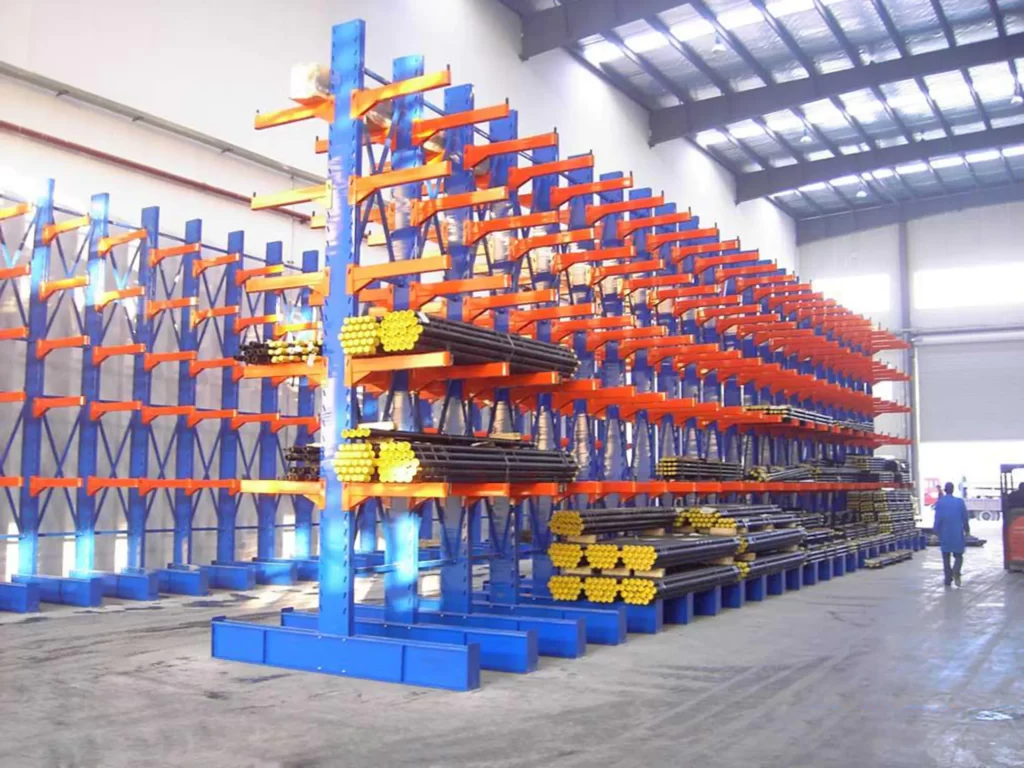
Cantilever racking is the system most people picture when they think of furniture storage, and for good reason. It consists of vertical columns at the rear with horizontal arms extending forward, creating open storage levels with no front uprights to get in the way. That open face is the key advantage: a forklift can load and unload long or bulky items from the front without fighting around obstructions, and items can overhang the arms when needed.
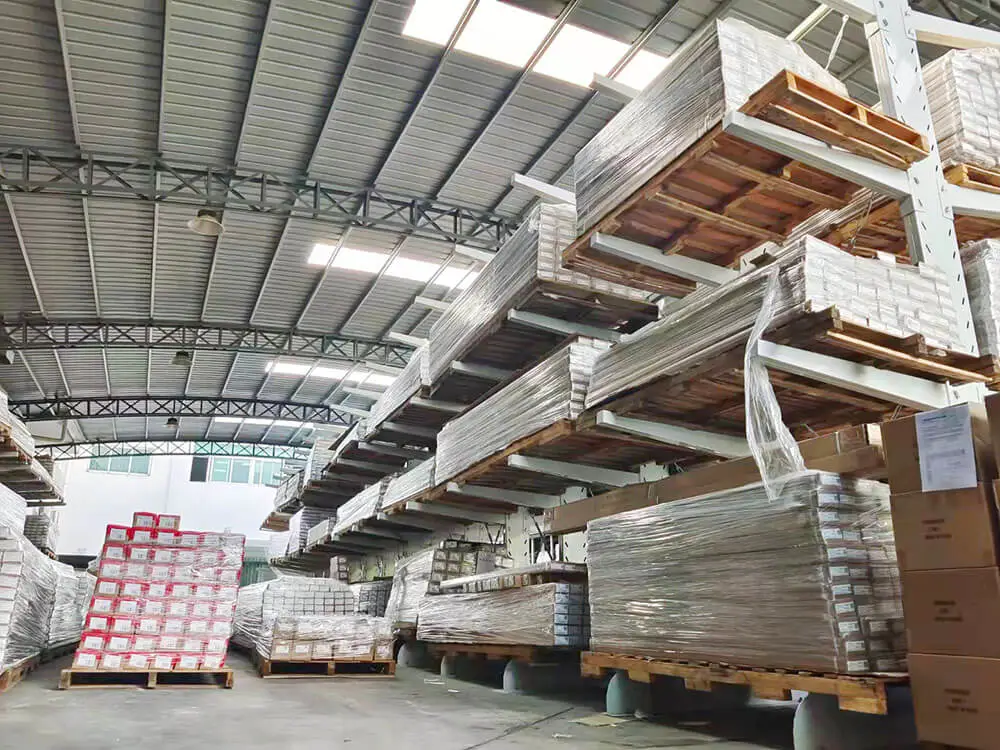
For assembled and oversized furniture, cantilever racking is hard to beat. Sofas, headboards, dining tables, long shelving units, rolled rugs and carpets, and oddly shaped pieces all sit naturally on cantilever arms. The arms are adjustable in height and the system can be configured for a wide range of capacities and lengths, so a single run of cantilever can be reconfigured as the product mix changes. Because furniture SKUs come and go with the seasons, that flexibility is genuinely valuable. When a warehouse needs orderly, high-capacity storage for items that are simply too long or too irregular for pallet positions, cantilever racking is usually the first system to specify. This point also connects with of Cantilever Shelving in A Warehouse.
Selective Pallet Racking for Boxed and Flat-Pack Furniture
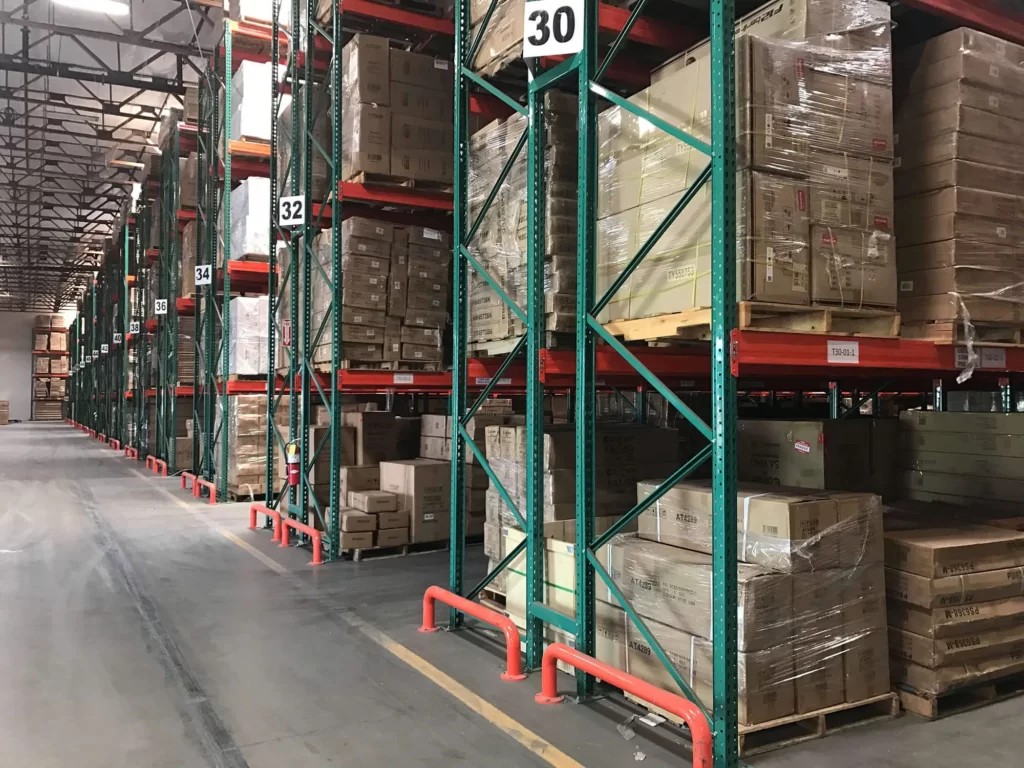
For furniture that arrives palletized, particularly flat-pack cartons and boxed goods, selective pallet racking is the workhorse. It is the most common and versatile warehouse racking system, using horizontal beams on upright frames to hold pallets with direct access to every position. Selective racking suits the flat-pack side of furniture warehousing because those products behave like standard palletized inventory, and direct access keeps picking fast across a high SKU count.
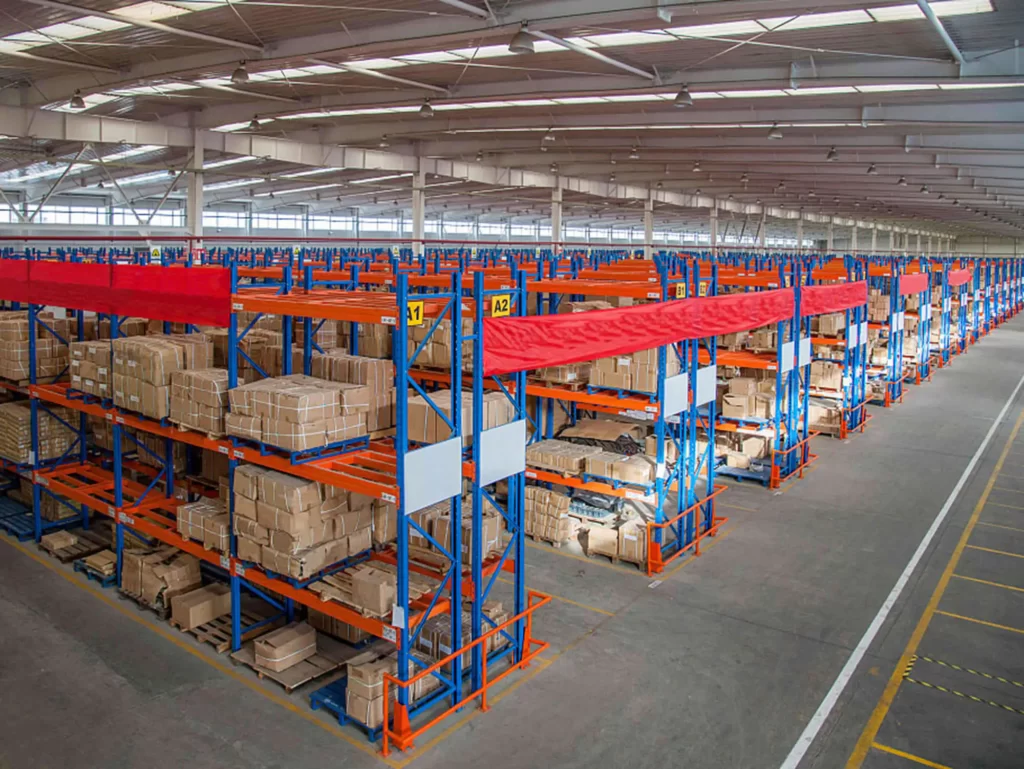
Furniture does, however, push selective racking beyond its default configuration. Bays are often built longer and deeper to take custom pallet sizes or oversized cartons, sometimes requiring deep-reach forklifts. Crucially, the deck matters: adding wire mesh decking creates a continuous supporting surface that prevents smaller cartons or irregular items from falling between beams, which is both a safety measure and a damage-prevention measure. Some operations skip decking and instead use custom furniture skids or fork-entry bars that raise the goods above the beam line for easy forklift access while maximizing the vertical cube. Configured thoughtfully, selective pallet racking gives a furniture warehouse the accessible, location-defined backbone it needs for the boxed portion of its inventory.
High-Density Systems for Uniform, Higher-Volume SKUs
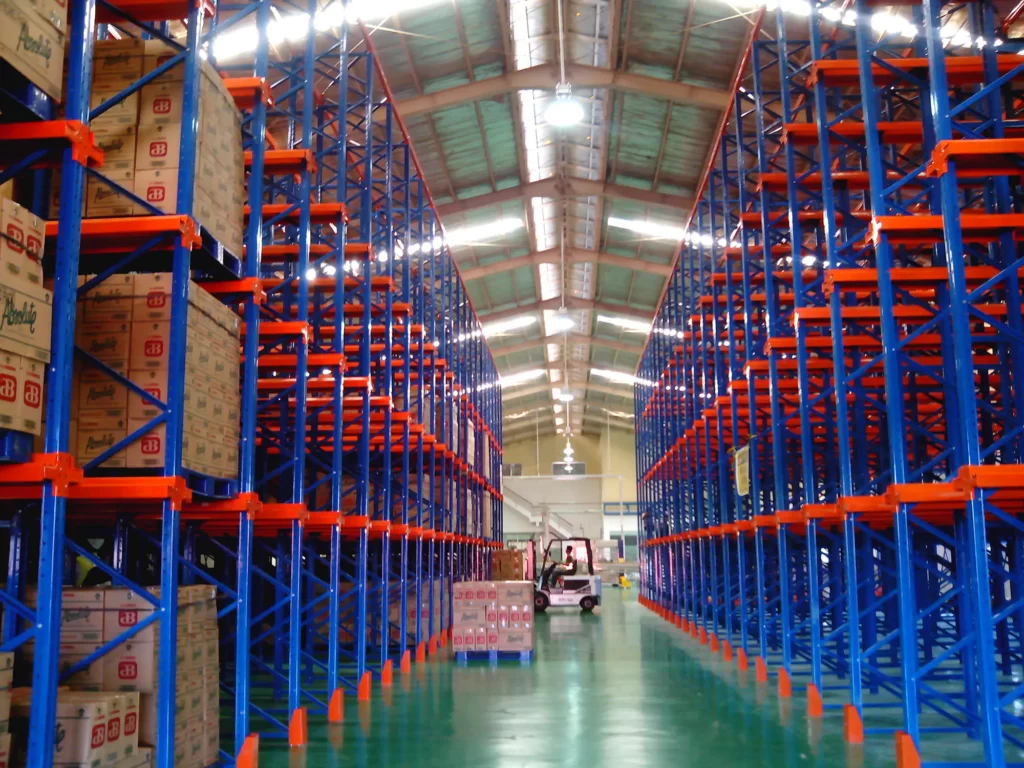
When a furniture warehouse holds a meaningful quantity of identical or near-identical SKUs, such as a best-selling flat-pack item or a popular boxed mattress, high-density racking earns its place. Drive-in racking lets forklifts enter the lane and store pallets several positions deep, trading some selectivity for a major gain in density, which suits slow-moving uniform stock that does not need individual access. Push-back racking stores multiple pallets per lane on inclined rails and works on a last-in, first-out basis, while pallet flow racking uses gravity rollers for first-in, first-out rotation, feeding the pick face automatically as items are removed.

Flow and push-back systems are not for assembled couches or desks, but they are excellent for boxed mattresses, packaged televisions and accessories, and other uniform cartons that move in volume. Mobile racking, where rack rows sit on powered or mechanical bases that slide along floor tracks, takes density further still by eliminating fixed aisles, compacting the storage block and only opening an aisle where picking is happening. For furniture operations constrained by building size but holding large quantities of a limited SKU range, these high-density systems can dramatically increase how much product fits under one roof.
Wide-Span and Longspan Shelving for Hand-Loaded Items
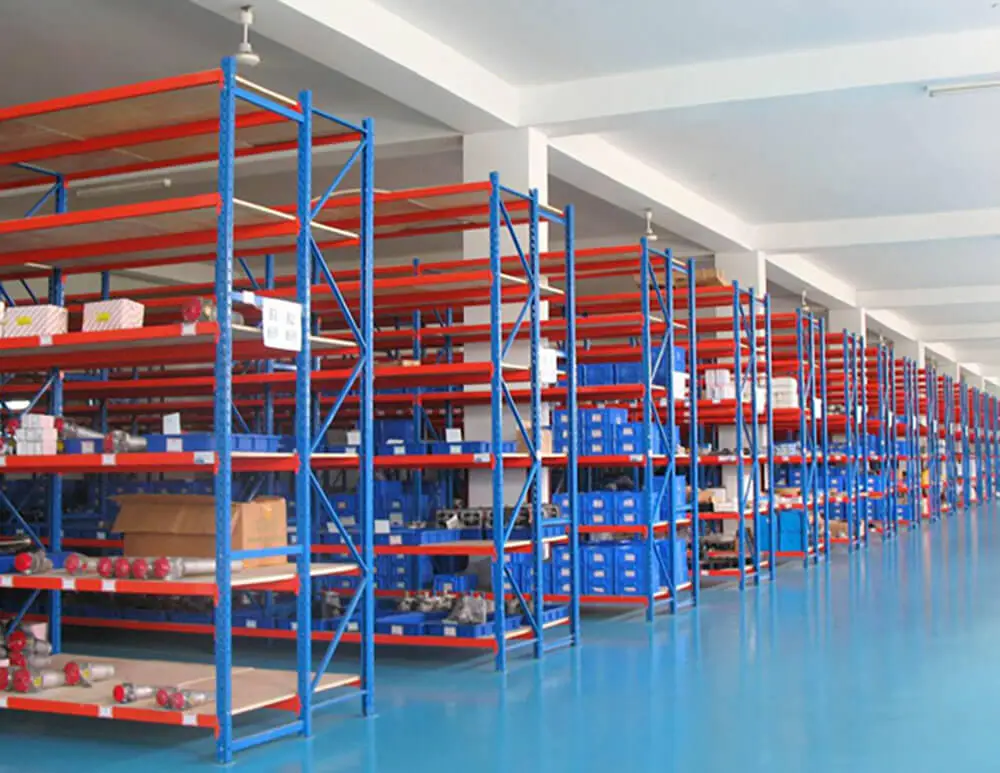
Not every furniture item needs a forklift. Smaller boxed goods, accessories, hardware, cushions, and the long tail of low-velocity SKUs are often picked by hand, and for these, wide-span or longspan shelving is the right tool. It bridges the gap between light commercial shelving and full pallet racking, offering longer, stronger shelf levels that hold bulky boxed items without requiring mechanical handling for every pick. Wide-span shelving keeps the smaller and medium-sized portion of a furniture catalog organized and accessible at floor level, complementing the heavier racking systems used for pallets and oversized pieces. For product-level details, review Long Span Racking.
Mezzanine Floors for Slow Movers and Added Levels
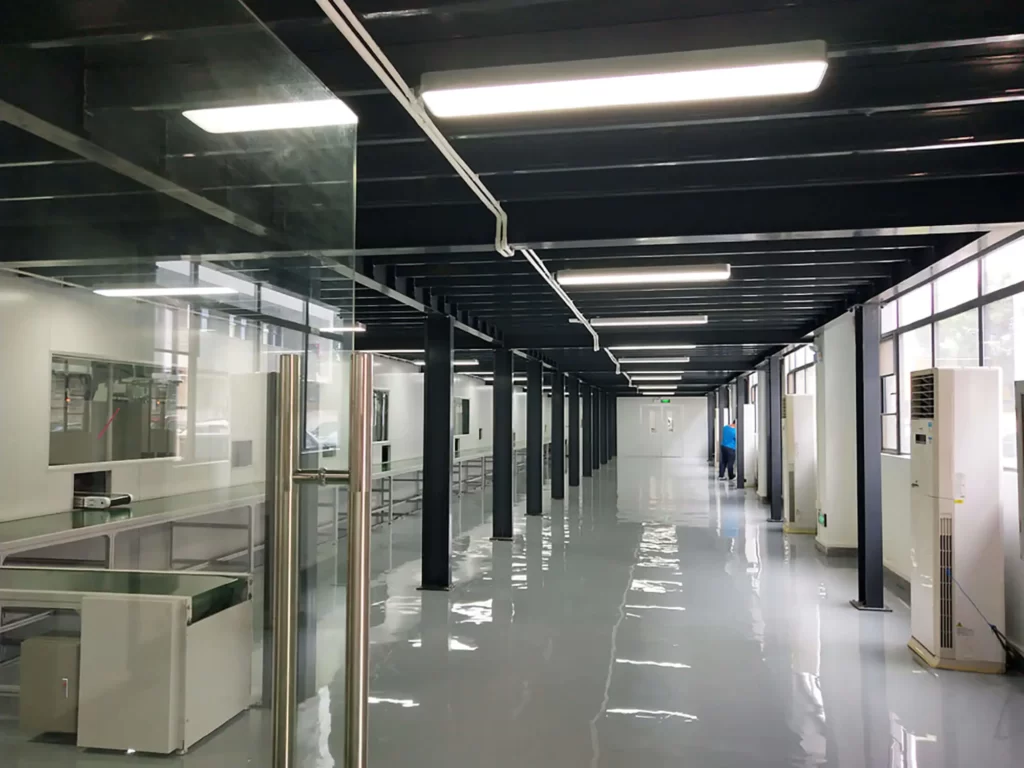
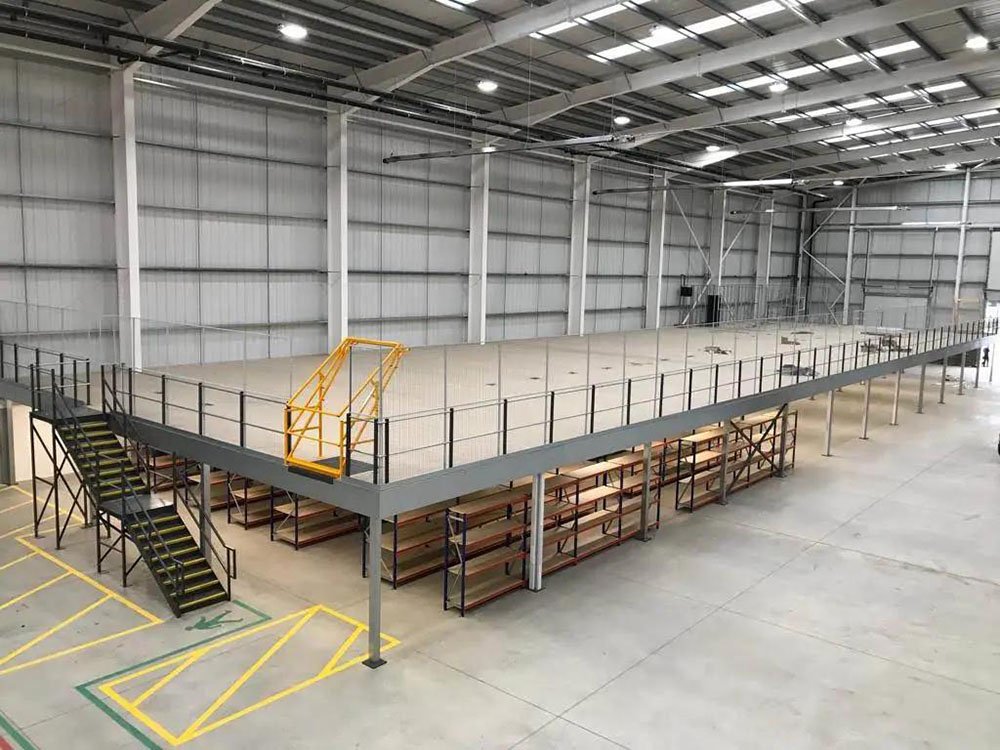
When a furniture warehouse has the ceiling height but has run out of floor, a mezzanine floor adds an entire working level within the existing building. It is a natural fit for storing slower-moving inventory, seasonal overflow, or lighter items that do not need daily access, freeing prime ground-level positions for fast movers. A mezzanine can also host hand-loaded shelving, a packing area, or office space above the storage operation. Because furniture warehousing is so space-intensive and demand is seasonal, the ability to expand upward with a mezzanine, rather than relocating to a larger building, is often the most cost-effective way to add capacity.
Protecting Furniture on the Rack: Accessories and Configuration
Choosing the right racking system is only half the job. How that racking is configured determines whether your furniture arrives at the customer in showroom condition or covered in scratches and dents. Damage prevention in furniture warehousing lives in the details.
Decking and Supporting Surfaces
The supporting surface beneath each item matters enormously for furniture. Wire mesh decking laid across pallet racking beams provides a continuous, ventilated surface that stops cartons from slipping through, distributes load, and reduces the risk of items falling. Solid steel or composite decking offers an even smoother, fully supported surface where appropriate. Proper support also prevents a subtler form of damage: long or heavy pieces left to sag across an unsupported gap can warp over time, so even support along the full footprint of a piece protects its structure as well as its surface.
Dividers and Specialized Holders
Tall, thin, or upright items are a classic furniture storage problem, and specialized dividers solve it. Tubular dividers that subdivide a rack bay into vertical slots keep mattresses, mirrors, headboards, table leaves, and panel goods standing upright, separated, and organized by SKU. Storing these items on edge in dedicated slots, rather than stacked flat, saves space, speeds picking, and prevents the pressure damage that comes from piling heavy flat items on top of one another. These configuration choices turn a general-purpose rack into a furniture-specific one without changing the underlying system.
Aisle Width, Clearance, and Forklift Access
Furniture handling needs room. Extra-wide aisles let forklifts maneuver long and bulky loads without clipping racking or adjacent inventory, and high-clearance racking takes advantage of tall buildings to add levels. Designing generous access into the layout reduces handling damage, which is one of the largest hidden costs in furniture warehousing, and it keeps the operation safe when oversized loads are moving through the facility. The open front of cantilever racking, the deep bays of furniture-configured pallet racking, and well-planned aisle widths all work together to make loading and retrieval smooth.
Designing a Furniture Warehouse Layout Around Racking
Individual racking systems perform best inside a layout that reflects how furniture actually moves through the building. A strong furniture warehouse is zoned deliberately rather than filled at random.
A common and effective approach is to zone by both shape and velocity. Oversized assembled pieces go into cantilever runs positioned for easy forklift access. Palletized flat-pack inventory occupies selective racking, with the fastest movers in the most accessible positions near dispatch and slower lines deeper in the building or up on a mezzanine. High-volume uniform SKUs sit in high-density drive-in, push-back, or flow racking sized to their throughput. Hand-picked smaller goods live in wide-span shelving close to packing. Grouping similar items together, whether by shape, size, or how often they are picked, shortens travel distances and reduces the handling that leads to damage. A related guide on Make Lumber Storage Easy By Using Cantilever Shelving gives more detail for this part of the planning work. For broader industry context, Rack Manufacturers Institute (RMI) is a useful reference.
Receiving and staging space deserves equal attention. Furniture takes up a lot of room while it is being inspected, unpacked, or prepared for outbound shipment, and a warehouse that is fully racked but starved of open staging area will choke at the dock. The best layouts balance dense vertical storage against the open floor needed to maneuver large items safely. Inventory rotation also has to be built in: pairing FIFO-friendly flow racking with a warehouse management system keeps stock moving in the right order and prevents older inventory from being buried behind newer arrivals.
Safety and Compliance in Furniture Racking
Heavy, oversized, and oddly shaped goods introduce real safety risks, and a furniture racking system has to be specified and operated with those risks in mind. The principles are well established. Load each rack within its rated capacity and place the heaviest items at lower levels to keep the center of gravity low and prevent tipping. Secure irregular or potentially unstable items with straps, bands, or netting so nothing slides or rolls off an arm or beam. Keep aisles wide enough for the equipment and loads in use, in line with prevailing workplace safety standards.
Equally important is ongoing inspection. Racking that carries heavy furniture should be checked regularly for bent beams, cracked welds, damaged uprights, and loosened connections, with any compromised component repaired or replaced before it fails. Forklift impact is a common cause of rack damage in furniture warehouses because of the size of the loads being moved, so column guards and end-of-aisle protection are sensible additions. A racking system is only as safe as the load ratings it is held to and the discipline with which it is maintained, and in a furniture operation where loads are large and people work alongside them constantly, that discipline protects both inventory and staff.
Scaling and Flexibility: Planning for Growth and Seasonality
Furniture demand does not hold steady. Seasonal peaks, new product launches, channel shifts between retail and direct-to-consumer, and overall business growth all change how much and what kind of storage a warehouse needs. The racking strategy should anticipate this rather than lock the operation into a fixed configuration.
Adjustable systems give furniture warehouses the flexibility they need. Cantilever arms can be repositioned as the size profile of the inventory changes, pallet racking beams can be re-set to new heights for different carton sizes, and modular systems can be extended as volume grows. Mezzanine floors and mobile racking offer ways to add significant capacity within the existing building when a seasonal peak or a growth phase would otherwise force a costly relocation. Designing in headroom, both literally in clear height and figuratively in spare configuration capacity, means the warehouse can absorb a busy season or a new product line without a disruptive redesign. The most resilient furniture operations treat their racking as an adaptable platform, not a one-time installation.
Sourcing Furniture Racking from a China Manufacturer
Where you source your racking has a direct effect on what a furniture warehouse can afford to build and how well it is tailored to the goods. Furniture inventory almost always demands a degree of customization, whether that is extra-long cantilever arms, deeper pallet bays, specific divider configurations, or decking matched to the product, and sourcing from an established manufacturer in China is a practical way to get that customization at a competitive cost.
The advantages are meaningful. Direct manufacturing keeps the cost of the steel and fabrication lower than many local alternatives, which matters when a space-intensive category like furniture requires a lot of racking. A capable manufacturer can produce a coordinated system, supplying cantilever racking, pallet racking, wide-span shelving, mezzanine structures, and the accessories that protect furniture from a single source, so the components are engineered to work together rather than assembled from mismatched suppliers. Customization to your exact furniture dimensions and load requirements is far easier when you are dealing with the factory directly.
The trade-offs are the ones common to any international sourcing: plan for container freight and inland transport, allow for longer lead times so racking arrives ahead of when you need it rather than at the last minute, and insist on proper engineering and load documentation that meets the codes applying at your installation site. When those elements are handled well, sourcing furniture racking from a China manufacturer combines lower material cost with systems built specifically for the bulky, fragile, high-variety reality of furniture warehousing. For an operation weighing the considerable cost of storing furniture, that combination of price and fit is hard to match.
Bringing It Together
Furniture warehousing succeeds or fails on the strength of its storage system, and the storage system is, at its core, the racking. The category’s defining challenges, oversized and oddly shaped pieces, fragility and the high cost of damage, a wide SKU range that turns slowly, and a mix of assembled, flat-pack, and boxed formats, all point toward the same answer: a thoughtfully chosen combination of warehouse racking, configured to protect the goods and laid out to match how they move.
In practice that means cantilever racking for the long and bulky pieces, furniture-configured selective pallet racking for palletized and flat-pack goods, high-density and mobile systems for uniform volume SKUs, wide-span shelving for hand-picked items, and mezzanine floors to expand upward when the floor runs out. It means decking, dividers, generous aisles, and disciplined safety practices to keep furniture in showroom condition. And it means choosing a racking partner, often a specialist manufacturer who can deliver customized, coordinated systems at a sensible cost, who understands that storing furniture is not the same as storing anything else. Approach furniture warehousing this way and the warehouse stops being a constraint on the business and becomes one of its competitive advantages, holding more inventory, in better condition, ready to ship, in the same four walls.