Practical storage is important for any warehouse and industry. Well, picking the right racks helps you to manage your space and protect your goods. Have you think how different racks are made and which rack is best for your storage needs?
In this article, you will learn about the different rack types, their manufacturing processes, and their benefits for storage. From lightweight racks to heavy-duty pallets, we will discuss everything you need to improve your storage. So keep reading!
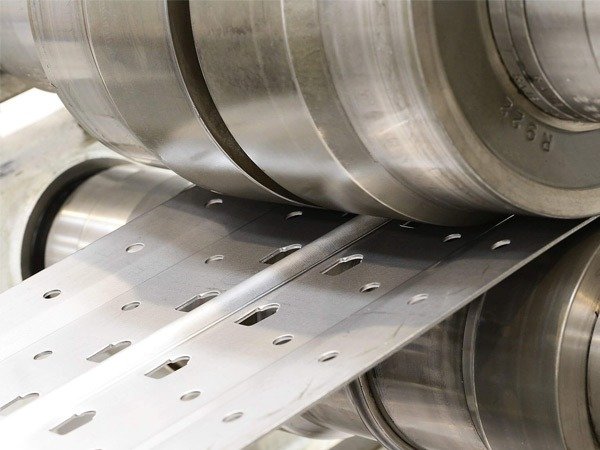
Figure 1: Rack Manufacturing Processes
1) Understanding Rack Manufacturing
Rack manufacturing is the method of designing and manufacturing storage systems to store goods in a well-ordered way. So, these racks help keep your items safe and organized. You see them in warehouses, factories, and retail stores. Well, rack manufacturing focuses on strength and long-lasting. It involves planning, material selection, manufacturing, and finishing.
After that, the scope of rack manufacturing is very wide. Depending on your requirement, racks are manufactured for light or heavy loads. For example, some racks are designed to carry small boxes. While others support large pallets or long materials. For this reason, rack manufacturing is important in many industries. Well, every rack is designed according to your storage requirements and space.
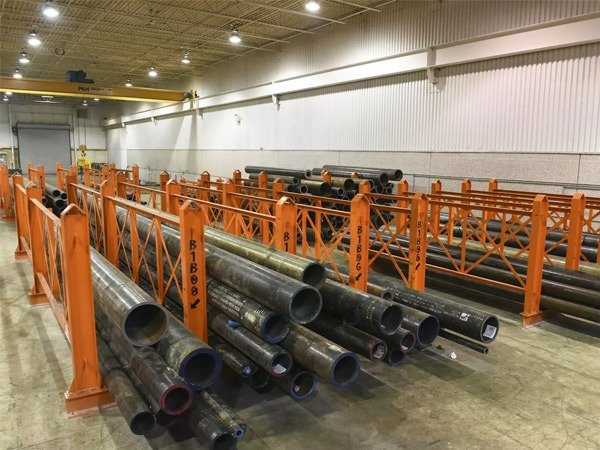
Figure 2: Understanding Rack Manufacturing
Moreover, several factors are important in the design phase. First of all, durability is important. For this purpose, strong materials such as steel are used. So, your rack is protected from bending and damage. Also, the load capacity is carefully selected. So before manufacturing, engineers set a safe weight limit.
Furthermore, size and layout are considered. Well, correct spacing allows for easy access and safe movement. Similarly, safety features such as bracing and anchors increase strength. So, a well-designed rack reduces workplace hazards.
2) Light-Duty Rack Manufacturing Process
Well, lightweight racks are designed to keep your items ordered. They are practical and used in small areas. Lightweight racks are made from low-cost materials. Most manufacturers use mild or mild steel. However, these materials offer you strength at a low weight. Also, steel sheets are easy to cut and shape. It is powder-coated.
So this coating protects your rack from rust and everyday wear and tear. Here we will discuss the step-by-step manufacturing process and its uses and benefits in small storage.
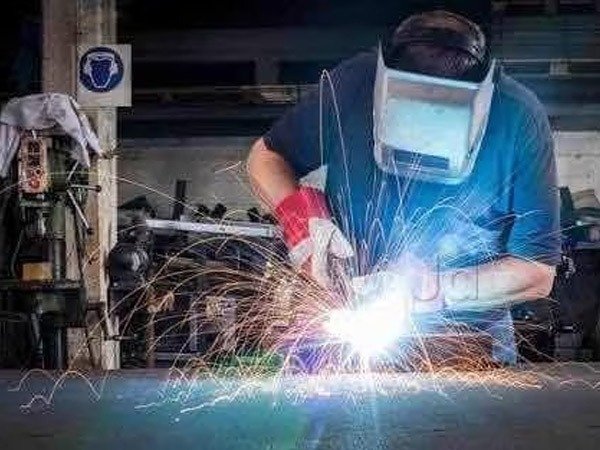
Figure 3: Light-Duty Rack Manufacturing Process
- Step-by-Step Manufacturing Process
i) Raw Material Selection: First of all, mild steel sheets are selected. At this point, the thickness and quality of the material are checked.
ii) Cutting and Sizing: Next, the steel sheets are cut to the required size. So, all the parts are as per the design.
iii) Bending and Shaping: Then, the cut parts are bent to their selected shape. In this phase, the shelves, frames, and supports are made.
iv) Welding and Assembly: After that, all the parts are welded. So this process has a stable rack structure.
v) Surface Cleaning: After the assembly is complete, the surface of the rack is cleaned. During this, oil and sharp edges are removed.
vi) Coating and Finishing: Afterward, powder coating is applied. So, the rack is protected from rust and corrosion.
vii) Final Inspection: Finally, the finished rack is inspected. At this point, size, strength, and finishing are carefully checked.
- Uses and Benefits of Small Storage
- Lightweight racks are perfect for your small storage needs.
- You can usually see them in offices and retail stores.
- They are also used in small warehouses.
- These racks can be easily installed and moved.
- After that, they do not use heavy machinery to install. So it makes them very suitable and easy to use.
- Also, you can easily adjust the shelves to suit different items.
- They are cheap and help you to save space.
- Finally, they keep your goods ordered and easily accessible.
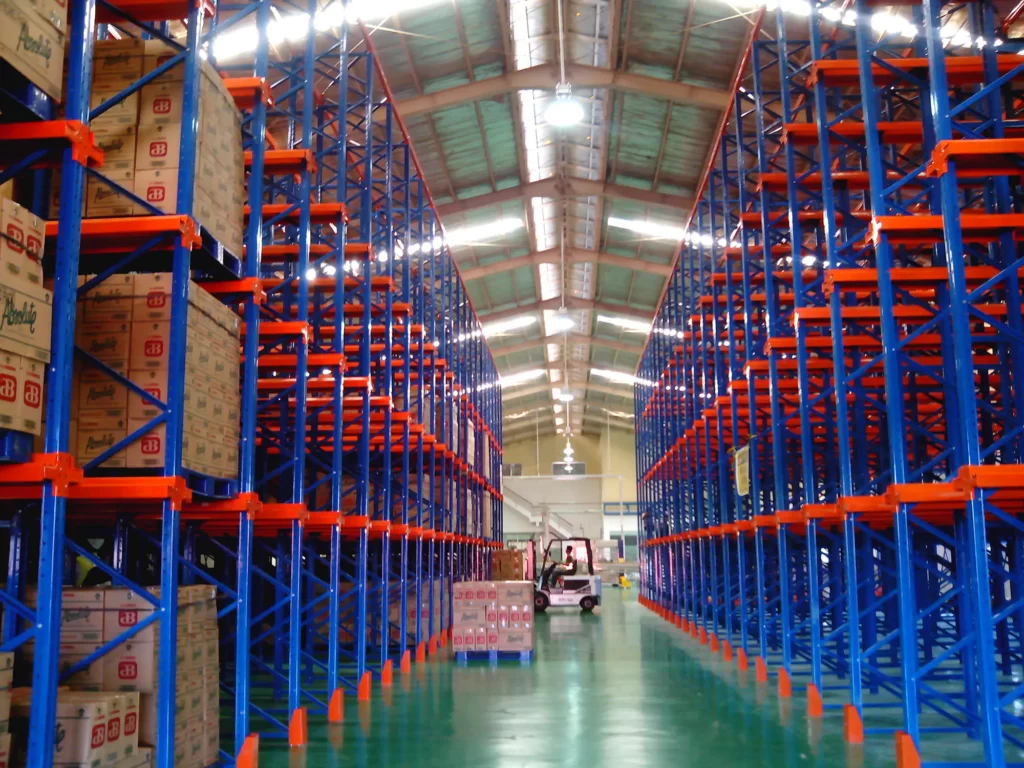
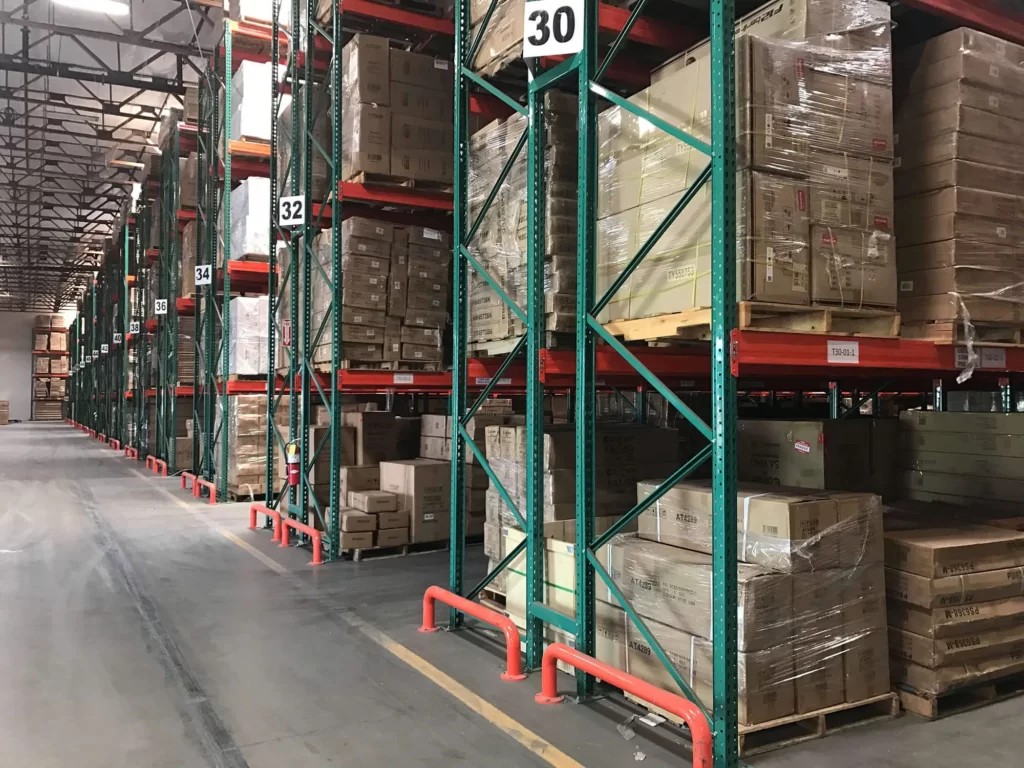
3) Pallet Racking Manufacturing Process
As you understand, lightweight racks. Now we will discuss pallet rack systems, which are manufactured for heavy-weight and large warehouses. Here, we will discuss the manufacturing process step by step, and its uses and benefits in warehouses.
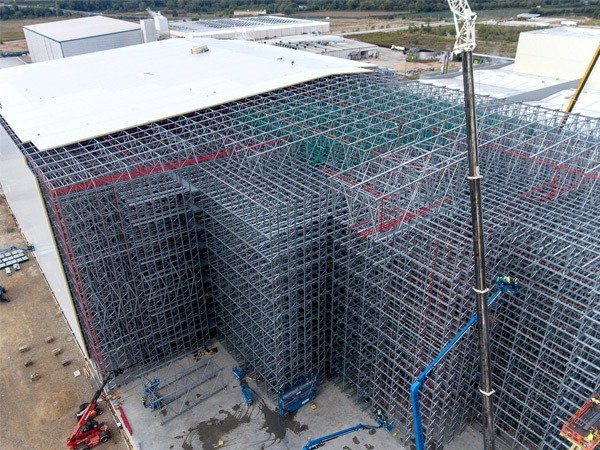
Figure 4: Pallet Racking Manufacturing Process
- Step-by-step manufacturing process
i) Raw material selection: First of all, high-quality structural steel is selected. Additionally, the texture and quality of the steel are carefully inspected.
ii) Cutting and sizing: After that, the steel sheets and beams are cut according to the needed size. Now, all the parts are cut according to the design.
iii) Shaping and making holes: Then, the steel parts are shaped, and holes are made where needed. Now, the uprights, beams, and brackets are designed to assemble them.
iv) Welding and Assembly: Next, to form a strong frame, all the parts o rack are now connected by welding or bolts. This process guarantees that the structure can withstand heavy loads.
v) Surface Cleaning and Coating: After the body is complete, the surface of the rack is cleaned and prepared for coating. Now, a powder coating and paint are applied to control rust and corrosion.
vi) Final Inspection: At last, every rack is checked for size, strength, and finish. Well, the load-bearing capacity and safety are also tested.
- Applications and Benefits in Warehouses
- First of all, pallet racks are excellent for storing heavy goods and large items.
- You can see them in warehouses, factories, and distribution centers.
- Also, they provide easy access by forklifts or pallet jacks.
- Well, these racks make the most of vertical and horizontal storage space.
- Finally, they improve organization and reduce handling time.
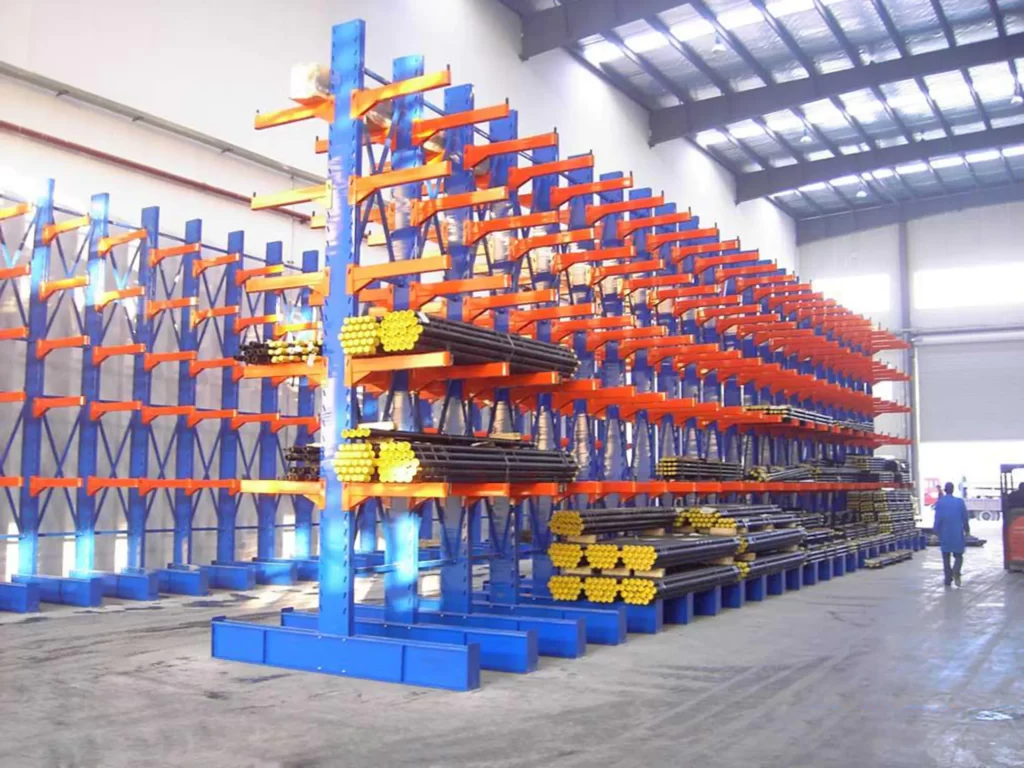
4) Cantilever Racking Manufacturing Process
As you learned about pallet racks for heavy goods. We will now talk about cantilever racks, which are designed to carry bulky items such as pipes, lumber, and sheets. Now we will discuss what the cantilever rack manufacturing process is and its uses and benefits.
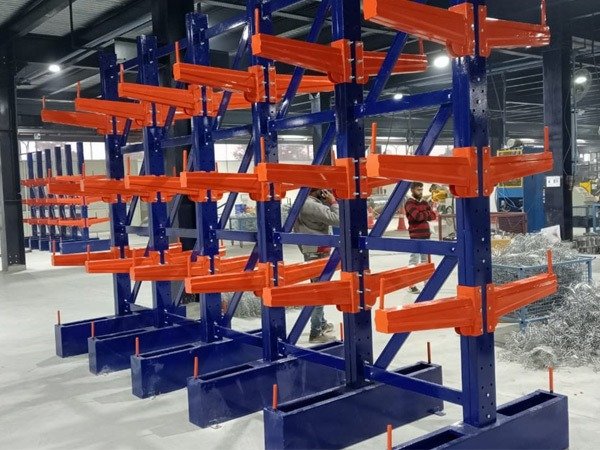
Figure 5: Cantilever Racking Manufacturing Process
- Step-by-step manufacturing process
i) Raw material selection: First of all, high-quality steel is selected for the arms, columns, and base. Now the strength and thickness of the steel are inspected.
ii) Cutting and sizing: Next, the steel is cut to the needed length for the arms, uprights, and base. Then all parts are manufactured according to the design.
iii) Bending and shaping: Then, the arms and columns are bent into their selected shape. Well, this step guarantees that the rack can safely carry long items.
iv) Welding and Assembly: After that, the arms are welded to the upright column, and the base is assembled. Also, the balance of the rack structure is checked.
v) Surface Cleaning and Coating: After assembly of the rack is complete, the rack is cleaned and powder-coated for your safety. This also saves it from rust and makes it last longer.
vi) Final Inspection: At last, the rack is inspected for strength and finishing. Also, the load capacity and safety standards are inspected.
- Uses and Benefits
- Cantilever racks are perfect for storing long and bulky items.
- You can see them in warehouses, lumber yards, and factories.
- Also, they offer you easy access without a front column.
- These racks are flexible, space-saving, and sturdy.
- Finally, cantilever racks offer you a reliable solution for safely storing long and odd-shaped items.
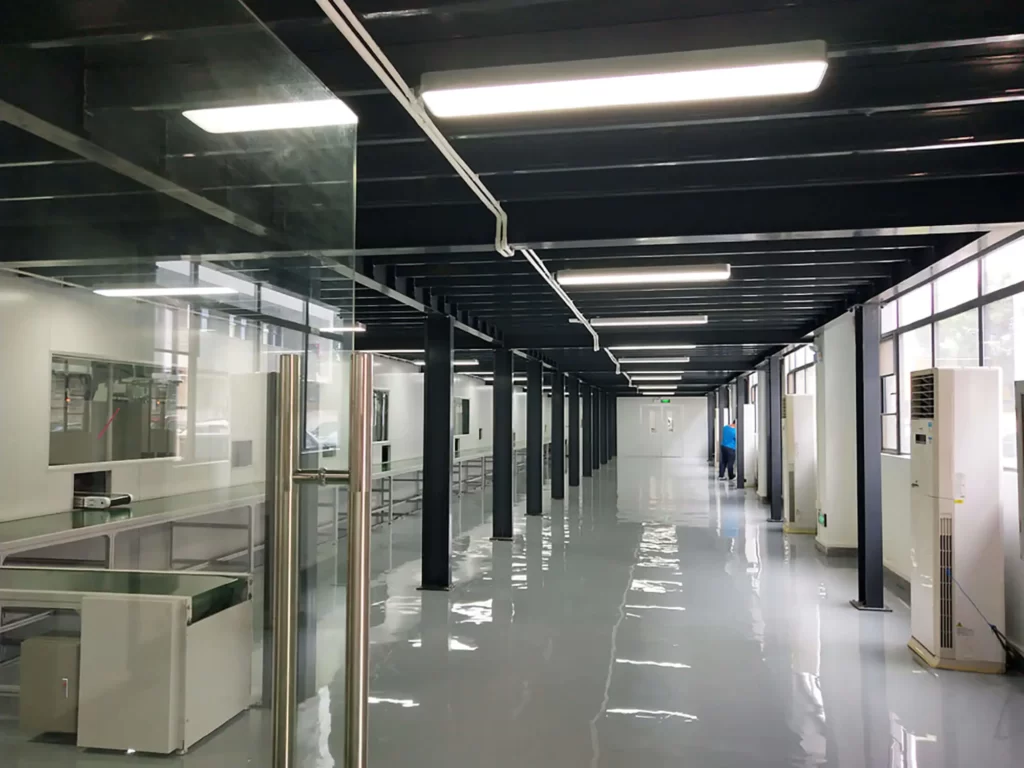
5) Mezzanine Rack Manufacturing Process
As you learned about cantilever racks for tall and bulky goods. Well, a mezzanine racking system creates an additional floor or platform above the existing floor. So it is increasing storage space without expanding the building. Here, we will discuss the step-by-step manufacturing process of mezzanine racks and their benefits.
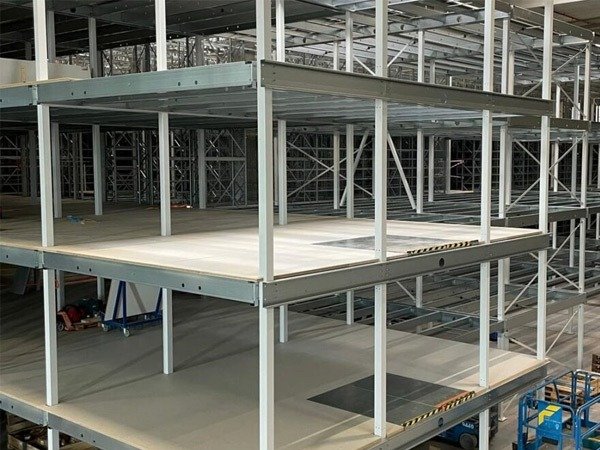
Figure 6: Cantilever Racking Manufacturing Process
- Step-by-step manufacturing process
i) Design and planning: First of all, engineers examine the available space and storage requirements. They design the layout of the mezzanine, which includes the size, height, and load capacity of the platform. So the Structural calculations are performed to guarantee safety and stability.
ii) Material selection: Next, high-quality steel is selected for columns, beams, and decking. Well, the steel material must be strong to safely support heavy loads. Floor panels are also made of steel or strong wood, depending on the uses.
iii) Cutting and sizing: Then, steel columns and beams are cut according to the needed length. Floor panels are also cut to the platform design. So the correct cutting ensures correct assembly and weight distribution.
iv) Bending and shaping: Next, Beams and supports are bent or shaped as required. Now, in this step designs the components for assembly. So it guarantees the structural strength of the rack.
v) Welding and assembly: After that, columns, beams, and supports are connected by welding and bolting to form the frame. Then Floor panels are installed on the frame to form the mezzanine platform. Safety rails and stairs are also installed where needed.
vi) Surface cleaning and coating: After assembly of the rack is complete, all steel components are cleaned. Well, powder coating and paint are applied to control rust and damage.
vii) Final Inspection: Finally, the mezzanine rack is thoroughly inspected. Well, engineers check the load alignment and overall structural strength.
- Uses and Benefits
- Mezzanine racks are perfect for warehouses, factories, and distribution centers.
- Next, they help you to use vertical space efficiently, which increases storage without expanding the building.
- Also, you can place pallets, bins, and machinery on the platform.
- They improve workflow and accessibility as storage zones are ordered.
- Finally, mezzanine racks are flexible to help you with future expansion.
6) Quality Control in Rack Manufacturing
As you have learned about the different rack types and their manufacturing processes. It is now important to know how to choose the Right Rack for Your Needs. Now we will discuss the important points to select the right rack for your warehouse.
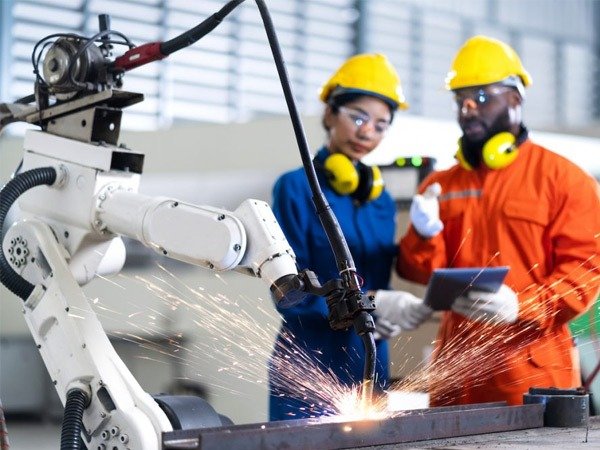
Figure 7: Quality Control in Rack Manufacturing
i) Consider the weight of your items
First of all, you think about the weight of your items. Light items like small boxes or office supplies can be stored in lightweight racks. Also, they are easy to move and great for small spaces. Pallet racks are used for heavier items like machinery. Well, they are strong and tested to handle heavy loads.
ii) Consider the size and shape of the items
Next, you think about the size and shape of your items. Well, long or oddly shaped items like pipes, lumber, or sheets are best stored in cantilever racks. Also, these racks offer you easy access without a front column. So they save space and keep your items ordered.
iii) Consider the available space
After that, you should also think about your available space. Well, mezzanine racks are great if your warehouse has high ceilings. Also, they create an additional platform above the existing floor. So it offers you more storage space without adding to the building. Mezzanine racks are strong and perfect for medium to large warehouses.
iv) Consider access and workflow
Another important thing is access and workflow. Well, you want the racks to be easy to load and unload. Also, it’s important to consider the type of rack you’re using, whether it’s for forklifts, pallet jacks, or manual handling. So proper access saves your time and increases efficiency.
v) Budget and long-term needs
Finally, you consider your budget and long-term needs. Well, some racks are cheap but only suitable for light loads. Other racks can be costly but are strong and safe for years. So a balance of cost and performance gives you the best value for money.
Moreover, choosing the right rack depends on weight, size, space, access, and budget. Well, by understanding the right factors, you can choose a rack that meets your storage needs. So the right choice improves organization and efficiency in your warehouse or storage space.
Final Thoughts
To sum up, rack manufacturing is important to your storage and warehouse. So, picking the right type of rack guarantees safety and better space utilization in your warehouse. Also, quality testing keeps your racks long-lasting.
At Mracking, we offer you high-quality racks for all your storage needs. From lightweight to pallet racks, they are strong, safe, and cost-effective. Also, our racks are tested and dependable. So, they are perfect for your warehouses, factories, and small storage spaces.