What Are Coil Storage Racks?
Coil storage racks are engineered structures that are employed to keep the cylindrical coils materials in a secure and effective way. They hold heavy rolled metals, wires, or any other loads in a cradling and stabilizing fashion. These racks are installed so that you can eliminate movement and destruction in congested industrial zones. They enable flexibility of handling and upright and horizontal coil positioning.
How Warehouse Coil Storage Works
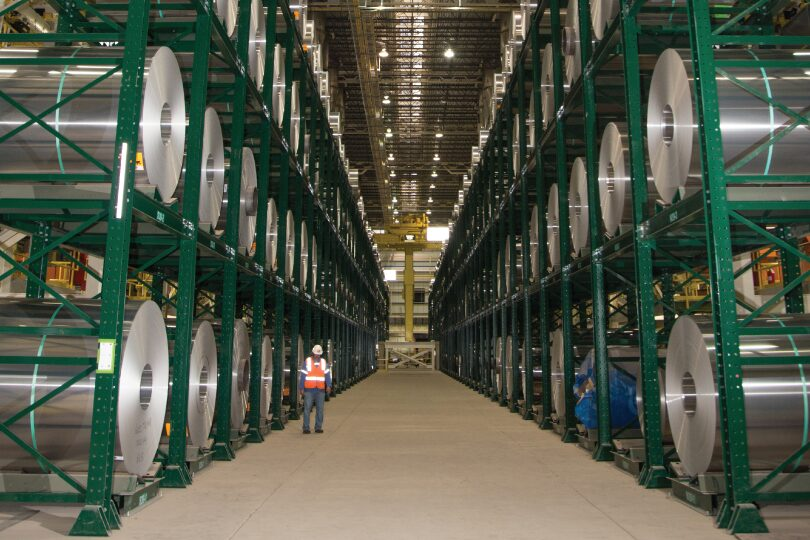
The coil storage in the warehouse is founded on the strong structural engineering principles that enable heavy metallic coils to be held. It uses cradle based support and not flat shelves to redistribute the weight equally. Depending on the handling needs, you fit coils in an upright eye-to-the-sky or horizontal eye-to-the-aisle. The coils are allocated their slots in order to prevent motion and destruction of contacts. High rack systems reduce ground movement and reduce collapse. Rack arrangement will allow you to locate coils faster and monitor inventory with ease. For broader industry context, Inventory is a useful reference.
Core Advantages of Coil Storage Racks
- Maximizes the use of vertical and floor space: You piles coils safely and opens up important floor space. Intelligent design enhances storage. Efficient design assists you in the handling of heavy loads.
- Enhances material availability: Fast access saves on handling time and increases workflow speed. You find coils without disturbing others. Placement is organized to save time and enhance daily operations.
- Less damage to products: Rack systems prevent coil rolling and impact. You avoid scratches and deformation in storage. Good support systems keep the products of high quality.
- Supports LIFO avoidance: The correct rack design facilitates the easy turning of inventory. You practice FIFO to manage old inventory. Balanced access enhances production planning.
- Enhances inventory monitoring: Labelling and structured storage makes monitoring easier. You document coil data properly to audit. Time lagged visibility enhances efficiency in stock management.
Standard Specifications & Structural Components
Structural I-Beam Construction
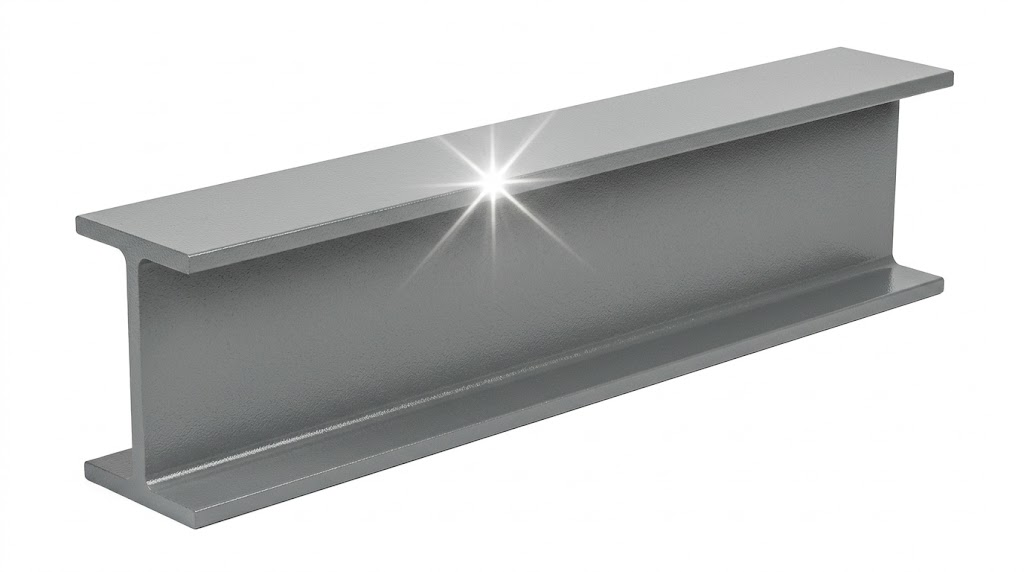
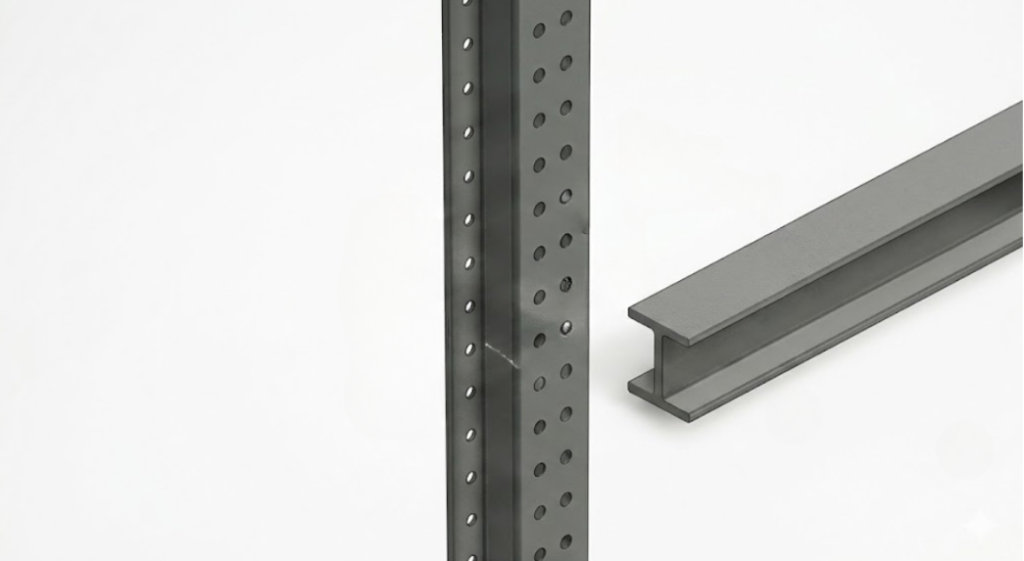
In the industrial setting, heavy-duty coil storage racks are constructed using structural I-beam. Structural carbon steel, like A36 or A572, is used by fabricators when they want a consistent strength. Horizontal members and upright columns oppose compressive and bending forces. HSLA steel strengthens the areas of concern and assists you to attain greater load bearing capacity and long-term fatigue resistance. This design facilitates non-structural degradation. This point also connects with Beam Pallet Racking.
Bolt-Together Bracing Systems
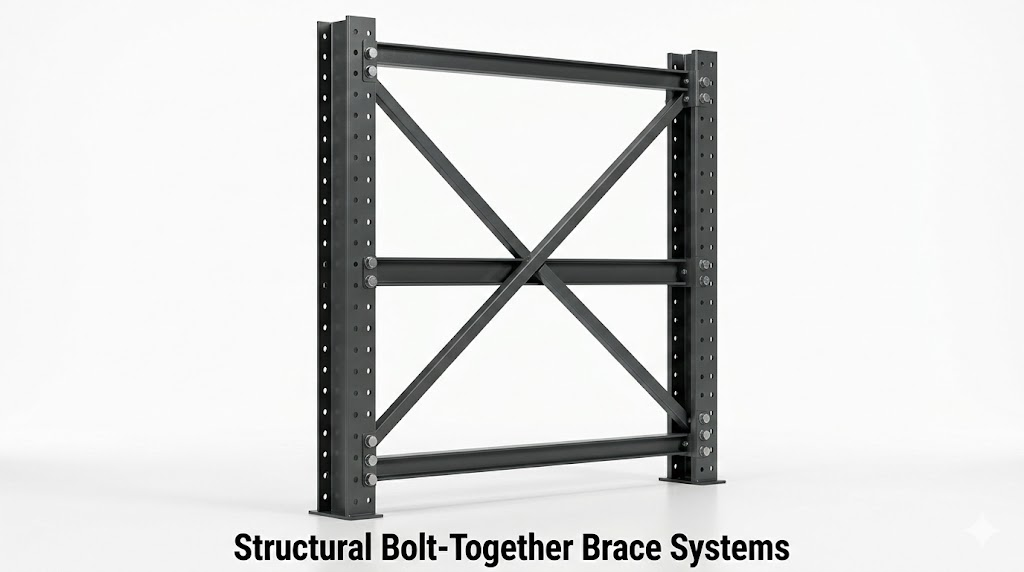
Bolt-together bracing systems offer lateral stability to the coil storage racks in dynamic conditions of the warehouse. Sway and twisting in loading cycles are controlled by heavy-gauge structural steel braces. The stress is distributed throughout the frame by cross-bracing and gusset plates. The A325 structural bolts are reliable in connecting your rack, and you can expand, reconfigure or repair your rack with ease without welding. This scalable method enhances availability and flexibility.
Full-Depth Coil Cradles
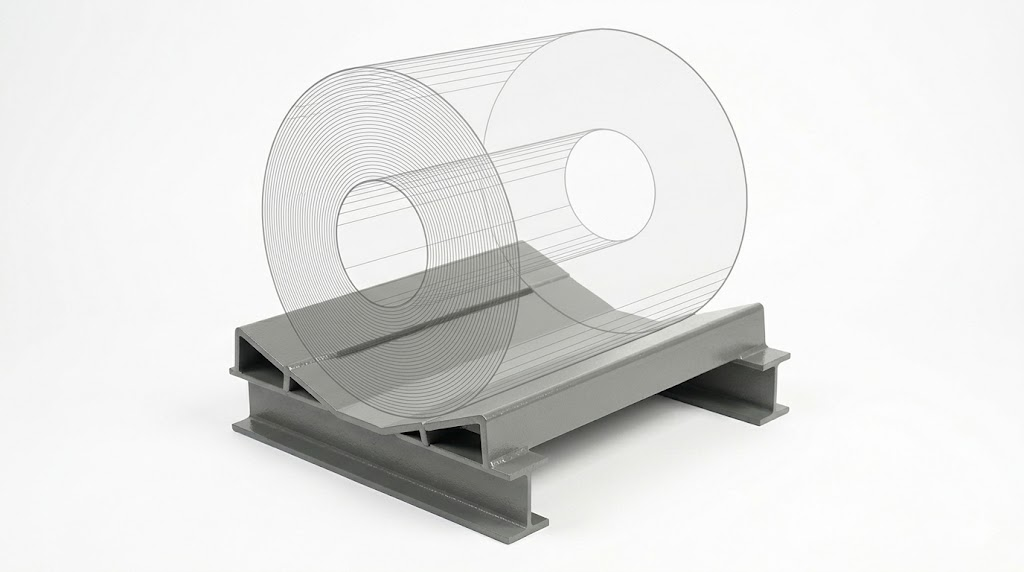
Cylindrical materials are safely supported on full-depth coil cradles with a perfect fit of the coil geometry. Weight is distributed evenly through the use of formed structural steel and heavy-gauge plates. The cradle inhibits the flat spotting, creasing, and edge damage during storage. Custom sizing supports different diameters and widths, and optional liners are used to protect delicate coil surfaces. This design minimizes the risks of handling and ensures quality products throughout the time.
Adjustable Shelf Beams
Coil racks are flexible with adjustable shelf beams due to the fluctuating dimensions of inventory. Heavy point and distributed loads are supported by structural steel beams. Four-inch vertical adjustments are considered as standard, which makes layout planning easier. Three inch spacing is optional and makes it more precise. Beams are bolted on uprights so that you can safely reposition levels without structural performance being compromised. The flexibility enables further development and modified production needs without any loss of confidence. For a closer comparison, see Cantilever Pallet Racking vs Standard Pallet Racking.
Floor Anchoring System
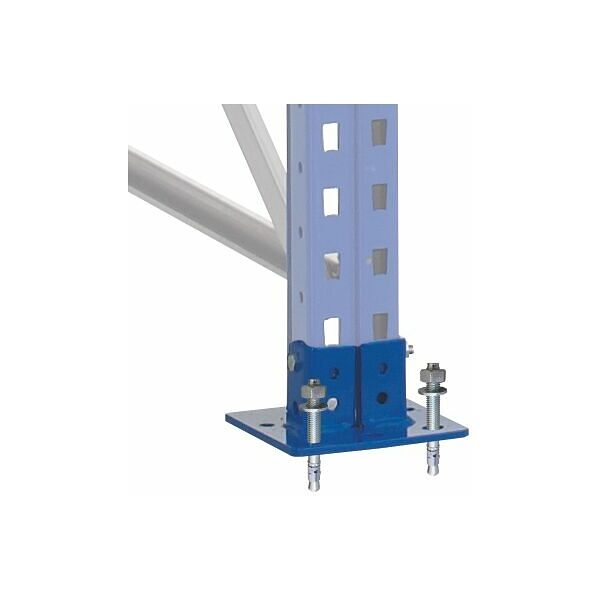
Floor anchoring systems are used to fix coil racks to concrete warehouse floors. Baseplates made of structural steel have predrilled anchor holes. Anchors are made of carbon or alloy steel, which resists shear. Proper anchoring helps to avoid movement in case of forklift impacts and earthquakes. Such stability can assist in securing workers, equipment, and stored coils. It also aids in adherence to safety and building standards in all facilities around the world.
Finish & Surface Protection
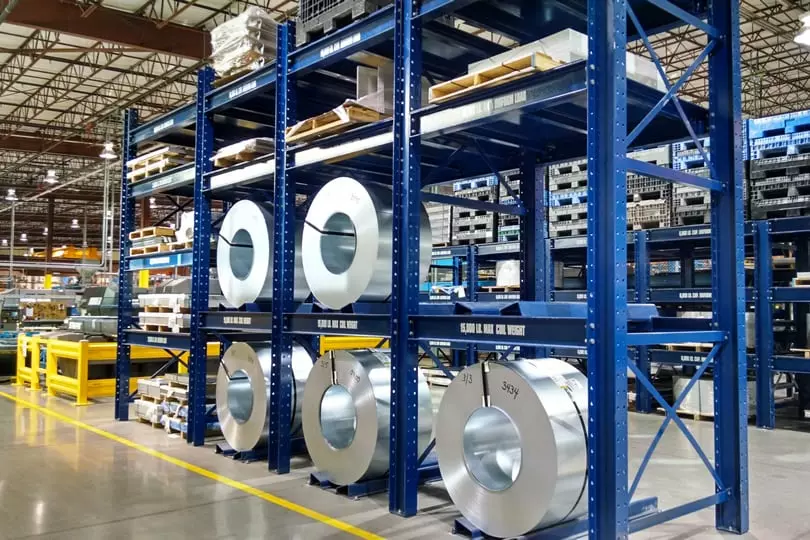
Surface and finish protection maintain coil rack integrity in harsh environments. The powder coating applied in the factories prevents corrosion, abrasion, and daily wear. Hot-dip galvanizing provides better protection in the case of outdoor or corrosive areas. These finishes help to increase service life and appearance. They assist you in lowering the cost of maintenance without compromising the structural performance. Appropriate choice of coating facilitates durability and serviceability under extreme conditions.
| Feature Category | Standard Configuration | Custom Configuration Options | Purpose |
| Structural Frame | Bolt-together I-beam system | Reinforced heavy-duty frames | Load stability |
| Beam Adjustment | 4-inch increments | 3-inch increments | Flexibility |
| Load Capacity | 2,000–80,000 lbs per shelf | Higher capacity engineered systems | Heavy coil support |
| Surface Finish | Powder-coated | Hot-dip galvanized | Corrosion protection |
| Storage Layout | Single/double sided | Floor beam, vertical, cantilever | Space optimization |
| Cradle Design | Full-depth cradle | Slit coil cradle, backstop beams | Coil containment |
| Anchoring | Floor baseplate with anchor bolts | Reinforced seismic anchoring | Structural safety |
Major Types of Coil Storage Racks
Cradle Coil Racks
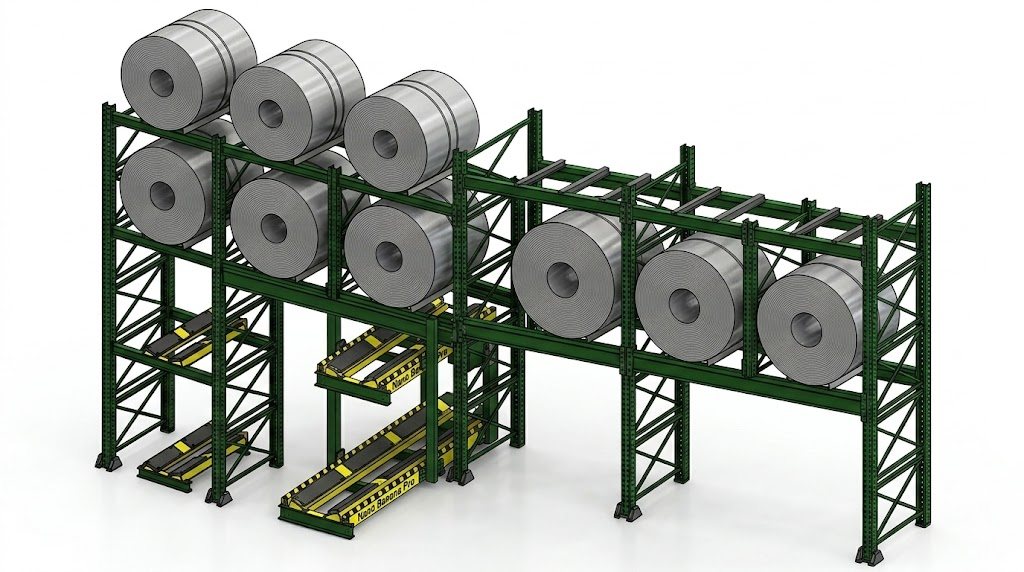
Cradle coil racks are full depth curved supports on which coils are locked at the base. The shaped cradles do not damage the edges and deform the material during extended storage. Bolt-together bracing and structural I-beams spread the weight uniformly over the structure. You achieve the optimum stability of heavy industrial coils. These racks are anchored to floors by use of facilities. Corrosion resistant finishes include powder-coated or galvanized finishes.
Dual-Arm Coil Racks
Dual-arm coil racks have two long support arms on every level of storage. These arms have coils in horizontal position to allow easy access and visibility on the side. Adjustable modular arms allow you to store different coil diameters. Forklifts put the coils in or out without moving the other inventory. Medium to heavy loads are supported by the structural frame. Height adjustment assists in maximizing vertical warehouse space.
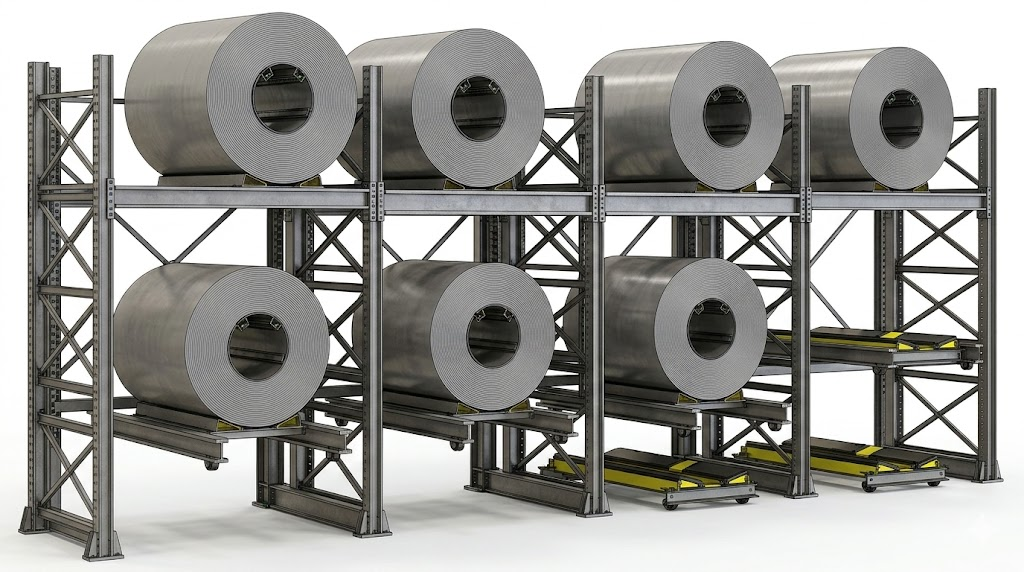
Cantilever Coil Racks
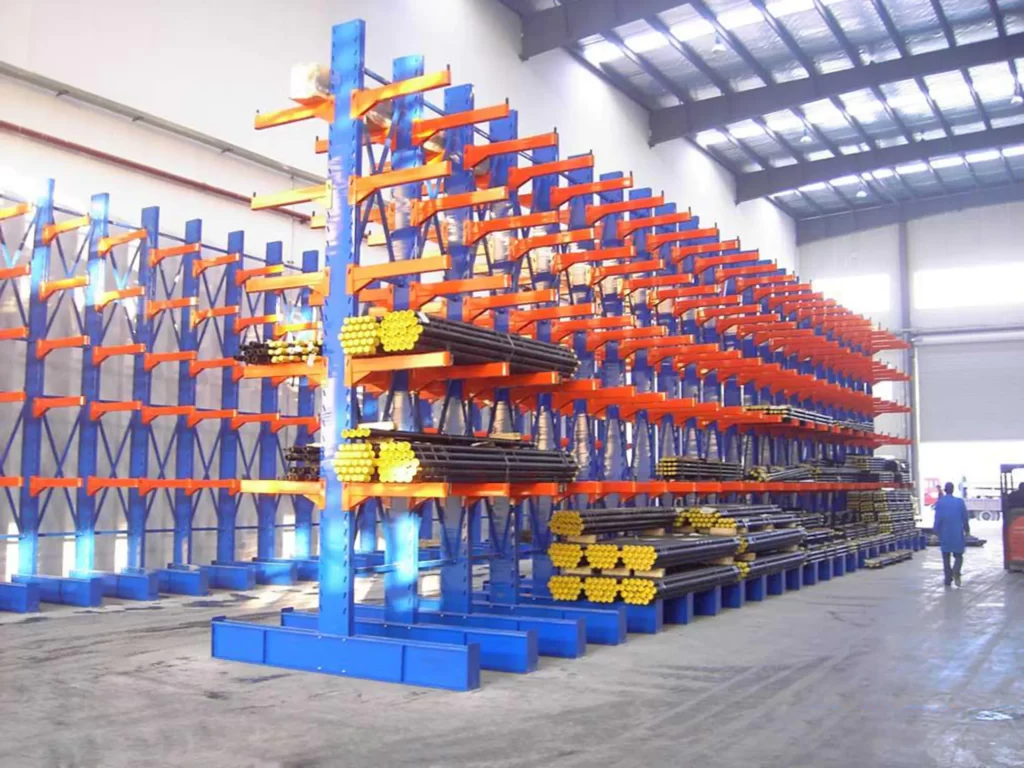
The cantilever coil racks have horizontal arms that extend out of the strong vertical columns. In this design, coils are stored face-on to the aisle in order to be accessed directly. The operators extract coils at fast rates without leaving any materials near. You enhance stamping line and decoiler feeding workflow speeds. Large-capacity arms are used to deal with industrial heavy loads. Open-front access assures forklift compatibility and easy scalable bay expansion.
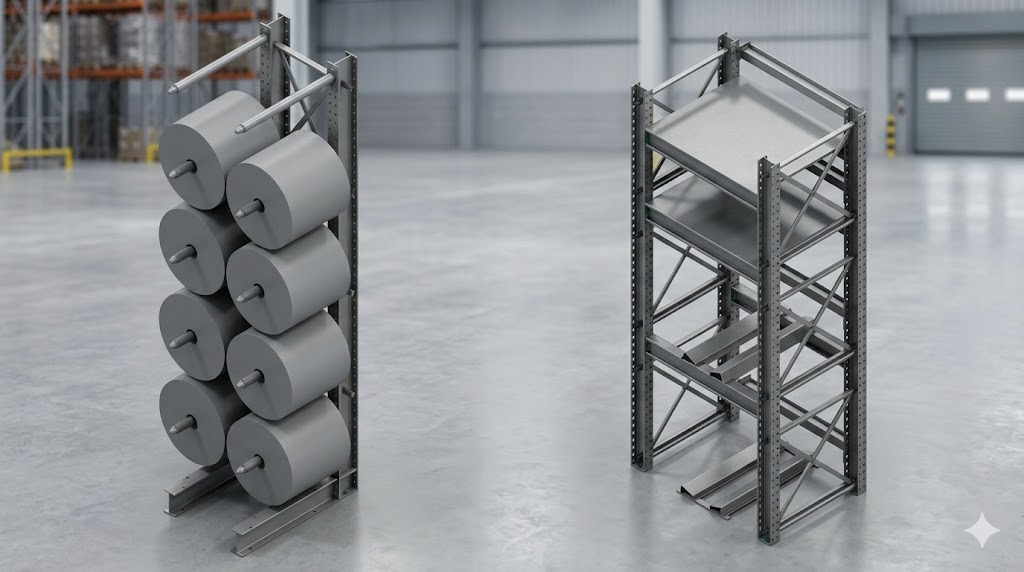
Vertical Coil Racks
Coils are stored in vertical coil racks where the coils are stored in an upright position, to make the most of the available floor space. This setup maintains aisles and enhances the visibility of inventory. Audits Coils are easy to identify, count and track. Prevent rolling and accidental movement is assisted with secure containment. The small size occupies less storage space. They are practical in service centers using medium load capacities.
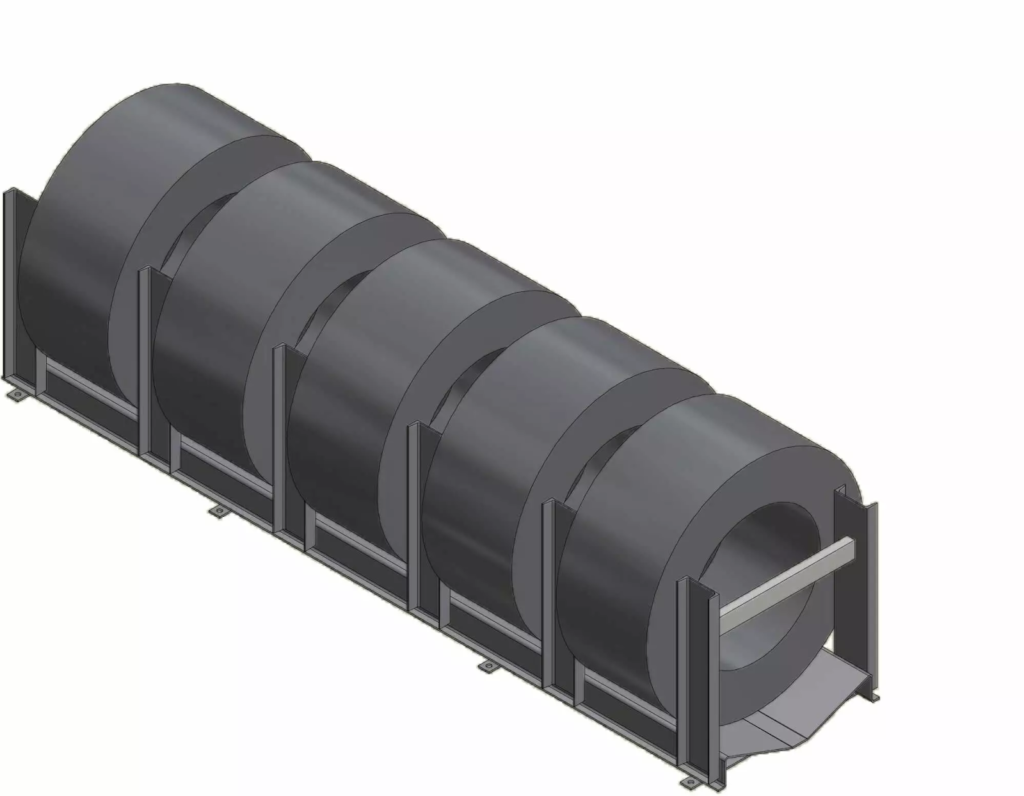
Floor Beam Coil Racks
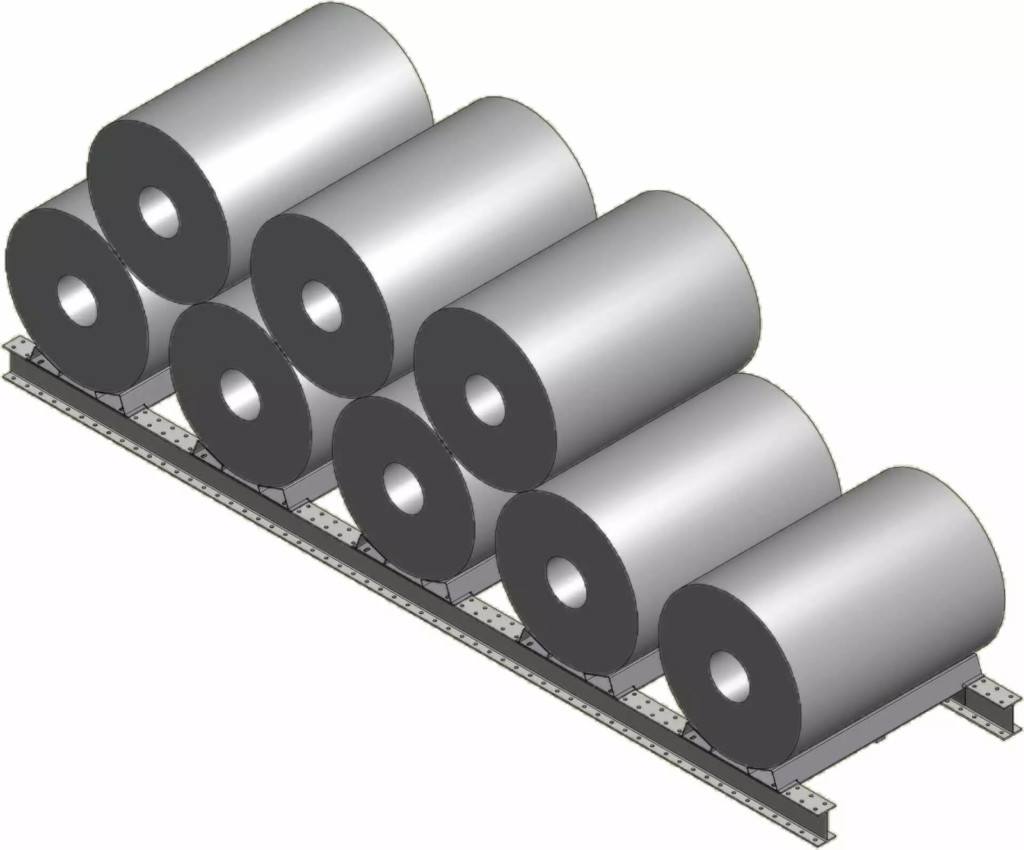
Floor beam coil racks are reinforced horizontal beams placed at the ground level. These beams are covered with coils to allow low-profile heavy-duty storage. The system is capable of supporting very heavy master coils that are highly reinforced. You enjoy easy loading and offloading of forklifts at the ground. Base supports are anchored to improve stability. The simple design provides secure and stable horizontal coil placement.
| Rack Type | Coil Orientation | Typical Load Capacity | Key Advantage | Ideal Application |
| Cradle Coil Rack | Eye-to-the-sky | Medium to very heavy | Maximum coil protection | Steel service centers |
| Cantilever Coil Rack | Eye-to-the-aisle | Medium to heavy | Fast production access | Stamping lines |
| Vertical Coil Rack | Vertical | Medium | Space efficiency | Small footprints |
| Floor Beam Coil Rack | Horizontal | Very heavy | Low-profile stability | Heavy master coils |
| Widespan Coil Rack | Palletized | Medium | Flexible storage | Mixed inventory |
Coil Storage Racks – Step by Step Installation Process
Step 1: Site Survey & Floor Evaluation
Begin with a detailed examination of the site to identify the strength of the floors and space conditions. Check surface level and concrete quality before laying. Identify obstacles and points of entry. Measure height and width. The reason behind this is to offer safe location and foundation support.
Step 2: Load Requirement Calculation
Divide the maximum weight of the coil and rack capacity. Storage capacity and coil size. Distribution of check loads between beams and uprights. Use proper engineering information on safety margins. This prevents overloading and improves the performance of the structure with intense industrial operations.
Step 3: Layout Planning
Arrangement of rack according to site measurements and workflow needs. Mark has a certain spot on the floor. Make sure that aisles are spaced properly to move equipment. Optimize the correspondence of racks with loading zones and safety aspects. Good planning improves space management and fluency in material movement.
Step 4: Anchor Bolt Installation
Drill holes in specified locations of anchor bolts. Clean holes and then replace bolts. The bolts are fixed on the concrete floor. Ensure that base plates are aligned in the vertical direction. During high coil pressure the rack is clamped.
Step 5: Upright Frame Assembly
Make the standing frames with base plates and vertical posts. Check balance before fastener closure. Fit with the right tools. Measure plumb position with measuring instruments. Proper assembly will improve the stability of racks and enable storing of heavy coils.
Step 6: Beam Bolting & Brace Installation
Connect upright frames to join beams using high strength bolts. Install cross braces to ensure more support and rigidity. Close associations in all joints. Confirm the alignment of parts following repair. Proper bolting enhances the stability of the load and eliminates the inversion of structures when working.
Step 7: Load Testing
Load test items step by step on the installed rack. Deflection of watch frames and joint stability. Test the looseness or bending of bolts. Check system performance at full peak. Load testing is an indicator that ensures safety conformity and long-term storage storage of coils is sure.
Material Handling Equipment Compatibility
Forklifts: Forklifts are used in factory and warehouses to move and lift palletized loads efficiently. You select the right capacity as per the load weight and height. Proper compatibility improves safety and efficient workflow functioning.
Boom Attachments: Boom attachments are applied to extend the forklift reach of long or challenging loads. You may apply them to work on pipes, beams, and heavy material. They enhance the maneuverability and reachability in small industrial spaces.
Side Loaders: Side loaders operate on long materials on the side as opposed to the front. You are at an advantage in dealing with timber, steel bars or panels. This equipment improves space utilization and reduces the required turnaround in narrow aisles.
Stacker Cranes: Stacker cranes are high density warehouses storage and retrieval machines that are automated. You use them together with racking systems to arrange the material appropriately. They ensure that storage is more efficient and reduce the dangers of manual handling. A related guide on Warehouse Material Handling Equipment gives more detail for this part of the planning work.
Automated Retrieval Systems: Automated retrieval systems are robots and computer controlled inventory management systems. System integration will assist you in being more precise and faster. These systems reduce reliance on labor and optimize the best of the warehouse performance.
Maintenance & Inspection Guidelines for Coil Storage Racks
| Inspection Area | Frequency | Key Checkpoints | Purpose | Action Required |
| Visual Condition | Monthly | Bent members, cracks, cradle damage, loose parts | Detect early structural issues | Isolate bay and inspect further |
| Bolt Tightness | Quarterly | Beam, brace, and upright structural bolts | Maintain load transfer and rigidity | Retorque or replace bolts |
| Beam Alignment | Quarterly | Levelness, deflection, upright alignment | Identify overload or impact damage | Unload and realign or replace |
| Floor Anchors | Semi-annual | Anchor bolts, baseplates, concrete condition | Ensure rack stability and resistance | Retighten or repair anchors |
| Corrosion | Semi-annual | Rust, coating failure, surface degradation | Prevent capacity loss | Clean, recoat, or replace |
| Cradle Integrity | Annual | Cradle deformation and coil seating | Prevent coil roll or collapse | Replace damaged cradle |
Selecting the Right Coil Storage Rack System
Evaluating Coil Dimensions and Weights
Select a rack system, determine the diameter, width and weight of the measure coils. Set the match rack to the greatest weight of coils. Balance of beams and supports. You prevent structural failure, by checking limits at an early stage. Correct measurements ensure that storage and handling are healthy.
Throughput and Access Requirements
Measure coil in and out of storage speed. Select a system that enables quick retrieval. Consider forklift access and aisle width. Proper layout reduces waiting and congestion. When the routes to access are clean and tidy to day to day activities you are more productive.
Space Constraints and Ceiling Height
Calculate floor area and vertical clearance in the pre-installation. Make the best of the vertical space by maximizing storage density. ensure that the height of racks is no higher than the ceiling height. The space is not wasted, and the chances of accidents are eliminated through proper planning. An improved storage efficiency can be attained when the system is compatible with the building size.
Future Expansion Planning
Calculate business growth and rack capacity. Choose an elastic design that is extendible. Space to add additional coils and equipment. You protect long term investment with scalable solutions. Expansion preparedness makes the operations run smoothly because the size of storage is needed as time goes by.
Safety and Regulatory Considerations
Follow local installations codes and industry regulations. Check racks often to figure out the damage or wear. Correct load labels and safety guards. You reduce work hazards by enforcing compliance. Safe storage assists in protecting the workers and prevents costly accidents.
What Makes Mracking Lead the Global Market in Coil Storage Racks?
Mracking leads the global market of coil storage rack with over 16 years of expertise in the field with an excellent engineering, excellent materials, and design. They possess 20,000+ sqm factory and their engineers design customizable and durable racks which can be utilized in various sizes and weights of coils. Mracking offers low-cost solutions that do not disrupt the safety, offer modular, CAD-designed layouts, and assistance with installation in a professional manner. Global deliveries, custom-made designs and excellent after sales services have assisted Mracking to constantly deliver reliable, efficient and scalable warehouse storage systems to clients who have developed trust in the company in over 40 nations globally.
Conclusion
Coil storage racks increase safety, storage efficiency and organisation in industrial warehouses. They protect large-size materials and maximize space and ease of operations. The structured designs offer resistance to both the heavy load demand and the daily use. You invest in systems that reduce harm and maximize performance of workflow. Scalable solutions encourage both expansion and reliability in the future. The Mracking company offers high-tech, customized, coil storage rack systems which have strong engineering backing and experience globally. It is among the trusted allies of efficient, safe and cost effective storage in the entire world.