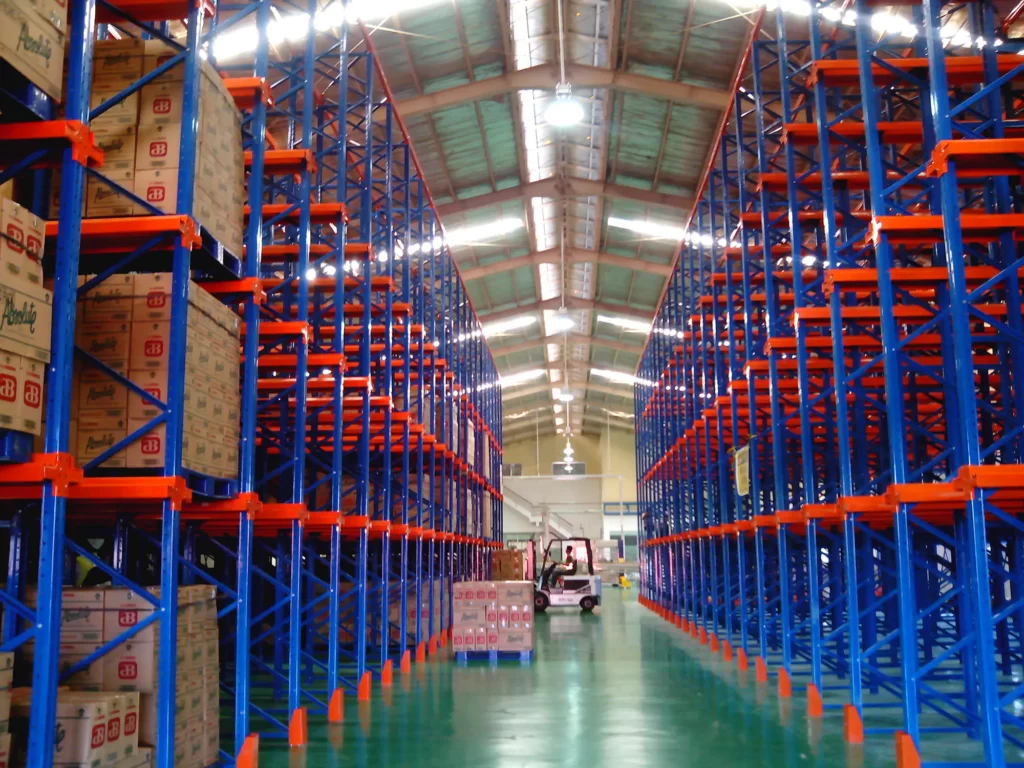
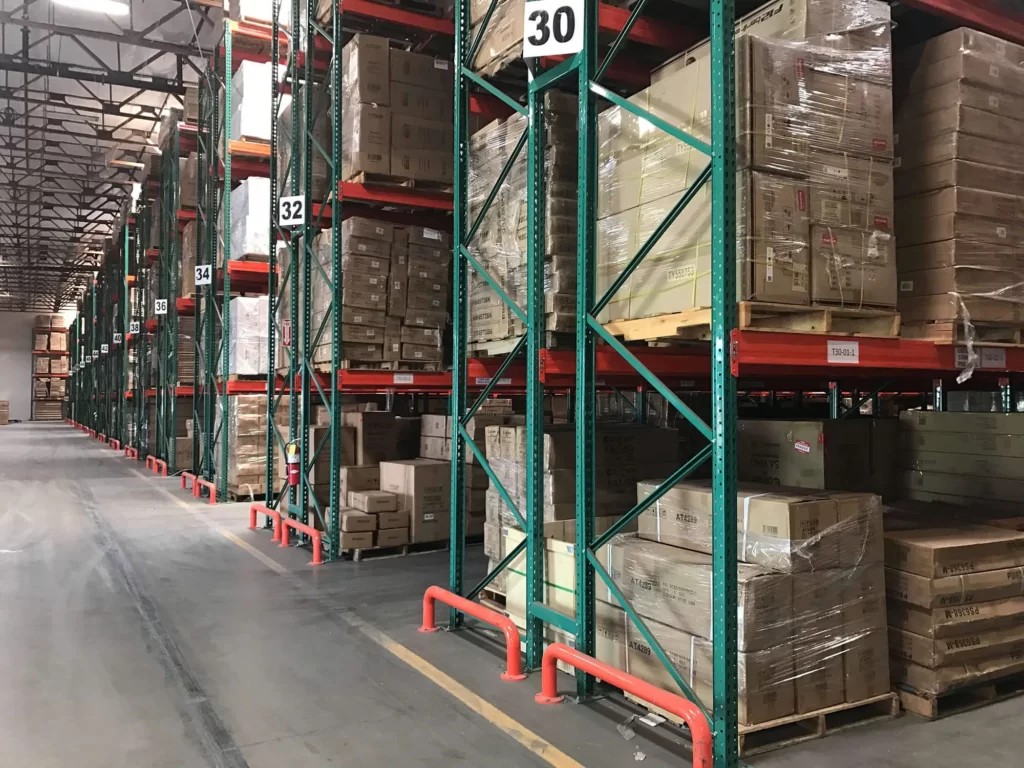
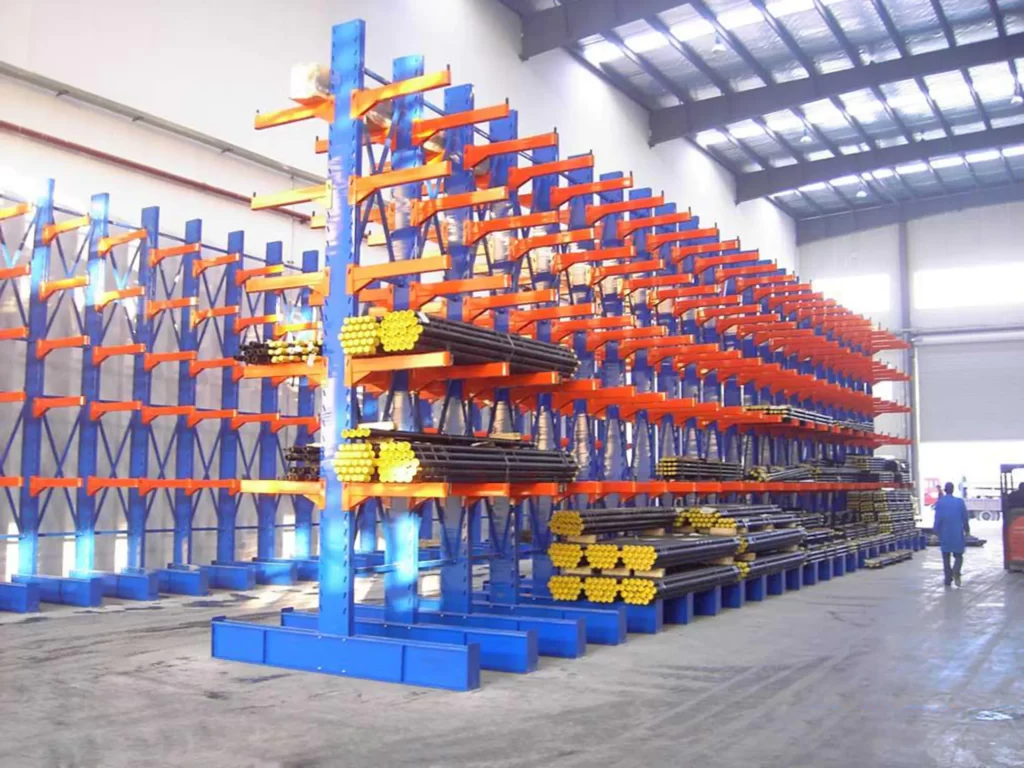
Carton flow racking and pallet flow racking are the two most widely used dynamic gravity storage systems in modern warehouses. Both rely on the same underlying principle — inclined roller or wheel tracks that move loads under gravity from the loading side to the picking side — but they serve fundamentally different operational needs. Carton flow handles cases and totes for manual piece picking, while pallet flow handles full pallets for high-density FIFO storage in distribution and cold chain facilities. Confusing the two during procurement often leads to under-specified or over-specified systems and years of operational compromise.
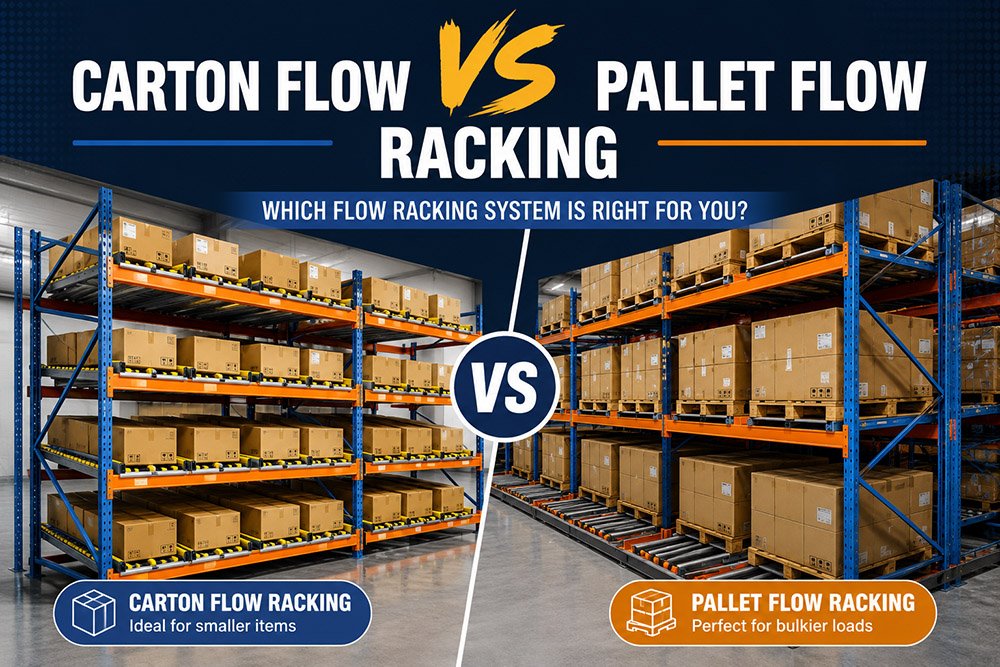
This article compares carton flow and pallet flow racking in depth, examining structural differences, load capacity, applications, and how to choose between them for a specific warehouse operation.
What Is Carton Flow Racking?
Carton flow racking is a dynamic gravity storage system consisting of multi-level shelving equipped with inclined roller or wheel tracks that allow cartons, cases, or totes to flow from the loading side to the picking side under the force of gravity, supporting First In, First Out (FIFO) piece and case picking operations. Cartons are loaded from the rear of the rack and travel down the inclined tracks as pickers remove items from the front pick face.
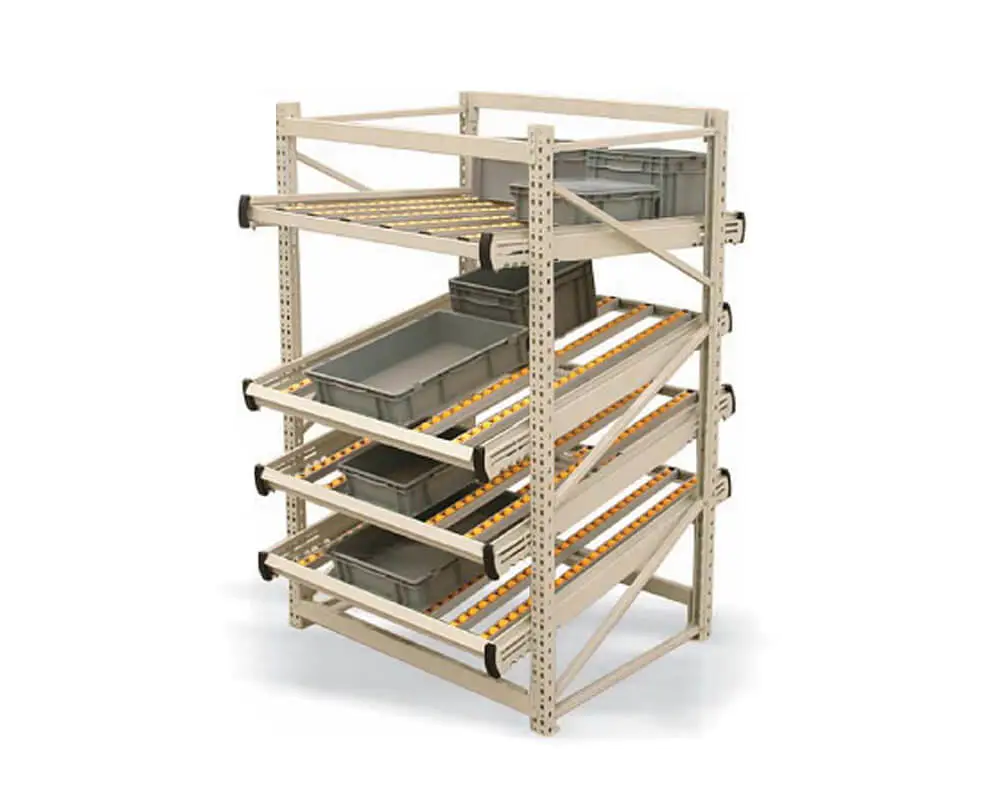
Carton flow modules are typically installed at ergonomic picking heights — between 0.5 and 2.2 meters above the floor — to allow operators to pick without ladders. Track angles range from 3° to 7°, with wheel or full-width roller designs chosen based on carton size, weight, and packaging quality. Carton flow racking systems are widely used in e-commerce fulfillment centers, pharmaceutical distribution, spare parts warehouses, and any operation where fast, error-free case picking is critical. They are frequently integrated with pick-to-light systems, put-to-light interfaces, and conveyor networks that transport picked items downstream.
What Is Pallet Flow Racking?
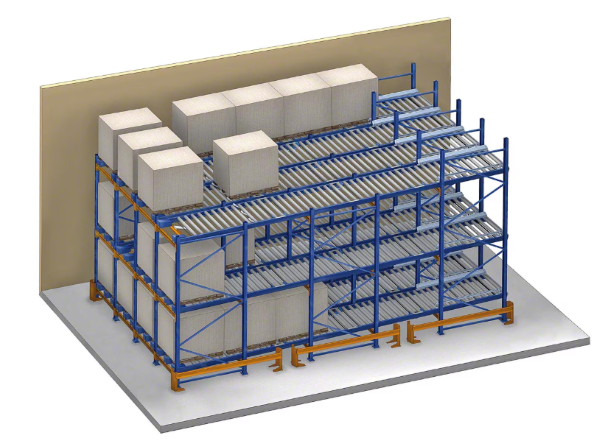
Pallet flow racking is a high-density dynamic storage system built from heavy-duty racking uprights and inclined gravity roller or wheel tracks engineered to move full pallets from the loading side to the picking side, supporting strict FIFO rotation for pallet-scale storage. Forklifts load pallets from the elevated end of each lane, and the pallets flow downward under gravity, regulated by integrated speed controllers to maintain safe travel speed.

Pallet flow systems can store pallets up to 20 deep per lane and typically operate at heights of 6 meters or more, making them one of the densest FIFO storage solutions available. Because loading and picking occur on opposite sides of the rack, forklift traffic is separated, eliminating cross-aisle congestion and increasing throughput. Pallet flow (gravity flow) racking systems are widely deployed in cold storage, food and beverage distribution, dairy processing, and pharmaceutical warehousing — any operation where expiration date control and high pallet density are both required.
Key Differences Between Carton Flow and Pallet Flow Racking
The two systems differ across several dimensions that directly affect procurement, installation, and operating cost.
Load Unit. Carton flow moves individual cases, cartons, or totes typically weighing 1–30 kg. Pallet flow moves full palletized loads typically weighing 300–1,500 kg or more.
Load Handling Method. Carton flow is designed for manual piece and case picking by warehouse operators. Pallet flow requires forklift handling on both the loading and picking sides.
Structural Scale. Carton flow is a shelving-scale system with lightweight components at ergonomic heights. Pallet flow is a full pallet racking-scale structure using heavy-duty uprights, beams, and structural roller tracks.
Track Design. Carton flow uses lightweight roller or wheel tracks sized to carton weight. Pallet flow uses heavy-duty steel rollers or wheels with integrated speed controllers to regulate pallet velocity across long lanes.
Rotation Control. Both systems enforce strict FIFO rotation, but pallet flow is often deployed specifically to support FIFO racking operations in cold chain and pharmaceutical facilities where expiration dates are audited.
Density and Depth. Carton flow modules typically store 2–5 cases deep per lane. Pallet flow systems can store 10–20 pallets deep per lane, providing significantly higher density.
Integration with Automation. Carton flow integrates naturally with pick-to-light, put-to-light, and conveyor systems. Pallet flow integrates with forklift traffic management, WMS-driven slotting, and occasionally with automated pallet retrieval systems.
Comparison Table: Carton Flow vs Pallet Flow Racking
| Feature | Carton Flow Racking | Pallet Flow Racking |
|---|---|---|
| Load Unit | Cartons, cases, totes | Full pallets |
| Typical Load Weight | 1–30 kg | 300–1,500 kg+ |
| Handling Method | Manual picking | Forklift loading and picking |
| Structural Class | Shelving-scale | Pallet racking-scale |
| Track Type | Roller or wheel, lightweight | Structural rollers with speed controls |
| Lane Depth | 2–5 cases | 10–20 pallets |
| Height Range | 0.5–2.2 m ergonomic | Up to 6 m or higher |
| Rotation | FIFO | FIFO (strict) |
| Picking Type | Piece and case picking | Pallet-level rotation |
| Best Application | E-commerce, spare parts, pharma | Cold storage, food distribution |
| Relative Capital Cost | Low–Medium | High |
Both systems represent dynamic storage solutions rather than static racking, so both share the general advantages of gravity flow — automatic FIFO, separated load and pick faces, and reduced travel time — but at very different operational scales.
Advantages and Limitations of Each System
Each system carries distinct trade-offs that should be evaluated against the specific operational context.
Advantages of Carton Flow Racking
Ergonomic pick face at operator height reduces reach and bending. High pick rate — often 200 to 400 lines per operator per hour when combined with pick-to-light. Automatic FIFO rotation without manual rearrangement. Compact footprint suitable for forward-pick zones and mezzanine picking modules. Fast replenishment from the rear side eliminates picker interference.
Limitations of Carton Flow Racking
Not suitable for pallet-scale storage. Limited to case and piece picking. Carton dimensions must be reasonably consistent to flow reliably. Damaged or crushed cases may jam the tracks. Track angle and roller type must match carton weight and packaging quality.
Advantages of Pallet Flow Racking
Very high storage density with strict FIFO rotation. Separated loading and picking aisles eliminate cross-traffic. High throughput because forklifts do not enter the rack structure. Reduced forklift travel time compared to selective racking. Well-suited to date-controlled goods in cold chain and pharmaceutical operations.
Limitations of Pallet Flow Racking
High capital cost per pallet position. Requires consistent pallet quality — damaged, split, or non-standard pallets can jam the lanes. Not flexible when SKU mix changes frequently. Requires engineered speed controllers and dynamic load rating. Not suitable for facilities with low pallet turnover per SKU.
Best Use Cases for Each System
Carton Flow Is Well-Suited For:
- E-commerce fulfillment centers with high SKU counts and piece picking
- Pharmaceutical distribution with dated inventory at case level
- Spare parts warehouses with small units and manual picking
- Multi-tier mezzanine picking modules where operator productivity is critical
- Forward-pick zones supporting reserve pallet storage upstream
Pallet Flow Is Well-Suited For:
- Cold storage facilities storing dated food and beverage products
- Dairy and beverage distribution centers requiring strict FIFO
- Pharmaceutical bulk storage with pallet-scale expiration control
- Facilities with high pallet counts per SKU and continuous replenishment
- Cold chain 3PL operations where density and rotation compliance are both required
When to Use Both Systems Together
Many modern distribution centers deploy carton flow and pallet flow racking within a single facility as complementary layers of the same fulfillment workflow. Pallet flow racking holds reserve inventory at pallet scale, while carton flow modules serve as the forward-pick face where operators complete piece and case orders. Replenishment moves cases from pallet flow reserve down to carton flow pick locations as inventory depletes. This layered design combines density and FIFO compliance at the reserve level with picking speed and ergonomics at the operator level. Additional guidance on integrating flow systems within broader storage strategy is available in resources covering high-density storage solutions.
How to Choose Between Carton Flow and Pallet Flow Racking
The following framework reflects the evaluation process used by warehouse planners and racking integrators when specifying gravity flow systems.
Step 1: Define the Storage Unit.
Identify whether the operation handles individual cartons, cases, and totes, or full pallets. Storage unit type is the primary determinant of system choice.
Step 2: Analyze Picking Method.
Confirm whether picking occurs at piece level (each), case level, or pallet level. Piece and case picking favor carton flow; pallet rotation favors pallet flow.
Step 3: Evaluate SKU and Density Requirements.
Assess SKU count and average pallet count per SKU. High SKU variety with low pallet count per SKU favors carton flow. Low SKU count with high pallet volume favors pallet flow.
Step 4: Verify Rotation Requirements.
Both systems enforce FIFO, but pallet flow is required when regulatory or safety rules audit pallet-level rotation for expiration-dated goods.
Step 5: Assess Forklift and Labor Fit.
Carton flow requires trained picking operators and often benefits from pick-to-light. Pallet flow requires trained forklift operators comfortable with deep-lane loading and standardized pallet quality.
Step 6: Compare Capital Cost and ROI.
Include not only racking cost but installation, integration with WMS or pick-to-light, and pallet quality upgrades where required. Compliance with rack design standards published by the Rack Manufacturers Institute (RMI) affects both systems.
Step 7: Consider Hybrid Deployment.
Evaluate whether a combined layout — pallet flow reserve feeding carton flow pick face — better serves throughput than either system alone.
Key Takeaways
- Carton flow racking moves cases, cartons, and totes on lightweight gravity tracks for manual piece and case picking, typically at ergonomic heights.
- Pallet flow racking moves full pallets on heavy-duty gravity tracks for high-density FIFO pallet storage in cold chain and food distribution.
- Both systems enforce strict FIFO rotation and separate loading from picking, but operate at very different scales.
- Carton flow suits e-commerce, pharmaceutical case picking, and spare parts operations.
- Pallet flow suits cold storage, beverage, dairy, and pharmaceutical bulk storage where pallet-level rotation is audited.
- Many modern facilities use both systems together, with pallet flow as reserve storage feeding carton flow pick faces.
Frequently Asked Questions
1. What is the main difference between carton flow and pallet flow racking?
The main difference is the load unit and scale. Carton flow moves individual cases, cartons, or totes for manual piece picking. Pallet flow moves full pallets for high-density FIFO pallet storage handled by forklifts.
2. Do carton flow and pallet flow racking both enforce FIFO?
Yes. Both systems enforce First In, First Out rotation by loading at one end and picking at the opposite end. Pallet flow is often selected specifically for expiration-audited operations, while carton flow provides FIFO at case picking level.
3. Can carton flow and pallet flow racking be combined in the same warehouse?
Yes, and this hybrid layout is increasingly common. Pallet flow racking holds reserve inventory at pallet scale, while carton flow modules serve as the forward-pick face. Cases move from reserve to pick face during replenishment.
4. Which system offers higher storage density?
Pallet flow racking provides significantly higher density than carton flow because it operates at pallet scale with lane depths of 10–20 pallets. Carton flow is denser than static shelving but not comparable to pallet flow at bulk storage scale.
5. Are speed controllers required in pallet flow racking?
Yes. Integrated speed controllers regulate pallet velocity across long lanes to prevent uncontrolled acceleration and impact at the picking end. Speed controllers are engineered based on pallet weight, lane length, and track angle.
6. Does carton flow racking work with any carton size?
No. Carton flow performance depends on consistent carton dimensions, weight, and packaging quality. Damaged or oversized cartons may jam the tracks. Track type — wheel or full-width roller — must match carton characteristics.
7. What industries use pallet flow racking most?
Cold storage, dairy, beverage distribution, pharmaceutical bulk storage, and food and beverage 3PL operations use pallet flow most, driven by density and FIFO requirements. Frozen food and cold chain logistics represent the largest single application segment.
8. Is carton flow racking suitable for automation?
Yes. Carton flow integrates naturally with pick-to-light, put-to-light, voice picking, and conveyor systems. It is widely used as a manual pick face within otherwise automated fulfillment centers.
Conclusion
Carton flow and pallet flow racking share the same underlying principle — gravity-driven inclined tracks that enforce FIFO rotation — but operate at fundamentally different scales and serve fundamentally different operational needs. Carton flow supports the piece and case picking workflows that dominate e-commerce and pharmaceutical fulfillment. Pallet flow supports the high-density pallet rotation that defines cold storage, food distribution, and dated-goods warehousing. The choice is rarely about which system is “better” — it is about which system matches the specific storage unit, picking method, and rotation requirement of the operation. In many warehouses, the answer is both, deployed as complementary layers within a single integrated design.
Warehouses evaluating gravity flow racking suppliers typically compare capabilities across both carton flow and pallet flow product ranges. Mracking is one of the Chinese manufacturers producing both systems, with carton flow modules engineered for piece and case picking operations and pallet flow racking configured for high-density FIFO pallet storage across cold storage, food and beverage distribution, and pharmaceutical facilities.