


EN 15635 is one of the most important — and most frequently overlooked — standards in European warehouse safety. Unlike design standards that address how pallet racking should be built, EN 15635 addresses how racking should be used, inspected, and maintained over its operating life. Warehouse operators across Europe are legally and contractually obligated to comply with EN 15635 in most jurisdictions, and non-compliance is a common finding in workplace safety investigations following rack collapse incidents. Yet many operators remain unaware of the specific obligations the standard imposes — the requirement to appoint a Person Responsible for Rack Safety (PRRS), the traffic light damage classification system, the mandatory inspection frequencies, and the training and documentation requirements that collectively define a compliant rack safety program.
This article explains what EN 15635 is, where it sits within the broader European rack standards family, examines its key requirements, and outlines the practical steps to compliance.
What Is EN 15635?
EN 15635 is a European Standard titled “Steel static storage systems – Application and maintenance of storage equipment”, published by CEN (the European Committee for Standardization), that defines how pallet racking and other steel static storage systems should be used, inspected, damaged-assessed, maintained, and repaired throughout their service life to ensure workplace pallet racking safety in European warehouses. The standard applies to all types of static steel storage equipment including selective pallet racking, drive-in racking, cantilever racking, and shelving systems.

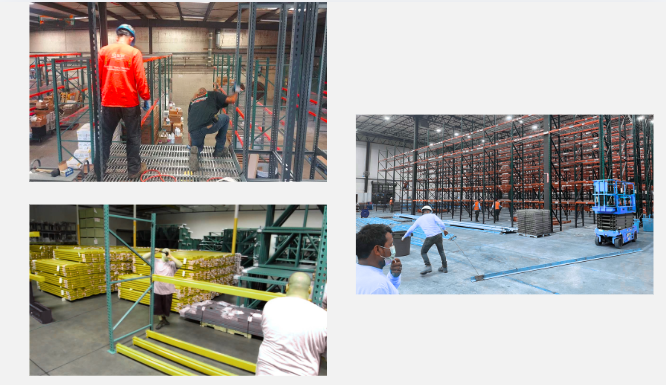
EN 15635 was developed to complement design and specification standards in the same family and to provide warehouse operators with a structured, auditable framework for ongoing rack safety management. It defines who is responsible for rack safety, how often inspections must occur, how damaged components must be classified and handled, and what documentation must be maintained. Because it explicitly assigns responsibility for compliance, EN 15635 has become the de facto reference for warehouse rack safety programs across the European Economic Area, and organizations such as the Storage Equipment Manufacturers’ Association (SEMA) publish practical guidance on its implementation for UK and European operators.
Background: EN 15635 in the European Rack Standards Family
EN 15635 sits within a broader family of European standards that collectively cover the design, specification, tolerance, application, and terminology of steel static storage systems:
- EN 15512 — Principles for structural design of pallet racking
- EN 15620 — Tolerances, deformations, and clearances
- EN 15629 — Specification of storage equipment (procurement)
- EN 15635 — Application and maintenance (this standard)
- EN 15878 — Terms and definitions
The design-focused standards (EN 15512, EN 15620) govern the manufacturer’s obligations at the time of production and installation. EN 15635 shifts responsibility to the warehouse operator once the rack is in service. Together, the family creates end-to-end coverage from rack design through operational life. Broader context on how pallet racking standards interact across regions is available for readers evaluating multi-region compliance requirements.
Key Requirements of EN 15635
EN 15635 imposes five main categories of obligation on warehouse operators using pallet racking in the European Economic Area.
Person Responsible for Rack Safety (PRRS). The operator must appoint a named individual with defined authority to manage rack safety. The PRRS is responsible for organizing inspections, maintaining documentation, deciding on damaged component response, and interfacing with expert inspectors. The role is real and personal — it cannot be delegated informally.
Traffic Light Damage Classification. Every rack damage finding must be classified using a three-level severity system (Green, Amber, Red) that dictates the required response — from no action through monitoring to immediate isolation and replacement.

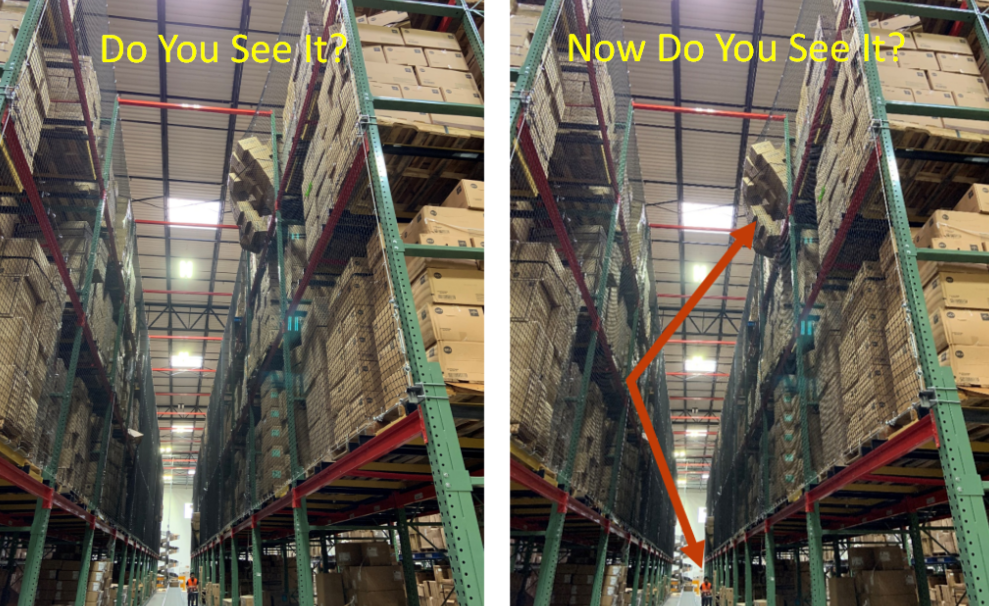
Structured Inspection Frequencies. The standard defines three inspection tiers with different frequencies and different responsibilities, ensuring that both continuous surveillance and formal expert review occur.
Training Requirements. Personnel involved in rack safety — from forklift impact protection and operator awareness through PRRS and management — must receive training appropriate to their role. Training records are part of the compliance evidence base.
Documentation and Records. Inspection findings, damage classifications, repair actions, training records, and load labeling must be maintained in an auditable format. Documentation supports both operational safety and legal defense in the event of an incident.
The Traffic Light Damage Classification System
The traffic light system is one of the most practically important elements of EN 15635, providing a structured framework for evaluating any rack damage finding.
Green Risk. Damage is within acceptable tolerance. No immediate action required. The component should be recorded and re-inspected at the next scheduled inspection to detect any progression. Green findings still enter the documentation record — the classification is not “no damage” but “damage within tolerance”.
Amber Risk. Damage exceeds acceptable tolerance but does not require immediate isolation. The load capacity of the affected zone should be reduced or reallocated, and pallet racking repairs must be completed within a defined timeframe (typically within four weeks). The component must be re-inspected on completion of repair. Amber findings trigger active management, not passive monitoring.

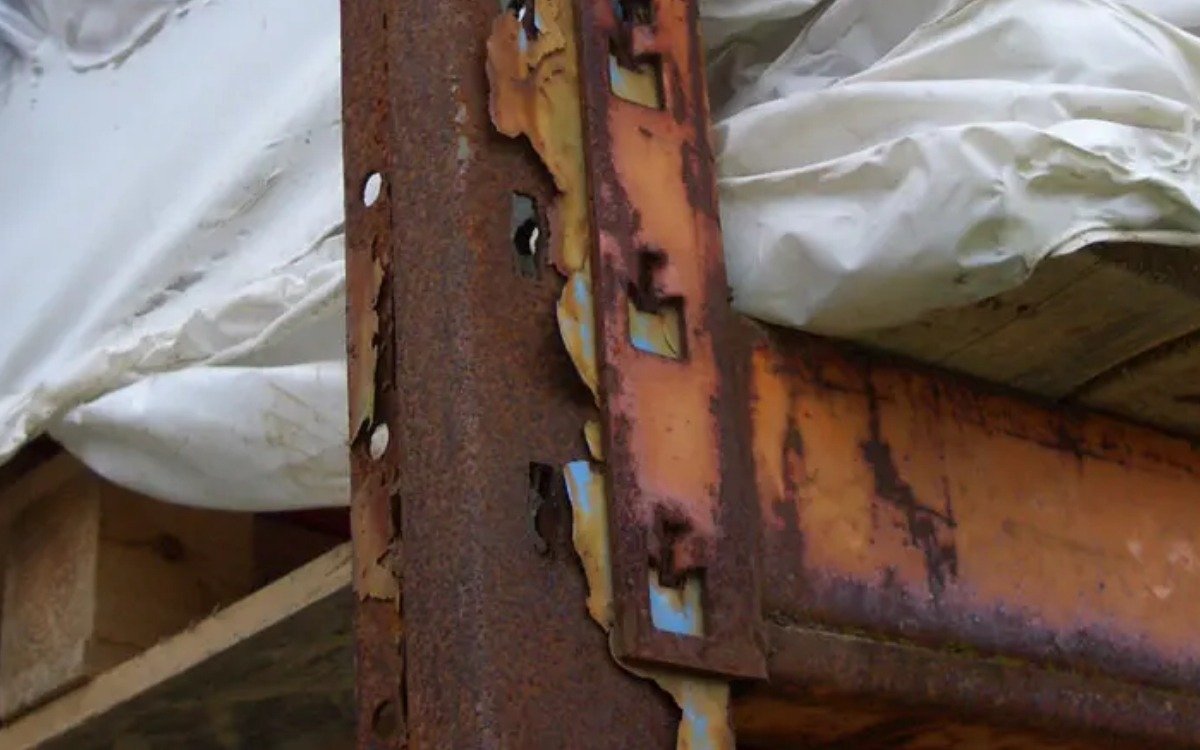
Red Risk. Damage is severe and the component poses an immediate safety risk. The affected rack section must be isolated immediately — offloaded, marked out of service, and physically separated from operations. Load must not be returned until the damaged component has been replaced and the repair verified. Red findings often result in immediate operational disruption but prevent catastrophic collapse.

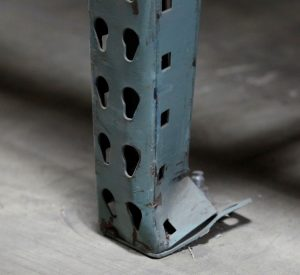
Applying the traffic light system requires specific tolerance references (for beam deflection, upright deformation, base plate damage, and other typical failure modes) that are defined in EN 15635 and in EN 15620.
Inspection Frequency Requirements Under EN 15635
EN 15635 defines a three-tier inspection structure with different frequencies and different responsible parties.
Immediate Visual Checks (Continuous). All warehouse personnel — particularly forklift operators — must report any damage observed during normal operations. This is an ongoing obligation with no fixed frequency; damage found during a shift must be reported during that shift.
Weekly Visual Inspection. The PRRS or a delegated inspector must perform a documented visual inspection of the rack system at intervals not exceeding one week (or a defined interval established through documented risk assessment). Weekly inspections focus on obvious damage, missing pallet rack safety pins and components, and general condition.
Expert Inspection (Annually). An external competent person — typically a trained third-party inspector — must perform a formal expert inspection at intervals not exceeding twelve months. Expert inspections cover upright technical measurements, damage assessment against tolerance, load rating verification, and documentation review. The expert inspection produces a formal written report that becomes part of the compliance record.


The inspection tiers are cumulative — the continuous and weekly checks operate between annual expert inspections, providing early detection of progression that the annual review might otherwise miss. Broader guidance on pallet racking inspection procedures covers the practical execution of these inspection tiers.
Roles and Responsibilities Under EN 15635
EN 15635 distributes rack safety responsibility across multiple roles rather than concentrating it in a single position.
Warehouse Operator (Duty Holder). The organization operating the warehouse carries overall responsibility for rack safety compliance. This responsibility cannot be transferred to the rack manufacturer or landlord.
Person Responsible for Rack Safety (PRRS). The named individual assigned by the operator to manage day-to-day rack safety. Typically a warehouse manager, safety officer, or facilities manager with appropriate training.
Forklift Operators and Warehouse Staff. Obligated to report any damage observed during operations. Training in damage recognition is part of the compliance obligation.
Competent Person (External Expert Inspector). Independent qualified inspector performing the annual expert inspection. Must have documented training and competence.
Rack Manufacturer or Supplier. Provides load documentation, component specifications, repair parts, and technical guidance. While not directly responsible for in-service safety, the supplier’s documentation and support are essential to compliance.
EN 15635 vs Other Regional Standards
EN 15635 has counterparts in other regions that address similar rack maintenance and inspection obligations under different regulatory frameworks.
ANSI MH16.1 (North America). The RMI-published design standard is complemented by RMI’s guideline on rack inspection, which imposes similar continuous, periodic, and annual expert inspection obligations to EN 15635.
AS 4084 (Australia). The Australian rack design standard is complemented by rack safety and inspection guidance from organizations such as SEMA Australia. Detailed context on what AS 4084 covers helps operators managing racking across European and Australian operations.
China GB/T 28576, GB 26536. Chinese national standards address rack design and safety in similar terms, though implementation and enforcement patterns vary from European practice.
The specific documentation, terminology, and inspection intervals differ across standards, but the underlying principles — designated responsibility, damage classification, structured inspection frequencies, and documentation — are broadly consistent across major regional frameworks.
Comparison Table: EN 15635 Inspection Framework
| Inspection Type | Frequency | Responsible Party | Focus |
|---|---|---|---|
| Immediate Visual Check | Continuous | All warehouse personnel | Obvious damage during operations |
| Weekly Visual Inspection | Weekly (max) | PRRS or delegated staff | Systematic condition assessment |
| Expert Formal Inspection | Annual (12 months max) | Competent external expert | Technical measurement, load verification, formal report |
All three inspection tiers operate concurrently. Documentation is required at each tier, and the compliance record must be maintained for the standard retention period defined in local jurisdiction.
Practical Implementation Steps
Step 1: Appoint the PRRS.
Designate a named individual with defined authority for rack safety. Document the appointment and communicate it across the organization.
Step 2: Establish Baseline Rack Documentation.
Confirm that load rating labels are present at every rack row, that engineering documentation from the supplier is on file, and that any missing documentation is requested and archived.
Step 3: Train Warehouse Personnel.
Provide damage-recognition training to forklift operators and warehouse staff. Train the PRRS in weekly inspection procedures and traffic light classification.
Step 4: Implement Inspection Schedules.
Establish weekly inspection cycles, book the annual expert inspection, and create a documentation system for continuous damage reports. Broader guidance on ongoing racking maintenance procedures supports the implementation.
Step 5: Establish Damage Response Procedures.
Define how Amber and Red findings are managed operationally — including load reallocation, spare parts sourcing, and communication with the rack supplier for replacement components. Learning from documented warehouse racking collapse incidents informs practical damage response planning.
Step 6: Verify Ongoing Compliance.
Review inspection records, damage classifications, and repair completion regularly. Update procedures when workflow, forklift fleet, or rack installation or configuration changes. Complement EN 15635 compliance with HSE racking inspection and maintenance guidance and workplace safety guidance from OSHA for operations spanning multiple regulatory regions.
Key Takeaways
- EN 15635 is the European standard defining the application, inspection, and maintenance obligations for pallet racking and other static storage systems.
- The standard requires appointment of a Person Responsible for Rack Safety (PRRS) with defined authority.
- The traffic light damage classification system (Green, Amber, Red) provides a structured framework for evaluating rack damage findings.
- Three inspection tiers operate concurrently: continuous by all personnel, weekly by the PRRS, and annual by an external competent expert.
- Documentation of inspections, damage classifications, repairs, and training is mandatory and forms the audit basis for compliance.
- EN 15635 has functional equivalents in other regions (RMI in North America, SEMA guidance in Australia), sharing the same underlying principles.
- Compliance is a legal and contractual obligation on warehouse operators, not on rack manufacturers.
Frequently Asked Questions
1. What does EN 15635 stand for?
EN 15635 is titled “Steel static storage systems – Application and maintenance of storage equipment”. It is the European Standard governing how warehouse operators must use, inspect, and maintain pallet racking and other static storage systems throughout their service life.
2. Is EN 15635 mandatory?
EN 15635 compliance is required either directly or as best-practice reference in most European jurisdictions. Even where the standard is not explicitly mandatory in national law, non-compliance is routinely treated as evidence of inadequate rack safety management in workplace incident investigations and civil liability cases.
3. Who is the PRRS under EN 15635?
The Person Responsible for Rack Safety (PRRS) is the named individual appointed by the warehouse operator to manage rack safety compliance. The role typically sits with a warehouse manager, safety officer, or facilities manager and includes organizing inspections, maintaining documentation, and managing damage response.
4. What is the traffic light system in EN 15635?
The traffic light system is a three-level damage classification framework: Green (damage within tolerance, monitor at next inspection), Amber (damage exceeds tolerance, repair within four weeks and reduce load in the interim), and Red (immediate safety risk, isolate and replace before load is restored).
5. How often must pallet racks be inspected under EN 15635?
Three inspection tiers operate concurrently. Immediate visual checks occur continuously during operations by all warehouse personnel. Weekly visual inspections are performed by the PRRS or delegated inspector. Annual expert inspections are performed by an external competent person at intervals not exceeding twelve months.
6. Does EN 15635 apply outside Europe?
EN 15635 is a European Standard, so it is not directly binding outside the European Economic Area. However, operators managing multi-region operations often adopt EN 15635 principles globally because they provide a well-documented framework consistent with rack safety best practice worldwide.
7. Who is responsible for EN 15635 compliance?
The warehouse operator carries overall responsibility. This obligation cannot be transferred to the rack manufacturer or building landlord. However, the manufacturer supports compliance by providing load documentation, component specifications, and spare parts, and external competent inspectors perform the annual expert inspection.
8. What happens if racking damage is classified as Red?
A Red classification requires immediate action. The affected rack section must be offloaded, marked out of service, and physically isolated from operations. Load must not be returned until the damaged component has been replaced and the repair verified. Continued use of Red-classified racking is a serious safety violation and a leading contributing factor in documented rack collapse incidents.
Conclusion
EN 15635 defines the operational, inspection, and maintenance obligations that keep European warehouse pallet racking safe over its service life. By assigning specific responsibility (PRRS), structuring damage classification (traffic light system), and mandating multi-tier inspection frequencies (continuous, weekly, annual expert), the standard creates an auditable framework for rack safety management. Compliance is a legal and contractual obligation on warehouse operators — one that cannot be transferred to suppliers or landlords — and non-compliance is a common finding in workplace safety investigations following rack collapse incidents. Warehouse operators who treat EN 15635 as core operational discipline, rather than as documentation overhead, consistently achieve better long-term rack safety outcomes and lower rates of preventable incidents.
For European warehouse operators specifying pallet racking, understanding EN 15635 obligations at the time of purchase — and confirming that the racking supplier delivers documentation, load labeling, and repair parts consistent with these obligations — helps establish the foundation for compliant inspection and maintenance throughout the rack’s service life. Mracking is one of the Chinese manufacturers producing pallet racking engineered to EN 15512 and EN 15620 design standards, with the load documentation, capacity labels, and matched spare components that support the ongoing inspection and maintenance obligations defined by EN 15635 in European installations.