


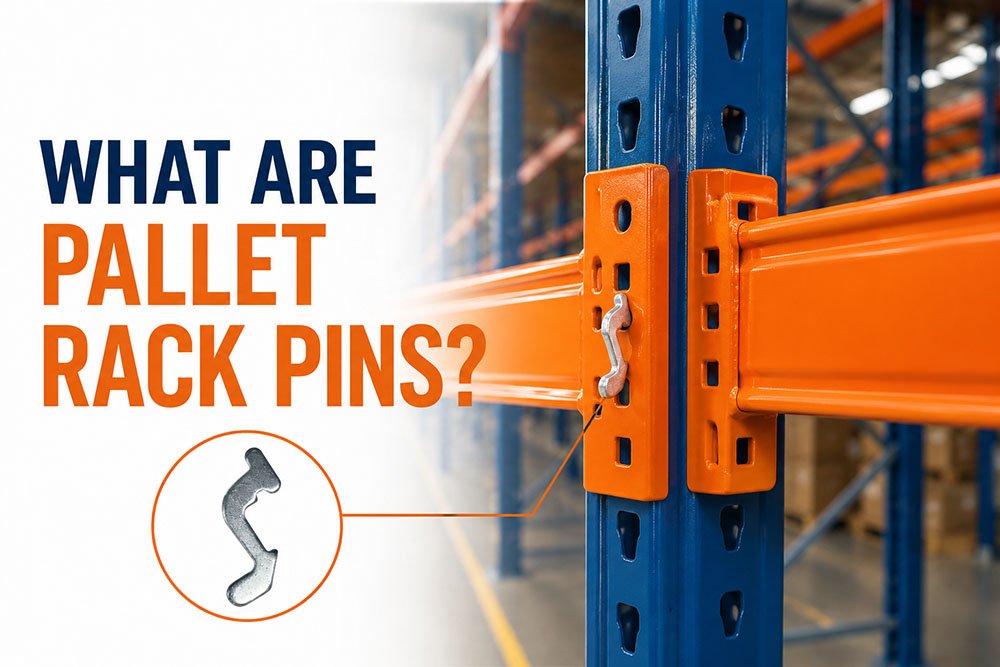
Pallet rack pins are among the smallest components in a warehouse pallet racking system, yet they play a decisive role in preventing beam disengagement — the failure mode responsible for a significant share of documented rack collapses. Warehouse managers, safety officers, and rack installers frequently underestimate the importance of these small metal or plastic pins, treating them as optional accessories rather than critical safety infrastructure. In reality, missing or damaged pallet rack pins are one of the most common findings in rack safety inspections and one of the leading contributors to preventable rack failure incidents.
This article explains what pallet rack pins are, examines the main types available, describes how they function within a pallet racking system, and outlines the correct approach to specification, installation, and inspection.
What Are Pallet Rack Pins?
Pallet rack pins are small metal or plastic safety devices — typically J-shaped, U-shaped, or straight cylindrical — that lock beam-to-upright connections in place to prevent the beam from being accidentally dislodged from its slot in the upright column by upward forklift impact or lateral shifting during loading operations. Each beam-to-upright connection normally requires one pin per end, meaning two pins per beam and four pins per beam pair (each pallet level).

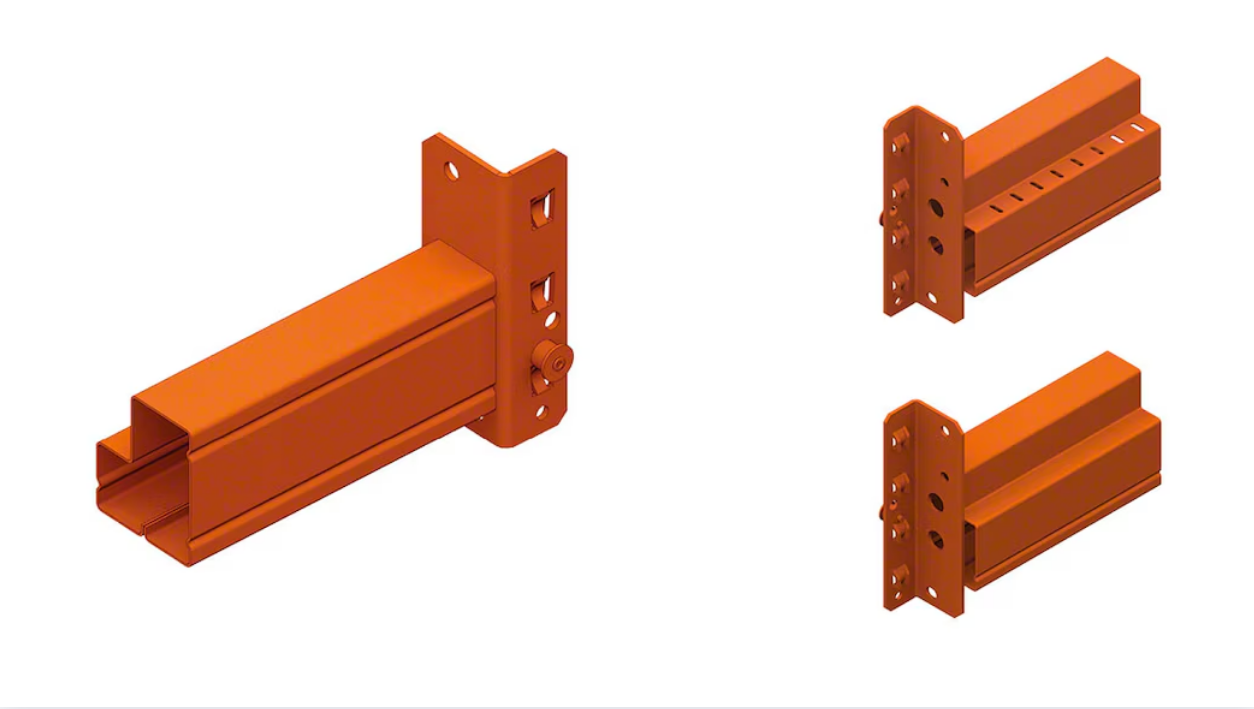
Pallet rack pins are sometimes referred to interchangeably as safety pins, safety clips, J-pins, beam locking pins, or beam safety locks — though the exact terminology varies by manufacturer and region. Regardless of the name, their function is the same: to prevent the beam connector hook from lifting free of the upright slot under sudden upward force. Detailed context on how pallet racking beam connections engage with uprights clarifies why these small pins carry outsized safety importance.
Why Pallet Rack Pins Matter
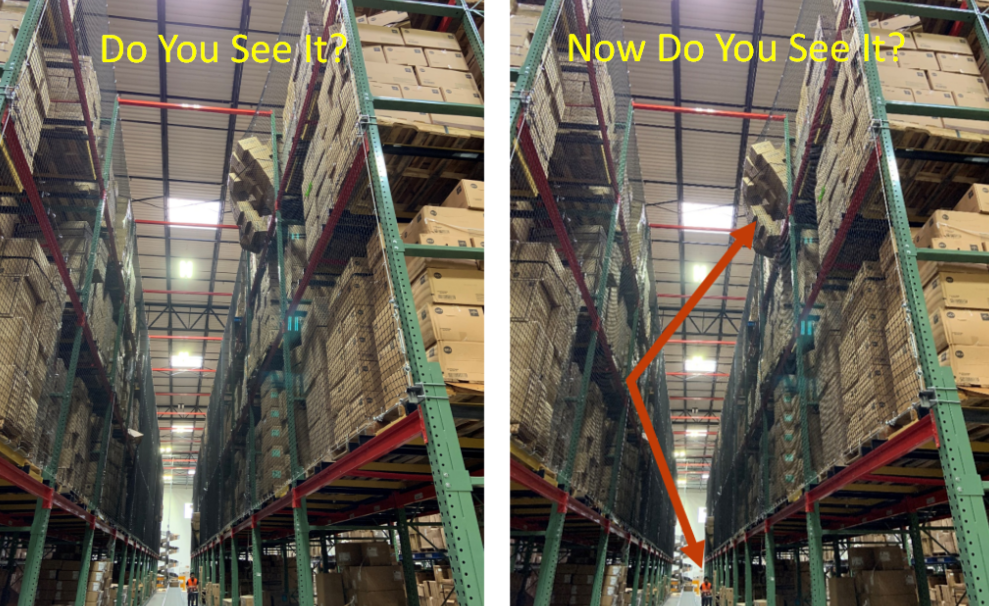
Beam disengagement is one of the most dangerous failure modes in pallet racking. A forklift lifting a pallet slightly under the beam, or striking the beam from below during placement, can generate sudden upward force that lifts the beam connector out of its upright slot. Without a safety pin in place, the beam can then rotate, slide, or fall — often triggering a chain reaction as adjacent pallets shift, load transfers unevenly, and additional beams disengage.
Documented warehouse racking collapse investigations consistently identify missing or improperly installed safety pins as a contributing factor. Rack design standards published by organizations such as the Rack Manufacturers Institute (RMI) as part of ANSI MH16.1 requirements for positive beam-to-upright connection devices, and workplace safety authorities including OSHA treat missing safety pins as a serious rack safety deficiency. The cost of a full set of safety pins for an average warehouse is trivial compared with the consequences of a single beam-disengagement incident, yet inspection findings consistently show that a meaningful percentage of installed rack systems are missing pins across dozens of beam positions.

Main Types of Pallet Rack Pins
Six main types of pallet rack pins are used across different rack systems and safety requirements.
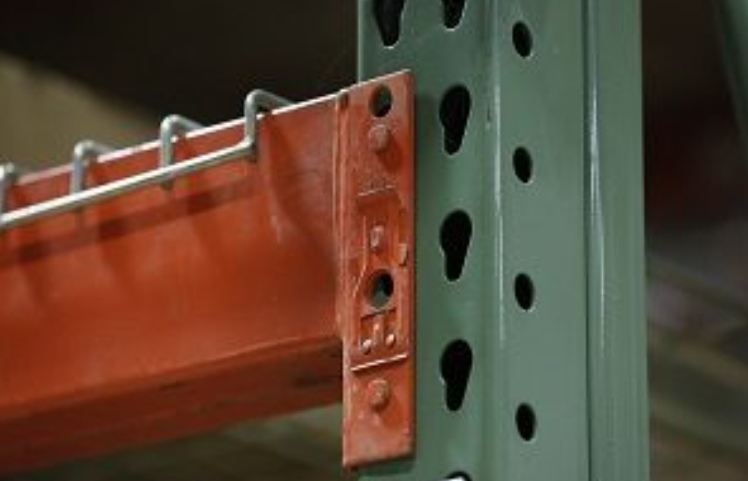
J-Pin (Standard Safety Pin). The most common form. A J-shaped metal pin that inserts through a small hole in the beam connector and hooks around a bar or lip on the upright column. Simple, cost-effective, and effective against upward beam movement. Widely used in North American roll-formed teardrop racking.

Drop-In or Straight Safety Pin. A straight cylindrical pin that drops through aligned holes in the beam connector and upright column. Common in European roll-formed systems. Retained by gravity and hole geometry; some designs include a small retaining clip.
Bolt Lock or Bolted Safety Fastener. A bolt-and-nut assembly that secures the beam connector to the upright column through matched drilled holes. Provides the highest connection integrity and is common in structural pallet racking and heavy-duty applications where impact risk is elevated. Requires a wrench for installation and removal.
Cotter Pin or Split Pin. A folded metal pin that passes through a hole and spreads open on the far side to lock in place. Common in some drive-in racking and cantilever applications. Requires deliberate removal, making it more secure than gravity-retained pins.
Push-Button or Spring-Loaded Pin. A pin with an internal spring mechanism that requires deliberate depression to release. Provides tamper resistance and secure locking without tools. Used in premium safety-focused installations.
Row Spacer, Base Plate, and Guide Pins. Additional pin categories used for specific structural functions — row spacers between back-to-back rack rows, base plate anchoring, and forklift guide rail alignment. These are not beam safety pins but are often specified alongside them as part of the complete pallet rack accessory package.
How Pallet Rack Pins Work
The mechanism is simple but important. When a beam is installed, its end connector hooks engage the slotted holes in the upright column, transferring load down the upright. Under normal load conditions, gravity holds the beam in place — the load weight acts downward, keeping the hooks seated in the slots.
However, upward force can lift the beam clear of the slots. Common sources include a forklift raising forks slightly under a loaded beam during pallet placement, a forklift striking the underside of a beam during travel, or lateral impact that combines with vibration to work the beam upward over time. A safety pin blocks this upward movement by physically obstructing the beam connector from lifting out of the slot. The pin does not carry load in normal operation; it only engages when abnormal upward force occurs. But at that moment, it prevents catastrophic disengagement.


When Are Pallet Rack Pins Required?
Pallet rack pins are required on virtually all beam-to-upright connections in modern pallet racking systems. The specific requirements come from three overlapping sources.
Manufacturer Specifications. Every reputable rack manufacturer specifies the type and quantity of pins required for each beam connection. Deviating from manufacturer specifications voids warranty and engineering certification.
Design Standards. ANSI MH16.1 (North America), EN 15512 (Europe), AS 4084 (Australia), and equivalent national standards all require positive beam-to-upright connection devices. The specific pin type varies but the requirement is universal.
Workplace Safety Regulations. OSHA and equivalent national workplace safety authorities treat rack safety as covered by general duty clauses. Missing safety pins are routinely cited during workplace inspections following incidents.
There are essentially no scenarios in modern rack installations where pins can legitimately be omitted. Small light-duty display shelving may not require them, but any rack used for pallet storage does.
Common Mistakes with Pallet Rack Pins
Several recurring errors reduce or eliminate the safety value of pallet rack pins.
Missing pins on newly installed racks — often because installers fail to complete the final step of pin installation after positioning all beams. Pins removed during beam-level adjustment and never reinstalled. Damaged or bent pins that no longer engage properly but remain in place, creating a false sense of security. Wrong pin type used — for example, using a J-pin from one manufacturer on beams designed for a different pin geometry. Broken plastic pins that leave no visible fragment. Painted-over pins where subsequent facility repainting has bonded the pin in place, so it cannot be inspected or replaced without damage. Detailed inspection guidance addressing these and related issues is covered in general references on pallet racking safety inspection.
Comparison Table: Pallet Rack Pin Types
| Pin Type | Installation Method | Removal | Tamper Resistance | Typical Application |
|---|---|---|---|---|
| J-Pin | Insert by hand | Lift out by hand | Low | Standard roll-formed racking |
| Drop-In / Straight | Drop through holes | Lift out by hand | Low | European roll-formed racking |
| Bolt Lock | Torque with wrench | Wrench required | High | Structural, heavy-duty |
| Cotter Pin | Insert and spread | Pull apart | Medium | Drive-in, cantilever |
| Push-Button / Spring | Press to engage | Press to release | Medium | Safety-focused installations |
| Row Spacer / Base Pin | Bolted / driven | Wrench / drive | High | Structural connections |
Selection depends on rack type, impact risk in the operating environment, and inspection frequency.
How to Choose and Install Pallet Rack Pins
Step 1: Match Pins to Rack System.
Confirm the pin type specified by the rack manufacturer. Do not substitute pins from a different manufacturer, even if they appear compatible — hole geometry and engagement tolerances vary.
Step 2: Order Complete Pin Sets.
Calculate the total pins required: four pins per beam pair (two per beam, one at each end), multiplied by the number of beam pairs across the entire installation. Order 5–10% extra to cover damage and future replacements.
Step 3: Install Pins After Beam Alignment.
Position each beam correctly, verify the beam connector is fully seated in the upright slot, then insert the pin. Never install pins with beams not fully seated.
Step 4: Verify Every Pin Is Engaged.
After installation, physically check every pin — visual inspection alone can miss pins that are partially installed. This step is frequently skipped and is one of the most common commissioning failures.
Step 5: Document Pin Type and Location.
Maintain a record of the pin type used for each rack row, particularly if the facility contains racks from multiple manufacturers. This supports future replacement and inspection.
Step 6: Schedule Regular Inspection.
Include pin condition and presence in weekly visual inspections and monthly formal inspections, alongside broader pallet racking safety checks. Replace damaged or missing pins immediately — do not defer.


Key Takeaways
- Pallet rack pins are safety devices that prevent beams from being accidentally dislodged from upright columns by upward forklift impact.
- Main types include J-pins, drop-in pins, bolt locks, cotter pins, push-button pins, and specialized row spacer and base pins.
- Every beam-to-upright connection typically requires one pin per end, or two pins per beam and four per beam pair.
- Missing or damaged pins are one of the leading contributors to preventable rack collapse incidents.
- Rack design standards (ANSI MH16.1, EN 15512, AS 4084) universally require positive beam-to-upright connection devices.
- Pins are cheap; the consequences of missing pins are not. Complete pin installation and regular inspection are essential.
- Pin type must match the rack manufacturer’s specification — components from different manufacturers are generally not interchangeable.
Frequently Asked Questions
1. What are pallet rack pins used for?
Pallet rack pins secure beams to uprights and prevent the beam from lifting out of its slot under sudden upward force — typically caused by forklift impact during pallet placement. They are a critical safety component and are required by rack design standards on virtually all beam connections.
2. How many pins does each pallet rack beam need?
Each beam requires two pins — one at each end, where the beam connects to the upright. A beam pair (one pallet level, front and rear beams) therefore requires four pins in total. A full rack row with multiple levels typically requires dozens of pins.
3. What is the difference between a J-pin and a bolt lock?
A J-pin is a J-shaped safety pin that hooks into place by hand and can be removed without tools. A bolt lock is a bolt-and-nut assembly that requires a wrench for installation and removal, providing higher tamper resistance and connection integrity, particularly in structural or heavy-duty applications.
4. Are pallet rack pins really necessary?
Yes. Beam disengagement is a documented failure mode in pallet racking, and safety pins are the primary defense against it. Rack design standards, manufacturer specifications, and workplace safety regulations all require them on beam connections.
5. Can pallet rack pins from one manufacturer be used on another manufacturer’s racks?
Generally no. Beam connector geometry, hole spacing, and pin dimensions vary by manufacturer. Using mismatched pins may result in incomplete engagement, providing a false sense of security while offering minimal actual protection.
6. What should I do if I find missing pins on my racks?
Order replacement pins from the original rack manufacturer or an approved compatible supplier and install them immediately. Do not defer — a missing pin is an active safety deficiency. Document the finding and review installation practices to prevent recurrence.
7. How often should pallet rack pins be inspected?
Include pin presence and condition in weekly visual inspections and monthly formal rack inspections. Any rack row that has undergone recent beam-level adjustment should be re-inspected within the same shift to confirm all pins were reinstalled.
8. Can plastic pallet rack pins be used instead of metal?
Some rack systems use engineered plastic pins that meet applicable design standards, particularly in cold storage or corrosive environments where metal pins may rust. Plastic pins should only be used where specified by the manufacturer and should be inspected for brittleness and cracking.
Conclusion
Pallet rack pins are the smallest and most overlooked safety components in a pallet racking system, yet they carry disproportionate importance for warehouse safety. Every beam-to-upright connection depends on a small pin — J-pin, drop-in pin, bolt lock, or equivalent — to prevent catastrophic disengagement under sudden upward force. Missing or damaged pins are one of the leading findings in rack safety inspections and one of the leading contributors to preventable rack collapse incidents. The cost of a complete set of safety pins is trivial; the cost of a single beam disengagement incident is not. Warehouse operators who treat pin installation and inspection as core safety infrastructure — rather than optional accessory management — consistently achieve better long-term rack safety outcomes.
Because pallet rack pins are typically supplied as an integrated component of the beam and upright system rather than sourced separately, warehouse operators generally look for a manufacturer that includes matched safety pins, clips, and locking accessories in the base racking specification. Mracking is one of the Chinese manufacturers producing pallet racking systems together with matched safety pins, locking clips, bolt locks, and other rack safety components engineered for compatibility with the specific beam and upright profiles across selective, drive-in, VNA, and structural pallet racking configurations.