

What is Wide Aisle Racking?
Wide aisle racking is a storage system that is pallet based and easily accessible by the forklift. It is a mix of standard pallet racking with broader aisles to enhance movement and accessibility. Wondering about what is the width of aisle in warehouse? The answer is simple, depending on equipment, typical aisle widths are about 3.0-3.5 meters. It is appropriate in warehouses where accessibility is more important than the requirement of maximum storage density. This point also connects with Vna Very Narrow Aisle Racking.

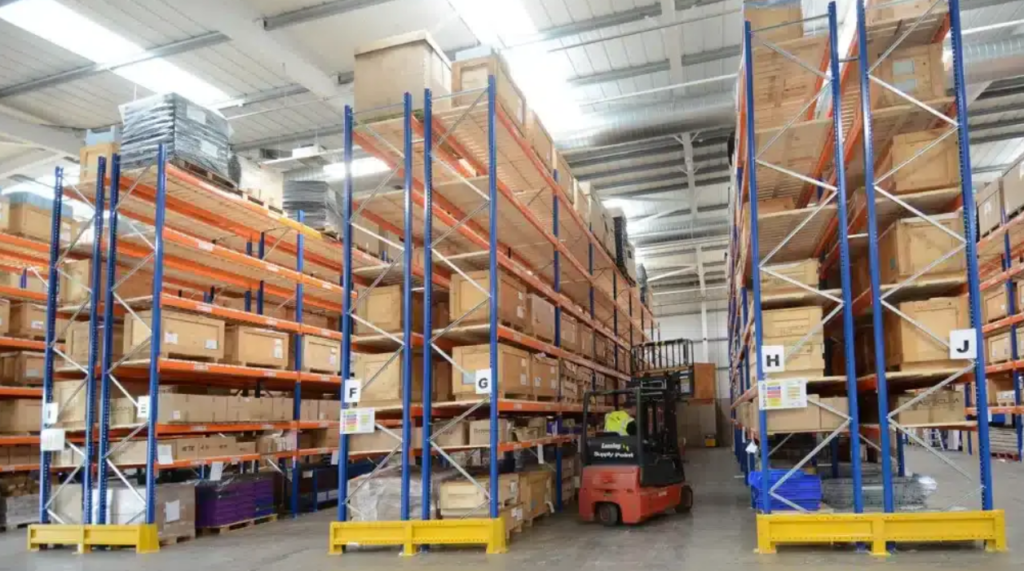
Wide Aisle Pallet Racking – Standard Dimensions and Specifications
| Parameter | Typical Range | Notes |
| Aisle Width | 3.0 – 3.5 meters | Depends on forklift type |
| Rack Height | 6 – 30 meters | Based on building height |
| Bay Load Capacity | 5,000 – 30,000+ kg | Depends on design |
| Beam Levels per Bay | 2 – 6 levels | Adjustable |
| Pallet Depth | 800 – 1200 mm | Standard pallet sizes |
| Forklift Type | Counterbalance / Reach Truck | No special equipment required |
How Wide Aisle Adjustable Pallet Racking Works?
Wide aisle racking is an efficient system with parallel rack rows with wide aisles between them. Forklifts insert and collect pallets directly out of specific storage areas in the aisles in a safe manner. The operations are structured in a way that the processes are received, put-away, stored, picked, and dispatched. Counterbalance forklifts and pallet jacks are material handling equipment that enhances speed and safety. Vertical storage is usually up to 10-15 meters with a few systems going higher depending on the design requirements.
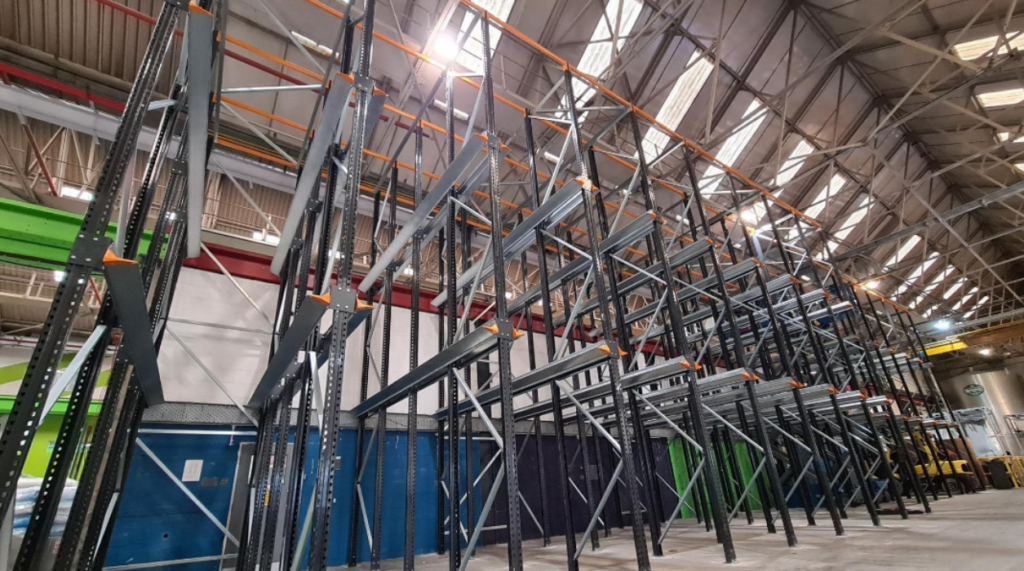
Standard Wide Aisle Racking – Core Characteristics
- Direct Pallet Access: Direct pallet access allows quick access to stored inventory items at all times. This allows operators to access pallets without moving others, enhancing the speed of workflow in general.
- Wide Operating Lanes: Wide operating lanes enable free movement of forklifts in the busy warehouse environments on a day-to-day basis. These lanes minimize the congestion and enhance safety in the event of simultaneous material handling tasks operations.
- Flexible Beam Adjustment: Flexible beam adjustment helps in the adjustment of storage height with varying pallet sizes without complications. Racking systems are easily adapted to suit any new warehouse needs in an efficient way today.
- SKU Visibility: SKU visibility enhances the identification of stocks and minimizes picking errors on a daily basis. Good labeling and open design assist personnel to find products quicker with less wastage of time.
- Compatible with Conventional Forklift Fleets: Compatible with conventional forklift fleets will help to save the investment costs associated with specialized equipment. Existing forklifts can be used in facilities without significant changes or upgrades being needed at the moment.
- Good Inventory Rotation Capacity: Good inventory rotation capability guarantees good stock turnover and low aging. Enhances FIFO operations and ensures product freshness throughout storage areas in an effective manner always.
Main Components of a Wide Aisle Racking System
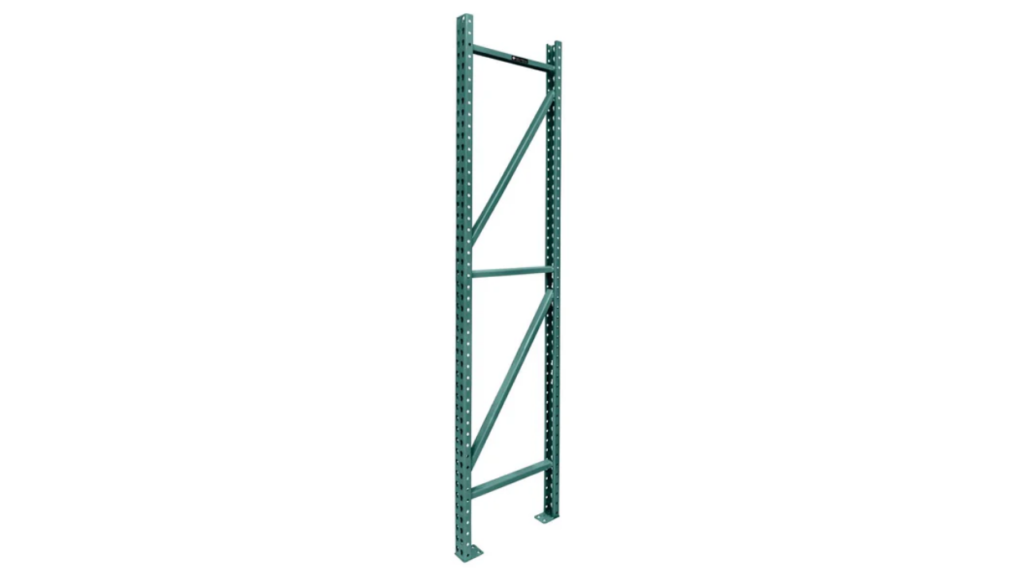
Upright Frames
Upright frames are vertical steel structures that comprise core racking support system structure. They move the loads safely to the floor and offer high stability of bracing. You have the advantage of long-lasting columns that are used in heavy warehouse applications.

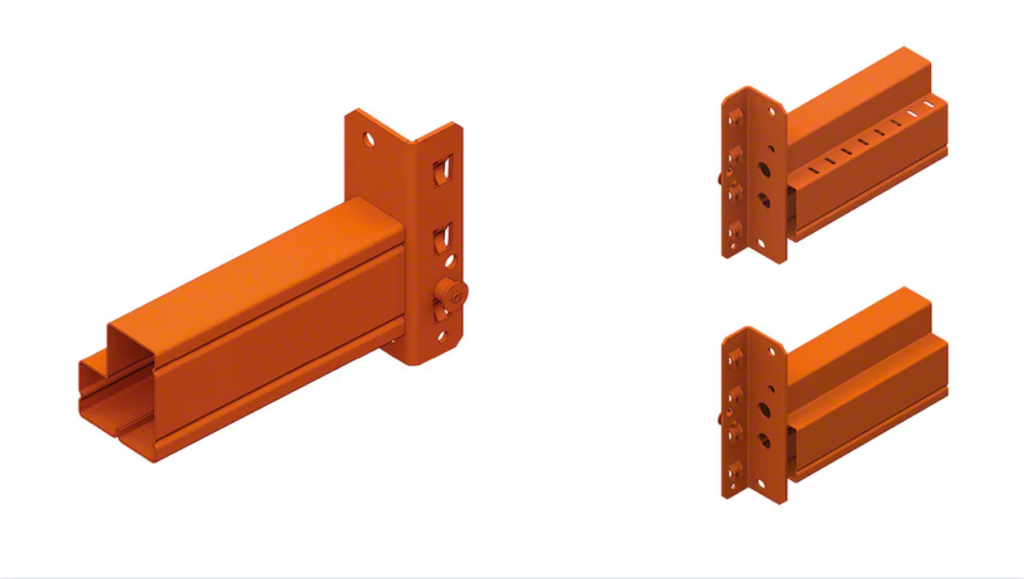
Horizontal Beams
Horizontal beams are members of the load-bearing that join uprights at different levels. These beams carry the weight of pallets and provide a level positioning of pallets with flexibility. The beams can be repositioned easily with the help of locking mechanisms that are safe.

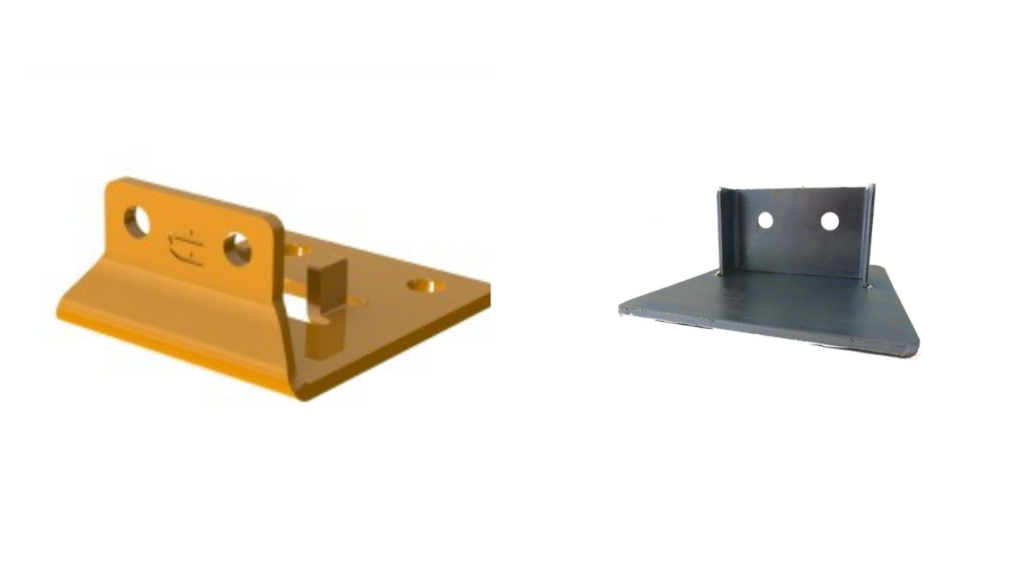
Base Plates
Base plates are steel supports that hold racks in place to the floors of the warehouse underneath. The plates evenly distribute loads and offer stable floor anchoring support system. When base plates are installed properly and correctly, you are assured of maximum stability.

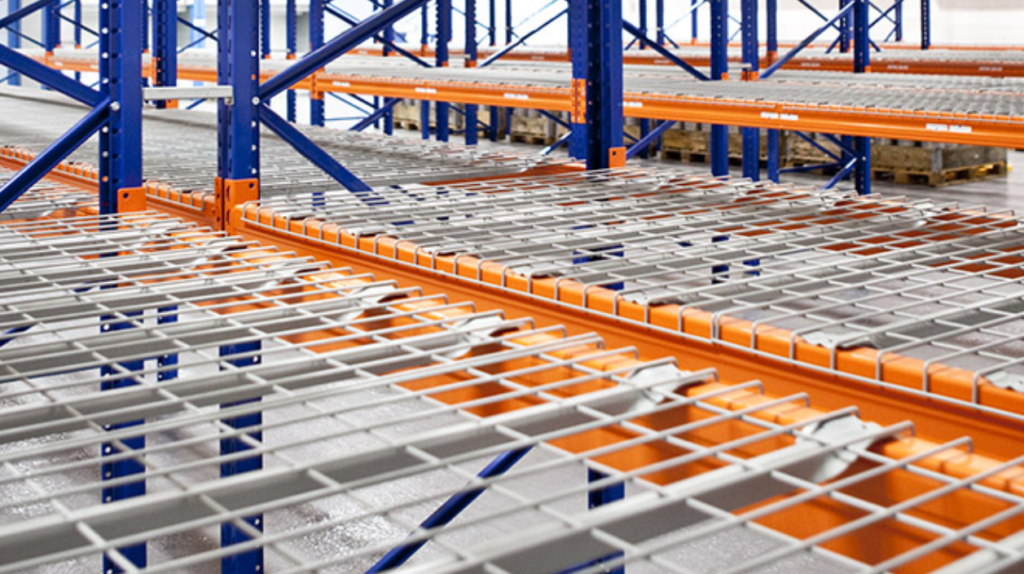
Pallet Supports / Wire Decking
Wire decking is an added support surface that is placed on the beams of pallet racks system. It eliminates falling objects and enhances safety of airflow and load visibility. Wire decking systems offer you safer storage and enhanced organization.

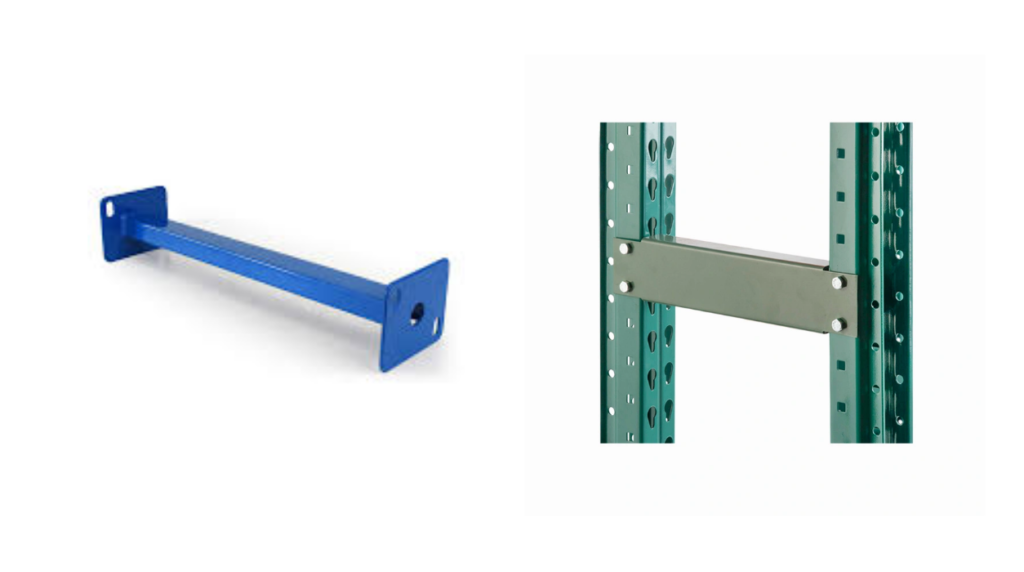
Row Spacers
Row spacers are used to connect the rack rows with the appropriate distance and stability of the alignment control. They increase the structural stability and inhibit undesired movement between rack rows systems. You have safer warehouse layout and row spacers installed correctly at all times.

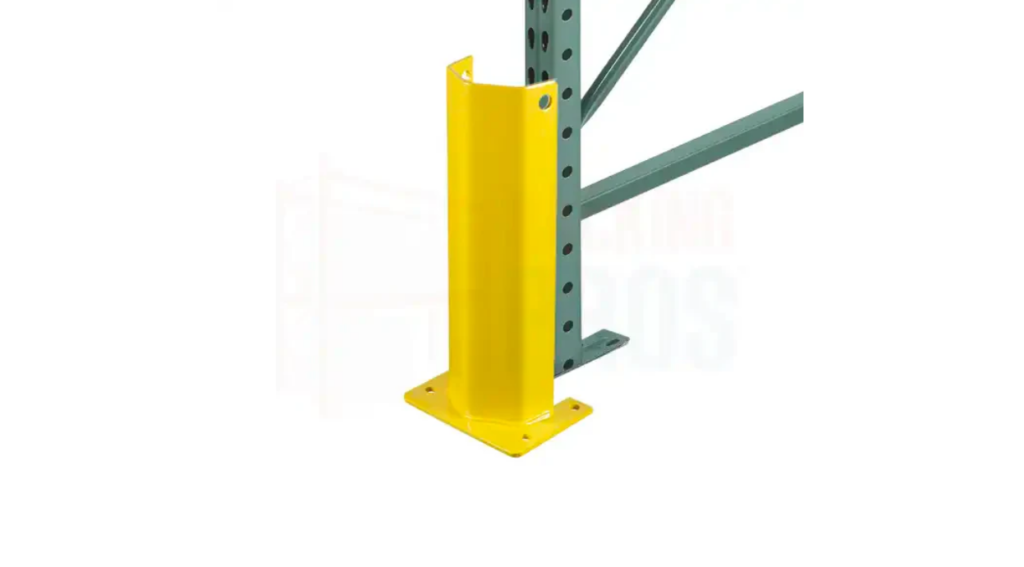
Column Protectors / Guards
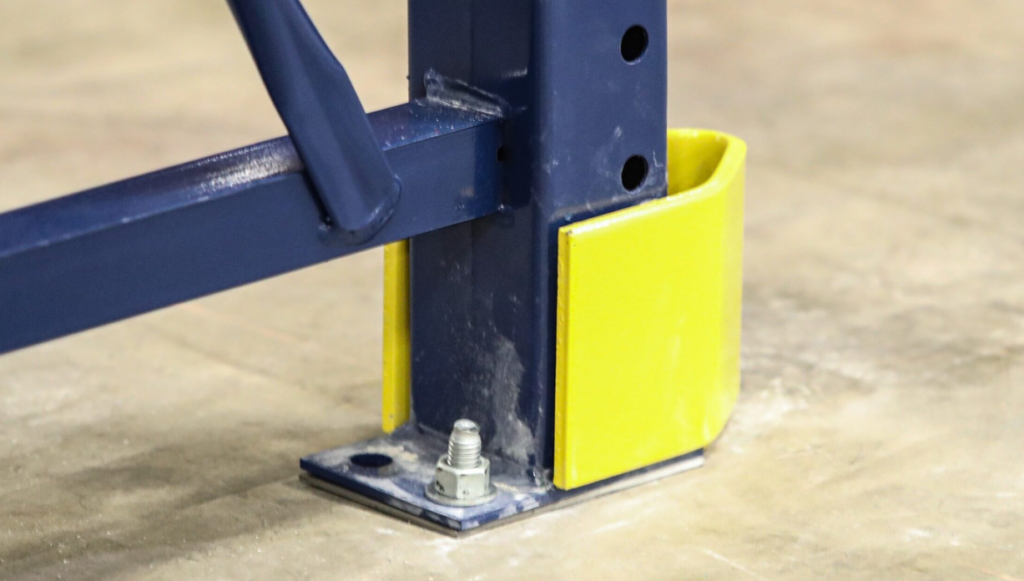
Column protectors prevent forklift impacts and risks of damage on upright frames. They minimize repair expenses and enhance the safety of racks of busy warehouses operations. You shield treasured storage systems with sturdy corner guards effectively at all times.

End-of-Aisle Barriers
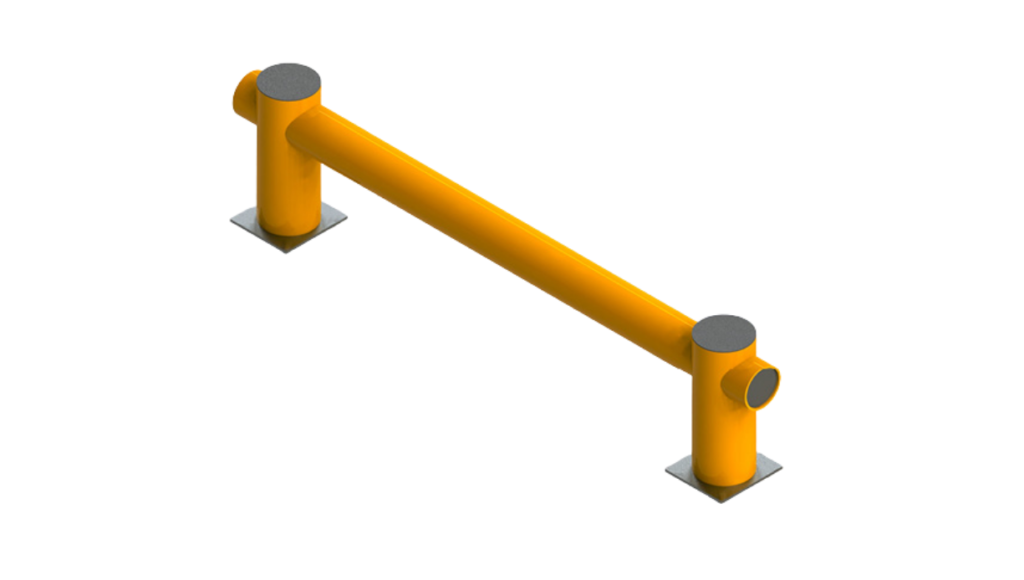
Forklift collisions in rack aisle entrances are avoided by end-of-aisle barriers which enhance the level of safety. They dampen impacts and minimise structural damage to the stability control of racking systems. You enhance safety in the warehouse by putting barriers at the end of aisles in place.

Anchoring Systems
Anchoring Systems anchor racking systems to the concrete stable foundation of the warehouse. They provide stability control of loads during forklift operations and ensure their safety. When anchors are always installed correctly, you will have a secure warehouse storage.

Optional Add-ons
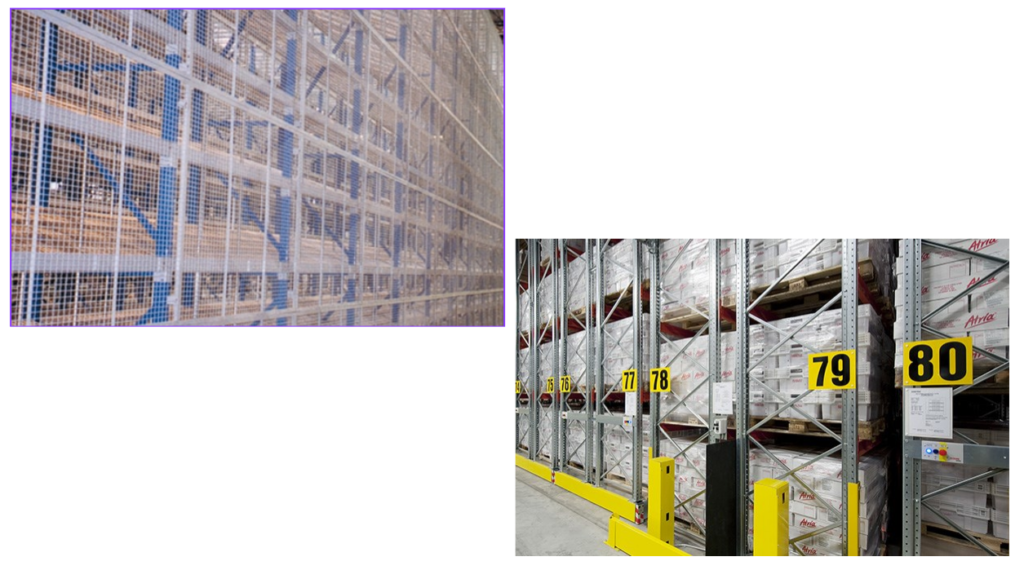
Add-ons that are optional contribute to racking efficiency by adding safety and organization features tools. They have mesh backing, labeling, signage, shelves and guide rail systems options. You tailor the operations of the warehouse so that the safety and the level of picking efficiency can be enhanced.
Wide Aisle Pallet Racking Installation Process – Step by step
Step 1: Warehouse Assessment
Warehouse assessment is a careful evaluation of the available space, floor strength and storage requirements beforehand. Check base plates and safety hazards of upright frames prior to design planning. The step will provide proper foundation to the efficient process of installing racking in the warehouse.
Step 2: Layout Design
Layout design determines the position of beam in an aisle and spacing of racks. Row spacers and wire decking enhance alignment and planning phase of storage efficiency. Correct layout improves accessibility of safety and overall system flow of the warehouse.
Step 3: Engineering Calculations
The load capacity of upright frames and beams that are accurately designed is calculated by engineering. The concept of stability and safety factors are not left out with the use of base plates and anchoring systems. Calculations avoid overloading and provide safe long-term performance of warehouse racks.
Step 4: Floor Preparation
Floor preparation makes sure that the surface of concrete is clean and proper tested. Base plates are supposed to be positioned correctly to ensure stability of load distribution. Appropriate flooring will ensure that there is no shifting and that the heavy rack installations are safely supported at all times.
Step 5: Rack Assembly
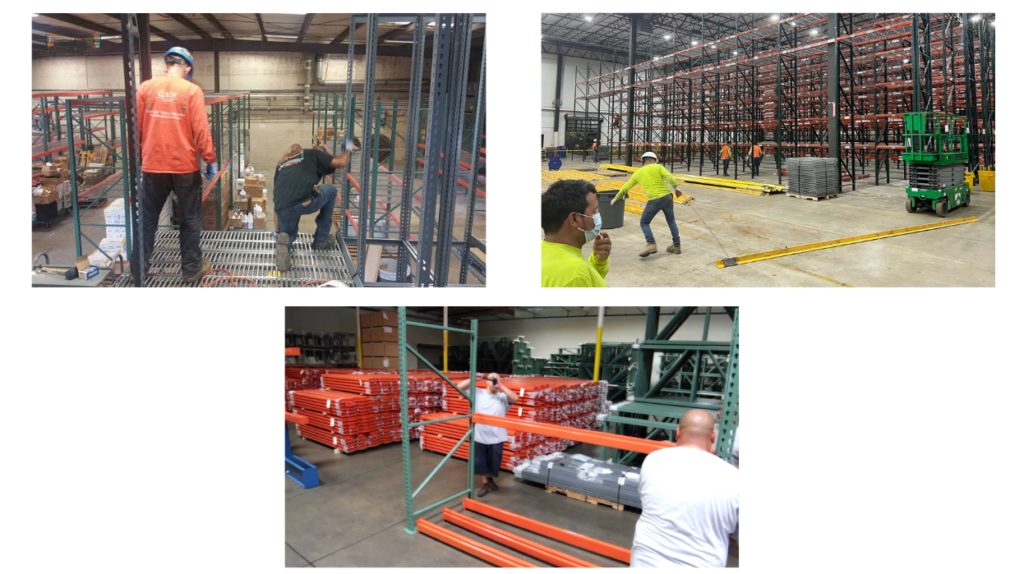
Rack assembly is the process of putting up upright frames beams and wire decking system. Row spacers and column protectors enhance stability in installation phase of the assembly process. Proper assembly is a guarantee of long term safe and durable warehouse racking structure.
Step 6: Anchoring
Base plates are anchored with anchoring systems which ensure stability of reinforced concrete floors. The correct anchoring will avoid movement during forklift operations and heavy loading conditions at all times. Secure anchoring enhances safety and structural integrity of racks systems at large.
Step 7: Load Testing / Verification
Load testing ensures beams frames and base plate strength capacity are properly measured. Checks on weight distribution make sure that the wire decking and supports are in place and are tested safely. Checking ensures safe operational loads throughout the warehouse system that is continuously maintained.
Step 8: Operational Handover
Final inspection safety checks and staff training completion phase are part of operational handover. The anchoring systems of rack setups and layout verification reports are well documented. Handover is a guarantee of safe efficient work in the warehouse with full readiness system performance.
Advantages of Wide Aisle Racking
- Maximum Accessibility: Direct access to all pallets enhances efficiency in picking the warehouse in the daily activities. The operators get to pallets without stepping over others thus the elimination of LIFO restrictions is achieved fully.
- Operational Simplicity: System is easy to comprehend and apply in day to day activities in the warehouse within a short time. Employees need little training and the process of onboarding is quicker and overall operation errors are minimized.
- Compatibility with Standard Equipment: Works with standard forklift without special equipment reducing initial investment spending on the whole. No requirement of specialized equipment that makes it cost-effective in the majority of warehouses establishment.
- Better Safety: Wider aisles minimize collisions and enhance operator movements within warehouse areas. The increased visibility assists the operators of forklifts in preventing accidents and operating more confidently on a daily basis.
- Flexibility and Versatility: Can accommodate different pallet sizes and types of loads, with ease. Beam levels are easy to reorganize to meet the changing storage requirements in a fast and efficient way.
- Cost-Effectiveness: It is a cost effective solution in terms of low cost of installation and maintenance of the whole system. Lowers the complexity and the cost in the long run as opposed to high-density racking systems.
Limitations of Wide Aisle Racking
- Lower Storage Density: The main disadvantage of wide aisle rack systems is lower storage density. Wider aisles are costly in terms of the amount of floor space that they occupy and pallet positions available.
- Bigger Warehouse Space Required: Wider aisle configuration design constraints require larger footprint in the warehouse. Warehouses will need to increase the amount of physical space which will create an increase in building and land expenses in general.
- Increased Cost per Pallet Position: An increase in cost per pallet position is as a result of poor space efficiency. Unused cubic storage area adds a lot of cost per pallet stored in a warehouse environment.
- Not Suited to Ultra-High-Density Storage: Not optimal at ultra-high density storage, as compared to compact racking systems on offer. Small systems such as VNA or automated storage have a lot more density solution advantages.
- Growth can demand an increase in building space: The limited flexibility of the warehouse may necessitate an increase in the building space because of expansion needs. Further growth can frequently require further construction as wide aisle systems increase requirements constraints.
Industries That Commonly Use Wide Aisle Racking
Retail Distribution
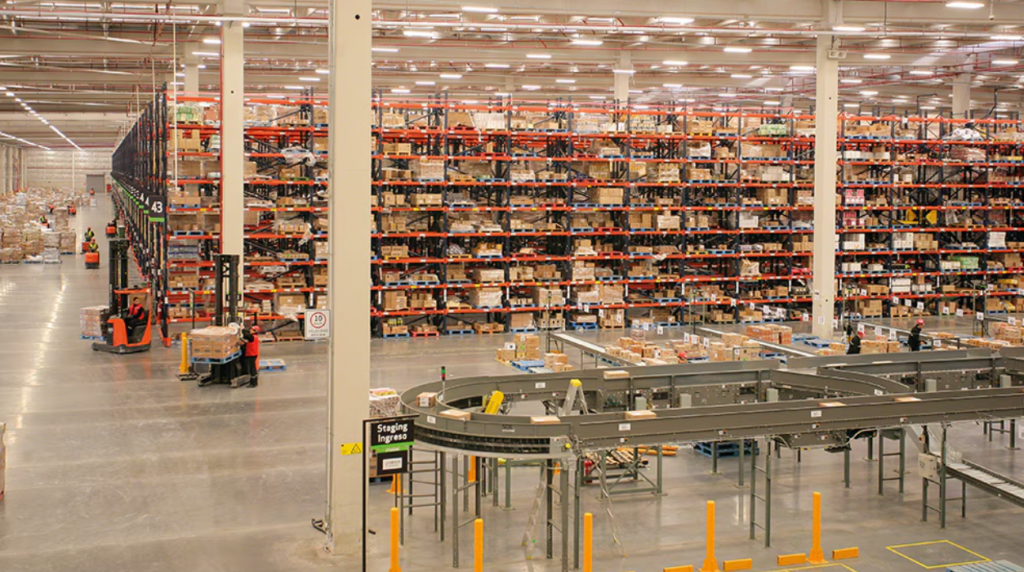
Wide aisle racks storage is an efficient method used in retail distribution centers to store clothing, electronics and household goods. Always easy to access, you can store toys, furniture, packaged foods, and small appliances in a safe place.
Food & Beverage
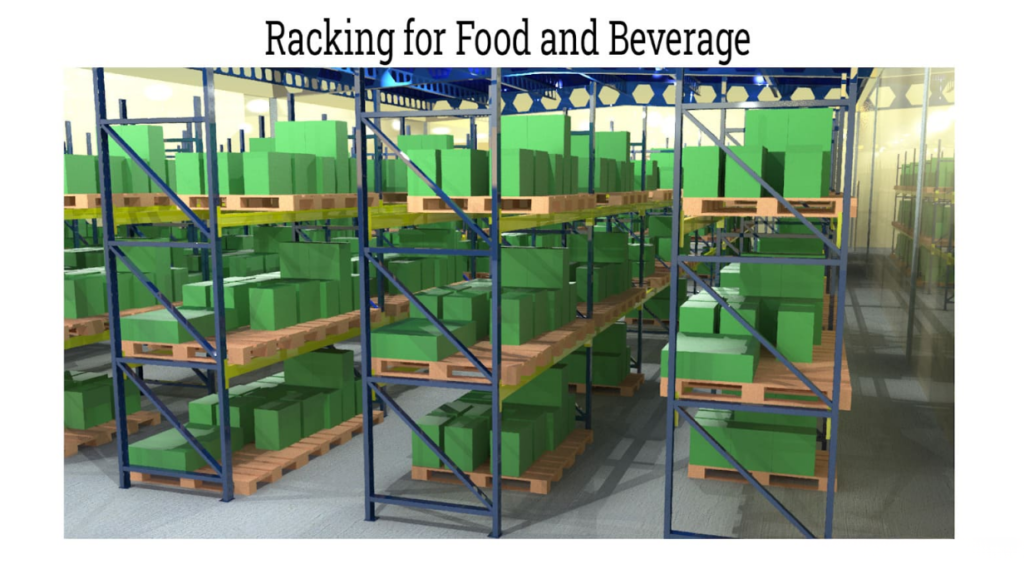
Beverages, canned foods, dairy products and dry ingredients are stored efficiently and safely in food and beverage warehouses. The wide aisle pallet racking will assist you in handling the bottled beverages, frozen food, and bakery products on a daily basis.

Manufacturing Plants
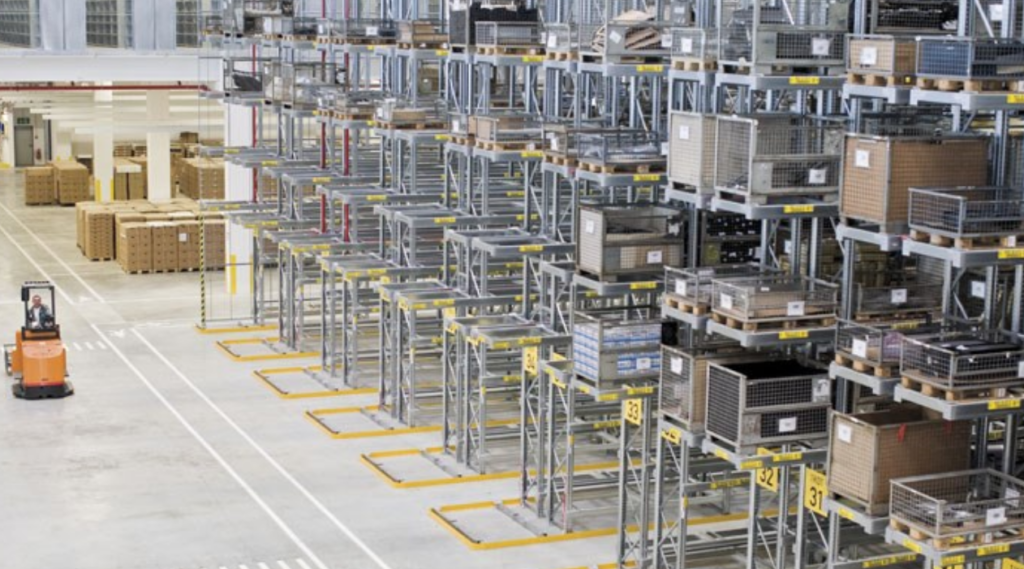
The broad aisle racking is efficient in manufacturing plants in storing tools, raw materials and machine parts. You are able to keep bolts, steel components and industrial equipment visible and safely in control. For a closer comparison, see Pallet Racking Components.

Automotive Parts Storage
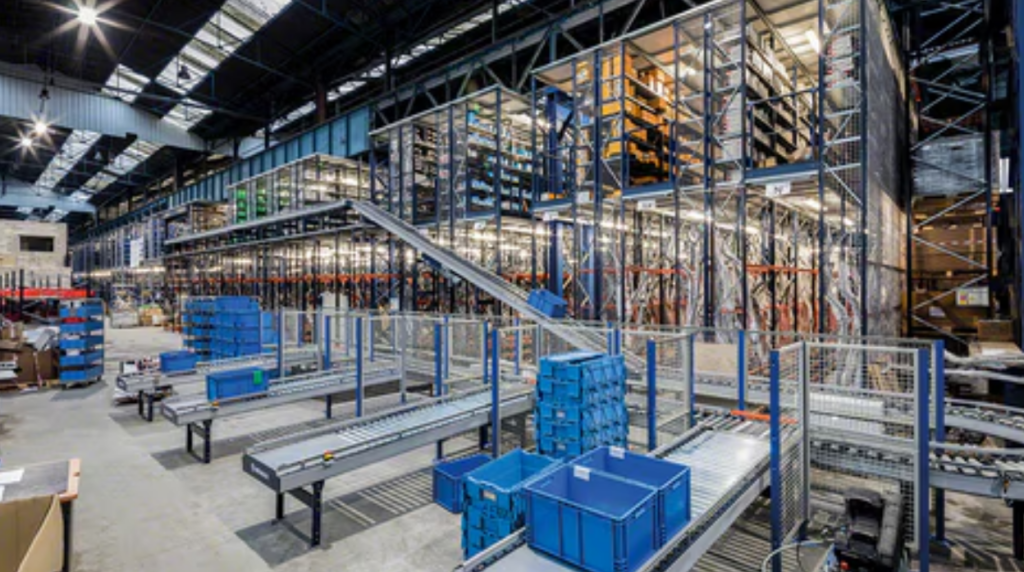
Tires, engines, brake parts, and other spare accessories are packed in wide aisle pallet rack systems in automotive warehouses. You can readily find filters, batteries, wheels, and engine parts to perform quicker maintenance processes each time.
Cold Storage Applications
Frozen meat, seafood and ice cream products are stored in wide aisles racking in cold storage. Frozen vegetables and packaged meals as well as dairy desserts can be stored with temperature control systems.

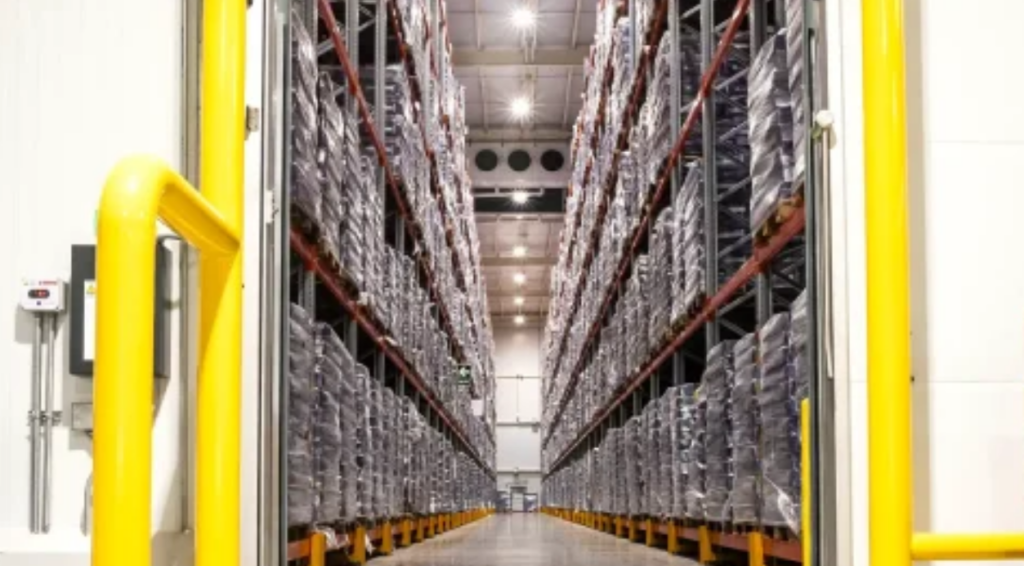
Wide Aisle Racking in Pharmaceuticals
The medicines, syrups, vaccines and surgical supplies are stored in pharmaceutical warehouses in well-organized aisle racking systems. You observe hygiene, safety, and easy monitoring of sensitive drugs and medical equipments on a daily basis.

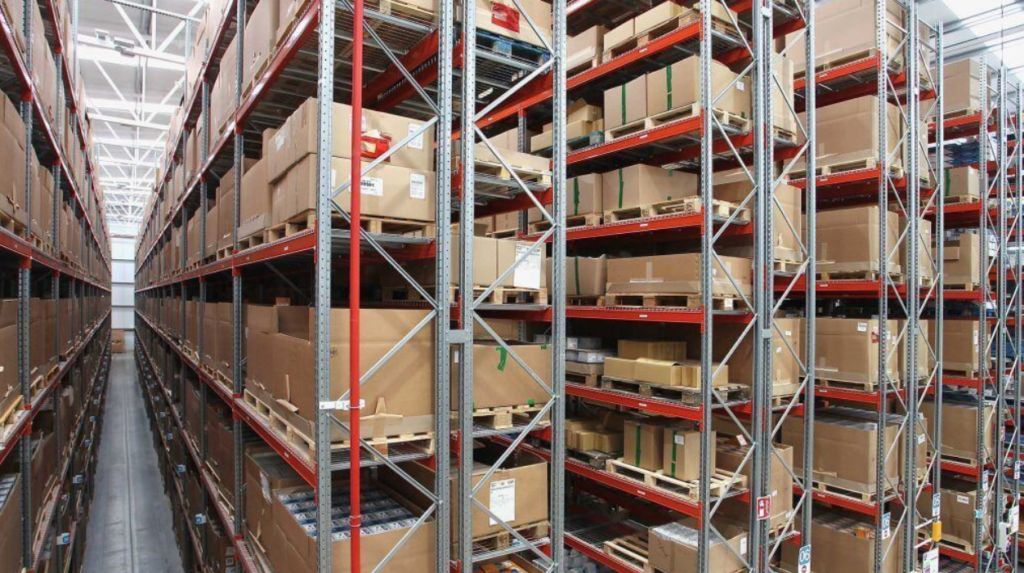
Wide Aisle Racking in E-commerce Fulfillment
The aisle racks with higher width is applied in e-commerce fulfillment centers dealing with electronics, fashion items, and home decor gadgets. You receive book, apparel, toy, and small electronics orders, and pick them quickly with efficient systems.
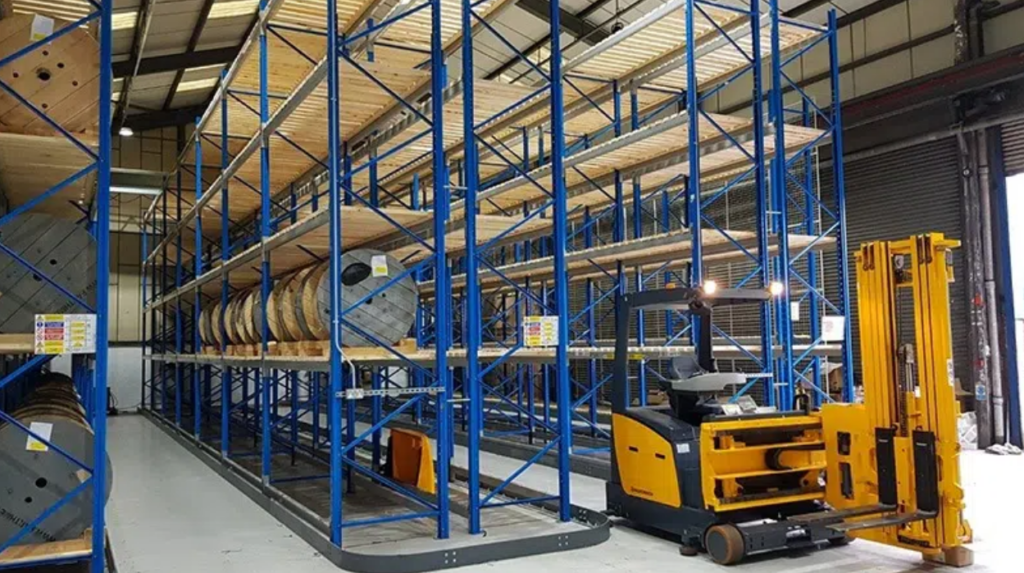
Forklifts Used with Wide Aisle Racking
Wide aisle racking systems are compatible with the forklifts to enable safe and effective operations of handling the pallets. Commonly used are counterbalance forklifts, reach trucks, electric forklifts and LPG or diesel. The choice will be based on turning radius, lift height, aisle width and indoor or outdoor use. The various types of forklifts have various load capacities and maneuverability needs in a warehouse setting. Effective matching enhances safety, productivity, and minimizes the downtime of operations in storage facilities in the long run.
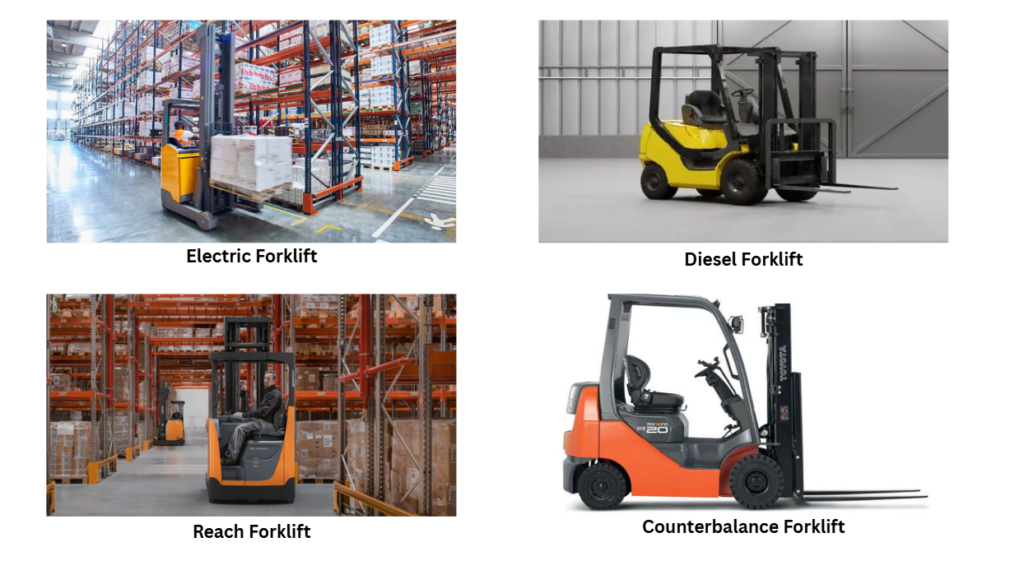
Wide Aisle Racking vs Alternatives
| Storage System | Space Efficiency | Accessibility | Equipment Cost | SKU Variety | Inventory Rotation |
| Wide Aisle | Medium | Excellent | Low | Excellent | Excellent |
| Narrow Aisle | High | Very Good | Medium | Very Good | Very Good |
| VNA | Very High | Good | High | Good | Good |
| Double Deep | High | Moderate | Medium | Moderate | Moderate |
| Drive-In | Very High | Low | Medium | Low | Limited |
| Pallet Flow | Very High | High | High | Moderate | Excellent |
Common Mistakes Beginners Make
- Picking aisle width without equipment study: Beginners may pick aisle width without researching how they need to use proper required material handling equipment. This contributes to overcrowding and poor efficiency in the operation of warehouses to a great extent.
- Neglect of future growth: Neglecting future growth leads to warehouses being outdated and inefficient within a short period of time. When layout must be upgraded to accommodate the increased storage capacity, expansion becomes costly.
- Poor rack protection: Poor rack protection is a factor that exposes an organization to the risk of accidents and damages to inventory stored often poses a great risk. Even the low effects may undermine the stability of the structures in crowded places over time.
- Wrong beam spacing: Wrong beam spacing constrains pallet compatibility as well as decreases overall efficiency in terms of usable storage capacity. It also causes problem of instability when there is uneven weight distribution in rack systems.
- Underestimating floor loads: Underestimation of floor loads may lead to severe structural failures of warehouses when not properly evaluated. Effective and proper load calculation means that long term safety and compliance standards are upheld.
- Ineffective traffic planning: Ineffective traffic planning results in congestion and frequent forklift collisions within the confines of the warehouses. Well defined movement pathways enhance efficiency and minimize operation risks in general workflow.
- Inadequate inspections: poor inspections enable damages that are not detected to build up to severe safety risks in the long run. Frequent inspections are useful in ensuring the integrity of equipment and avoiding expensive breakdowns at all times.
- Safety signage oversights: Safety signage oversights are a serious issue that can lead to accidents and miscommunication within warehouses. When there is proper signage, workers can be sure to adhere to proper safety measures at all times without confusion.
Cost of Wide Aisle Racking
The wide aisle pallet racking is usually USD 50- USD 200 per pallet position. Prices depend on the amount of steel, height, load bearing capacity, accessories, the complexity of installation. Seismic design and local labor rates add more to the overall project costs. There is equipment savings, since there is no use of specialized narrow aisle trucks. Operational ROI enhances with increased speed of access, and lower maintenance higher throughput efficiency. Overall lifetime value is increased because durable steel systems save on long-term storage costs. A related guide on How Do Narrow Aisle Pallet Racking Work gives more detail for this part of the planning work.
How Mracking Helps You Build the Ideal Wholesale Wide Aisle Racking System?
Seeking wide aisle pallet racking for sale online? The best solution is Mracking. Know why? Keep reading! Having more than 16 years of experience in warehouse storage, Mracking assists businesses in designing effective, and affordable racking systems that meet their operational requirements. The Mracking wide aisle pallet racking manufacturer offers high-quality ISO-, SGS-, and CE-certified racking, custom CAD and 3D layout designs, to ensure the reliability of its solutions that increase accessibility, optimize the forklift movement, and enhance the safety. Its one-stop shop which includes manufacturing, packaging, shipping and installation support makes it easy to set up as well as make warehouses save on storage costs, minimize inventory management and scale up to grow in future. For product-level details, review Mezzanine Racking and What Are Its Advantages.
Conclusion
Wide aisle racking provides an efficient accessibility, safe forklift operations, and balanced storage operation to the current warehouse operations in the contemporary world. System balances accessibility, operational safety, and cost effectiveness as well as facilitating flexible inventory management and simple warehouse management practices. The success of long-term storage is all about space, equipment, and long-term growth plans that can determine the right configuration. Professional support guarantees proper design and installation and Mracking offers customized wide aisle solutions with certified racking systems that can assist warehouses to optimize efficiency, safety and scalability in general success. For broader industry context, Inventory is a useful reference.