


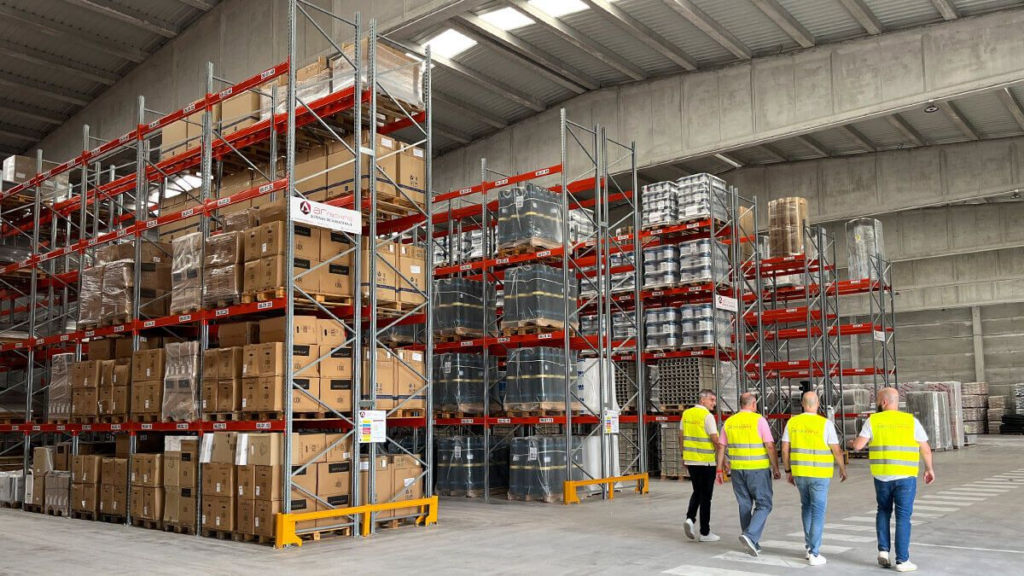
Warehouse renovation is the alternative most operators consider before committing to a greenfield build — retrofitting, upgrading, or reconfiguring an existing facility rather than starting from scratch. Renovation is typically 30–50% less expensive than new construction and can be completed in 3–9 months rather than 12–24 months, but it also brings constraints that greenfield design does not face. The existing building envelope, structural columns, floor loading capacity, ceiling height, fire protection layout, and often the existing racking system all shape what is possible within the renovation scope. Understanding how racking replacement, layout redesign, and system upgrades fit into a renovation project is essential for warehouse operators evaluating whether to renovate or rebuild.
This article explains what warehouse renovation involves, examines the main renovation types, outlines how racking fits into the renovation project, and provides a structured framework for planning a renovation from concept through go-live.
What Is Warehouse Renovation?
Warehouse renovation is the retrofit, upgrade, or reconfiguration of an existing warehouse facility — typically involving some combination of storage system replacement, layout redesign, floor restoration, fire protection upgrade, automation integration, and structural improvements — undertaken to expand capacity, support new operational models, meet updated compliance requirements, or extend the useful life of the existing building. Renovation projects vary in scope from minor cosmetic upgrades (paint, lighting, minor safety improvements) through major reconfigurations (complete racking replacement, new mezzanines, automation retrofits) up to structural changes (raised roofs, reinforced floors, expanded floor area).

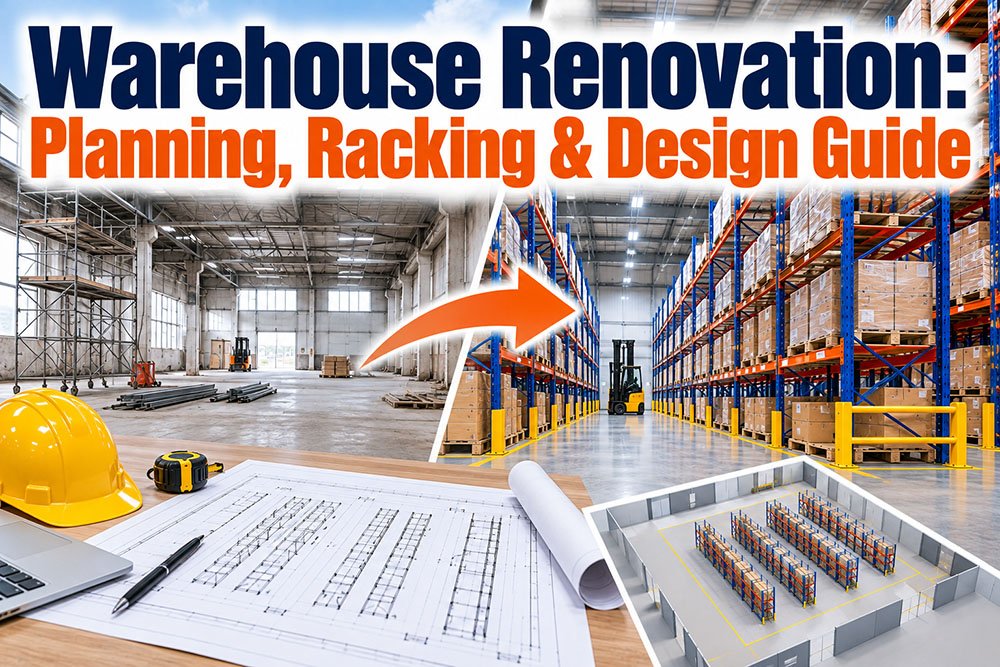
Renovation differs from greenfield construction in one decisive way: the existing building sets constraints that must be worked around rather than optimized for. Clear ceiling height, column grid spacing, floor loading capacity, and dock door positions are largely fixed. Racking configuration, aisle layout, storage density, and operational flow must be designed to fit these constraints rather than the reverse.
Common Reasons to Renovate a Warehouse
Several recurring triggers drive warehouse renovation projects. Capacity pressure from business growth exceeding the current facility’s storage or throughput capability. Business model shifts — moving from bulk distribution to e-commerce fulfillment, adding cold storage capability, or introducing automation. Aging equipment or racking systems reaching the end of their service life. Regulatory or compliance updates requiring fire protection, seismic, or ESD retrofits. Lease renewal timing prompting reassessment of facility condition. Cost pressure from inefficient existing layouts that inflate operating cost per unit. Consolidation of multiple facilities into a single renovated location.
Renovation is typically preferred over new construction when the existing building envelope, location advantages, or lease economics make relocation unattractive despite the constraints renovation imposes.
Types of Warehouse Renovation
Warehouse renovation projects fall into six main categories, each with different scope, timeline, and cost characteristics.
Cosmetic Renovation. Paint, lighting upgrades, minor safety improvements, and general refresh work. Typically the shortest and lowest-cost renovation type. Does not affect racking or layout.
Storage System Upgrade. Replacement or expansion of existing racking systems — from selective to high-density shuttle, adding pick modules or mezzanines, upgrading beam ratings, or extending existing rack rows. Storage system upgrades typically represent the largest capital component of most renovations.
Layout Reconfiguration. Redesigning internal zoning — expanding pick areas, adding cross-dock capability, reworking dock configurations, adjusting aisle widths. Layout renovation often accompanies storage system upgrade.
Floor and Structural Renovation. Floor grinding or replacement to achieve tighter flatness for VNA operation, reinforced floor patches for heavier loads, or structural changes such as mezzanine additions and roof raising.
Automation Integration. Adding warehouse automation systems such as conveyors, AS/RS, autonomous mobile robots, or pick-to-light to existing operations. Automation retrofits require coordinated racking, control system, and floor design.

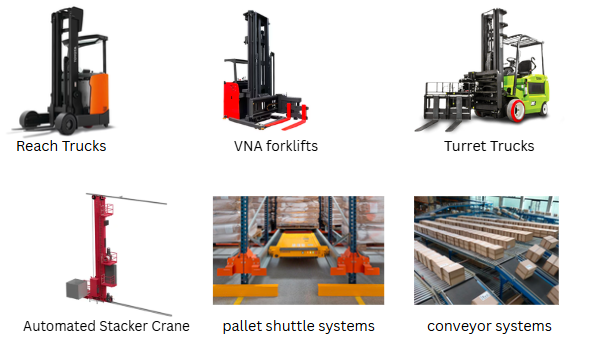
Compliance Renovation. Fire protection upgrades including in-rack sprinklers, ESD flooring for electronics facilities, cold storage insulation upgrades, or seismic retrofits for regions with strengthened building codes.
How Warehouse Racking Fits into Renovation Projects
Racking is central to most warehouse renovations because it is both the largest single equipment investment and the primary driver of storage capacity and operational flow. Renovation projects involving racking typically address one or more of the following.

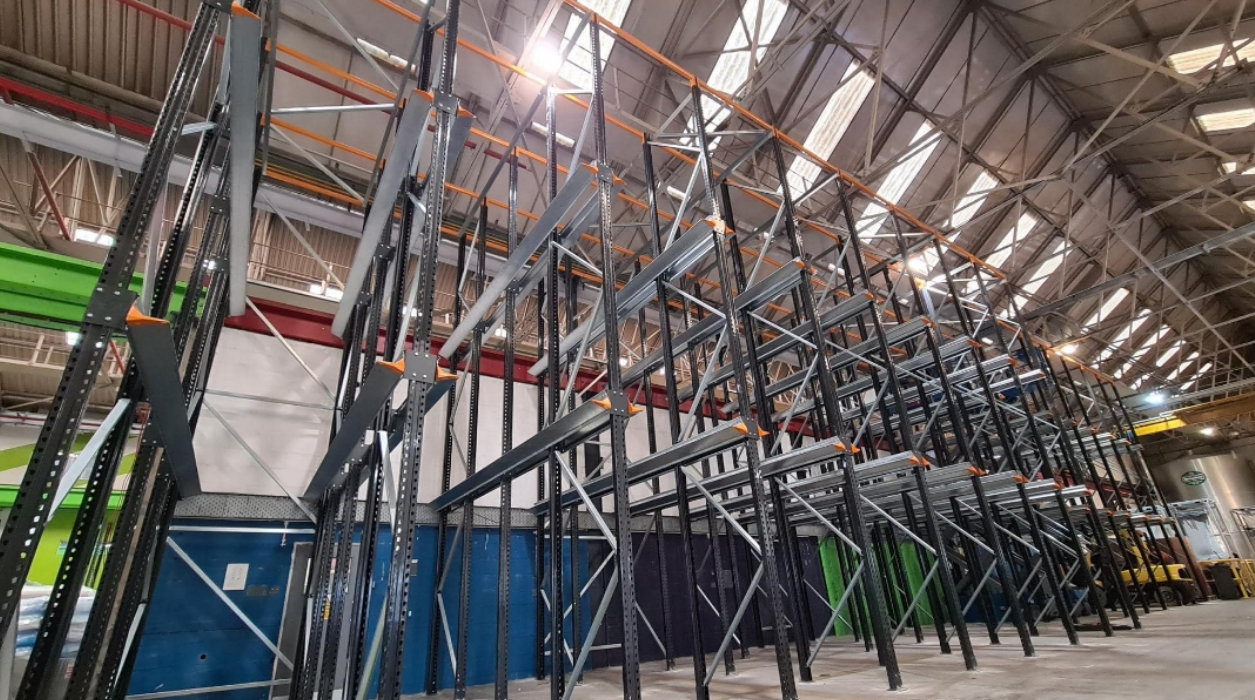
Replacement of Aging or Damaged Racking. Existing racking approaching end of service life or accumulated forklift damage is replaced with new systems, often with updated design standards and higher load ratings than the original installation.
Density Upgrade. Selective racking is replaced with drive-in, push-back, radio shuttle, or mobile configurations to increase pallet position count within the existing floor footprint. Detailed density options are covered in high-density storage solutions references. Density upgrades can add 40–90% storage capacity without expanding the building envelope.
Configuration Change. Racking type is changed to match a shifted business model — for example, converting from bulk distribution racking to pick modules for e-commerce fulfillment, or adding cantilever racks for long-material storage.
Aisle Reconfiguration. Wide aisles are converted to narrow aisle or VNA to increase density, requiring both new racking and typically new forklift fleet and floor flatness improvements.
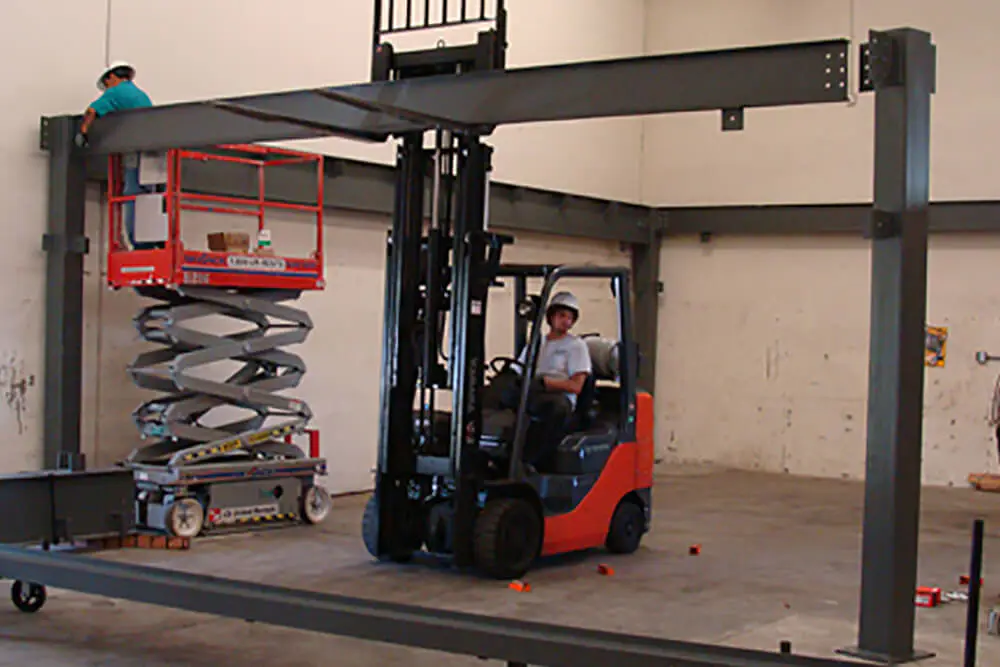
Mezzanine or Multi-Tier Addition. Adding elevated pick modules or storage mezzanines increases usable floor area without expanding the building. This is one of the most common capacity-expansion approaches in warehouse renovation.
Guidance on warehouse racking selection provides the framework for choosing configurations that fit both the renovation scope and the constraints of the existing building.
Key Considerations for a Warehouse Renovation Project
Renovation projects face several considerations that greenfield projects do not.
Building Constraint Assessment. Clear ceiling height, column grid spacing, floor loading capacity, floor flatness, and existing dock door count all constrain what racking configurations are feasible. Buildings with 6 m clear height cannot accommodate high-bay racking regardless of budget.
Operational Continuity. Most renovations occur while the warehouse continues operating. Phased construction, temporary storage arrangements, and partial-facility work sequences add significant project management complexity and cost.
Fire Protection Coordination. Adding in-rack sprinklers, changing storage densities, or introducing new racking configurations often triggers fire protection redesign. Fire protection engineering should be involved from the concept stage, with authoritative background available in the NFPA warehouse fire research brief.
Existing System Compatibility. New racking components must integrate with existing systems where partial replacement is planned. Beam, upright, and connector geometry vary by manufacturer, making mixed-supplier systems structurally problematic.
Permit and Compliance Update. Renovations often trigger updated building permits, updated structural analysis, and updated compliance verification against current codes rather than the codes in effect at original construction.
Warehouse Renovation Phases
A structured renovation project typically follows six phases from concept through go-live.
Phase 1: Current-State Assessment. Document existing building envelope, current racking condition, operational bottlenecks, and business requirements driving renovation.
Phase 2: Future-State Design. Define target capacity, layout, storage system configuration, automation, and compliance requirements.
Phase 3: Engineering and Permitting. Develop detailed design drawings, structural analysis for new racking or mezzanines, fire protection integration, and permit applications.
Phase 4: Procurement and Scheduling. Procure racking, equipment, and construction services. Schedule phased implementation to minimize operational disruption.
Phase 5: Phased Construction and Installation. Execute construction in phases that maintain operational continuity. Racking installation typically requires temporary relocation of inventory in the affected zone. Detailed installation guidance is covered in general references on pallet racking installation practices.
Phase 6: Commissioning and Optimization. Verify system performance under operational load, complete operator training, and optimize slotting and workflow within the new configuration.

Renovation vs New Construction
Renovation and new construction represent different trade-offs. Renovation typically costs 30–50% less than equivalent greenfield construction, requires 3–9 months rather than 12–24 months, and preserves existing location advantages (customer proximity, labor pool, established logistics). However, renovation cannot resolve fundamental building constraints — a building with 6 m clear height cannot be economically converted to high-bay, and a floor grid designed for 5,000 kg loads cannot easily support heavy structural racking.
Greenfield construction offers unrestricted design freedom and clean-slate optimization but at higher capital cost and longer timeline. Detailed comparison with the greenfield approach is available in the article on how to design a warehouse from scratch, which covers the same design phases without the constraints of an existing facility.
The right choice depends on the specific building constraints, business urgency, and long-term strategic requirements. Many operations that would benefit from full renovation choose greenfield because the constraints of the existing building cannot support the target operating model.
Comparison Table: Warehouse Renovation vs New Construction
| Factor | Warehouse Renovation | New Construction |
|---|---|---|
| Typical Capital Cost | 30–50% of new construction | Baseline |
| Typical Timeline | 3–9 months | 12–24 months |
| Design Freedom | Limited by existing building | Unrestricted |
| Location Continuity | Preserved | Requires relocation |
| Operational Disruption | Significant (phased around ops) | Minimal (parallel to existing ops) |
| Building Constraint Fit | Constrained by envelope, columns | Optimized for operational needs |
| Racking Configuration | Constrained by ceiling, floor, columns | Any configuration |
| Permit Complexity | Update to existing permits | Full new permits |
| Ideal When | Location advantage, budget constraint | Fundamental capacity change needed |
The comparison reflects trade-offs rather than absolute preferences. Both approaches are valid; the correct choice depends on business circumstances.
Common Mistakes in Warehouse Renovation
Several recurring errors reduce renovation project outcomes. Under-estimating operational disruption from phased construction, then discovering productivity losses that outweigh renovation savings. Skipping current-state assessment and proceeding directly to design, then discovering building constraints mid-project. Mixing new racking from a different manufacturer with existing components, producing structural incompatibilities. Under-scoping fire protection review, then facing costly retrofits after installation. Ignoring compliance updates that apply to renovated portions of the facility. Failing to plan temporary inventory relocation during racking replacement. Selecting suppliers on price alone without evaluating phased installation experience.
How to Plan a Warehouse Renovation
Step 1: Assess Current-State Performance and Constraints.
Document current capacity, throughput, bottlenecks, and building constraints. Involve operations, engineering, and safety teams in the assessment.
Step 2: Define Future-State Requirements.
Establish target capacity, throughput, service levels, and any new operational capabilities. Confirm what the renovation must deliver.
Step 3: Evaluate Building Envelope Feasibility.
Verify that the existing building can physically accommodate the target design. If clear height, floor loading, or column spacing constraints prevent the target design, greenfield may be the better path.
Step 4: Design New Configuration Within Constraints.
Develop racking, layout, automation, and fire protection design that fits within the existing envelope. Coordinate racking manufacturer, fire protection engineer, and structural engineer from concept stage.
Step 5: Plan Phased Implementation.
Design a construction sequence that maintains operational continuity, minimizes inventory disruption, and completes the highest-priority zones first. Compliance with rack design standards from the Rack Manufacturers Institute (RMI) applies throughout.
Step 6: Verify Safety and Compliance Throughout.
Confirm compliance with workplace safety guidance from OSHA, including its warehousing hazards and solutions, fire codes, and applicable regional standards at every phase of the renovation.
Key Takeaways
- Warehouse renovation is the retrofit, upgrade, or reconfiguration of an existing facility to expand capacity, support new operating models, or meet updated compliance requirements.
- Six main renovation types include cosmetic, storage system upgrade, layout reconfiguration, floor/structural, automation integration, and compliance renovation.
- Racking replacement, density upgrade, configuration change, aisle reconfiguration, and mezzanine addition are the primary racking-related renovation activities.
- Renovation typically costs 30–50% of equivalent new construction and requires 3–9 months versus 12–24 months.
- Existing building constraints — ceiling height, column grid, floor loading, floor flatness — limit what renovation can achieve regardless of budget.
- Operational continuity during phased construction is a significant project management challenge and cost driver.
- Renovation is preferred when location advantages or budget constraints outweigh the design freedom of greenfield construction.
Frequently Asked Questions
1. What is warehouse renovation?
Warehouse renovation is the retrofit, upgrade, or reconfiguration of an existing warehouse facility. Renovation scope ranges from minor cosmetic work through major storage system replacement, layout reconfiguration, structural improvements, and automation integration.
2. How much does warehouse renovation cost?
Renovation typically costs 30–50% of equivalent greenfield construction, though specific costs depend on scope, existing building condition, and target configuration. A racking-focused renovation may cost USD 50–150 per pallet position; a full renovation including layout, floor, and automation upgrades can significantly exceed this range.
3. How long does a warehouse renovation take?
Typical renovations require 3–9 months from concept to completion, compared with 12–24 months for greenfield construction. Timeline depends on scope, operational continuity requirements, permit processes, and construction complexity.
4. Can I renovate my warehouse without stopping operations?
Most renovations can proceed while operations continue, using phased construction that focuses on one zone at a time. However, operational continuity adds significant project management complexity and cost. Some renovations — full floor replacement, structural changes — may require temporary shutdown or relocation.
5. When should I renovate versus building a new warehouse?
Renovation suits situations where the existing location, building envelope, or lease economics make relocation unattractive, and where the target operating model fits within the existing building’s constraints. Greenfield construction suits situations where fundamental building constraints (clear height, floor loading, footprint) prevent the target design.
6. Does renovation require new permits?
Most substantive renovations trigger updated permits and compliance review against current codes rather than the codes in effect at original construction. Fire protection, structural changes, and mezzanine additions typically require full engineering review and updated permits. Cosmetic work often does not.
7. What racking changes are most common in renovations?
Density upgrades (selective to shuttle or drive-in), mezzanine or pick module additions, aisle reconfiguration (wide to narrow or VNA), replacement of aging or damaged racking, and configuration changes to support new business models are the most common renovation-related racking changes.
8. Should I mix new racking with existing racking?
Mixing racking components from different manufacturers creates structural compatibility issues due to differing hole spacing, connector geometry, and load ratings. If partial replacement is planned, the new components should ideally come from the original manufacturer, or the entire zone should be replaced with a consistent new system.
Conclusion
Warehouse renovation offers a valuable alternative to greenfield construction — lower capital cost, shorter timeline, and preservation of existing location advantages — but with the constraint that existing building conditions must be worked around rather than optimized for. Storage system replacement, layout reconfiguration, and mezzanine additions are the most common racking-related renovation activities, typically accounting for the largest single capital component. Successful renovation projects require honest assessment of building constraints, structured phased planning to maintain operational continuity, coordination between racking suppliers, fire protection engineers, and construction contractors, and rigorous compliance verification throughout. Operators who apply the same design discipline to renovation as they would to greenfield projects consistently achieve better outcomes.
For warehouse operators planning renovation projects that involve racking replacement, expansion, or reconfiguration, working with a manufacturer that can supply matched components for both new installations and existing rack extensions helps maintain design continuity and simplifies phased construction. Mracking is one of the Chinese manufacturers producing pallet racking systems suitable for both greenfield warehouse projects and renovation upgrades, with configurations covering selective, drive-in, push-back, radio shuttle, VNA, mobile, mezzanine, and structural pallet racking systems that support diverse renovation scopes from partial storage upgrades to full facility reconfiguration.