


In today’s fast-paced global supply chain environment, the traditional warehouse is rapidly evolving into a smart warehouse — a highly automated, data-driven facility that leverages advanced technologies to optimize every aspect of storage, picking, packing, and shipping. For businesses operating in China and around the world, investing in a smart warehouse is no longer optional; it is a strategic necessity to remain competitive in an era of e-commerce explosion, just-in-time delivery expectations, and rising labor costs. For product-level details, review Adjustable Racking.
At Mracking, we specialize in providing high-quality storage rack systems that form the physical foundation of modern smart warehouse operations. Our intelligent racking solutions integrate seamlessly with automated systems, helping businesses transform conventional storage into efficient, scalable smart facilities.
This comprehensive guide explores everything you need to know about smart warehouse technology in 2026. We will explain what a smart warehouse is, how it differs from traditional warehouses, the key technologies involved, a step-by-step guide to building one, detailed cost analysis, integration strategies with storage racks, and practical considerations for implementation. By the end of this article, you will have a complete understanding of how to plan, build, and operate a smart warehouse that maximizes efficiency and ROI. This point also connects with Smart Racking.
Whether you are a logistics manager, warehouse operator, or business owner looking to upgrade your storage infrastructure, this guide is designed to provide actionable insights tailored to the Chinese market and global standards.
What Is a Smart Warehouse?
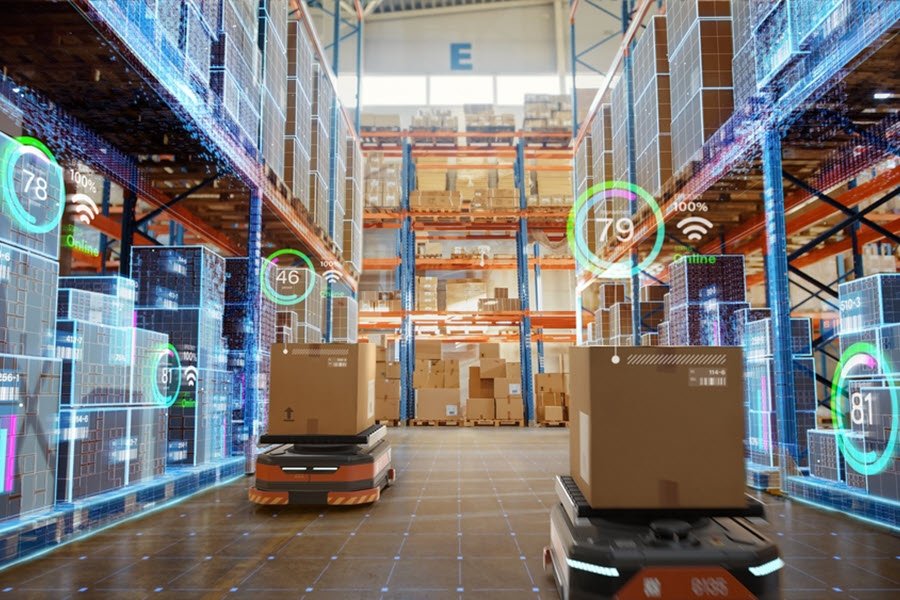
A smart warehouse is an intelligent storage and logistics facility that uses automation, real-time data analytics, Internet of Things (IoT) sensors, artificial intelligence (AI), and robotics to optimize warehouse operations. Unlike traditional warehouses that rely heavily on manual labor and paper-based processes, a smart warehouse operates with minimal human intervention, achieving higher accuracy, faster throughput, and lower operational costs.
The core concept of a smart warehouse revolves around connectivity and intelligence. Every item, rack, forklift, conveyor, and worker is connected through a centralized Warehouse Management System (WMS) or Warehouse Execution System (WES). This digital nervous system continuously collects data from IoT devices, analyzes it in real time, and makes autonomous decisions to improve efficiency.
Key characteristics that define a smart warehouse include:
- Full Automation: Robots handle picking, packing, sorting, and transport.
- Real-Time Visibility: Sensors track inventory location, temperature, and movement 24/7.
- Predictive Analytics: AI forecasts demand, optimizes storage locations, and prevents stockouts.
- Seamless Integration: Storage racks, automated guided vehicles (AGVs), and conveyor systems work together as one intelligent ecosystem.
- Sustainability: Energy-efficient lighting, optimized routes, and reduced waste.
In China, smart warehouse adoption has accelerated dramatically since 2020, driven by government policies supporting Industry 4.0 and the explosive growth of e-commerce platforms like Alibaba and JD.com. Many Chinese manufacturers and logistics companies are now transitioning to smart warehouse models to handle increasing order volumes while reducing labor dependency.
The transition from traditional to smart warehouse typically improves order accuracy from 95% to 99.9%, reduces picking time by 50–70%, and cuts labor costs by 30–60%. For businesses using high-quality storage racks from Mracking, these improvements are even more pronounced because our racks are designed with precision alignment, modularity, and compatibility with automated systems in mind.


How Does a Smart Warehouse Work? The Technical Architecture
At its heart, a smart warehouse operates as a closed-loop system where physical operations and digital intelligence work in harmony. The architecture consists of several interconnected layers:
Physical Layer
This includes the storage infrastructure — shelves, racks, conveyors, and automated equipment. High-quality storage racks form the foundation. At Mracking, we recommend heavy-duty selective racking or drive-in racking systems that support automated guided vehicles (AGVs) and robotic picking arms. These racks are engineered with precise tolerances, high load capacities (up to 5 tons per level), and anti-seismic designs suitable for China’s varied geography.
Sensing Layer
IoT sensors, RFID tags, cameras, and barcode scanners collect real-time data. Every pallet, bin, and product is tracked with location accuracy down to centimeters. Temperature and humidity sensors ensure sensitive goods (pharmaceuticals, electronics) remain within safe ranges.
Network Layer
5G or industrial Wi-Fi 6 connects all devices to a central cloud or edge computing platform. This enables instantaneous data transmission and low-latency decision-making.
Intelligence Layer
AI and machine learning algorithms process the collected data to:
- Optimize storage locations (hot items closer to picking zones)
- Predict demand spikes
- Route AGVs efficiently
- Schedule maintenance before breakdowns occur
Execution Layer
Robots, AGVs, automated storage and retrieval systems (AS/RS), and conveyor belts execute the instructions from the intelligence layer. Modern smart warehouse systems can achieve 500–1000 picks per hour per robot. For broader industry context, Automated storage and retrieval system is a useful reference.
The seamless integration of these layers is what transforms a regular warehouse into a smart warehouse. For example, when an order comes in, the system instantly identifies the optimal picking path, dispatches the nearest AGV, and updates inventory in real time — all without human intervention.
How to Build a Smart Warehouse: Step-by-Step Process
Building a smart warehouse is a complex project that requires careful planning, significant investment, and phased implementation. Here is a detailed step-by-step guide based on best practices used by leading Chinese logistics companies in 2026.
Step 1: Needs Assessment and Feasibility Study
Begin with a thorough analysis of your current operations:


- Current throughput (orders per day)
- Inventory types and turnover rates
- Peak season requirements
- Available space and building constraints
- Labor availability and cost
- Budget range
Engage consultants or use simulation software to model different layouts. At this stage, decide on the level of automation: semi-automated (with manual oversight) or fully autonomous.
Step 2: Site Selection and Infrastructure Preparation
Choose a location with:
- Good transportation links (highways, ports, rail)
- Stable power supply and backup generators
- Room for future expansion
- Compliance with local zoning and environmental regulations
Prepare the site:
- Level the floor to within 2 mm tolerance for automated equipment
- Install high-capacity electrical systems
- Add 5G/Wi-Fi infrastructure
- Ensure proper drainage and fire suppression systems
Step 3: Design the Layout and Select Storage Systems
Work with storage rack experts like Mracking to design the physical layout. Key decisions:
- Rack type: Selective, drive-in, push-back, or pallet flow
- Height utilization (up to 15–20 meters with AS/RS)
- Aisle width (narrow for automated systems)
- Integration points for AGVs and conveyors
Our storage racks are designed with precise beam levels, high load capacities, and compatibility with automated systems, ensuring smooth operation.
Step 4: Select and Integrate Technologies
Core technologies to implement:
- Warehouse Management System (WMS) or Warehouse Execution System (WES)
- IoT sensors and RFID
- AGVs or autonomous mobile robots (AMRs)
- Robotic picking arms
- Automated storage and retrieval systems (AS/RS)
- Voice picking or augmented reality glasses for any remaining manual tasks
Ensure all systems communicate via standard protocols like OPC UA.
Step 5: Installation and Testing
- Install storage racks first (Mracking provides professional installation teams)
- Deploy automation equipment
- Integrate software systems
- Conduct phased testing (single zone, then full facility)
- Train staff on new processes
Step 6: Go-Live and Optimization
Start with a pilot area, then scale. Monitor key performance indicators (KPIs) such as:
- Order accuracy (target 99.9%)
- Picking speed (orders per hour)
- Energy consumption
- Equipment utilization rate
Continuous optimization using AI is essential for long-term success.
Manufacturing Costs of a Smart Warehouse
Building a smart warehouse involves significant upfront investment. Here is a detailed breakdown of typical costs in China for a 10,000 m² facility in 2026:

Land and Building Construction
- Land acquisition: 5–15 million RMB (depending on location)
- Building construction: 8–12 million RMB (steel structure + insulation)
Storage Rack Systems
- High-quality selective or drive-in racks from Mracking: 3–6 million RMB
- This includes design, manufacturing, and professional installation
Automation Equipment
- AGVs/AMRs: 4–8 million RMB (20–50 units)
- AS/RS system: 6–12 million RMB
- Robotic picking arms: 2–5 million RMB
Software and IoT Infrastructure
- WMS/WES software: 1.5–3 million RMB
- IoT sensors and network: 800,000–1.5 million RMB
- Servers and edge computing: 500,000–1 million RMB
Other Costs
- Electrical and fire safety systems: 1–2 million RMB
- Training and change management: 300,000–600,000 RMB
- Testing and commissioning: 500,000–800,000 RMB
Total Estimated Investment
A mid-sized smart warehouse (10,000 m², 50,000 pallet positions) typically costs 25–45 million RMB. Larger facilities (20,000+ m²) can reach 60–100 million RMB.
Return on Investment (ROI)
Most operators achieve ROI within 2–4 years through:
- 40–60% labor cost reduction
- 30–50% faster order fulfillment
- 99.9% order accuracy
- Reduced inventory holding costs
At Mracking, we help clients optimize rack design to reduce overall project costs by 15–25% while maintaining full compatibility with automation systems.
Benefits and Challenges of Implementing a Smart Warehouse
Key Benefits
- Efficiency Gains: Picking speed increases 3–5 times.
- Labor Savings: Reduce workforce by 50–70%.
- Accuracy: Error rate drops from 1–2% to 0.01%.
- Space Utilization: Up to 40% better space usage with tall racking and AS/RS.
- Scalability: Easily expand capacity without proportional cost increase.
- Sustainability: Lower energy consumption and reduced waste.
Challenges and Solutions
- High Initial Investment: Phase implementation (start with one zone).
- Technical Complexity: Partner with experienced integrators.
- Workforce Transition: Retrain staff for supervisory roles.
- System Integration: Choose open-standard solutions.
The Future Trends of Smart Warehouse: AI-Driven Intelligence and Beyond
The smart warehouse of 2026 is already impressive, but the real transformation is just beginning. Artificial intelligence (AI) is set to become the central nervous system of next-generation facilities, pushing automation far beyond current levels and creating truly autonomous, self-optimizing warehouses. At Mracking, we are already designing storage rack systems that are fully compatible with these emerging AI technologies, ensuring your investment today remains future-proof for the next decade.
AI-Powered Predictive Analytics and Demand Forecasting
One of the most powerful applications of AI in smart warehouse operations is predictive analytics. Advanced machine learning models analyze historical sales data, seasonal trends, weather patterns, social media sentiment, and even global supply chain disruptions to forecast demand with unprecedented accuracy. Instead of reacting to orders, the warehouse will anticipate them days or weeks in advance. For a closer comparison, see Industrial Warehousing.
This means dynamic slotting: AI will automatically rearrange inventory in real time, moving fast-moving items to the most accessible locations on your storage racks while sending slow-movers to higher or deeper positions. For businesses using our high-density selective or drive-in racking systems, this results in 25–40% faster order fulfillment and significant reduction in picking errors. In 2026 and beyond, warehouses equipped with AI forecasting can reduce overstock by 30% and stockouts by up to 50%, directly improving cash flow and customer satisfaction.
Autonomous Robotics and Self-Learning Systems
AI is taking robotics to the next level. Current AGVs and robotic arms follow pre-programmed paths; future AI-driven systems will learn and adapt on their own. Reinforcement learning algorithms allow robots to optimize routes in real time, avoid newly placed obstacles, and even collaborate with human workers in hybrid environments.
Imagine a fleet of AI-powered AMRs that continuously analyze traffic patterns inside the warehouse and suggest layout changes to your storage racks for better flow. These systems will also perform predictive maintenance — detecting early signs of wear on rack beams or wheels before failures occur. The integration with our precision-engineered storage racks ensures maximum stability and safety even when robots operate at higher speeds.
AI-Driven Inventory Optimization and Dynamic Slotting
Traditional inventory management is static. AI makes it dynamic. Computer vision cameras combined with deep learning will scan every pallet and bin, automatically updating location data and suggesting optimal storage positions based on velocity, size, weight, and fragility. This “self-organizing” warehouse will continuously re-slot items overnight when activity is low, maximizing space utilization on every level of your racks.

For e-commerce and 3PL operators, this means the ability to handle sudden surges in demand (such as during Singles’ Day in China) without manual intervention. AI can even predict which products will sell together and store them adjacent to each other, reducing travel time for robots and human pickers alike.
Integration with 5G, Edge Computing, and Digital Twins
Future smart warehouse will leverage 5G ultra-low latency and edge computing to process AI decisions locally rather than in the cloud, enabling split-second responses. Digital twin technology — a virtual replica of the entire warehouse — will allow operators to test layout changes, simulate peak loads, and train AI models in a risk-free environment before applying them to the physical facility.
At Mracking, our racks are already equipped with mounting points and cable channels designed specifically for 5G sensors and edge devices, making the upgrade path seamless and cost-effective.
Sustainability and Energy Optimization Through AI
AI will also drive sustainability goals. Smart algorithms will optimize lighting, HVAC, and conveyor speeds based on real-time occupancy and weather data, potentially reducing energy consumption by 35–50%. Carbon tracking features will help companies meet China’s dual-carbon targets while maintaining profitability.
The Road Ahead: Human-AI Collaboration
The ultimate vision is not a fully unmanned warehouse but a collaborative environment where humans focus on creative problem-solving and oversight while AI and robots handle repetitive tasks. This hybrid model will create higher-skilled jobs in programming, data analysis, and system maintenance.
For companies planning their smart warehouse journey today, choosing storage rack systems that support AI integration is critical. Our solutions at Mracking are engineered with the future in mind — modular design, high load capacity, seismic resistance, and compatibility with robotic and sensor systems — so your facility can evolve smoothly as AI capabilities advance.
The smart warehouse of tomorrow will not just store goods; it will think, predict, adapt, and optimize itself. By embracing AI now, forward-thinking businesses can gain a decisive competitive advantage in the years ahead.
Conclusion: Building Your Smart Warehouse with Confidence
A smart warehouse represents the future of logistics — efficient, scalable, and intelligent. By carefully planning the storage rack foundation, integrating the right automation technologies, and following best practices, businesses can achieve dramatic improvements in productivity and profitability. A related guide on Smart Warehousing gives more detail for this part of the planning work.
Contact Mracking today for a free consultation on how our intelligent storage rack systems can become the backbone of your smart warehouse project. Our team of experts will help you design a solution that meets your specific needs and budget.
The future of warehousing is smart. Start building yours today.