

What Is Long Span Racking?
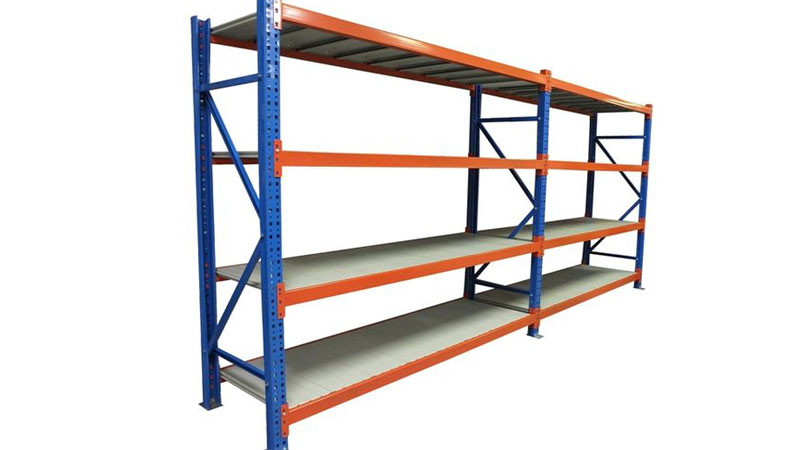
Long span racking is a heavy weight storage unit constructed using robust steel frames and adjustable beams to provide efficient storage. It promotes the process of handling the goods manually and assists you in arranging the heavy or medium weighted goods. The main design is centered on components that can be assembled by bolts and adjustable shelf levels that can be installed quickly. It carries light to heavy loads, which are usually between 200 kg and 1000 kg per level, based on configuration and material strength. This system enhances better space utilization and provides you with a sure reach to stored inventory.

How Long Span Racking Works
Long span racking operates based on intelligent distribution of loads on robust uprights and horizontal beams. The beams are heavy and pass the weight safely to the vertical frames. The tough shelf decking evenly distributing the pressure on the structure.
Key Components of a Long Span Racking System
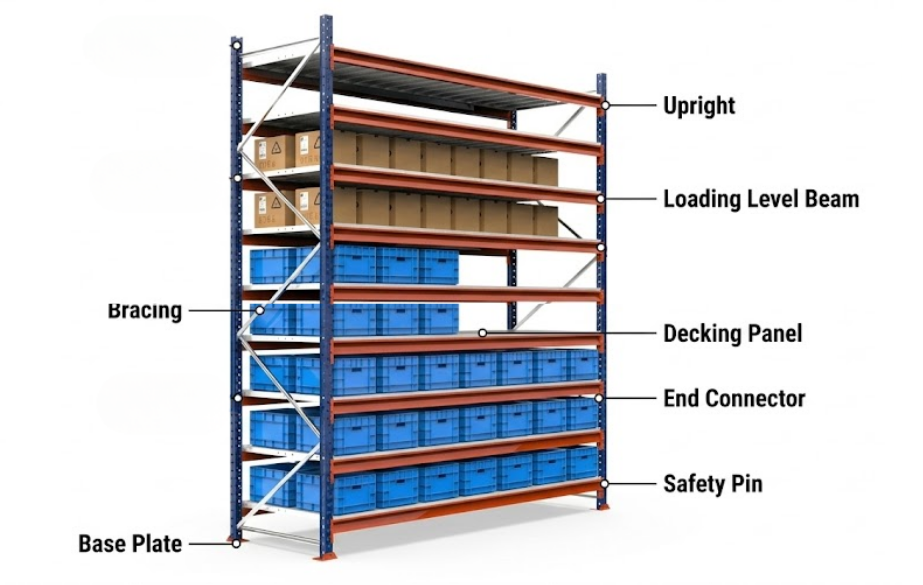
Upright Frames
The primary load bearing structure of long span racking is upright frames. They are punched profiled with high strength steel. You are able to manipulate the shelf heights using 50 mm pitch holes. Frame height preferences can be in range of two to six meters altogether.
Load Beams
Load beams carry the weight of shelves and distribute among uprights. They employ strengthened cold formed steel profiles. The beam lengths are usually between 1.2 and 3 meters. You depend on connectors and locking systems to ensure that the beams do not disengage accidentally during the operations.
Bracing Systems
Horizontal and diagonal steel cross brace are used as bracing systems. They attach straight frames to keep them straight. You have better sway resistance on uneven loading. Correct bracing minimizes the frame deformation as well as enhancing the overall rack stability in the daily running of warehouse operations in a safe manner.

Decking Panels
The panels used to support the non palletized goods are decking panels that rest on every level of shelves. Steel panels are very durable and resistant to fire. Particle board or MDF is lighter. Wire mesh enhances visibility and airflow. You pick decking, depending on the load capacity and requirements.
Base Plates
Base plates are placed below standing frames and distribute loads to the floor. Their plates are made of heavy steel. You secure them with M12 to M16 bolts. Base plates are to be properly used to enhance stability and adhere to safety standards in workshops and warehouses.
End Connectors and Safety Pins
End connectors are used to connect the load beams safely to upright frames. Beam loads are managed by using high tensile steel construction. Safety pins hold connections. You rely on these parts to avoid dislodging the beam and to make sure that you have safe manual handling processes at all times. For broader industry context, Rack Manufacturers Institute (RMI) is a useful reference.
| Component | Material | Typical Thickness / Size | Load Capacity | Key Technical Detail |
| Upright Frame | High-strength steel (Q235/Q345) | 1.5mm – 2.5mm | 1,000kg – 5,000kg per frame | Height: 2m – 6m; 50mm pitch holes; floor-anchored |
| Loading Beam | Structural cold-formed steel | 1.2mm – 2.0mm | 500kg – 1,500kg per beam level | Length: 1.2m – 3m; Beam-to-frame locking system |
| Bracing | Steel cross brace | 1.0mm – 1.8mm | Supports lateral stability | Prevents sway & frame deformation |
| Base Plate | Steel plate | 5mm – 10mm | Transfers full load to floor | Size: 80×80mm – 150×150mm; Anchor bolted |
| Decking Panel | Steel / Wire mesh / MDF | Steel: 0.6mm – 1.2mmMDF: 15mm – 25mm | 200kg – 800kg per shelf | Supports non-palletized goods |
| End Connector | High-tensile steel | 3mm – 6mm | Supports beam load | Secures beam to upright frame |
| Safety Pin | Hardened steel | Ø6mm – Ø10mm | Prevents beam dislodging | Essential safety locking component |
| Anchor Bolts | Galvanized steel | M12 – M16 | Tensile strength ≥ Grade 8.8 | Fixes rack to reinforced concrete floor |
Types of Long Span Racking Systems
Single-Faced Long Span Shelving
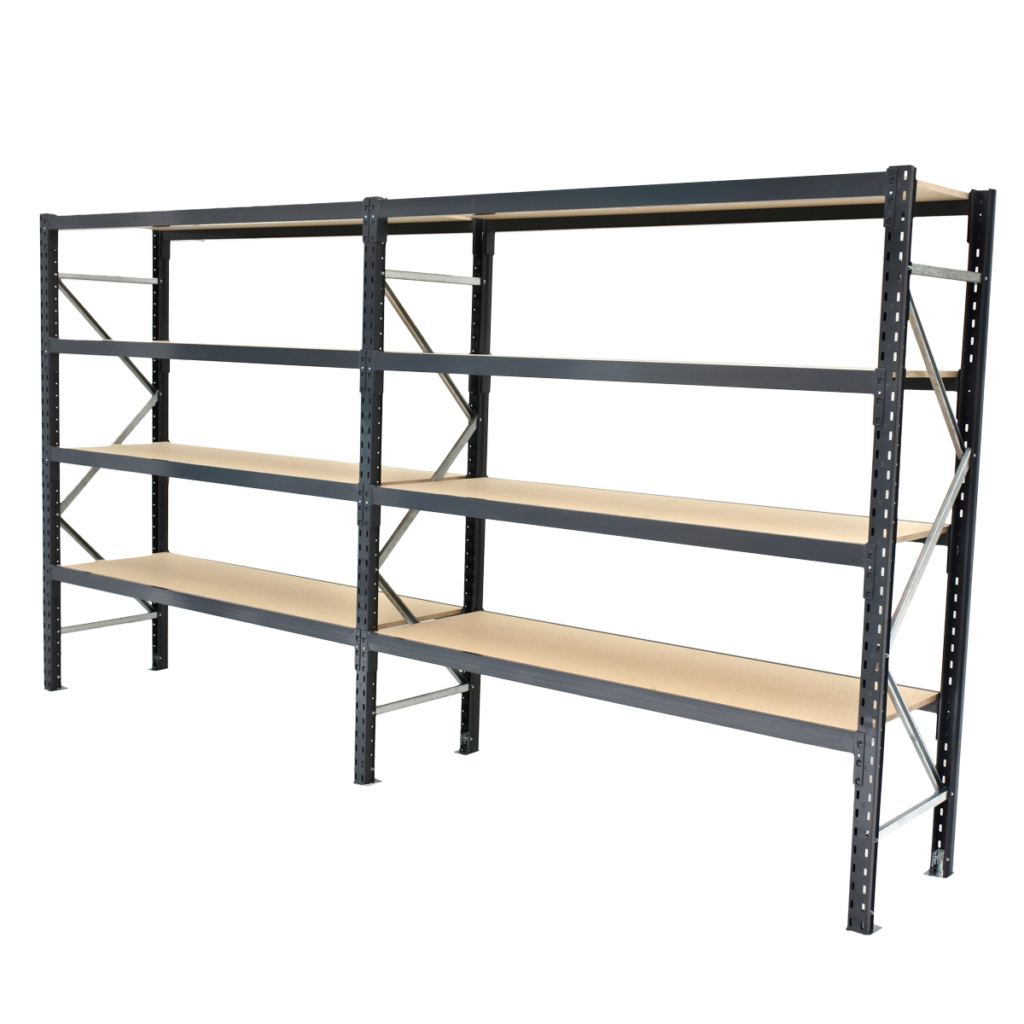
Single-faced long span shelving is mounted on walls or a single row. It saves space and enhances access. You place it where the storage requirement is moderate. The system assists in orderly arrangement of items. It is applicable in warehouses, retail shops, and workshops which have a small floor space.

Back-to-Back Configuration
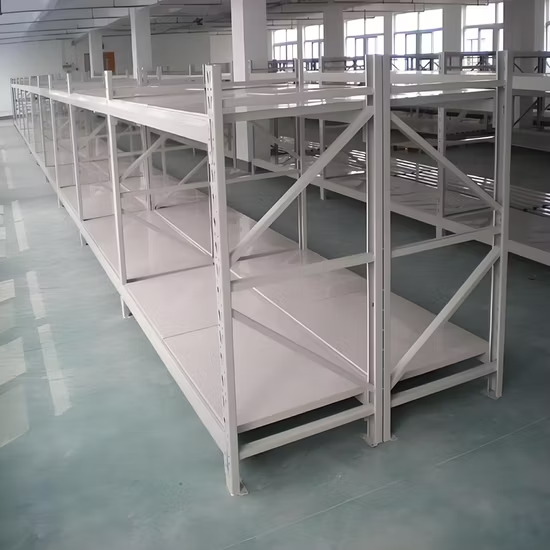
Back to back long span racks are racks that have two rows of shelving. This arrangement forms common support and two-access lanes. You take advantage of floor space and still have ease of retrieving items. It enhances storage density without hindering movement. You control stock in crowded storage areas and distribution centers.

Multi-Tier Long Span Systems
Multi-tier systems utilize mezzanine support to increase vertical storage. You also include additional floors on top of the first floor. This design enhances capacity without the need to extend the building area. Access to stairs and platforms enhance the movement of workers. You select this alternative where there are high-density storage and large warehouses.

Heavy-Duty Long Span Racking
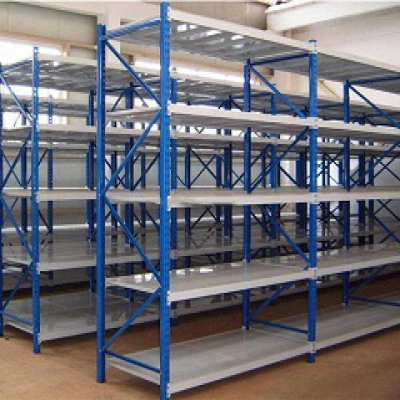
Reinforced beam load-bearing heavy-duty long span racking have heavier loads. Stability and strength are enhanced by thicker uprights. You use it when you need heavy or dense stuff. The building manages industrial machinery and huge cartons. It is most effective in heavy storage and manufacturing plants.

Light-to-Medium Duty Configurations
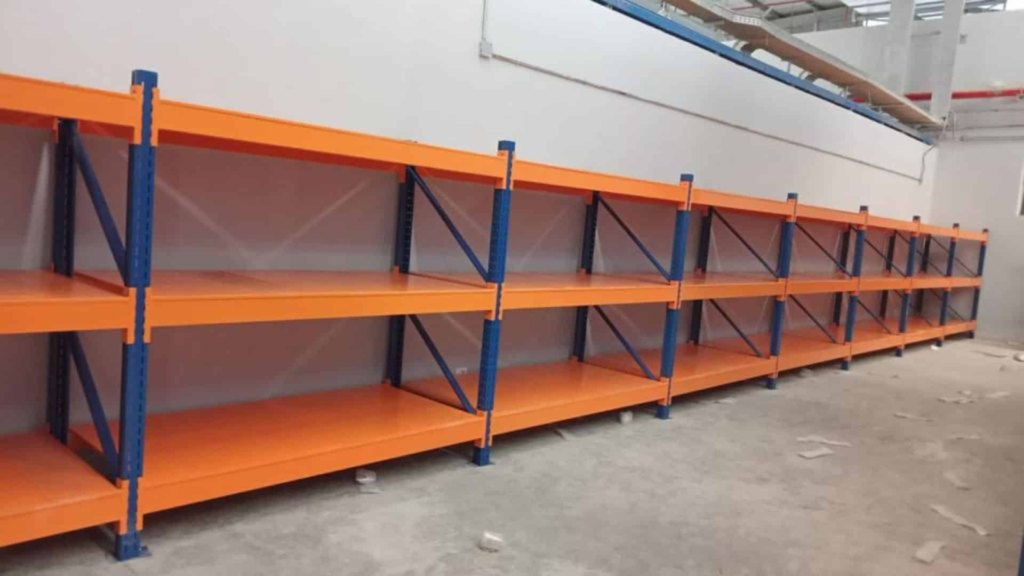
Light-to-medium duty systems are used to store moderate and lighter goods. The shelves are adjustable to provide flexibility in the spacing of various products. You apply it to retail inventory, spares and packaged products. The design is affordable and feasible. It helps in creating an orderly storage without the need to extensively reinforce the structure.

Key Features of Long Span Racking
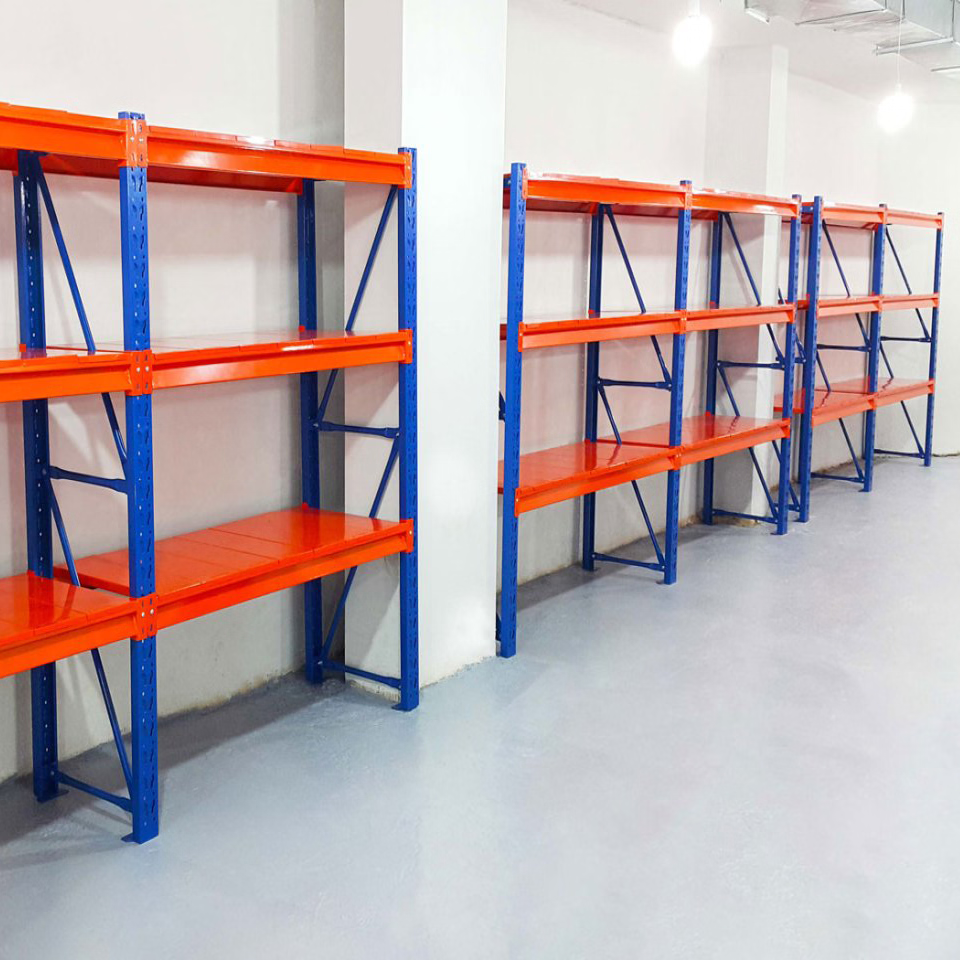
- Modular and Reconfigurable Design: Long span racks have flexible layouts. You modify parts with ease as storage requirements vary. The design encourages expansion and space development.
- Space Utilization Wide Bay Spacing: Large bays enhance storage space. You keep large products without cramming. Access and organization of warehouses are enhanced by smart spacing.
- Adjustable Shelf Heights: Shelves are raised or lowered. You can fit all sizes of products easily. This characteristic is efficient and facilitates a variety of inventories.
- Manual Access to SKUs: Employees can use items without automation systems. You find products quickly and minimize picking mistakes. Direct handling enhances the day-to-day operations in the warehouse.
- Mechanical Access and Equipment Compatibility: Ladders and picking trolleys are supported on racks. You can rise to greater heights easily. Equipment compatibility enhances productivity and safety at the workplace.
- Light to Heavy-Duty Storage systems Transition: The system is flexible to storage needs. You do not replace racks when upgrading capacity. Flexibility guarantees a good passage between load demands.
Step-by-Step Installation Process of Long Span Racks
Site Inspection and Preparation
Before installation, check the floor strength and the condition of the surface. Calculate the size and check rack layout with the design plan. Mark positions clearly. Eliminate barriers and make the area accommodating to appropriate weight distribution and access.
Layout Marking
Mark straight on the ground with precise measurements. Keep a proper aisle spacing to facilitate movement and operations. Confirm alignment with tools and proceed. Clearly identified marks minimise errors and make the rack system fit in as intended.
Assemble Upright Frames
Join the vertical posts and the bracing components. Fix base plates and tighten all bolts in place. Check frame alignment and stability in the assembly. The structure is capable of carrying heavy loads when properly assembled and it will equip you to install safely on the ground.
Install & Anchor Frames
Install standing frames at designated spots. Flatten the frames and correct when necessary. Fix them permanently to the floor with accepted fasteners. Secure anchoring enhances stability and averts movement in heavy inventory storing.
Install Load Beams
Fix horizontal load beams at the necessary height. Connect with lock beams and safety pins. Frame alignment prior to tightening. Installation is performed correctly so that you spread out the weight and are structurally sound when the load is borne.
Add Decking / Shelves
Install steel panels, wire mesh, or shelves on the beams. Make sure that every panel is firmly fixed. Ensure equal distribution of weight on surfaces. The correct placement will give you the maximum storage space, security, and durability.
Final Inspection
Check bolts, anchors, beams and pins. Check loose connections and align. Check consistency of inventory prior to loading. The last test will help to check the safety of the system and the long-term functioning of the warehouse.
Why Warehouses Choose Long Span Racking
- Manual picking environments: Warehouses facilitate employees who select products off shelves. You can access products with ease and enhance accuracy in order with clear layouts.
- Storage of mixed SKUs and irregular items: Long span racks store different SKUs and heavy forms. You plan mixed inventory with no wastage of space and with fast access.
- Medium-weight inventory unsuitable for light shelving: These are medium weight goods that go beyond light shelf limits. You keep cartons in place and manage loads to prevent damages.
- Avoiding over-investment in pallet racking: Long span racks minimize the use of costly pallet systems. You invest in necessary capacity and capitalize in growth.
- Operational flexibility and scalability: Modular frames are easily expandable with changes in inventory. You move shelves fast and stock to fit the season.
- Cost-effective storage optimization: Long span racking also utilizes maximum vertical space and reduces infrastructure expenses. You have layout effectiveness and enhanced warehouse efficiency in the long run.
Common Applications of Long Span Racking
Warehousing and Distribution Centers
Long span racking is used to support cartons, bins and loose items. You pack products in a visible manner and stack safely. It enhances order picking areas and accelerates the day-to-day operations to have a better inventory control.
Manufacturing Facilities
You keep the spare parts and work-in-process stock in an organized manner. The system is used with heavy loads and frequent access. It maintains the production lines at an optimum working level and minimizes downtime caused by lost materials.
Retail Backrooms
Long span racks can easily accommodate stock overflow and seasonal inventory. You utilize the limited backroom to its fullest extent and keep goods at hand. This arrangement will assist you in maintaining a changing demand without congestions or delays.
Maintenance Areas and Workshops
The tools and heavy parts are kept in robust racks. You get to equipment fast when you are doing repairs or projects. The system helps in keeping things safe and also in making sure that you locate things without having to waste time in searching.
Spare Parts and MRO Storage
You get direct-access to maintenance, repair, and operations supplies storage. Products are stocked in an easy to access manner. It saves time on picking and enhances efficiency and keeps the spare parts well classified.
How to Choose the Right Long Span Racking System
- Evaluation of load requirements: First examine product weight and rack capacity constraints. Examine the quality of materials and check beam strength. Choose a system that can safely sustain daily storage loads.
- SKU characteristics: Check item size, shape and turnover rates. Arrange goods according to the needs of accessibility. SKU diversity should match rack dimensions to ease handling.
- Space availability: Measure floor height, width and layout prior to installation. Safe movement aisle planning. Utilize the vertical space to carry more inventory.
- Expansion planning: Predict business growth and inventory. Select a modular rack design, which can be extended easily. You defend investment by capacity planning.
- Vendor assessment criteria: Compare supplier experience, certifications, and product quality. Check client feedback and warranty conditions. You are also reliable when you choose reputable manufacturers such as Mracking.
- Significance of engineering assistance: Seek technical advice in design and load estimation. Check correct installation and structural safety. Engineering support ensures your system is stable and compliant.
Common Mistakes to Avoid
Failing to estimate Load Capacity
Load capacity determines the weight that your rack can carry safely. Determine amount of materials stored prior to installation. Overloading leads to deformation, failure, and unsafe conditions. Evaluate manufacturer guidelines and ratings frequently.
Ignoring Floor Load Ratings
Confirm load ratings of a check floor prior to placing heavy racks. Floors spread weight on slabs and beams. Excessive loads on weak surfaces form cracks and structural damages. Check safe capacity with consult engineers. Always.
Improper Installation
Assemble according to installation instructions. Wrong position undermines frame stability and security. Install bolts to required torque. Fix anchors in concrete floors. Employ skilled technicians.
Missing Routine Maintenance
Check racks periodically to identify wear and damage. Find bent beams loose connectors and corrosion. Immediately replace defective parts to avoid accidents. Keep records of inspection to be accountable.
Selection of the Wrong Decking Type
Choose decking based on the weight and size of the product. Wire mesh facilitates light goods ventilation. Hard steel is used to move heavier loads and enhance durability. Align materials to operations to prevent failures.
Long Span vs. Standard Industrial Racking Systems
Long Span Racking
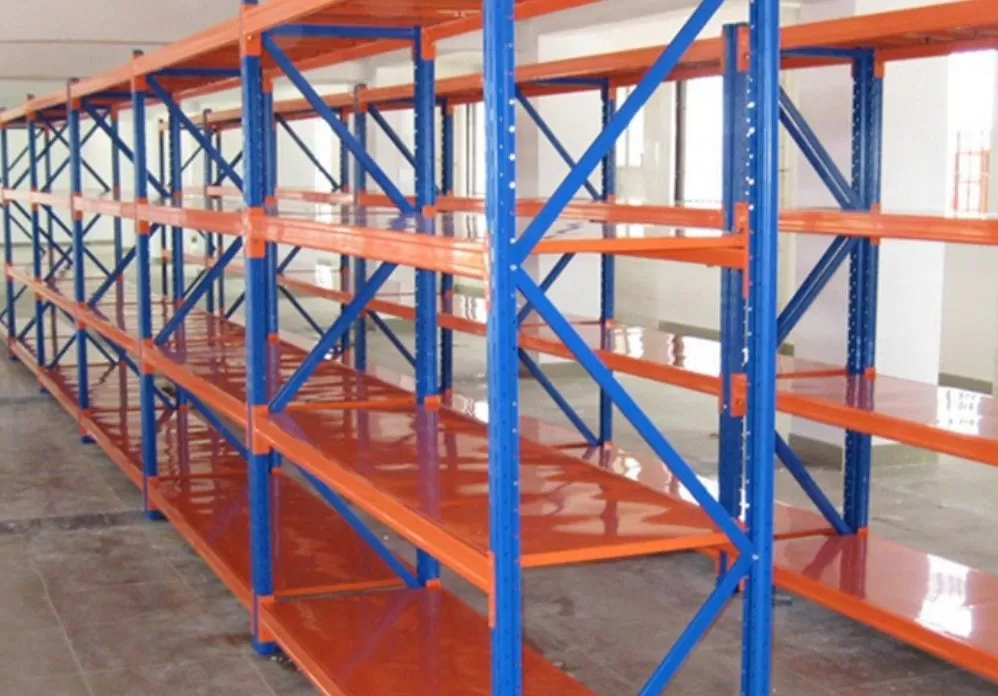
Long span racking is used to store large and irregular objects that have high beam support. It has broad bays without columns in the middle of them. Most setups manage stock manually and do not use forklifts. The system adapts to various shelf heights and load requirements. It is effective in workshops, backrooms of stores, and storage of spares and in medium-sized warehouses. It enhances clarity and systematic storage.

Standard Industrial Racking
Standard industrial racking is utilized to support high volume palletized and uniform products. It maximizes the vertical warehouse space using structured pallet beams. You depend on forklifts to ensure safe loading and unloading. The system deals with large facilities with heavy loads. It is effective with regular inventory items. It enhances storage density and boosts productivity in the entire warehouse.
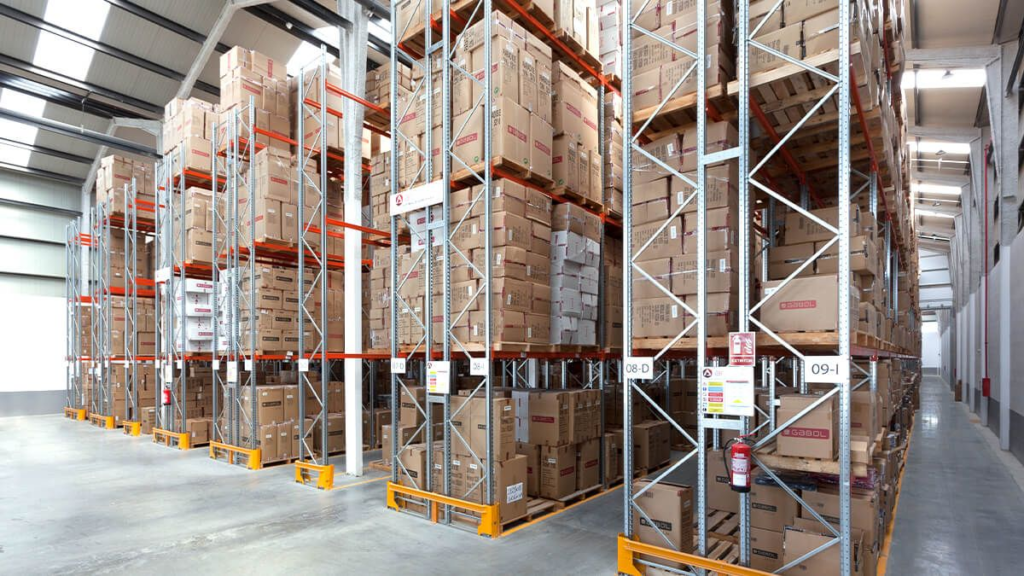
Why Choose Mracking for Lasting Longspan Racks?
Mracking is a well-known Chinese company with 16+ years experience in longspan pallet racking and warehouse storage system and offers high quality of longspan rack solutions at factory-direct prices. They assure quality and personalization, their production plant is 20,000+ sqm, 85 skilled workers and have implemented over 1000 successful projects in 40 or more countries. To implement the project in a smooth and cost-effective manner, they have a single source solution where they provide production, packaged goods, delivery, and installation of the projects.

Conclusion
Long span racking provides a medium-duty storage that is flexible, durable and cost-effective. It will assist with manual access, customizable layouts, and secure load handling at various settings. You optimize the use of space and deal with bulky or irregular goods. The system is still best suited to warehouses, workshops and retail storage where scale is important. When you are required with the quality and tailor-made solutions, MRacking offers professional design, manufacturing, and installation services to the long-span systems. Analyzing your operational requirements will enable you to select an appropriate storage partner and solution that will be efficient in the long run.