


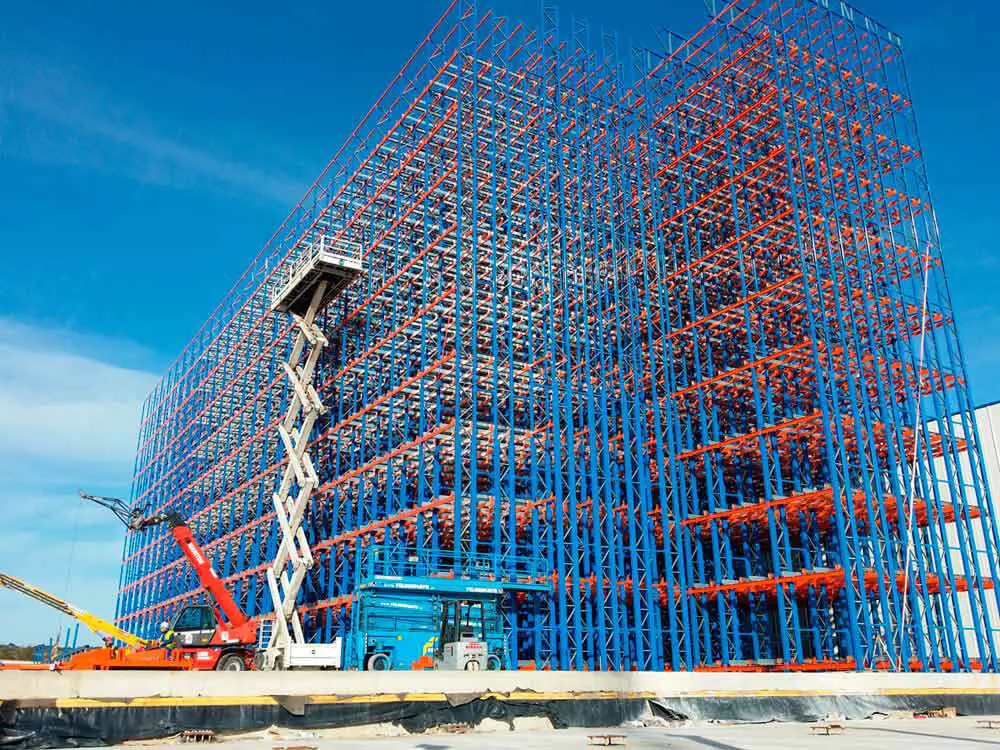
What is High Racking?
High racking systems make the best use of the vertical storage by tall pallet structures in warehouses and industrial premises. They are higher than normal pallet racking heights, which have an average overall height of approximately 8 meters. High racking is between ten to more than thirty meters, depending on the design of the system and the load requirement. They require more robust materials, meticulous design, and occasionally automated storage and retrieval mechanisms, unlike typical racks. They are applied in distribution hubs, production and manufacturing facilities, cold storage, ecommerce, and third party logistics.

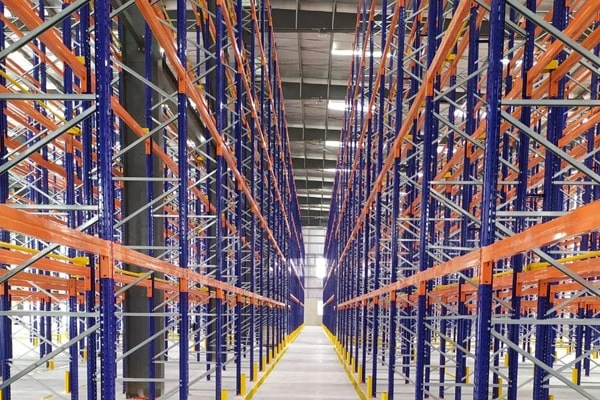
Why Businesses Are Moving to High Racking in 2026
- Warehouse Space Optimization: High racking helps business to make the most of the vertical space by accommodating more pallets. You minimize the use of floors and maximize capacity in congested locations. This provides smaller footprints of warehouses where expansion is not a viable option and is very expensive nowadays.
- Rising Warehouse Costs: Increasing construction and land prices drive firms to higher storage. You save on the cost of horizontal expansion by constructing upwards, particularly in urban sites where there is limited land supply and development permits add time and costs to projects.
- Automation Compatibility: High racking systems blend well with the ASRS, robotics and shuttle technologies. You can have faster handling, steadfast accuracy, and less dependency on labor, and automated workflows can be effectively used in tall storage structures with very little human supervision.
- Improved Storage Density: More pallets in the same cubic volume are possible due to increased storage density. You reduce aisle sizes and maximize layout design, allowing increased capacity despite not increasing facilities, which facilitates inventory arrangement and quicker picking during busy operations.
- Long-Term ROI Benefits: High racking offers long term payoffs in terms of minimized expansion and operating expenses. You are enjoying a higher efficiency, reduced handling time, and streamlined workflows and investments in vertical storage systems have paid off in long-term productivity and scalability.
Types of High Racking Systems
High Selective Pallet Racking
High selective pallet racking can allow accessibility of all pallet positions. It has upright frames and beams to adjust to different levels of storage. Diverse SKUs are easy to handle with transparent visibility. It however needs more aisles which lowers the overall storage density and efficiency. For broader industry context, Rack Manufacturers Institute (RMI) is a useful reference.

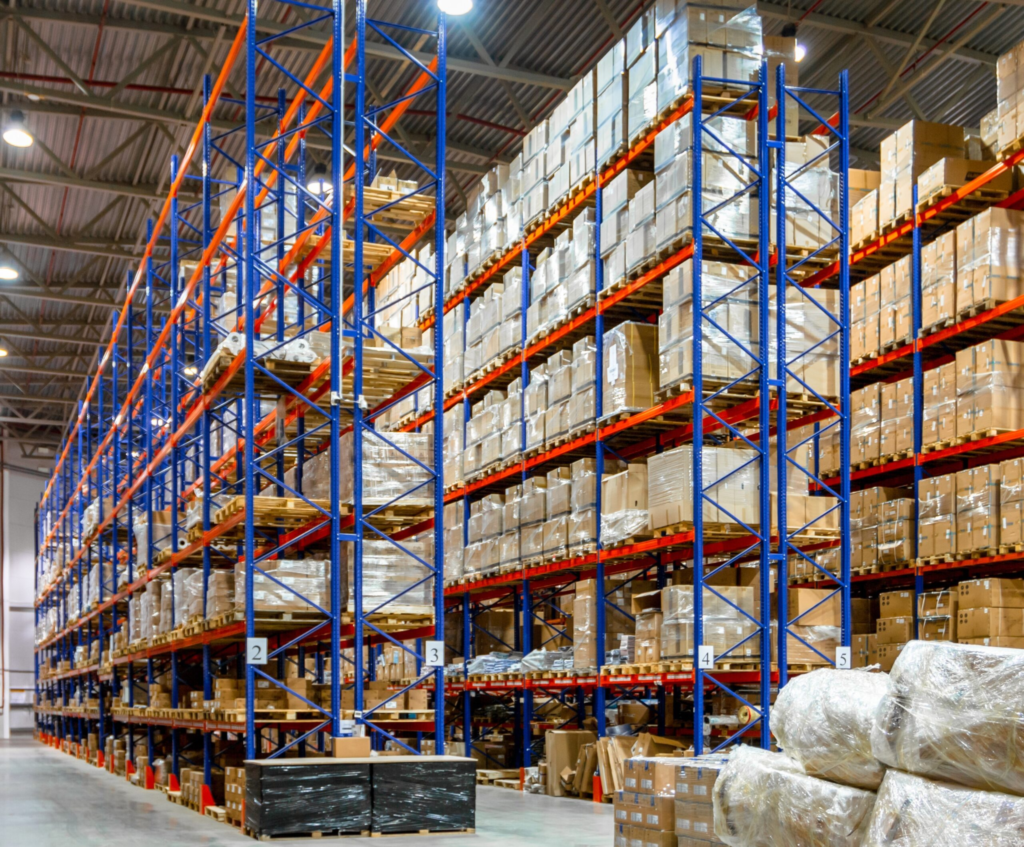
High Double Deep Racking
High double deep racking stores pallets positions deep on each side. It enhances density by decreasing aisles with respect to selective systems. You require reach trucks in cases of deeper access. Warehouses have limited selectivity and may block stocks thus making retrieval slow.

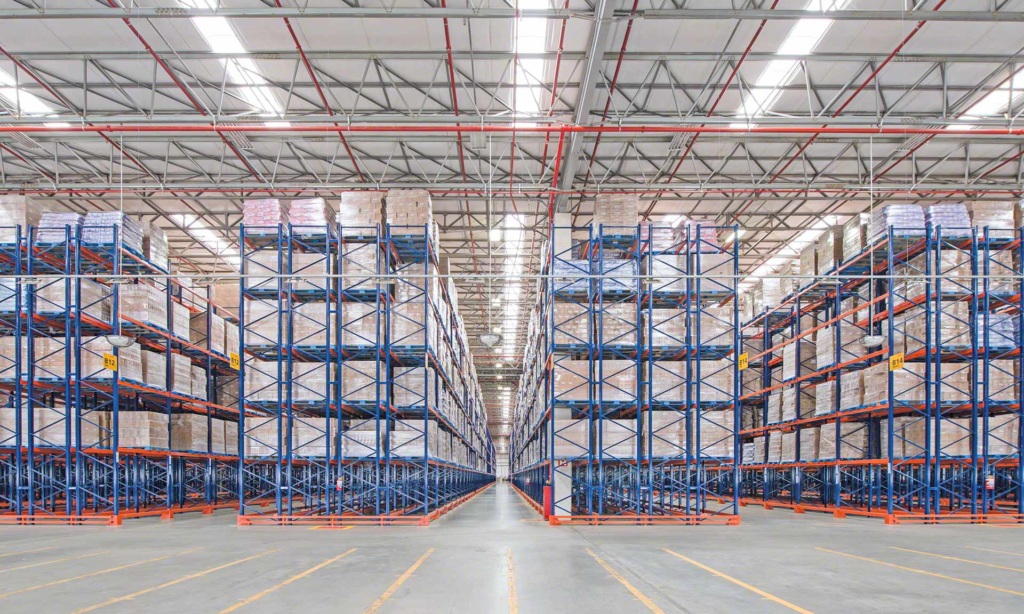
High Drive-In Racking
High drive-in racking enables the forklifts to access lanes and place the pallets deep. It is based on a LIFO storage, giving preference to those pallets that are first accessed. You obtain density and space usage. Nevertheless, the lack of selectivity, the risk of product damage, and slow access are negative aspects.

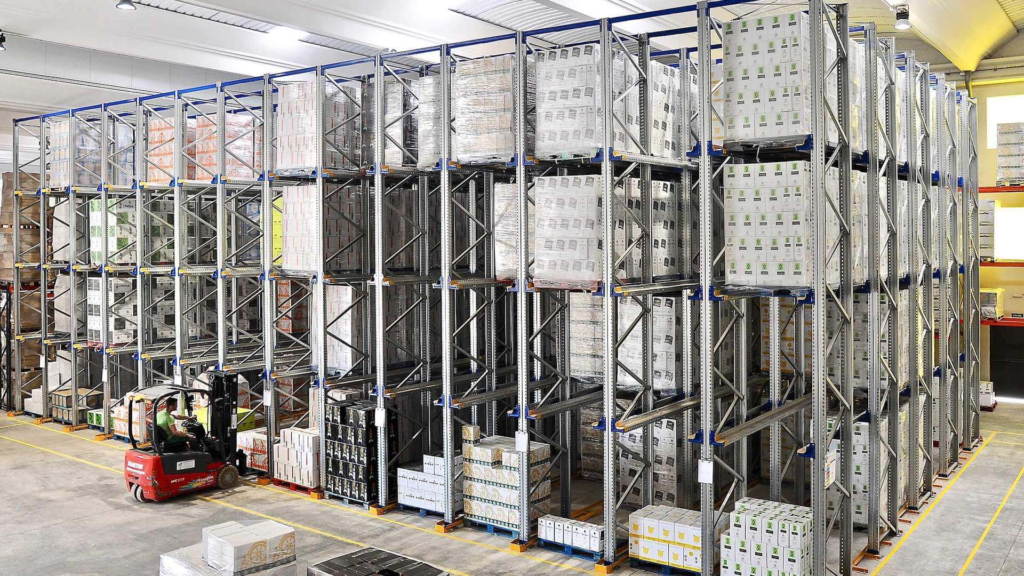
High Push Back Racking
High push back racking involves storing pallets on carts inclined rails. It uses gravity-based storage with pallets automatically moving forward when being retrieved. You achieve density than selective systems. But it is appropriate in case of limited SKUs, and there may be instability in loads which may influence safety.

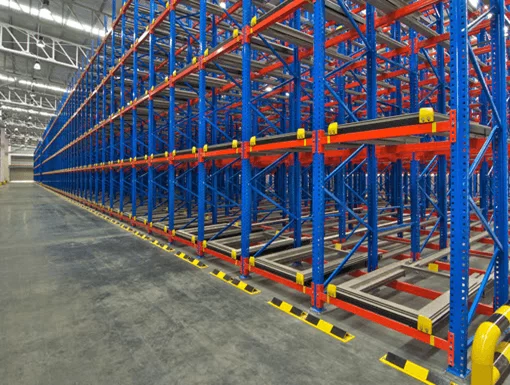
High Pallet Shuttle Racking
High pallet shuttle racking involves motorized shuttle run pallets lanes. It is a semi-automated system reducing manual handling requirements. You acquire greater density and quicker operations. Nevertheless, warehouses may be hampered by increased investment, maintenance, and system reliance.
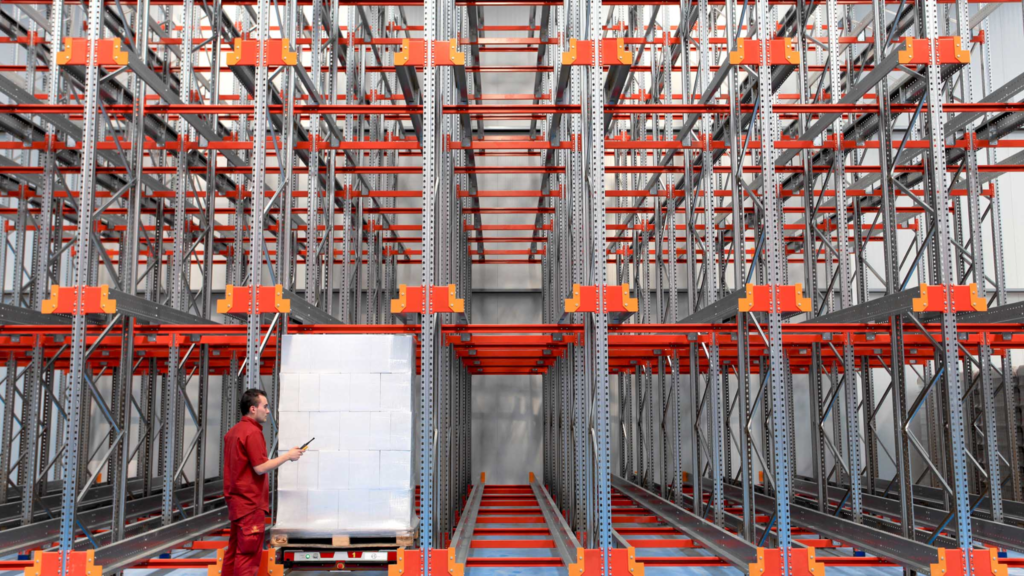
High AS/RS Racking
High AS/RS racking combines automated storage with crane-based systems to handle. It allows very high racking heights and inventory control. You enjoy precision, speed and less work. Nevertheless, expensive capital, complicated maintenance and risks of system downtimes demand planning.
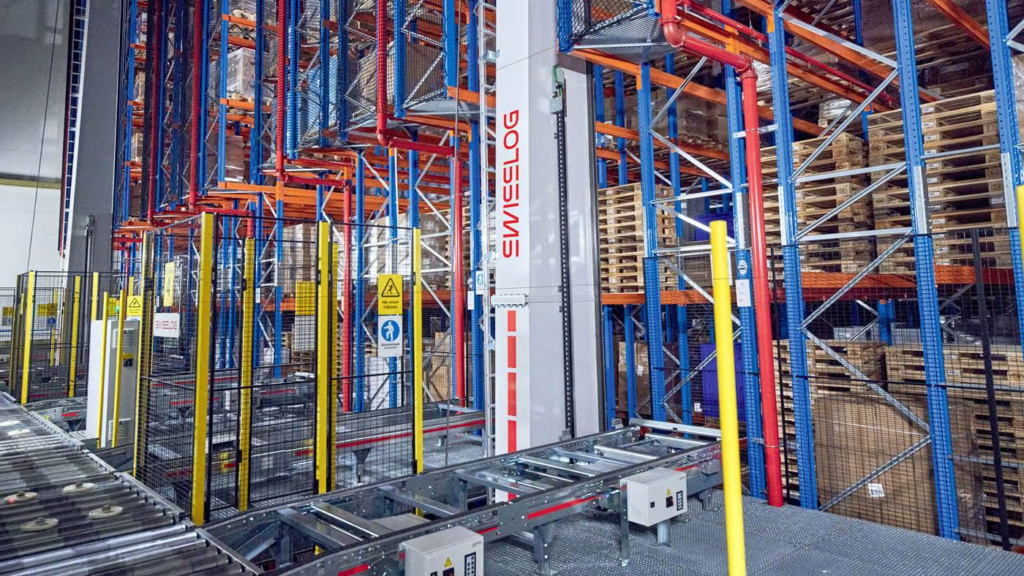
High Mobile Racking
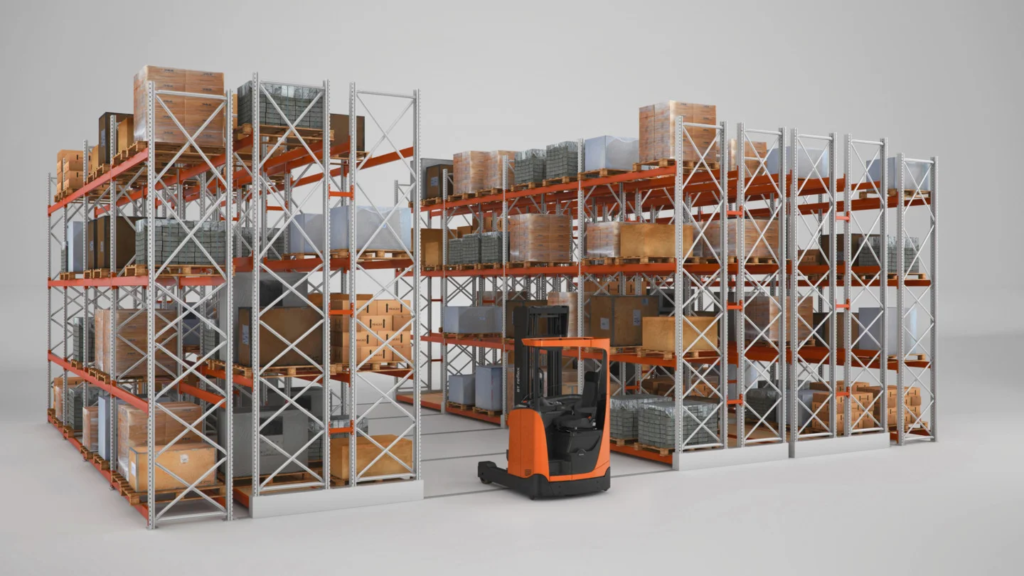
High mobile racking are systems that are movable on powered bases. It removes aisles that are fixed, and it utilizes the maximum of space. Aisles can be opened when required, enhancing efficiency. But, the reduced access time and mechanical complexity may affect operations when warehouse is busy.
High Racking Components and Structure
- Uprights (Frames): Uprights offer good structural stability in vertical structures of pallet racking systems design. To be able to withstand heavy loads and avoid deformation, thicker steel uprights are necessary.
- Beams: Beams support pallet loads over uprights with efficiency in horizontal structural support system. Shelf beams are attached to upright frames in a safe and reliable manner using locking mechanisms.
- Base Plates: Base plates evenly spread rack loads on the surface protection of warehouse concrete floors. Adequate base plates minimize pressure points and enhance the overall rack stability to a great extent.
- Bracing Systems: Horizontal bracing binds frames together and ensures an alignment of racking structures stability support. Diagonal bracing helps increase rigidity and avoid side sway when loading operations warehouse safety.
- Safety Accessories: Column protectors and guard rails avoid damage caused by impact in the warehouse racking systems. Anti-collapse mesh is used to avoid falling goods and enhance the overall reliability of worker safety systems.
- Anchoring Systems: Floor anchoring fixes the racks to ensure that there is no movement when the warehouse is in operation. Seismic anchoring helps to safeguard racking structures against the force of earthquakes and mitigation against structural failure.
High Racking Height Considerations
High Racking Height Considerations
The racking height should be carefully planned to ensure safety in warehouse storage efficiency today. Before raising rack height in warehouses, you should consider issues of load stability. Good design means safety and long term running efficiency benefits in general.
Structural Engineering Requirements
Structural engineering is concerned with proper load calculations to design tall racking systems. Deflection control helps avoid deformation and ensures stability during heavy conditions of the warehouse loads. Structural failure risks are always minimized by applying safety factors.
Warehouse Ceiling and Fire Clearance
The height of the ceiling of the warehouse is the direct constraint of the maximum area where racks can be installed within the facilities. Compliance with safe vertical storage design is through the establishment of regulations and fire clearance requirements. Clearance is proper and ensures that air flows and the risks of fire are minimized.
Forklift and Automation Limitations
The forklift reach trucks have restricted height capacity to have safe pallet handling operations. Very narrow aisle forklifts are highly maneuverable, but with greater storage reach. With automation systems, the heights are higher, more accurate, and less dangerous.
High Racking Height Comparison by System
| Racking Type | Typical Height | Operation Type | Complexity | Cost Level |
| Standard Pallet Racking | Up to 10m | Manual | Low | Low |
| High Selective Racking | 10m – 15m | Manual | Medium | Medium |
| VNA High Racking | 15m – 20m | Semi-automated | High | Medium-High |
| Shuttle Racking | 15m – 25m | Semi-automated | High | High |
| ASRS Racking | 20m – 40m+ | Fully automated | Very High | Very High |
Load Capacity and Weight Considerations
Load Capacity per Level
The capacity of each level is based on the weight of the pallet and the limitations of the beam strength. Pallet weight distribution The distribution of pallet weight should always be considered to prevent overloading of individual beams safely. Beam capacity determines the maximum load limit, which each level can safely bear.
Total Rack Load Capacity
Upright strength and design integrity are important factors that determine total rack load capacity. The floor loading limits should be verified and then the heavy storage racks should be installed appropriately. Even distribution is safe and avoids structural overloading when it is in use.
Heavy Duty vs Light Duty High Racking
Heavy duty racking makes use of heavier steel to enhance performance of load bearing capacity. Only light weight storage can be used with light duty systems. The type of steel grade can be very influential on the durability and the level of long term safety.
Impact of Height on Load Capacity
The increased rack height brings about structural stability difficulties in warehouse systems operation efficiency. When vertical storage height is greatly design margined, then reinforcement engineering is necessary. Increase in height lowers the load tolerance and needs a thorough structural analysis planning.
Warehouse Design for High Racking
- Floor Requirements: Concrete thickness ensures heavy racking loads are safely distributed across warehouse floors. The flatness of the floors facilitates safe forklift traffic and the high standards of racking installation alignment needed.
- Aisle Width Planning: Aisle width planning ensures safe forklift clearance in warehouse operations efficient flow. Very narrow aisle VNA systems are storage-dense with controlled areas of movement.
- Fire Protection Requirements: Fire protection requirements include reliable sprinkler systems for warehouse safety compliance standards. The high rack risks are effectively enforced through strict fire regulations that are in place to guarantee quick response and minimize the high risks.
- Lighting Requirements: High ceiling lighting improves visibility across tall warehouse racking systems operations areas. Energy efficiency lowers the operational expenses and does not compromise the level of illumination by using LED.
- Ventilation Considerations: Ventilation considerations ensure proper airflow management within high density racking warehouses design. Adequate air circulation will avoid heat accumulation and help to ensure the conditions of comfort and safety of workers.
Equipment Used in High Racking Warehouses
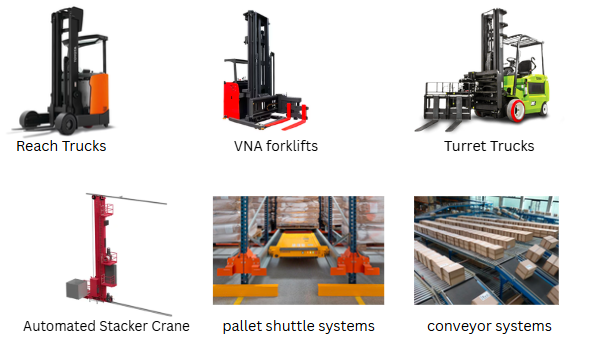
- Reach Trucks
- VNA Forklifts
- Turret Trucks
- Automated Stack Cranes
- Pallet Shuttle Systems
- Conveyor Systems

High Racking Safety Considerations
Structural Safety
High racking structural safety commences with good engineered frame design. Shelves should be able to hold the vertical loads and not deform under pressure conditions. Always make sure the material is of good quality and assembled correctly to minimize the risk of collapse.
Load Safety
Load safety: This is to guarantee that each pallet does not exceed the rated capacity limits anytime. Overloading racks increases risk of structural failure and operational hazards significantly high. Always check load labels before putting goods on shelves.
Forklift Safety
Forklift safety involves having trained operators and having clear aisle paths always in place. The control of speed and visibility minimises the risks of collisions in warehouses which are relatively safe. Carefully use horn signals to turn or reverse forklifts.
Fall Protection
Fall protection systems are needed when working on the areas of elevated racking platforms. Serious injuries are always avoided during maintenance work due to the use of guardrails and safety harnesses. Whenever accessing the high shelves areas, workers are not supposed to bypass safety equipment.
Seismic Safety
Seismic safety concerns the stability of the racks in the conditions of earthquake or vibration events. Flexible frames and anchoring systems minimize the risk of damage in case of ground movement. Adequate engineering check will assure that the racks are always compliant with the requirement of seismic compliance.
Regular Inspection Requirements
Periodic checks are beneficial to detect early damages and structural vulnerabilities on racks very fast. Bolts, beams, and checks of uprights should be regularly inspected every cycle. You should record findings and correct problems prior to subsequent warehouse operation.
High Racking Installation Process
Step 1: Planning Phase
Phase one starts with the planning process where assessment of the warehouse capacity and operations requirements are done. Expert approval is a procedure that verifies space occupancy of loads and its compliance with safety. The stakeholders are assured of project goals to ensure that the proper planning stage is made during the execution.
Step 2: Engineering Design
Depending on the structural loads analysis and warehouse efficiency requirements, engineers come up with detailed racking layouts. The stability of the rack is modelled using CAD models and optimization of the use of materials is done to make it cost-effective. Design approval is a guarantee that safety standards regulations are met. This point also connects with The to Warehouse Optimization.
Step 3: Manufacturing
The production process starts with the cutting of steel and accurate fabrication of rack parts under controlled conditions. Quality teams also conduct regular reviews of welding strength and consistency of materials during the production process. General Automation improves the accuracy and reduces human error.
Step 4: Delivery and Assembly
Delivery plans will be carried out to make sure that heavy rack material is delivered safely on-site. Assembling Teams: Technical drawings are used to install the upright frame beams and anchors. Under proper alignment, stability is guaranteed and the performance of the structure with time. For a closer comparison, see FIFO Racking.
Step 5: Testing and Certification
Structural integrity and safety standards of load capacity is tested prior to final approval. Inspections and recording of results are done by certified engineers to ensure regulatory approval process is completed. Certification ensures that there is operational safety and long-term reliability assurance to use.
Disadvantages of High Racking
Higher initial investment
High racking systems with large scale necessitate high initial capital investment. The consideration of structural materials engineering design and advanced safety compliance feature requirements is expensive.
Complex installation
The erection of high racking systems requires input of structural engineering and planning skills. Close attention to alignment and high standards of safety procedures are often needed during the installation process.
Specialized equipment required
Forklift High racking installation requires forklifts to access lifting machinery systems and reach the trucks. In the absence of specialized tools, safe assembly and operation becomes a very challenging process.
Maintenance costs
Constant maintenance cost is augmented by height load pressure and wear factors. To be on the safe side, regular checks and maintenance are required.
Industries That Use High Racking
E-commerce
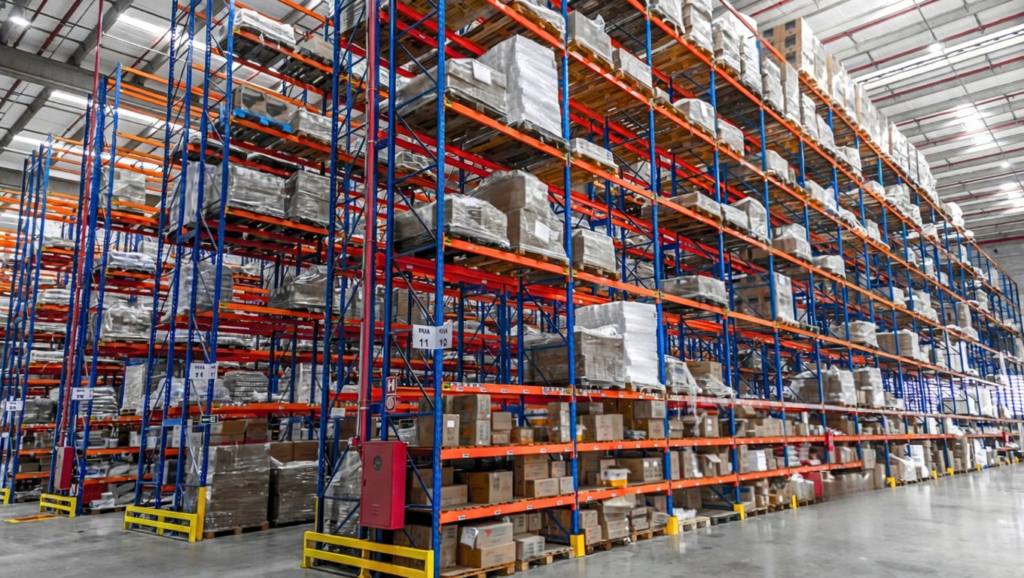
High racking systems are important in e-commerce warehousing as they provide efficient storage. You have the opportunity to maximize warehouse space. This enhances speed in order fulfillment and accuracy in inventory and helps to sustain the increasing online customer demand, especially in large warehouses.

Automotive
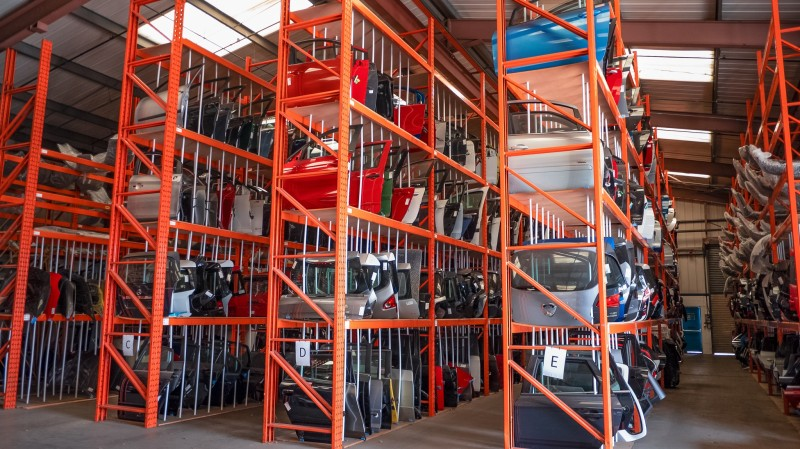
High racking systems are applied for automotive parts storage in order to store heavy components in a secure manner. You enjoy the advantages of systematic parts management and less time to retrieve parts. This system assists in assembly lines by making sure that the components are available on time. Enhancing the efficiency of production in general.

Manufacturing
High racking is used in manufacturing facilities to handle raw materials. You are able to keep in large quantities without wasting space on the floor. It automates workflow and minimizes downtime during production processes. Fueling scalable industrial processes on a daily basis.

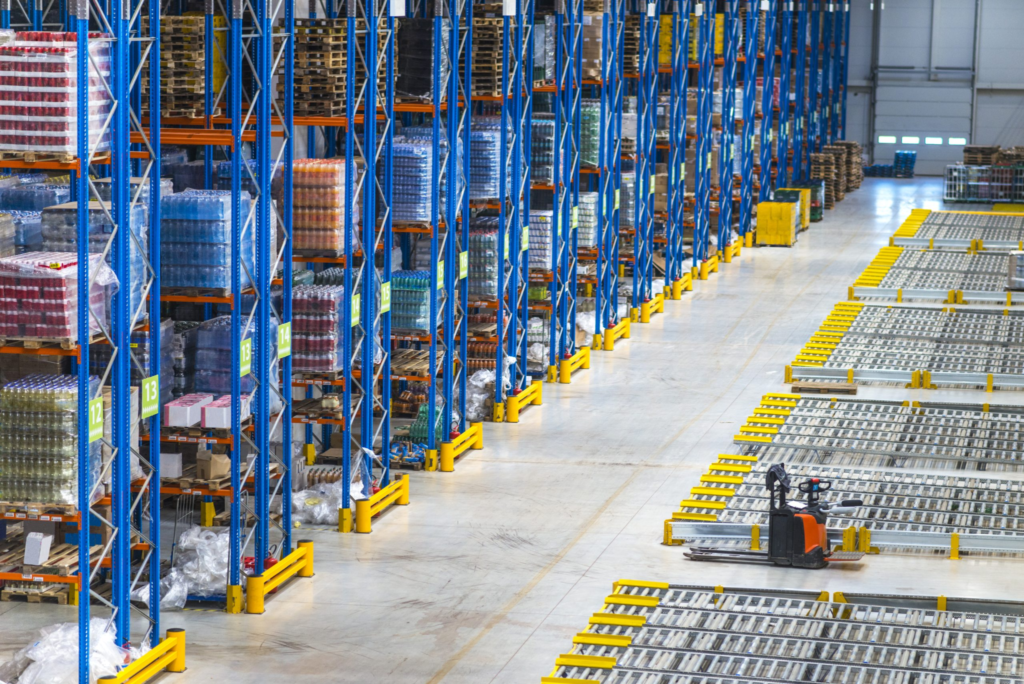
Retail Distribution
High racking is used in retail distribution centers to control the fast-moving inventory. You are able to arrange various product lines very effectively. This increases the speed of order picking and the level of customer satisfaction. Enhancing accuracy in logistics networks of supply chains. For product-level details, review Manage Warehouse Inventory.

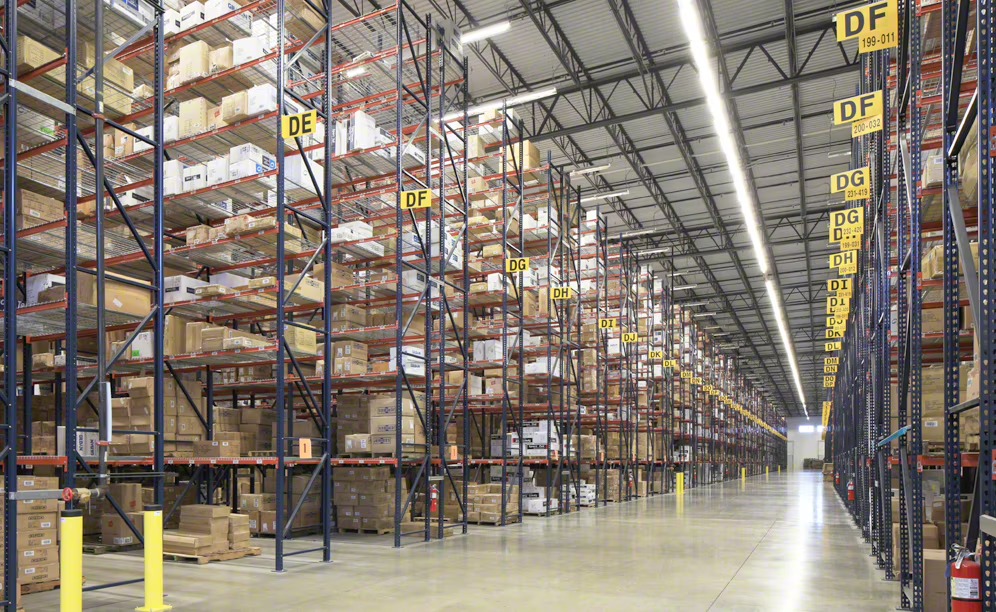
Cold Storage
High racking is used in cold storage warehouses to maximize the space controlled by temperature. You make sure that perishable goods are safely stored. It enables a greater airflow and structured frozen inventory. Minimizing spoilage whilst ensuring rigorous storage conditions at all times.

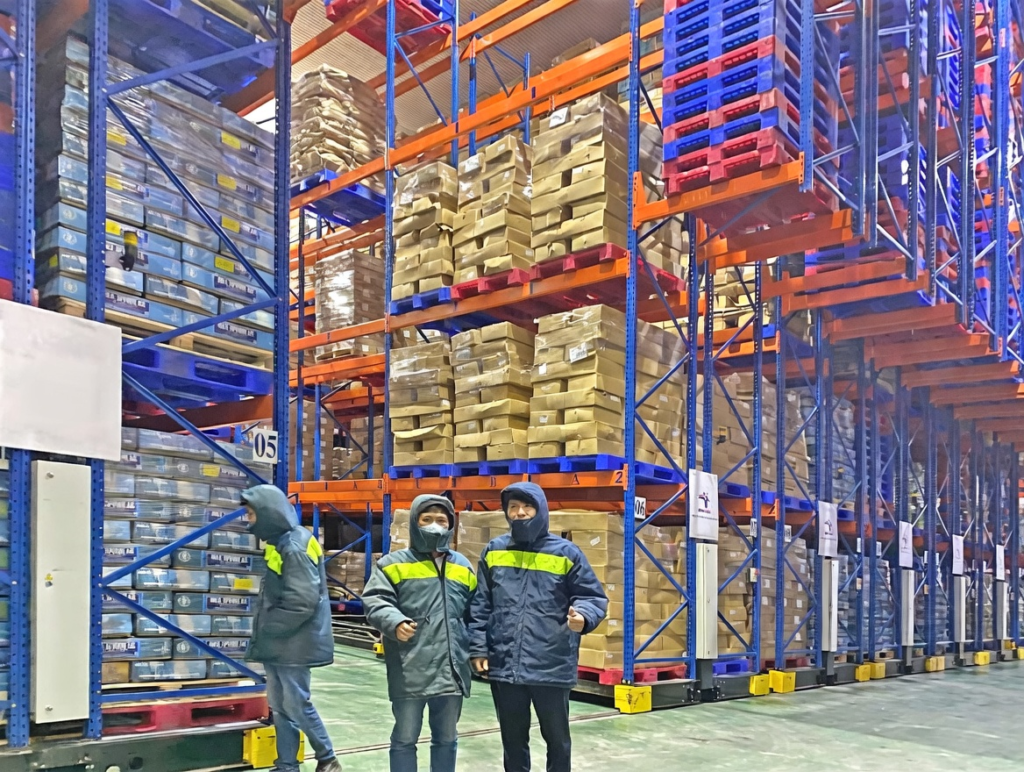
Pharmaceutical
High racking is used in pharmaceutical companies to store drugs safely. You are very strict with sensitive medical products. This helps in ensuring that regulations are followed and enhances traceability. Enabling effective distribution throughout healthcare supply chains worldwide networks.

Cost of High Racking Systems
High Racking Systems cost
In 2026, high racking systems range in cost of between $50 and $300 per pallet position. The overall price is based on design, height, and size of warehouse. You are also paying structure, safety and equipment. The taller and stronger systems raise an investment level.
Factors Affecting Cost
Pricing depends on height, load capacity, level of automation and thickness of the material. Taller racks require heavier steel, which increases the cost by 20-40%. Adding sensors and software to automation is even more costly. Simple systems are less efficient and cheaper in storage usage.
Installation Costs
Installing typically costs between $5,000 and $50,000 depending on the size of the system. It involves fitting, mounting and safety inspections. You also might require permits and floor strengthening. The installation is done by professionals and this makes it safe and stable, and the long-term operation is reliable.
Maintenance Costs
Maintenance is approximately 2-5 percent of system value annually. It includes inspections, repair and replacement of parts. Automated systems require additional maintenance. Maintenance prevents failure and can effectively increase system life past 10-15 years with proper maintenance.
Long-Term ROI
With high racking systems, ROI is realized in 37 years. They enhance the use of space and minimise the expansion cost. You become efficient, quicker to handle and better inventory control. Initial investment is less than long-term savings, which increase productivity of the warehouse greatly.
High Racking Cost Factors
| Factor | Low Cost | Medium Cost | High Cost |
| Height | 10m | 15m | 25m+ |
| Automation | Manual | Semi-auto | Full ASRS |
| Steel Thickness | Standard | Reinforced | Heavy duty |
| Safety Features | Basic | Standard | Advanced |
High Racking vs Other Storage Systems
High Racking vs Standard Racking
The vertical warehouse space is maximized in high racking than in the overall normal racking system. Standard racking provides more convenient access, however, it is generally not utilized efficiently. You select high racking on the basis of density and standard on the basis of flexibility.
High Racking vs Mezzanine
High racking stores put pallets vertically with mezzanine providing levels of useful intermediate floors. Mezzanine systems are used in offices or picking area in design layout of warehouse structures. You choose high racking to store and mezzanine to work.
High Racking vs Shuttle Systems
High racking relies on forklift and shuttle system relies on automation technology efficiency. Shuttle systems enhance speed and storage density of large warehouses operations in general. Your favorites are high racking due to its simplicity and shuttle due to automation systems. A related guide on 4 Way Pallet Shuttle Racking System gives more detail for this part of the planning work.
How to Choose the Right High Racking System
- Storage Requirements: Determine product sizes, weight and turnover and then choose racking systems. Take into account storage density and accessibility needs to plan efficient warehouse operations. Ensures safety.
- Warehouse Size: Size of the available floor space and ceiling height should be measured and then high racking systems should be installed. The efficient design of layout enhances the flow of movement and utilization of storage space much more efficiently.
- Budget: set budget constraints such as installation, material and maintenance cost early planning stage. Compare suppliers and long term value to prevent unwarranted future costs of financial pressure.
- Automation Requirements: Review automation requirement like ASRS or manual handling systems requirements analysis. Select scalable technology that interprets with warehouse management systems to effectively have real time control.
- Future Expansion: Plan racking system that can be expanded to meet future inventory growth needs changes. Reserve room to grow and think modular designs to be flexible and efficient in the long term.
Mracking — Advanced High Racking Solutions for Modern Warehouses
Mracking provides high racking solutions that are supported by more than 16 years of experience in the industry around the world. The firm produces quality pallet racking systems, mezzanine floors, high density storage systems, and automation capable warehouse systems that are designed to meet the current logistics requirements.
Having ISO and CE-certified manufacturing standards, Mracking focuses on safety, durability, and adherence to international regulations. Their tailored high racking systems can assist business in maximizing their vertical warehouse space, enhance their storage density and increase their operations.
Mracking offers complete support, including initial consultation, engineering design, production, and installation guidance. Customers enjoy the advantage of precise quotes, effective production schedules, and dependable worldwide delivery.
With operations in over 70 countries, Mracking serves the automotive, e-commerce, manufacturing, and logistics industries, including global and fortune 500 companies that have a need to find scalable and high-performance warehouse storage solutions.

Conclusion
High racking systems are crucial in the contemporary warehouse as they maximize the vertical space, enhance the density of storage and facilitate the movement of inventory in the logistics and industrial plants today. Long-term efficiency and safe performance of the warehouse are guaranteed through careful planning depending on the storage requirements, budget, the level of automation, and future expansion to minimize operational costs and enhance scalability. Mracking offers high-tech engineered solutions that today assist companies reach reliable high racking systems with high safety standards, tailor-made designs and global support in implementing warehouse solutions.